7 Days in North Albania: Into the Accursed Mountains
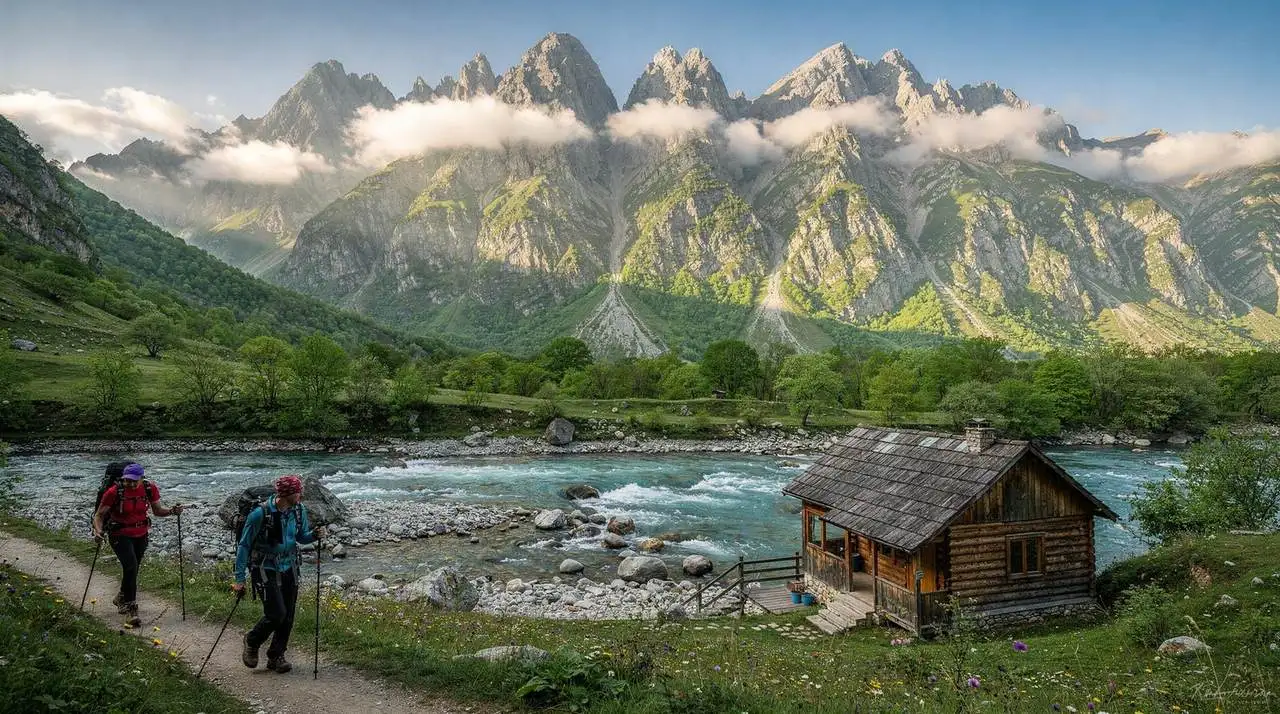
The Albanian Alps — known locally as Bjeshkët e Namuna, “the Accursed Mountains” — are one of Europe’s great mountain wildernesses. Dramatic limestone peaks, traditional stone guesthouses, ancient highland villages ruled for centuries by the Kanun (the Albanian customary law code), and some of the most spectacular mountain scenery on the continent make northern Albania a destination that is only now beginning to appear on serious hikers’ radars. This seven-day itinerary covers the essential north: from Shkodra’s lakeside history through the legendary Koman Lake ferry to the alpine valleys of Valbona and Theth.
Note: this itinerary requires moderate fitness for Day 5 (the Valbona-to-Theth trek, around 14 km and 1,200 m elevation gain). Non-hikers can take a vehicle over the Valbona Pass instead. For a detailed trekking guide, see the Theth and Valbona trekking itinerary. For a route combining north and south, see the 10-day complete Albania itinerary.
| Where | Tirana, Shkodra, Koman Lake, Valbona, Theth |
| Cost | Around EUR 235–690 per person (budget to mid-range) |
| Time needed | 7 days; Day 5 requires moderate fitness (or a 4WD alternative) |
| Getting there | Tirana International Airport, then bus north to Shkodra |
| Best time | June–September (mountain pass conditions dependent) |
Overview
- Day 1: Tirana — arrival and sights
- Day 2: Tirana to Shkodra
- Day 3: Shkodra and surroundings
- Day 4: Koman Lake ferry to Valbona
- Day 5: Valbona to Theth (trek or vehicle)
- Day 6: Theth — waterfalls, Blue Eye, and Grunas Canyon
- Day 7: Return to Tirana via Shkodra
Day 1: Tirana — Arrival and Orientation
Afternoon/Evening
Fly into Tirana International Airport and settle into your accommodation in the city centre. Tirana is the perfect decompression chamber before heading into the Albanian Alps: energetic, colourful, and very easy to navigate.
Spend the afternoon at Skanderbeg Square and the surrounding streets. Visit the National History Museum (700 lekë) for essential context on Albanian history — understanding the communist era and the historical geography of northern Albania makes the villages and the Kanun traditions far more comprehensible.
Have dinner in Blloku. Traditional Albanian food — tave kosi (lamb baked with eggs and yoghurt), tavë dheu (a baked meat dish), fërgësë — at Oda Restaurant or similar tavernas in the centre. Budget 1,500–2,500 lekë for a full dinner with raki.
If you have more time in the capital before heading north, the Tirana destination page and the where to stay in Tirana guide cover neighbourhoods and sights beyond this short first evening, and the 3 days in Tirana itinerary lays out a fuller city stay.
Use the evening to confirm your accommodation bookings in Valbona and Theth. Guesthouses in both valleys fill up fast in July–August; book at least a week ahead in peak season.
Day 2: Tirana to Shkodra
Morning: Travel to Shkodra
The bus from Tirana to Shkodra takes approximately 2 hours and costs 400 lekë. Multiple daily services depart from the northern bus terminal near the train station. Shkodra is 110 km north of Tirana, close to the border with Montenegro and Kosovo.
Shkodra — known in Albanian as Shkodër — is one of Albania’s oldest and most significant cities, with a history stretching back to Illyrian times. It sits at the confluence of the Buna and Drin rivers at the southern end of Lake Shkodra — the largest lake in the Balkans, shared with Montenegro. The city has a compact historic centre, a remarkable castle, and a lively cycling culture (Shkodra has more bikes per capita than any other Albanian city).
Afternoon: Rozafa Castle
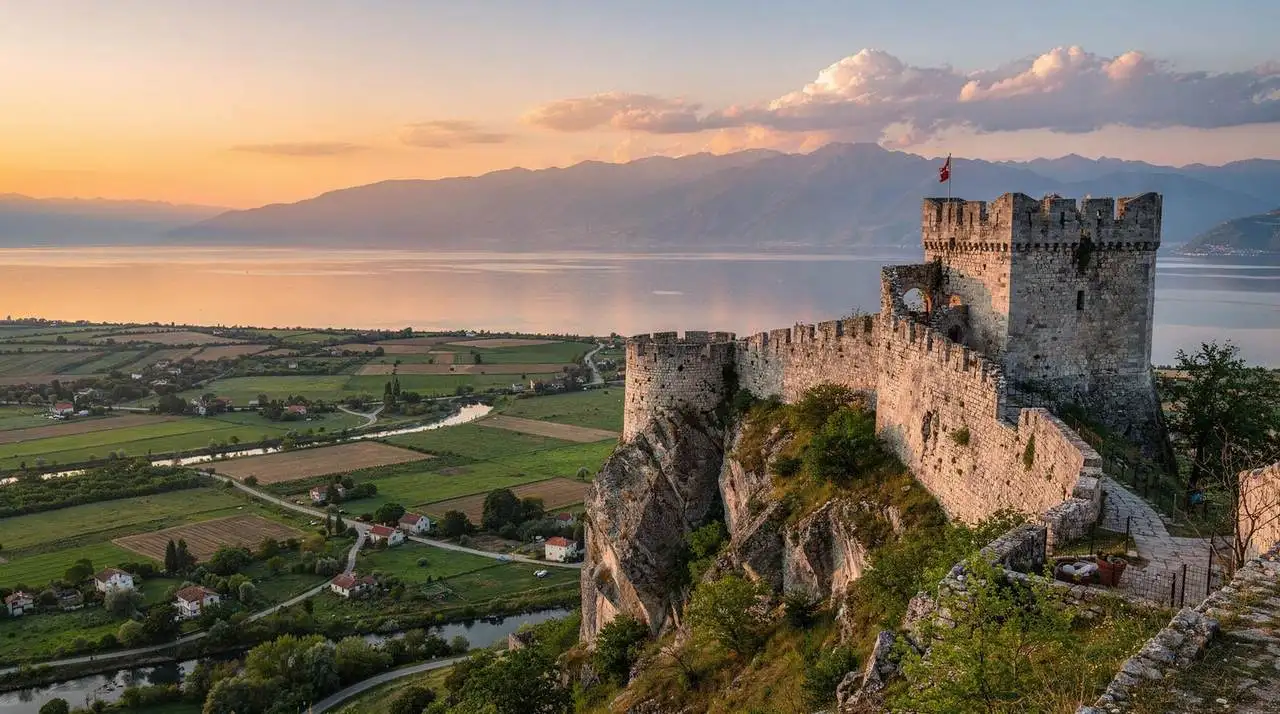
Rozafa Castle — the great Illyrian-era fortress on a rocky promontory above the confluence of the Buna, Drin, and Kiri rivers — is Shkodra’s dominant landmark and one of the finest castle sites in Albania. Climb to the upper ramparts for exceptional views over the lake and the three rivers meeting below; on a clear day the mountains of Montenegro are visible to the north.
The castle is associated with the legend of Rozafa — a woman said to have been built into the walls to ensure the castle’s foundations held fast, in a story that parallels similar foundation sacrifice legends across the Balkans. The small museum inside is worth a visit. For more places to eat and sleep in town, see the best restaurants in Shkodra and where to stay in Shkodra, and for outings beyond this itinerary, the day trips from Shkodra guide. The wider Lake Shkodra area rewards a slower look if you have spare time.
Evening: Lake Shkodra Promenade
Walk along the lake promenade at sunset — the light on Lake Shkodra in the late afternoon, with the castle reflected in the water and the Albanian Alps visible beyond, is one of the great views of northern Albania. Shkodra has a good selection of restaurants; Restaurant Piazza and several fish restaurants near the lake serve fresh lake fish (carp, trout, eel) at reasonable prices.
Day 3: Shkodra — Day of Exploration
Morning: Marubi National Photography Museum
The Marubi Museum houses the extraordinary archive of the Marubi family — Italian-Albanian photographers who documented Albanian life from the 1850s through the communist era. The collection contains over 500,000 photographs and negatives and is one of the most important photographic archives in the Balkans. The museum building itself is beautiful; allow 1.5–2 hours. Entry 500 lekë.
Afternoon: Shala River and Koman Lake Exploration
Join a Koman Lake and Shala River boat tour from Shkodra — this is one of the most spectacular half-day trips in Albania, travelling by boat along the Shala River canyon (dubbed “the Maldives of Albania” for its impossibly turquoise water) and into the dramatic reservoir of Koman Lake. Tours typically depart in the morning and return by mid-afternoon.
The Shala River gorge — sheer limestone cliffs plunging into water so blue-green it looks photoshopped — is the most photogenic stretch of the entire northern Albania journey. Tour boats moor at a riverside platform where you can swim, cliff-jump (with caution), and eat grilled meat at the basic but excellent restaurant.
Evening: Prepare for the Alpine Journey
Pack for the mountains tonight — several days without shops means you need: snacks, sunscreen, a good rain layer, and cash in small denominations for guesthouse payments. Most Valbona and Theth guesthouses operate on cash only.
Book your ferry ticket for the Koman Lake crossing tomorrow: the public ferry departs Koman at approximately 9am; the private Berisha ferry company runs a more comfortable and slightly later service. Consult your Shkodra guesthouse for current schedules.
Day 4: Koman Lake Ferry to Valbona
Morning: The Koman Lake Ferry — One of Europe’s Great Journeys
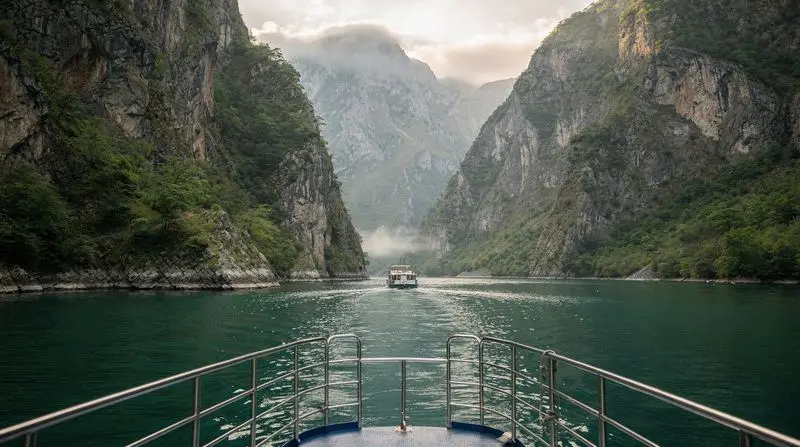
Rise early. A shared taxi from Shkodra to the Koman ferry terminal takes about 1.5 hours (1,000–1,500 lekë, arranged through your guesthouse or at the bus station). The ferry ride from Koman to Fierza takes approximately 2.5 hours through what is genuinely one of the most spectacular landscapes in Europe: a narrow reservoir carved into the limestone mountains of northern Albania, with sheer cliffs rising from the water, abandoned villages visible on ledges high above, and an atmosphere that is completely unlike anywhere else.
Book a combined Koman Lake and Shala River tour from Shkodra for the most relaxed version of this journey, with all transport included.
For more on schedules and what to expect on board, read the Koman Lake ferry guide and the Koman Lake destination page; the Koman ferry experience blog post is a first-hand account of the crossing.
The ferry is used by locals as much as tourists — villagers bring supplies, motorcycles, and livestock; the whole scene has an atmosphere of a world apart. Arrive early and sit at the bow for the best views.
Afternoon: Arrive in Valbona
From the Fierza ferry landing, a shared taxi or minibus runs to Valbona — approximately 1 hour through increasingly dramatic mountain scenery. Valbona Valley National Park is a glacially carved valley surrounded by limestone peaks reaching over 2,500 metres. The valley floor is covered in beech and pine forest; the peaks above are bare limestone, snowcapped until June.
Check into your guesthouse (most are family-run affairs with home-cooked meals included in the price — half-board at 3,500–5,000 lekë per person is common and excellent value). Spend the afternoon acclimatising: short walks along the valley floor, dipping feet in the glacially cold Valbona River, and eating a tremendous home-cooked dinner.
The most famous guesthouse in Valbona is run by American-Albanian adventurer Catherine Bohne, who largely put Valbona on the map for international visitors. Her operation is slightly more expensive but offers good information and transport connections.
Evening: Guesthouse Dinner
Guesthouse dinners in Valbona are one of the genuine pleasures of northern Albania: long tables, multiple courses of home-grown food (vegetable salads, white bean soup, roasted lamb or chicken, local cheese, homemade raki), and conversation with other travellers from across Europe and beyond. This is where you gather information about the trail for tomorrow.
Day 5: Valbona to Theth — The Crossing
The Trek
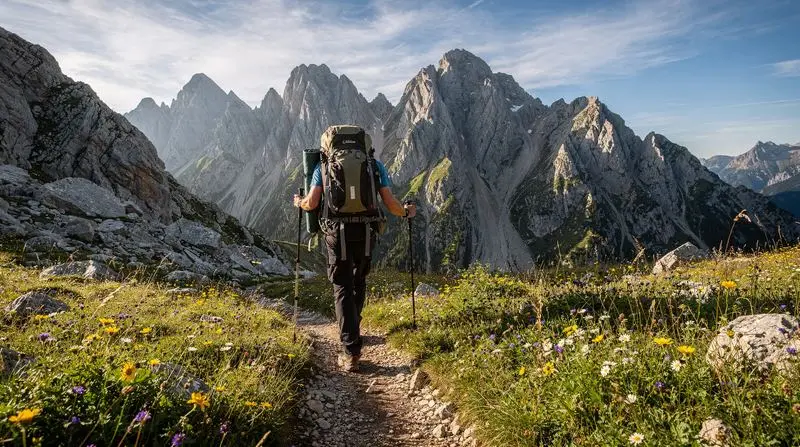
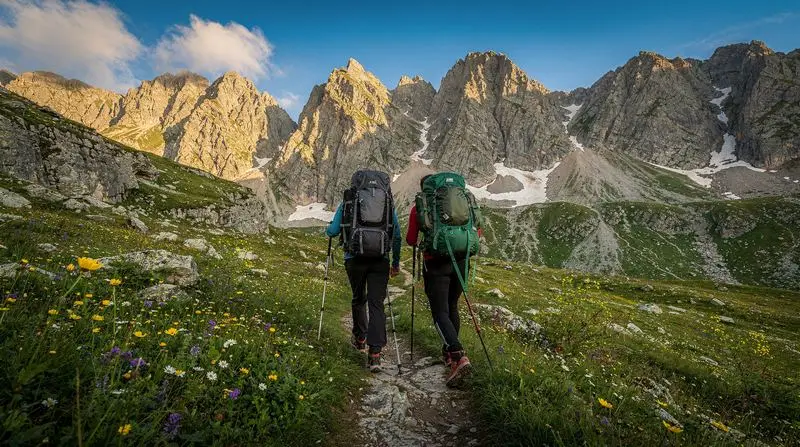
The Valbona-to-Theth trek is the most famous day hike in Albania and one of the best mountain walks in the Balkans. It covers approximately 14 km (8.7 miles), ascends 1,200 metres to the Valbona Pass (1,800 m), and descends 800 metres into the Theth Valley. Allow 6–8 hours of walking time plus breaks; the full day from early morning departure to Theth guesthouse arrival is typically 9–10 hours.
Book a guided Valbona-Theth crossing tour — a 3-day trip that handles all logistics and includes the Koman Lake approach, making this the easiest way to experience the full north Albania mountain circuit.
Start by 7am at the latest; the trail initially follows the Valbona River through forest before ascending steeply to the pass. Navigation is straightforward in good weather using the red-and-white waymarks of the Peaks of the Balkans trail. The pass itself offers extraordinary 360-degree views; on a clear day you can see into Montenegro and Kosovo.
The descent into Theth is steep and loose underfoot for the first section; trekking poles are strongly recommended. The Theth Valley opens up gradually, becoming greener and lusher as you descend, with the distinctive stone kulla towers and water mills visible below.
Non-hiking alternative: A 4WD vehicle can cross the pass via a rough road (impassable in wet weather and often in June before the road is cleared). Arrange this through your Valbona guesthouse; cost approximately 6,000–8,000 lekë per vehicle.
Evening: Theth
Arrive in Theth and check into your guesthouse. Theth is a scattered highland village in a valley of extraordinary beauty, its vernacular architecture of stone houses and wooden shingles little changed over centuries. Eat well, sleep deeply. The Theth destination page and the guesthouses in the Albanian Alps guide give more background on where to stay, and the Theth and Valbona hike guide and personal hike story describe the crossing from the trail’s point of view.
Day 6: Theth — Waterfalls, Canyon, and the Lock-In Tower
Morning: Grunas Waterfall and Canyon
Theth’s immediate surroundings offer excellent half-day walks. The Grunas Waterfall is a 30-metre cascade a short walk from the village centre — the path is marked and takes about 45 minutes each way. The gorge above the waterfall is dramatic.
The Grunas Canyon — a narrow slot canyon below the waterfall — can be explored on foot in dry conditions; it’s impressively claustrophobic and beautiful.
Afternoon: The Blue Eye of Theth and Kulla
Don’t miss Theth’s own Blue Eye (different from the more famous one near Saranda) — a turquoise pool fed by a spring in the valley floor, popular for swimming in summer. From the Blue Eye it’s a short walk to the Kulla e Ngujimit (Lock-In Tower) — a stone defensive tower where feuding families historically sheltered men under threat of blood vengeance, as specified by the Kanun customary law. This is one of the few surviving examples open to the public and gives a remarkable insight into the highland culture that shaped northern Albania.
Evening: Last Night in Theth
Your last night in Theth. Guesthouse dinners continue to be excellent; local raki (often made from plums or grapes at home) appears at every table. Arrange your transport for the morning — most travellers take a shared 4WD taxi from Theth to Shkodra (approximately 2.5–3 hours on a rough mountain road, 2,000–3,000 lekë per person). The road crosses the dramatic Theth gorge with views that make the rough sections entirely worthwhile.
Day 7: Return to Tirana
Morning: Theth to Shkodra
The 4WD ride from Theth to Shkodra via the gorge road is itself an experience — bumpy, slow, and staggeringly beautiful. The road descends through pine forest with sheer drops and river crossings before eventually reaching asphalt near Bogë and continuing through the mountains to Shkodra. Arrive in Shkodra by late morning.
Afternoon: Return to Tirana
Bus or shared taxi from Shkodra to Tirana: 2 hours, 400 lekë by bus. Arrive in Tirana by mid-afternoon with time for a final coffee or meal in Blloku before heading to the airport.
Airport transfer: Taxi from city centre to Tirana International Airport approximately 2,500–3,000 lekë (20–25 minutes in normal traffic; allow 45 minutes during rush hour).
Where to Stay
Tirana (1 night): Any central hostel or guesthouse — you won’t be spending much time here.
Shkodra (2 nights): Hotel Kaduku (budget/mid-range), Hotel Rozafa (mid-range), Hotel Tradita (comfortable, traditional style).
Valbona (1 night): Guesthouse Bujtina e Lugut, Guesthouse Margjeka — both serve excellent home-cooked food and can arrange ferry/transport connections.
Theth (2 nights): Guesthouse Polia, Guesthouse Gjeloshi — most guesthouses in Theth are family-run and include breakfast and dinner. Book ahead in July–August.
7-Day North Albania Budget Summary
| Category | Budget | Mid-range | Comfortable |
|---|---|---|---|
| Accommodation (7 nights) | EUR 105–140 | EUR 245–350 | EUR 420–560 |
| Transport (all routes) | EUR 25–40 | EUR 45–70 | EUR 80–140 |
| Ferry and lake transport | EUR 10–15 | EUR 20–30 | EUR 35–50 |
| Food (guesthouse half-board) | EUR 90–120 | EUR 120–160 | EUR 160–210 |
| Guided tours | EUR 0–30 | EUR 40–80 | EUR 100–200 |
| Total 7 days | EUR 235–345 | EUR 470–690 | EUR 800–1,160 |
Note: guesthouse half-board in Valbona and Theth represents exceptional value and is usually the best and only practical meal option in the mountains.
Essential Information for North Albania
When to go: June–September for the trek. The Valbona Pass may still have snow in early June; September offers cooler temperatures and better visibility. July–August is peak season — book guesthouses 2–3 weeks ahead.
What to pack: Good hiking boots (essential for the trek), rain layer, trekking poles, headlamp, cash in small denominations, water filter or purification tablets (springs are generally safe), sunscreen.
Before you go: the Albania safety guide, the Albania packing list and the seasonal road closures guide are worth a read when planning a mountain trip.
Mobile coverage: Patchy in the mountain valleys. Download offline maps (Maps.me or AllTrails) and the Peaks of the Balkans trail map before leaving Shkodra.
The Kanun: The traditional Albanian highland law code is still culturally present in northern Albania. Ask your guesthouse host about it — the stories of blood feuds, hospitality obligations (besa), and mountain justice are fascinating and complex. Read Robert Carver’s book or Ismail Kadare’s “Broken April” before you go.
The Albanian Alps: Context and Character
The Bjeshkët e Namuna — “Accursed Mountains” — earned their Albanian name not from malevolence but from the old Slavic namur, meaning “untameable” or “wild.” They are wild: limestone peaks over 2,500 metres, glacially carved valleys, ancient forests of beech and pine, rivers so cold they turn your feet numb within seconds. The UNESCO Peaks of the Balkans transboundary park protects 90,000+ hectares across Albania, Kosovo, and Montenegro — and Albania’s section contains some of the most dramatic scenery.
The human history of these mountains is as extraordinary as the landscape. For centuries, the highland clans of northern Albania — the Kastrati, Hoti, Kelmendi, Shala, and others — governed themselves entirely through the Kanun, a customary law code attributed to the 15th-century chieftain Lek Dukagjini. The Kanun regulated every aspect of life: inheritance, marriage, blood feuds (gjakmarrja), hospitality obligations (besa), property rights, and the proper treatment of guests. The Kanun’s hospitality clause — a guest must be protected at all costs, even at the expense of the host’s life — is why travellers in these mountains have always been treated with extraordinary generosity.
The communist government largely destroyed the highland social fabric: collectivised agriculture replaced the clan structure, religious practice was banned (Albania became the world’s first officially atheist state in 1967), and many mountain families were forcibly relocated to the lowlands. The revival of highland culture since 1991 — including the reopening of guesthouses, the recognition of traditional architecture, and the growing international attention — is a genuine cultural renaissance, still very much in progress.
Valbona Valley: What Makes It Special
Valbona Valley National Park was established in 1966 — ironically, the communist government was responsible for protecting many of Albania’s most beautiful landscapes from development, if not from dam-building. The valley runs approximately 30 km from the Fierza reservoir to the closed head at the Albanian-Kosovo border.
The valley floor is remarkably level, a legacy of glacial deposits that filled the bottom of the original V-shaped valley to create a flat-floored U-shape. The Valbona River runs the length of the valley, crystal-clear and cold year-round, fed by snowmelt and underground springs. Beech forest covers the lower slopes; above the treeline, the bare limestone karst of the upper peaks catches the alpenglow in extraordinary colours at dawn and dusk.
Wildlife in Valbona includes brown bears (rarely seen but genuinely present), wolves, chamois, golden eagles, and numerous smaller mammals and birds. The forests are among the most biodiverse in Europe.
The human population of the valley is tiny — perhaps 300–400 people, all involved in agriculture, animal husbandry, or increasingly tourism. The families who run the guesthouses have been here for generations; their knowledge of the valley, the weather patterns, and the local ecology is encyclopaedic. A conversation with a guesthouse host about the changes in the valley over the past 30 years — the return of tourism, the threat from the proposed Dragobia dam, the challenges of maintaining traditional stone architecture — is one of the most interesting conversations you’ll have in Albania.
Theth: The Most Beautiful Village in Albania
Theth makes a strong claim for the title of Albania’s most beautiful village. Scattered across a wide, high-altitude valley at approximately 800 metres, surrounded by peaks rising to 2,500+ metres, with the Thethi River running through it and traditional stone-and-timber buildings dotting the meadows, it looks like a scene from a fairy tale that hasn’t been overrun yet.
The village is technically the seat of the Shala clan, one of the most storied of the northern Albanian highland clans. The Shala maintained extraordinary independence through the Ottoman centuries — their territory was never effectively subdued — and their name appears in western travellers’ accounts of Albania from the 18th century onwards.
The Church of Theth (19th century, simple stone construction) is one of the most photographed buildings in the village; its setting against the mountain backdrop is instantly recognisable. The water mills on the river (some still operational during high water season) are working examples of the pre-industrial technology that served the valley for centuries. The traditional houses — stone lower storeys, timber upper storeys, wooden shingle roofs — are an endangered building tradition; several have been restored with EU and Albanian cultural heritage funding.
Getting Between Shkodra and the Alps: A Logistics Deep Dive
The single most confusing aspect of the north Albania circuit for first-time visitors is the logistics between Shkodra and the mountain valleys. Here is the complete picture:
Shkodra to Koman ferry terminal:
- Shared taxi from Shkodra bus station: approximately 1,200–1,500 lekë per person, 1.5 hours. Arrange the evening before through your guesthouse. The taxi will pick you up at your guesthouse or at the bus station.
- Berisha Lines minibus: this company runs a service connecting with the ferry schedule. Ask your Shkodra guesthouse for current contact details.
- Private transfer: available through Shkodra-based agencies, approximately 5,000–8,000 lekë for the vehicle (split between passengers).
The Koman ferry itself: The public ferry (Berisha Lines) departs Koman at approximately 9:00am and arrives at Fierza approximately 2.5 hours later. There is one departure per day. The ferry carries foot passengers, motorcycles, and small vehicles. Buy tickets at the Koman terminal on the day; arrive by 8:30am to secure a good spot on deck. Private speedboats are sometimes available for hire; more expensive (5,000–10,000 lekë for the boat) but faster and available outside the ferry schedule.
Fierza to Valbona: Multiple shared taxis and minibuses wait at the Fierza dock for the ferry arrival. Fare to Valbona: 1,000–1,500 lekë per person. Vehicles depart when full; you should not have to wait more than 20–30 minutes for the vehicle to fill.
Valbona to Bajram Curri (if not trekking): The market town of Bajram Curri is approximately 30 minutes from Valbona by road. There are additional accommodation options and restaurant choices here, though Valbona guesthouses are significantly more atmospheric.
Theth return: Shared 4WD taxis from Theth to Shkodra are the standard return. The vehicle and time must be arranged the evening before through your Theth guesthouse — the host will call a trusted driver and confirm the pickup time (usually 7–8am). Cost: 2,000–3,000 lekë per person. The drive takes 2.5–3 hours on the mountain road.
If You’re Not Confident About the Trek
The Valbona-to-Theth crossing is the centrepiece of this itinerary, but it’s not the only way to experience both valleys. If you’re unsure about your fitness or simply prefer not to commit to a 7–9 hour mountain day, the 4WD alternative covers the same pass on the same day, giving you the dramatic high-altitude views from the vehicle without the physical demand — many travellers do one direction on foot and the other by vehicle, or skip the walk entirely and still consider the trip a success. The road is rougher and slower than it sounds, so it’s not a “cheat” so much as a different, equally memorable way to cross the same mountains.
If mobility or time is a bigger constraint, an alternative structure skips Theth altogether: stay a second night in Valbona instead, using the extra day for a shorter valley walk (the approach toward the Valbona Pass as far as the treeline and back, roughly 3–4 hours round trip) rather than the full crossing. You’ll miss Theth’s waterfalls and Lock-In Tower, but you’ll still get the ferry, the valley, and genuine mountain guesthouse culture — the essential character of this itinerary — without the demanding trek day. See the hiking Albanian Alps guide for a full breakdown of trail difficulty and alternatives across the region.
Alternative Bases: Should You Stay Longer in One Valley?
This itinerary splits mountain time evenly between Valbona (1 night) and Theth (2 nights), which suits most first-time visitors well since it covers both valleys’ distinct character — Valbona’s open, glacier-carved floor versus Theth’s tighter, more scattered village landscape. Travellers who fall in love with one valley over the other, which happens often, can rebalance in either direction on a return trip: Theth has more short walks (waterfalls, the Blue Eye, the canyon) to fill a longer stay, while Valbona’s appeal is more about the valley’s calm and the approach to the pass itself.
If you have flexibility and want to add a rest day, the best place to add it is Theth on Day 6, extending to two full days there rather than one — it has slightly more to see at a relaxed pace, and it’s the more physically demanding day (Day 5) that benefits most from a lower-key day immediately afterward rather than an early departure.
Food in the Mountains: What to Actually Expect
Guesthouse half-board in Valbona and Theth deserves more than a passing mention, since it shapes the whole rhythm of Days 4 through 6. There are no independent restaurants and no shops selling prepared food in either valley — your guesthouse’s breakfast and dinner are the only practical meal options, and they are consistently excellent: multiple courses built from what the family grows and raises, served at a long communal table shared with whichever other travellers happen to be staying that night. Expect fresh bread, white bean soup, a vegetable salad, roasted or stewed meat (usually lamb or chicken), local cheese, and homemade raki, all included in the half-board price of roughly 3,500–5,000 lekë per person per night.
Lunch on trekking and travel days is typically whatever you carry — pack snacks, dried fruit, and nuts from Shkodra or Tirana before heading into the mountains, since there’s nowhere to buy them once you’re past Koman. Vegetarians are generally well accommodated (the bean soups, cheese, and vegetable dishes are naturally meat-free), but let your guesthouse know in advance if you have specific dietary needs, since the kitchen is cooking for the whole table rather than offering a menu.
Note that half-board pricing usually covers only breakfast and dinner, not the packed lunch you’ll want for the crossing day itself — ask your Valbona guesthouse the evening before whether they can prepare a trail lunch, since most do this routinely for hikers and it’s far more reliable than trying to source food along the trail.