Street Food in Albania: The Essential Guide to Eating on the Go
Albanian street food is one of the great bargain food experiences in Europe. In a country where the average meal at a traditional restaurant already represents extraordinary value by Western standards, the street food layer goes further still: some of the best eating in Albania happens at pavement grills, bakery windows, and market stalls for prices between one and three euros per portion.
The street food culture here is not a tourist industry — it is how Albanians have always eaten when they are away from home, in a hurry, or simply in the mood for something quick and satisfying. The result is food that is made efficiently and eaten unpretentiously, without any of the self-consciousness that accompanies street food scenes in cities where food trucks and artisanal vendors have become an attraction in themselves.
This guide covers everything worth seeking out, from the essential byrek that appears at every corner to regional specialties that most visitors never find.
| Must-try | Byrek, qofte, sufllaqe, petulla |
| Typical price | EUR 1-3 per portion |
| Daily budget eating | Around EUR 5-10/day |
| Best area | New Bazaar (Pazari i Ri), Tirana |
| Hygiene | Generally safe — pick busy, high-turnover stalls |
Byrek: Albania’s Greatest Street Food
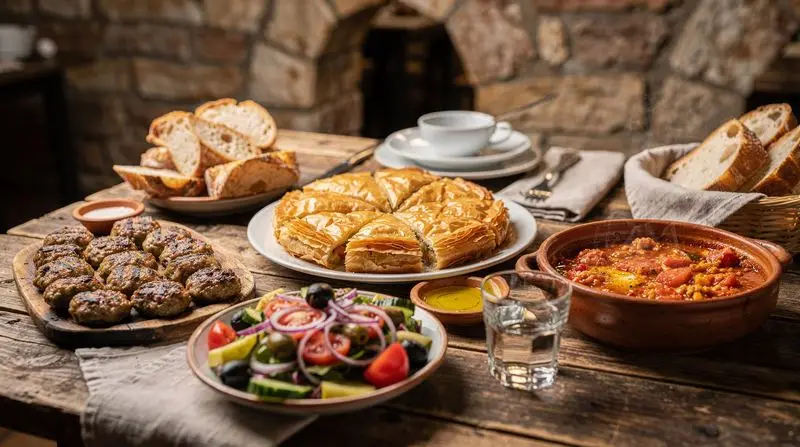
Byrek is the food that Albania runs on. Available from dedicated byrek shops, bakeries, and market stalls from early morning until late afternoon, it is the default breakfast, the quick lunch, and the reliable between-meal snack for Albanians across the country. Understanding byrek properly means understanding both what it is and how it varies.
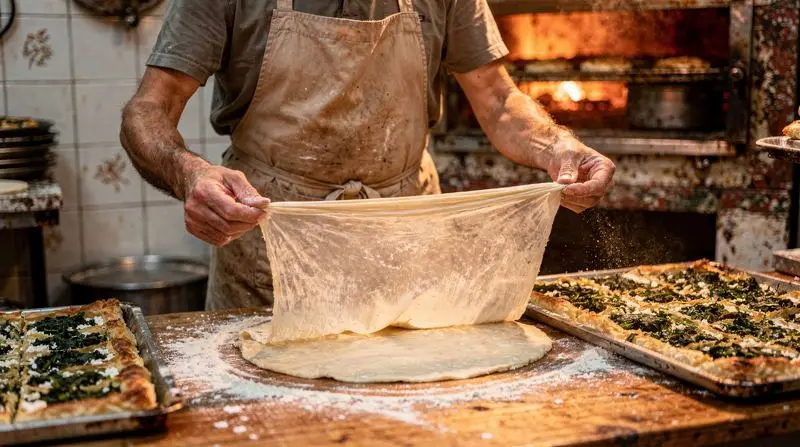
At its best, byrek is a layered filo pastry pie, made with dough that is pulled by hand until translucent, layered with filling, rolled or folded, and baked until golden and shatteringly crisp on the outside while remaining steamy and yielding within. The key to exceptional byrek is the hand-pulled pastry: filo made in this way has a delicacy and a slightly uneven texture that pre-manufactured filo never achieves.
The fillings divide broadly into savory categories. Byrek me djath (with white cheese) is the most popular and usually the best introduction: the mild, salty cheese melts into the hot pastry layers and creates something simple but deeply satisfying. Byrek me spinaq (with spinach and egg) has a more pronounced flavor and is particularly good when the spinach is fresh rather than frozen. Byrek me mish (with meat) uses seasoned ground beef or lamb, often with onion. Some bakeries also produce versions with leek, pumpkin, or potato, which appear seasonally.
The best byrek in Albania is found in dedicated burekxhi (byrek shops) that specialize exclusively in pastry rather than attempting a broader menu. In Tirana, several legendary byrek shops have operated in the same locations for decades and maintain a consistent standard. The New Bazaar area has some of the city’s best. Arriving before noon gives the best chance of finding freshly baked byrek; by mid-afternoon, what remains has often been sitting for hours.
Price: 100-150 lek (roughly EUR 1 to EUR 1.30) per piece.
Qofte: Grilled Meatballs from the Street
Qofte are small minced meat patties or sausage-shaped rolls, grilled over charcoal or on a flat iron plate, and eaten wrapped in fresh bread with yogurt sauce and pickled vegetables. They are sold from dedicated qofte grills, from market stalls, and as part of the standard menu at traditional Albanian restaurants.
The street version of qofte is made from a mixture of beef and lamb (occasionally just one or the other) seasoned simply with onion, parsley, salt, and sometimes dried mint. The mixture is formed by hand into small shapes — typically 5-8 cm long — and grilled quickly over high heat so the outside develops a slight char while the inside remains just cooked through. Eating them within minutes of leaving the grill is essential; qofte that have sat cooling become dense and much less enjoyable.
The accompanying bread is a flat, slightly chewy Albanian roll called bukë. The yogurt sauce (salce kosi) made with garlic and drained yogurt provides acid and richness. Turshi (pickled vegetables — usually cucumber, peppers, and carrot) adds crunch and vinegar sharpness. Together, these components create a satisfying meal that costs well under EUR 3 for a full portion.
Qofte grills are active from midday through the evening in Albanian cities and towns. The smell of charcoal and grilling meat is one of the defining sensory experiences of walking through Albanian streets in the afternoon.
Sufllaqe: The Albanian Doner
Sufllaqe (pronounced soof-LAH-cheh) is the Albanian version of the doner kebab, and like the original, it is the universal late-night food. Meat — usually chicken, beef, or a mixture — is cooked on a vertical rotating spit and sliced into thin pieces that are stuffed into either a thin flatbread or a pita-style bread with yogurt sauce, tomatoes, cucumber, and sometimes French fries.
The Albanian version differs from Turkish or Greek doner primarily in the bread (thinner and more crepe-like in the Albanian style) and the sauces used (the yogurt-based salce kosi is more prominent than tahini or tzatziki). The meat is often more generously seasoned with paprika and dried herbs than equivalent preparations in neighboring countries.
Sufllaqe shops operate late — often until 2am or 3am in Albanian cities — and cluster near bars and clubs in the entertainment districts. A large sufllaqe with everything costs around 300-400 lek (EUR 2.50-3.50), making it extremely affordable even by Albanian standards.
The best sufllaqe is made by shops that cook their own meat in-house and rotate the spit continuously rather than keeping pre-sliced meat under heat lamps. Freshly cut meat from an actively turning spit is noticeably superior and worth the slight wait that busy shops sometimes require.
Petulla: Fried Dough for Breakfast and Beyond
Petulla is a fried dough that deserves far more international recognition than it receives. Made from a simple batter of flour, water, yeast, and salt, it is fried in hot oil until puffed and golden, then served immediately while still crisp at the edges and fluffy within. It is primarily a breakfast food but appears at any hour in household cooking and at certain market stalls.
The standard accompaniments are a bowl of white cheese (djath) for dipping, sour cream (ajkë), or honey. In some parts of Albania, petulla is served with jam. The combination of hot fried dough with cold, salty cheese is straightforward in a way that is entirely satisfying — a reminder that the best breakfast foods rarely require complexity.
Petulla is made primarily in Albanian homes and by certain market vendors rather than in dedicated shops. If you are staying with an Albanian family or in a traditional guesthouse (bujtina) in the mountains, petulla is a likely breakfast option. Finding it in the street food sense requires more luck than byrek or qofte, but the market areas in larger cities usually have at least one vendor.
Mishelqe and Ballokume: Sweet Street Eats
Albanian street food is not exclusively savory. Several sweet preparations appear in market and festival contexts.
Mishelqe is a soft, sweet pudding made from wheat flour cooked slowly in butter and sugar, with a slightly grainy, caramel texture. It is made for special occasions and at religious festivals and appears occasionally at market stalls. The flavor sits between a thick caramel sauce and a soft halva.
Ballokume is the cookie of Elbasan — a crumbly, corn flour and butter biscuit associated with the Dita e Veres (Summer Day) spring festival but sold in Elbasan and Tirana bakeries year-round. It is not particularly sweet and has a slightly gritty texture that sounds unappealing but works very well. Ballokume does not stay crisp for long after baking; the fresh version from a bakery is far superior to packaged versions.
Akullore (ice cream) is sold from carts and kiosks throughout Albania in the warmer months. The quality varies, but several Albanian producers make flavored ice cream using local fruit (figs, mulberry, citrus from the south) that represents genuinely good artisanal production.
Market Eating: The New Bazaar and Its Equivalents
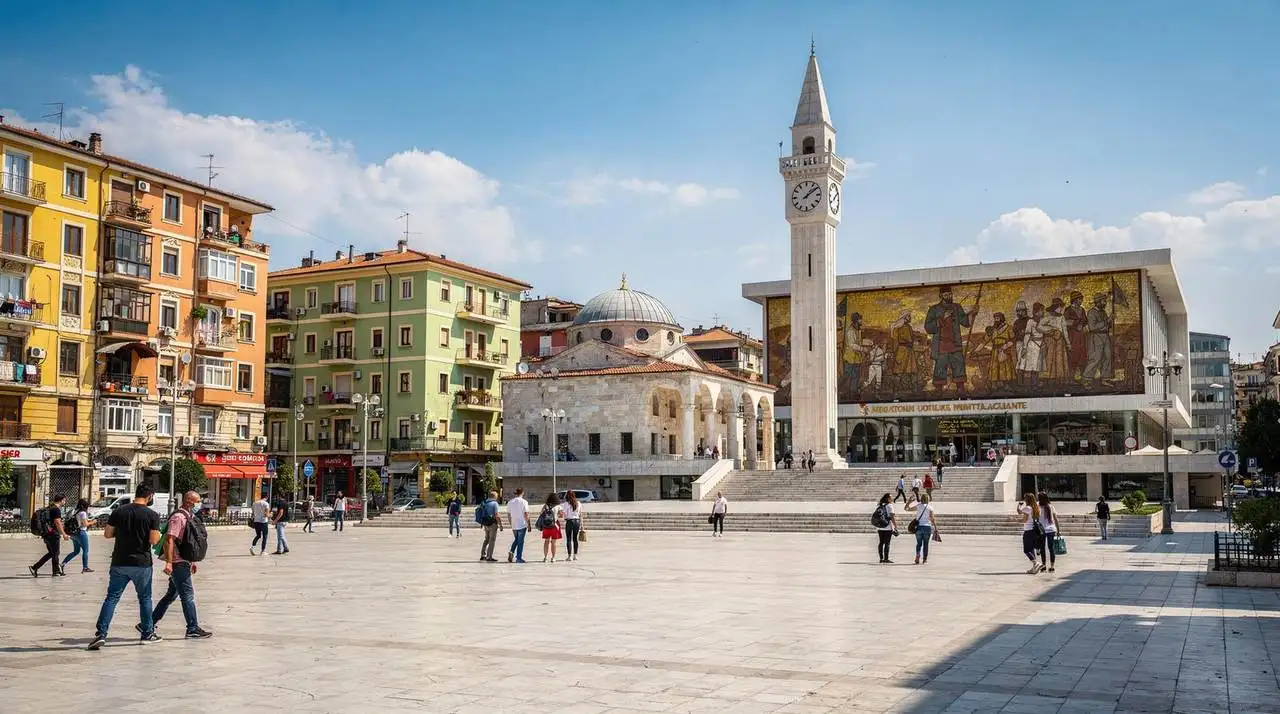
The covered and outdoor market stalls in Albanian cities represent the highest expression of street and quick-service food in the country. The Pazari i Ri (New Bazaar) in Tirana is the premier example: a revitalized historic market where food stalls, restaurants, bakeries, and produce vendors combine to create a food environment of extraordinary variety.
Walking the New Bazaar at lunchtime means navigating competing smells of fresh byrek, grilling meat, roasted peppers, aged cheese, and freshly ground coffee. The food stalls on the upper terrace level serve full Albanian dishes — fergese, tave elbasani, grilled fish — at prices comparable to the street food around them. A meal here costs EUR 4-8 including a drink and represents some of the best value eating in the capital.
Shkodra’s old bazaar, Gjirokastra’s Old Bazaar, and Berat’s market areas offer similar experiences at a smaller scale. The principle is the same: market food is fresh, seasonal, honest, and inexpensive.
This Tirana local food experience walking tour visits the New Bazaar alongside street food stalls and traditional shops, providing a guided framework for understanding the city’s quick food culture that independent exploration takes longer to develop.
Seasonal Street Foods
Albanian street food is more seasonal than the year-round items described above might suggest. Several preparations appear only at certain times of year or in connection with specific festivals.
Roasted corn (misri i pjekur) appears on street grills from late summer through autumn, the ears charred over charcoal and eaten with salt. It is simple but very good when the corn is at its seasonal peak.
Chestnuts (gështenja) are sold from street roasters in October and November, particularly in Tirana and in the mountain areas where chestnut trees grow. The roasted chestnut seller is a consistent feature of the Albanian autumn streetscape.
Grilled peppers (speca te pjekura) appear in late summer, both in market stalls and as an accompaniment to grilled meats at restaurants. Albanian red peppers are exceptionally flavorful at their August and September peak, and simply charred over fire with salt and olive oil they need nothing else.
Street Food Across Albanian Cities and Regions
The street food culture varies meaningfully between Albanian cities, and understanding these regional differences enriches the experience of eating your way through the country.
In Tirana, street food is most concentrated around the New Bazaar (Pazari i Ri) and the neighborhoods immediately surrounding it. The New Bazaar itself has dedicated byrek shops, qofte grills, and market stalls selling prepared foods from early morning. The surrounding streets contain the city’s best sufllaqe shops, the longest-running qofte operations, and the small pastry and coffee stalls that serve the neighborhood’s residential population rather than visitors. The Blloku neighborhood has a different orientation — more cafe-and-bar than street-food — but the surrounding streets have working-class food stalls that pre-date the area’s fashionable transformation.
In Shkodra, the street food culture reflects the northern city’s somewhat different culinary tradition. The byrek here tends toward more layered, thicker preparations than the Tirana version. Street-cooked meats include preparations specific to the north — certain types of offal (liver and kidneys) cooked on street grills are more prevalent in Shkodra’s informal eating culture than in the south. The pedestrian street along Rruga Kole Idromeno has a mix of cafe culture and informal food stalls that represents northern Albanian urban eating at its most characteristic.
In Saranda and the Riviera towns, the street food geography shifts toward a more seafood-facing culture. Grilled fish portions, fried calamari from market stalls, and the cone-served seafood preparations that appear in the port areas in summer add a maritime dimension to the standard Albanian street food repertoire. The Saranda fish market area, described in our Saranda restaurant guide, functions partly as a street food destination in its own right.
In Gjirokastra and Berat, the UNESCO old city settings give the street food context a particular atmosphere. The byrek shops and qofte grills in the bazaar areas of both cities operate within Ottoman-era market buildings and stone-paved lanes that are genuinely historic. Eating a freshly baked byrek on a Gjirokastra bazaar step, watching the city’s daily life flow around you, is a street food experience with a dimension that the identical byrek in a modern Tirana shop does not quite match.
Hygiene and Safety
Albanian street food is generally safe to eat. The high turnover at popular stalls ensures that food does not sit for long, and the cooking methods — grilling over high heat, frying in hot oil, baking in hot ovens — effectively eliminate the food safety concerns that are sometimes associated with street food in other contexts.
The practical guidelines are the same as anywhere: prefer stalls where you can see the food being cooked to order over stalls where prepared food sits waiting; prefer busy stalls with high turnover over quiet ones; trust your eyes and nose (fresh byrek smells wonderful; byrek that has been sitting for hours does not).
Tap water in Albanian cities is generally safe to drink, which removes one of the common street food risks. In smaller villages and at outdoor festivals, bottled water is a more cautious choice.
Street Food and the Albanian Food Guide
The street food described in this guide connects directly to the home-cooking traditions and restaurant dishes of Albanian food culture. Byrek is not merely a street food — it is the foundation pastry of Albanian cuisine, made in homes, restaurants, and bakeries with the same basic technique. Qofte are not merely street food — they appear at family gatherings, restaurants, and as a central component of Albanian meat cooking. Understanding street food as an expression of the same tradition that shapes Albanian domestic and restaurant cooking adds depth to both experiences.
The Albanian food guide provides this broader context, covering the history and tradition of Albanian cooking in full. For visitors wanting to explore the food scene in depth, food tours in Albania offer guided access to the best producers and stalls across the country’s cities, with local knowledge that independent exploration takes longer to develop.
Budget Eating Across Albania
For budget travelers, Albanian street food makes it entirely possible to eat well for EUR 5-10 per day. A byrek breakfast, a qofte lunch with bread and a drink, and an evening sufllaqe covers the day’s eating at costs that would be impossible in any other European country with a comparable food quality level.
Regional Street Food Differences
Albania’s street food varies significantly by region:
Tirana street food: The capital has the widest variety. Byrek shops are on every other corner. The New Bazaar has artisan food stalls selling cured meats, aged cheeses, pickled vegetables, and prepared snacks alongside fresh produce. Sufllaqe (Albanian doner) stalls appear in the evening hours. Turkish-style simit (sesame bread rings) are sold from mobile carts near Skanderbeg Square in the mornings.
Southern coastal street food: The coast from Saranda to Himara has fresh seafood as the dominant street food mode. Grilled fish from beach vendors, fresh mussels from lagoon-side stalls near Butrinti, octopus grilled and served with lemon from harbor-side grills. The seafood street food of the south is the freshest eating in Albania.
Northern street food (Shkodra): Shkodra has a distinct food culture shaped by its Catholic heritage and Italian influence. The city has the best pizza outside Tirana. Traditionally made flija (a layered pancake baked in a specific clay pot over embers) appears at certain traditional restaurants as an almost-lost local specialty worth seeking.
Mountain village food: In Theth and Valbona, street food as a category barely exists — the guesthouse is where you eat. But the guesthouses’ packed lunches for hikers (bread, cheese, cold meat, fruit) are a form of fast food shaped by mountain practicality that is excellent in its own right.
The Best Street Food Experiences in Albania
A curated shortlist of the most memorable street food moments the country offers:
1. Dawn byrek at a Tirana bakery. The bakeries that open before 7am and pull the first byrek out of the oven at 6:30am serve the best version of this dish anywhere. The pastry is at its crispest, the filling at its freshest and hottest. Standing on a Tirana street at 7am eating a EUR 0.80 piece of fresh cheese byrek is among the most satisfying food moments available in European travel.
2. Qofte from a Berat grill. The grilled meatball stalls near the Berat bazaar area serve qofte made from local lamb with a spice mix that varies by family recipe. Eaten with fresh bread and a spoonful of yogurt, this is Albanian street food at its most essential.
3. Fresh fish at Ksamil harbor. The small fishing pier at Ksamil has occasional informal grilled fish sellers in high season — fishermen grilling their catch with olive oil and herbs directly off the boat. This is the freshest possible coastal eating.
4. Petulla at a market. Fried dough dusted with powdered sugar or drizzled with honey, sold from improvised market stalls at regional festivals and fairs. The Albanian version of fried dough that appears in food cultures from Turkey to Italy — here, made with a slightly richer dough and often accompanied by homemade white cheese.
5. Roasted chestnuts in autumn cities. From October through December, roasted chestnut vendors appear on the streets of Tirana, Berat, and Gjirokastra. A paper cone of roasted chestnuts on a cold Albanian autumn evening costs 150-200 lek and is one of the most seasonal and genuinely pleasurable street food experiences in the country.
Street Food Safety and Hygiene
A few practical notes:
Albanian street food prepared in high-turnover establishments (byrek shops with constantly replenished product, qofte grills with fresh batches cooked continuously) is generally safe. The high heat of fresh byrek from the oven and freshly grilled qofte eliminates standard food safety concerns.
Caution applies to anything sitting at room temperature for extended periods — the few stalls with food left uncovered in summer heat warrant more care. Fresh-cooked is always safer than pre-cooked sitting waiting.
Water for drinking should always be bottled. Albanian tap water is safe in major cities by treated-water standards but variability in older pipes makes bottled water the sensible default.
The Albanian food guide provides full context for Albanian cuisine beyond street food, including restaurant dining and the regional differences in cooking traditions.
Street Food Etiquette and Ordering Tips
Ordering street food in Albania is straightforward and informal — there is rarely a queueing culture in the strict sense, and stalls handle a steady flow of customers with quick, direct exchanges. Pointing at what you want works perfectly well if you don’t speak Albanian, though a few basic phrases smooth the interaction: “një copë, ju lutem” (one piece, please) covers byrek and most single-item orders, and asking “sa kushton?” (how much does it cost?) before committing avoids any ambiguity, particularly at less obviously priced stalls. Payment is almost always cash — small denominations of Lek are useful since street vendors, unlike restaurants, are not always equipped to break large notes. Eating standing up or walking is entirely normal and not considered rushed or impolite; this is, after all, food designed for exactly that use.
Street Food Price Guide
| Item | Typical price | Where to find it |
|---|---|---|
| Byrek (per piece) | 100-150 lek (~EUR 1-1.30) | Bakeries, New Bazaar, any street corner |
| Qofte with bread | Under EUR 3 | Dedicated grills, market stalls |
| Sufllaqe (with everything) | 300-400 lek (~EUR 2.50-3.50) | Late-night shops near bars/clubs |
| Petulla | Varies, market pricing | Home cooking, market festivals |
| Roasted chestnuts (autumn) | 150-200 lek | Street vendors, Oct-Dec |
Street Food and Food Tours
For visitors who want a structured, guided introduction rather than independent grazing, food tours in Albania typically build street food stops into a broader culinary walk — visiting the New Bazaar, dedicated byrek shops, and qofte grills alongside restaurant-style dishes, with local commentary on ingredients and technique that independent exploration takes longer to piece together. This is a particularly useful option for a first day in Tirana, giving you a reliable shortlist of good spots to return to independently for the rest of your trip. One small-group option is the Tirana city food tour with meals included, which works well as an orientation to local flavors on arrival.
Dietary Considerations
Vegetarians will find byrek me djath (cheese) and byrek me spinaq (spinach) reliably meat-free, and petulla is naturally vegetarian as well, making the street food layer more accommodating than it might first appear. Vegans face more difficulty, since byrek pastry is typically made with butter or animal fat and the cheese and yogurt sauces common to qofte and sufllaqe are dairy-based — asking directly (“A ka mish/gjalpë/kos?” — does it have meat/butter/yogurt?) is the most reliable way to check. For a fuller picture of how Albanian cuisine handles vegetarian and vegan needs beyond the street food layer, see the vegetarian Albania guide.
Frequently Asked Questions About Street Food in Albania
Is Albanian street food safe to eat?
Yes, generally very safe. High-turnover stalls — byrek shops constantly baking fresh batches, qofte grills cooking continuously — eliminate most food safety concerns through sheer freshness and high cooking heat. The main caution is food that has sat at room temperature for extended periods; prefer stalls where you can see food being cooked to order.
What is the cheapest way to eat well in Albania?
Combining a byrek breakfast, a qofte lunch with bread and a drink, and an evening sufllaqe covers a full day of eating for roughly EUR 5-10 — a food quality-to-price ratio that is difficult to match anywhere else in Europe. The Albania travel budget guide covers how this fits into an overall daily spend.