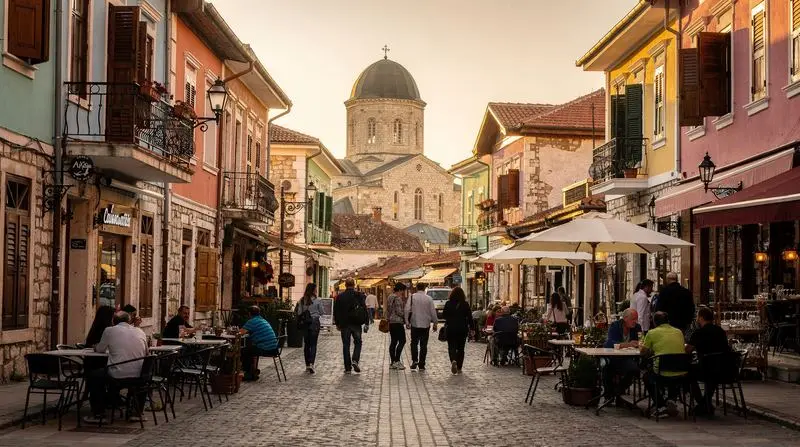
Korca City Guide: Everything You Need to Know
Korca is Albania’s most intellectually interesting city — a place that combines a genuinely distinguished cultural and educational history with excellent food, a celebrated brewery, Byzantine-era art of world significance, and a sophistication that surprises visitors who arrive expecting a provincial eastern Albanian town. The city sits at 869 metres on a broad plateau ringed by mountains, and the highland climate and altitude give it a character — cooler, greener, more measured in its pace — that distinguishes it from every other Albanian city.
This guide covers all the key attractions, activities, and practicalities for a Korca visit, including the in-city highlights and the essential day trips to Voskopoje and Lake Ohrid’s Albanian shore that complete the eastern Albania picture.
| Where | Southeastern Albania, 869m altitude, 180km from Tirana |
| Time needed | 2 days minimum, 3 with the Lake Ohrid circuit |
| Getting there | 3-3.5hrs by bus from Tirana, or 2.5-3hrs by car |
| Cost | EUR 25-50/night accommodation; museum entries EUR 2-4 |
| Best time | April-October; Beer Festival late July/early August |
The National Museum of Medieval Art
The single most compelling reason to make the journey to Korca is the National Museum of Medieval Art — the finest collection of Albanian Orthodox icons and religious art in the country, housed in an 18th-century Ottoman building in the city centre.
The collection spans from the 12th through the 19th century, with its greatest strength in the works of the Korca school of iconography — the tradition of Albanian Orthodox icon painting that flourished in the 17th and 18th centuries and produced some of the finest post-Byzantine religious art in the Balkans. The painters of the Korca school — including the celebrated David Selenicasi and his contemporaries — worked in a tradition derived from Byzantine iconography but incorporating influences from contemporary European Baroque painting, creating a distinctive hybrid style of great vitality and technical sophistication.
The icons are painted on wooden panels in egg tempera with gold backgrounds, following Byzantine compositional tradition while displaying the specific stylistic characteristics of this school: elegant elongated figures, expressive faces, complex narrative scenes arranged with a spatial depth that anticipates later painterly concerns, and a colour palette dominated by warm ochres, vivid blues, and the characteristic warm reds of the regional tradition.
Practical details:
- Entry: Approximately 300 ALL
- Hours: Tuesday-Sunday, 9am-5pm (closed Monday)
- Visit duration: Allow 60-90 minutes
- English labels: Available throughout; audio guide also available
For visitors with any interest in Byzantine art, Orthodox religious culture, or Albanian cultural history, this museum is a genuine discovery. It is rarely crowded — even in summer the visitor numbers are modest — and the quality rivals any religious art collection in the western Balkans. Visit before going to Voskopoje to provide the contextual framework for understanding the church frescoes there.
The Old Bazaar
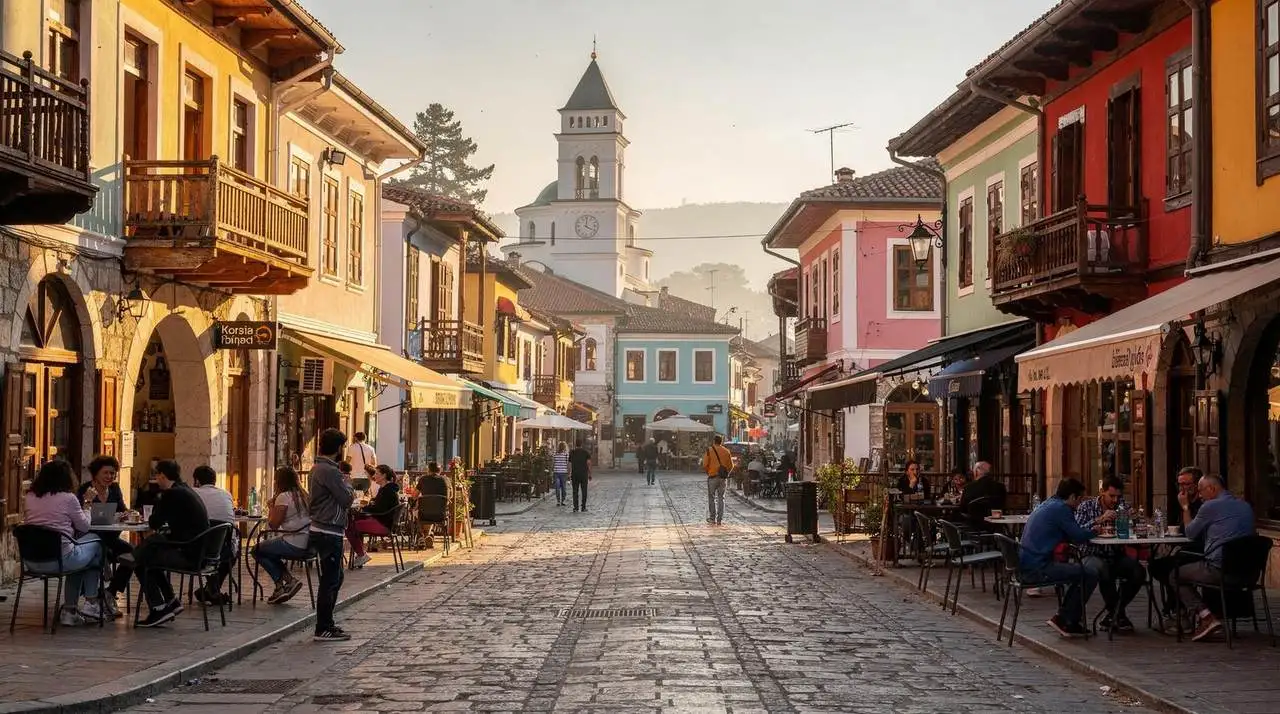
Korca’s old bazaar (pazari i vjetër) is the most visually atmospheric part of the city — a network of covered market lanes, traditional stone-fronted shops, and craftsmen’s workshops that has maintained a genuine commercial identity rather than transforming into a tourist heritage zone.
The architecture of the bazaar — arched stone entrances, wooden shuttered shopfronts, the occasional surviving carved wooden ceiling in the older interiors — represents the Ottoman commercial architecture of 18th and 19th century eastern Albania in its most intact surviving form. Walking through the bazaar in the early morning, when the shops are opening and the coffee smell mixes with the metal-working sounds from the remaining craft workshops, provides the most authentic encounter with Albanian traditional commercial life available in this region.
The bazaar sells:
- Hand embroidered textiles in the Korca tradition: distinctive geometric patterns in red and black on white cloth. These are genuinely handmade, not imported, and the quality is exceptional.
- Copper and silver work from the remaining metalsmith workshops
- Traditional pastries: sheqerpare, bakllava made with local walnuts, petanik, and the region’s distinctive lakror
- Coffee from local roasteries: Korca has a strong coffee-roasting tradition and the bazaar roasteries produce excellent blends
- Local honey from the surrounding mountain valleys
Allow at least an hour for a proper bazaar exploration. If shopping seriously for textiles or handcrafts, more time is needed — the best pieces require finding the right shop and the right maker.
For a guided exploration of the bazaar in cultural context: this Korce Walking Tour with Old Bazaar and Cathedral covers the bazaar, the Cathedral of the Resurrection, and the key architectural highlights of the city centre with an English-speaking guide. This is the best orientation for first-time Korca visitors and typically runs 2-3 hours covering the main in-city sites.
The Cathedral of the Resurrection of Christ
The Cathedral of the Resurrection of Christ is the dominant architectural presence in central Korca — a large neo-Byzantine building that dominates the skyline above the bazaar area and serves as the principal church of the Albanian Orthodox community in eastern Albania.
The history of the building mirrors the history of Albanian communism’s relationship with religion. The original 19th-century cathedral was severely damaged and partially demolished in 1967 during Enver Hoxha’s campaign to declare Albania the world’s first atheist state — a campaign that destroyed or repurposed virtually every religious building in the country. The cathedral was restored and reconsecrated in 1992 following the fall of communism, and the restoration continues to be added to with new frescoes and furnishings.
The interior frescoes, painted in the 1990s and 2000s by contemporary Albanian and Greek Orthodox artists, follow the Byzantine iconographic tradition in composition and iconography while reflecting modern execution. The overall effect is of a building in the process of becoming what it was designed to be — a work in progress that will be completed across generations.
Entry is free. A donation is appropriate. The cathedral is open to visitors outside service hours; Sunday morning services are well-attended and provide the experience of Albanian Orthodox worship in its social and liturgical fullness.
The walking tour of the bazaar and cathedral provides the cultural context that makes both more legible: this Korce walking tour connects the bazaar’s commercial Ottoman heritage with the cathedral’s religious and nationalist significance in a narrative that makes the city’s history concrete.
The Birra Korca Brewery
The Korca Brewery — Birra Korça — is Albania’s most famous beer producer and one of the few Albanian commercial products with genuine national cultural recognition. Founded in 1928 by Gjergj Ciço, a returning diaspora Albanian who had learned brewing in Romania, the brewery survived nationalisation, privatisation, and Heineken acquisition while maintaining its reputation as the finest Albanian domestic beer.
The brewery tour is one of the most enjoyable structured activities in eastern Albania. This Korca Brewery Tour with Traditional Beer Tasting takes participants through the brewing facility, explains the history of Albanian brewing, the cultural significance of the Korca brand, and includes multiple tastings of the various Korça styles. Book ahead as capacity is limited, particularly in summer.
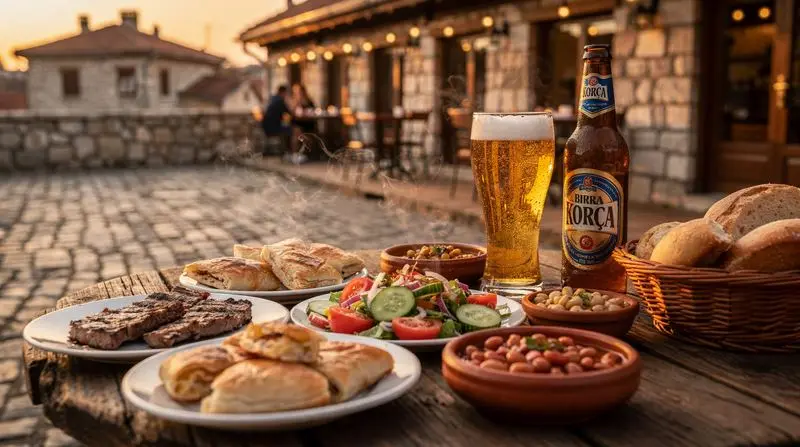
The Korca Beer Garden adjacent to the brewery is the best place in the city to drink beer. Open-air communal tables, the brewery building behind, live music on weekend evenings — the combination creates an atmosphere that is distinctive and festive, particularly in summer when the mountain air makes outdoor evening sitting genuinely pleasant. Cold Korca beer on draught, grilled Albanian food, and the brewery visible behind: this is the Korca experience at its most characteristic.
The Korca Beer Festival (late July or early August annually) transforms the city into one of Albania’s most festive destinations. The festival draws Albanians from across the country and the diaspora; accommodation books months in advance and prices rise significantly. If your visit coincides, it is worth experiencing — the atmosphere is extraordinary.
Boulevard Republika and the Evening Promenade
The main boulevard of Korca — Boulevard Republika — was laid out in French urban planning style during the French military administration of World War I. The broad, plane tree-lined avenue with a central pedestrian zone is unlike any other street in Albania: more European, more deliberately civic in its design, and reflecting the French influence that shaped Korca’s early 20th-century architectural character.
The evening xhiro (promenade) on the boulevard is one of Albania’s finest urban social rituals. From around 6pm, the boulevard fills with families, couples, young people, and the social fabric of the city on display. The cafes along the boulevard fill with espresso drinkers; the pedestrian zone becomes a slow-moving social gathering. This is not a tourist attraction — it is the city’s daily life, and visitors are simply part of it.
The boulevard cafes serve excellent coffee — Korca’s roasting tradition makes its espresso among the finest in Albania — and cold Korca beer. The combination of the French-planned setting, the mountain air cooling pleasantly from late afternoon onward, and the Albanian social warmth of the evening promenade creates one of the most agreeable urban evening experiences in the country.
Voskopoje Day Trip: The Athens of Albania
The most rewarding day trip from Korca — arguably one of the finest half-day excursions in all of Albania — is to Voskopoje, the former 18th-century city of 20,000 now reduced to a mountain village of a few hundred people, 20 kilometres southwest.
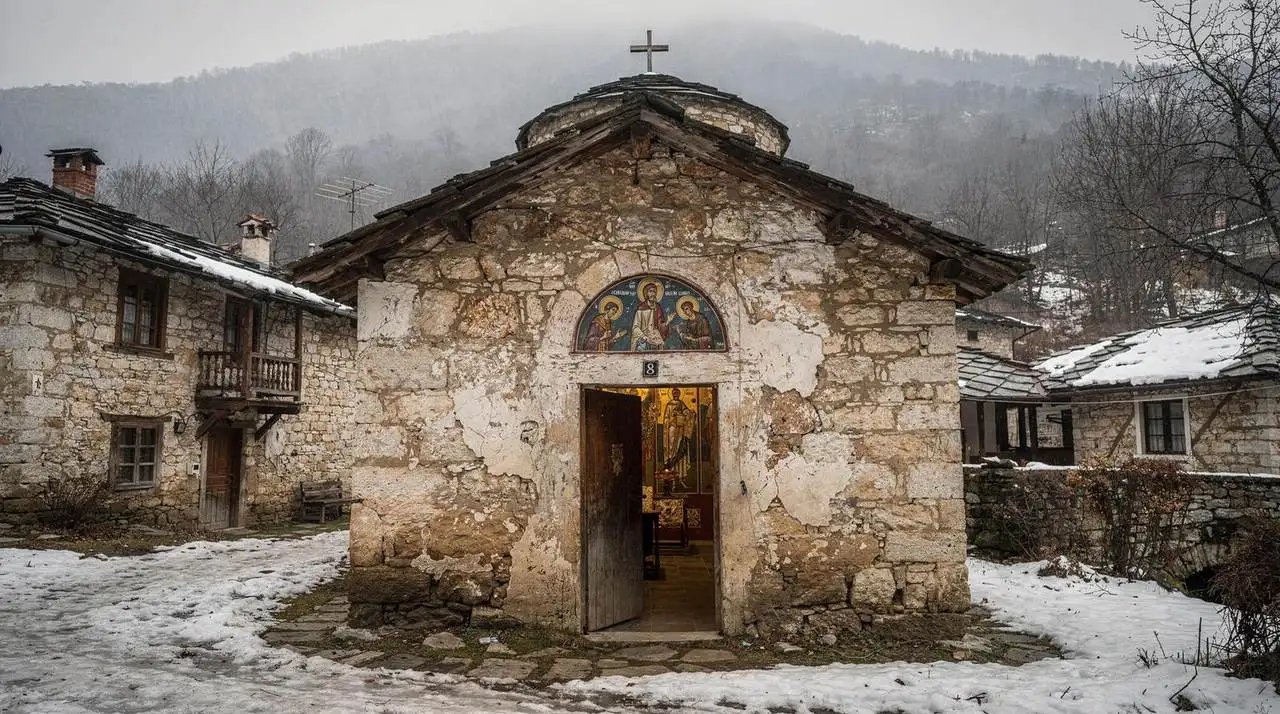
At its height, Voskopoje was one of the most important intellectual and commercial cities in the Ottoman Balkans: home to a printing press (the first south of the Danube), an Academy, and churches decorated by the finest painters of the Korca school whose frescoes rival anything in Serbia or North Macedonia for quality. The city was destroyed by Ottoman military campaigns in 1769 and 1789, and what survived is the stone churches with their intact fresco programmes.
The visit to Voskopoje works best after the National Museum of Medieval Art in Korca — the museum provides the contextual framework (the Korca school iconographers, the Byzantine tradition, the historical period) that makes the church frescoes more legible and more moving. See the museum first, go to Voskopoje second.
The drive takes 30-40 minutes on mountain roads. There is no regular public transport; a taxi from Korca negotiated for the return trip is the practical approach. Our Voskopoje guide covers the archaeological and artistic context in detail, including which churches are most accessible and what to look for in the frescoes.
Lake Ohrid Day Trip
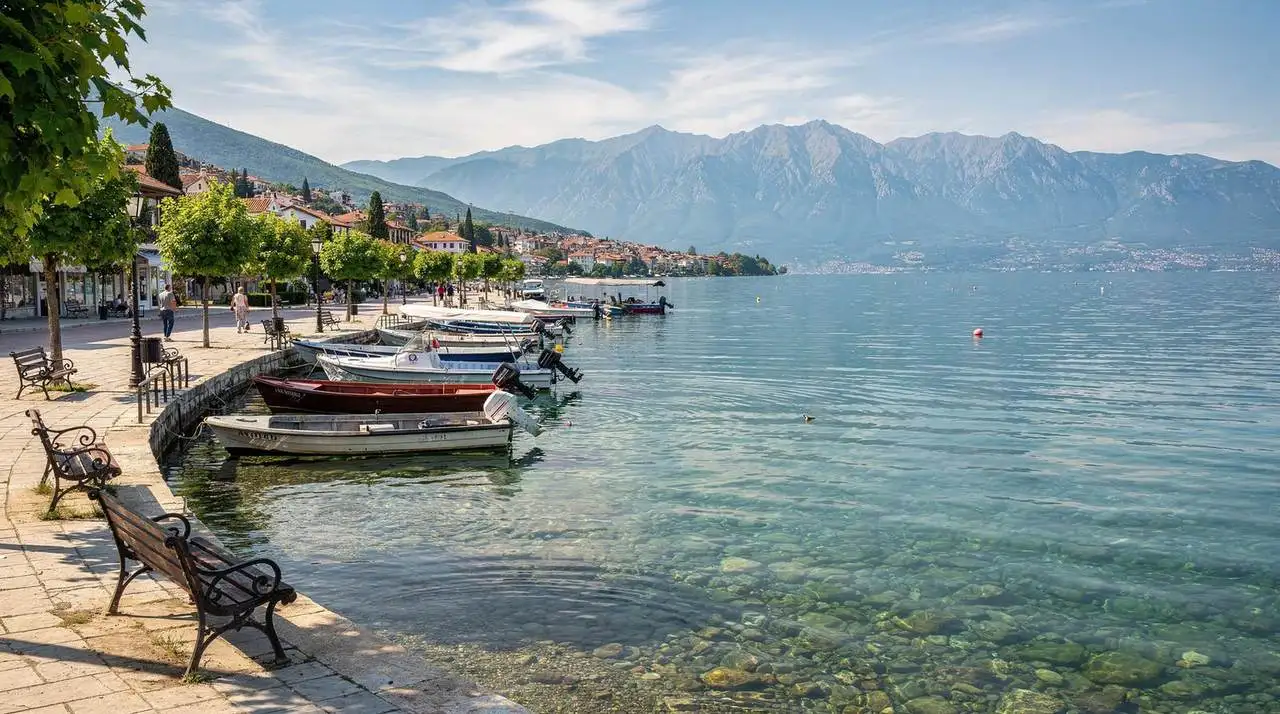
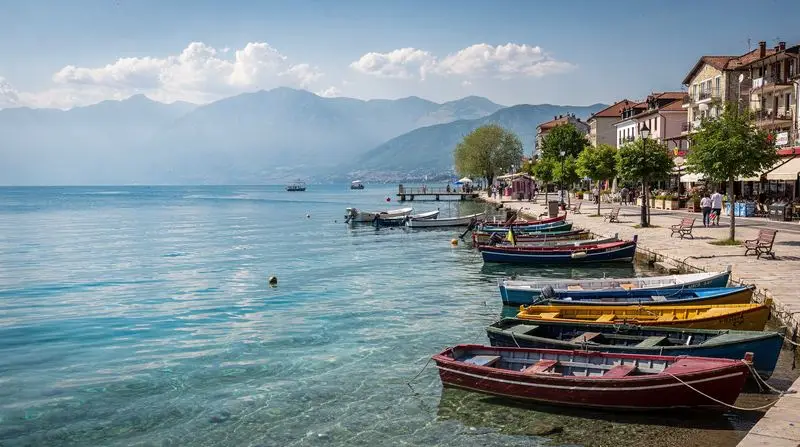
Pogradec on the Albanian shore of Lake Ohrid is approximately 55 kilometres northwest of Korca — a 60-70 minute drive through the Devolli valley. The two cities pair naturally for a complete eastern Albania circuit.
The Lake Ohrid day trip from Korca covers:
- Pogradec town: Lakeside promenade, fish restaurants, koran trout lunch
- Tushemisht village: Lake shore village with beach swimming
- Lin peninsula: Archaeological sites, Byzantine mosaics, extraordinary lake views
- Drilon springs: Natural reserve, spring channels, rowing boats
Allow a full day (8-9 hours) for the complete lake shore circuit. A rental car or a hired taxi with a full-day driver gives the most flexibility. The Albanian side of Lake Ohrid guide covers the complete itinerary in detail.
Dardha and the Mountain Villages
The mountain village of Dardha — at 1,344 metres, Albania’s main ski destination — is 14 kilometres south of Korca. In winter it provides skiing and mountain village atmosphere; in summer, hiking trails and cool-weather escape from lowland heat.
A half-day excursion to Dardha combines well with Voskopoje for a complete eastern highland day: morning at Voskopoje (churches, frescoes, village), afternoon at Dardha (mountain walk, traditional lunch), evening back in Korca for the boulevard promenade.
The Korca Food Scene
The best restaurants in Korca guide covers the city’s dining in full detail, including the brewery beer garden, the old bazaar pastry shops, and the boulevard traditional restaurants. The brief summary:
The distinctive local specialities — lakror, petanik, sheqerpare, and the Korca version of bakllava made with local walnuts — are the primary reason to eat in the bazaar area. The brewery beer garden provides the best atmosphere for an evening meal. The boulevard restaurants offer the combination of traditional Albanian highland cooking and the evening promenade setting. The local dairy (white cheese, sheep’s milk yogurt) and the Korca highland lamb are the standout ingredients that distinguish the eastern Albanian kitchen from the coastal cuisine.
The First Albanian School
A site of historical rather than architectural significance: Korca was home to the first Albanian-language school, opened on 7 March 1887 by Pandeli Sotiri. The school was a pivotal moment in the Albanian national awakening — the first formal acknowledgment that Albanian identity deserved an educational institution conducted in the Albanian language rather than Greek, Ottoman Turkish, or other regional languages.
The building associated with this event has been preserved and marked, and visiting it provides a concrete connection to the Albanian national awakening that is otherwise abstract when encountered in historical reading. This is a short stop rather than a major visit — 20-30 minutes — but it is one of the more resonant historical sites in the city for visitors interested in Albanian national identity and the intellectual tradition that Korca specifically embodies.
Practical Korca Information
Getting there:
- By bus from Tirana: 3-3.5 hours, regular daily services from Tirana South Bus Terminal. Cost around 600-700 ALL.
- By car from Tirana: Approximately 180km via Elbasan and Qafe e Thanes mountain pass; 2.5-3 hours. The mountain section is winding but fully paved.
- From North Macedonia: The Kapshtice border crossing is 30 kilometres from Korca, making it a natural entry/exit for travellers combining Albania with Ohrid.
Where to stay:
- City centre guesthouses and hotels: EUR 25-50/night for a comfortable double room
- Boulevard area preferred for walking access to the main attractions
- Beer Festival period (late July/August): Book months in advance; prices rise significantly
Climate:
- Summer: Cool by Albanian standards (23-28°C), notable relief from coastal heat
- Autumn/spring: Pleasant walking weather (12-18°C)
- Winter: Genuine cold with occasional snow; the city is functional year-round but tourist infrastructure reduces
Getting around:
- City centre attractions are walkable from any central accommodation
- Day trips to Voskopoje and Dardha require car or taxi
- Lake Ohrid day trip requires car or taxi for the full shore circuit
For the broader eastern Albania context that places Korca within the regional itinerary: the Albania off the beaten path guide covers the eastern circuit comprehensively and rates it as the single best off-mainstream experience in Albania.
Where to Stay in Korca
Korca’s accommodation is concentrated around the boulevard and the streets between it and the old bazaar — the walkable core that covers essentially everything in this guide. Budget guesthouses and mid-range hotels run EUR 25-50 for a comfortable double outside the Beer Festival period; a handful of boutique properties in restored buildings command a modest premium for character. Book well ahead for late July and early August, when the Beer Festival fills the city and prices rise noticeably. The where to stay budget guide and best boutique hotels guide cover options applicable to Korca alongside the rest of the country.
Korca as a Base for Southeastern Albania
Beyond Voskopoje, Dardha, and Lake Ohrid, Korca’s location makes it a workable base for exploring southeastern Albania more broadly for travellers with a rental car and a few extra days. The castles guide and historical sites guide both include lesser-visited eastern sites reachable within a day’s drive, and the unesco sites in Albania guide puts Korca’s cultural density in the context of the country’s protected heritage more broadly. For travellers building a longer eastern Albania itinerary rather than a single Korca stop, this is worth reading before finalising a route.
Korca’s Wine Country
The Korca plateau and the surrounding hillsides are part of Albania’s most established wine-growing region, and the connection between the city’s culture and its viticulture runs deeper than most visitors expect. Local wineries around Korca produce reds from the Kallmet grape and whites suited to the cooler highland climate — noticeably different in character from the wines of the warmer coastal regions. Several boulevard restaurants and bazaar wine bars stock these labels as house wine, and a few wineries within a short drive of the city offer tastings. The Albanian wine guide and wine tasting guide cover producers and how to arrange a visit, which pairs naturally with a Korca stay given the short driving distances involved.
Getting to Korca from the South
Travellers coming from Gjirokastra or the southern coast can reach Korca via Erseka and Leskovik on a scenic but slow mountain road, or loop back through Permet — both routes are best done with a rental car rather than public transport, since bus connections on this axis are infrequent. The car rental Albania guide covers vehicle options, and the driving in Albania guide covers what to expect on the mountain sections, which are winding but paved throughout on the main route via Elbasan.
Two-Day Korca Itinerary
Day 1:
- Morning: National Museum of Medieval Art (90 minutes)
- Late morning: Old Bazaar exploration and coffee at a bazaar roastery cafe
- Lunch: Traditional Albanian restaurant near the bazaar area
- Afternoon: Cathedral of the Resurrection; first Albanian school; Boulevard walk
- Early evening: Brewery tour (book in advance)
- Evening: Brewery Beer Garden dinner; boulevard promenade
Day 2:
- Early morning: Drive to Voskopoje (30 minutes)
- Morning: Churches and frescoes of Voskopoje (2-3 hours)
- Late morning: Drive to Dardha (30 minutes)
- Lunch: Traditional restaurant in Dardha village
- Afternoon: Mountain walk above Dardha or return to Korca
- Evening: Boulevard cafe for evening xhiro; dinner at a boulevard restaurant
Extension Day 3 (optional):
- Full day Lake Ohrid circuit: Pogradec, Tushemisht, Lin, Drilon springs
Frequently Asked Questions About Korca
How many days do you need in Korca?
Two days allows comfortable coverage of all in-city highlights (museum, bazaar, cathedral, brewery) with one day-trip to Voskopoje and Dardha. Three days adds the Lake Ohrid circuit via Pogradec and Lin, which is highly recommended. One day is sufficient only for the most rushed visit covering the museum and bazaar; the brewery and Voskopoje require more time to do properly.
Is Korca worth visiting for non-beer drinkers?
Absolutely. The beer culture is one element among many. The National Museum of Medieval Art is the finest regional art museum in Albania. The Old Bazaar is among the best-preserved in the country. The day trip to Voskopoje and its Byzantine frescoes is compelling for anyone interested in religious art, history, or extraordinary landscape. The cafe culture and boulevard evening promenade are enjoyable regardless of preference for beer. Non-drinkers lose the brewery tour element but retain the best of what Korca offers.
What is the best season to visit Korca?
April through October covers the optimal season, with spring (April-May) and early autumn (September-October) offering the most pleasant highland climate. July-August is viable — notably cooler than coastal Albania — and coincides with the Beer Festival in late July/August. Winter visits are possible and the city functions year-round, but the reduced tourist infrastructure (some guesthouses close, reduced transport frequency) requires more planning.
Can you visit Korca without a car?
Yes — buses from Tirana and Elbasan provide reliable connections. The in-city attractions are all walkable. The limitation is day trips: Voskopoje, Dardha, and Lake Ohrid all require either a rental car, a hired taxi, or joining an organised tour. A taxi hired for a full day in Korca for the Voskopoje-Dardha circuit costs approximately EUR 30-50 — very affordable by European standards and the practical solution for car-free visitors.
What is the Korca school of iconography?
The Korca school refers to the tradition of Orthodox icon painting that developed in eastern Albania during the 17th and 18th centuries, centred on Korca and the surrounding region. The painters of this school — including David Selenicasi, considered its finest practitioner — worked in the Byzantine tradition while incorporating influences from contemporary European Baroque painting. Their icons and church frescoes are characterised by elegant figures, emotional expressiveness, complex narrative scenes, and a warm colour palette. The best collection of their work is in the National Museum of Medieval Art in Korca; the finest surviving in-situ frescoes are in the churches of Voskopoje.