Albanian Riviera vs Greek Islands: The Honest Comparison
The question is heard more and more at European travel planning forums, in backpacker hostel conversations, and in travel magazine features: is the Albanian Riviera the new Greek islands? It is a comparison that makes geographic and experiential sense — both destinations offer Ionian and Aegean-adjacent water, Mediterranean climate, whitewashed scenery, and seafood-heavy cuisine. The difference is in cost, crowds, development, and what kind of traveler experience you want.
This comparison addresses the question without hype or dismissal. The Albanian Riviera is genuinely extraordinary. The Greek islands are genuinely extraordinary. They are not the same thing, and the choice between them depends on what you actually value from a Mediterranean coast holiday.
| Cost difference | Albania around 40–70% cheaper |
| Best base (Albania) | Saranda or Ksamil |
| Best base (Greece) | Corfu, for the ferry connection |
| Crossing time | Saranda–Corfu ferry, around 35 min |
| Ideal trip length to combine both | 10–14 days |
The Price Difference: 40-70% Cheaper
This is the headline fact and it deserves proper context.
Greek islands accommodation costs (peak summer 2025-2026):
- Budget hostel dorm on Santorini, Mykonos: EUR 35-60 per night
- Budget private room on Crete, Rhodes, Corfu: EUR 50-90 per night
- Mid-range hotel on popular islands: EUR 100-200+ per night
- Airbnb apartment on Santorini: EUR 150-300+ per night
Albanian Riviera accommodation costs (peak summer 2025-2026):
- Budget hostel dorm in Saranda, Ksamil, Dhermi: EUR 12-20 per night
- Budget private room: EUR 25-50 per night
- Mid-range guesthouse or small hotel: EUR 50-100 per night
- Apartment rental in Ksamil or Himara: EUR 60-120 per night
The difference is real and consistent: comparable accommodation on the Albanian Riviera costs 40-60% less than on popular Greek islands. During shoulder season (May-June, September), the Albanian advantage increases further as Greek island prices remain elevated while Albania’s prices are already at their accessible floor.
Food costs comparison:
- Greek island taverna fish dinner per person: EUR 20-40
- Albanian Riviera seafood restaurant dinner per person: EUR 10-18
- Greek island coffee: EUR 3-5
- Albanian Riviera coffee: EUR 0.80-1.50
- Greek island beer: EUR 3-6
- Albanian beer: EUR 1.50-3
The verdict on cost: Albanian Riviera is unambiguously cheaper. For budget travelers, the Riviera enables a Mediterranean coast experience that Greek islands at peak season prices simply don’t permit. For a week’s beach holiday, you will spend EUR 300-500 less on the Albanian Riviera for a comparable standard of experience. See the Albania travel budget guide for full daily cost breakdowns.
Water Quality and Beach Conditions
Greek islands water quality: Greek islands are rightly celebrated for water clarity, particularly in the Ionian and Aegean sea areas away from industrial zones. Water transparency of 20-30m is common. The sandy-floored beaches of Rhodes, the volcanic black sand of Santorini, the beaches of Lefkada (Egremni, Porto Katsiki) are world-class.
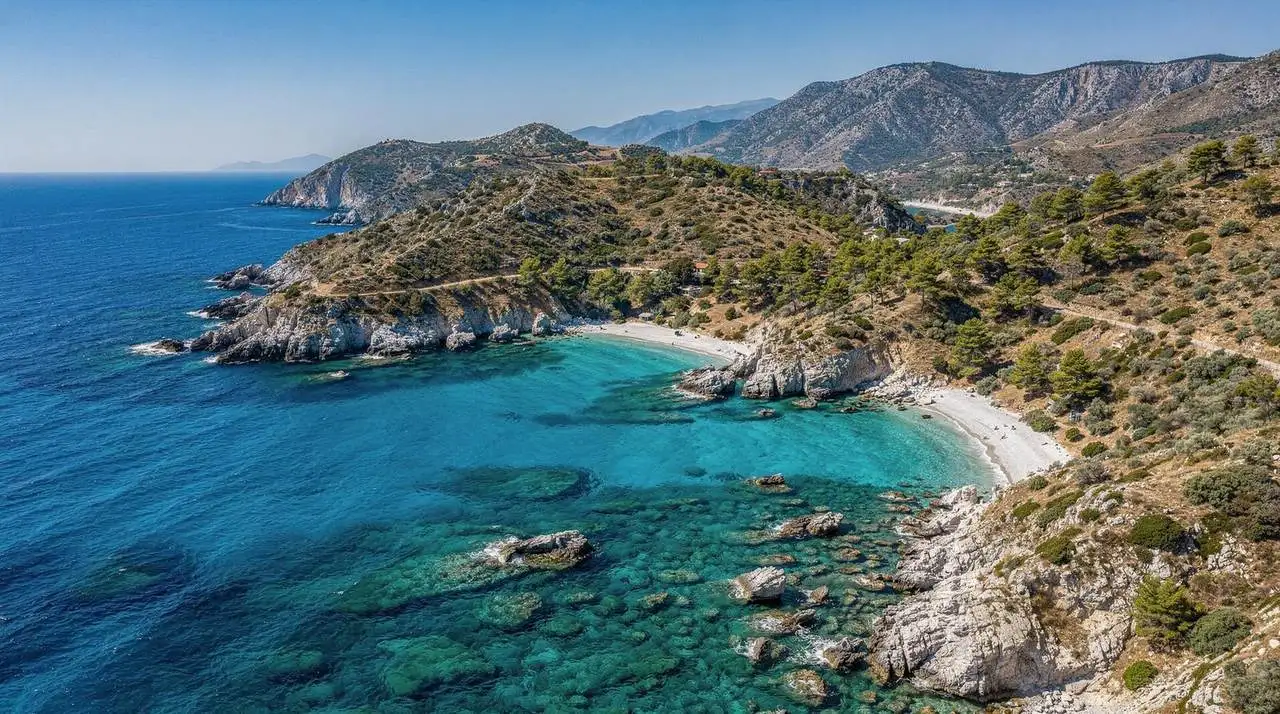
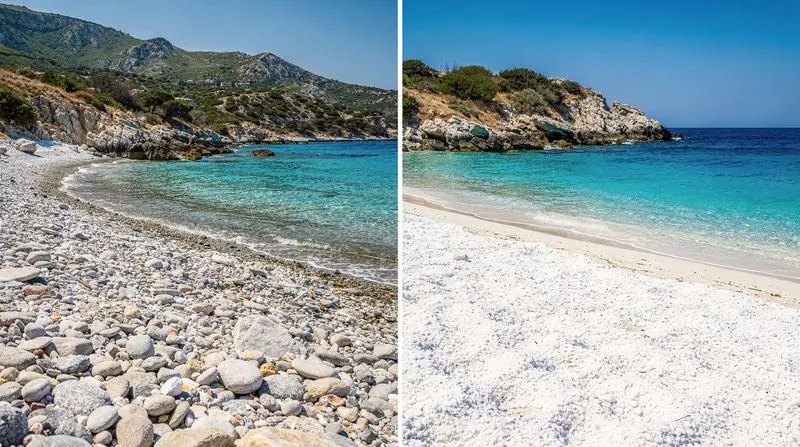
Albanian Riviera water quality: The Ionian coast of Albania has water quality that matches — and in some protected areas exceeds — comparable Greek locations. Ksamil’s beaches just north of the Greek border have extraordinary clarity. The sheltered coves between Saranda and Himara (accessible by boat) have pristine conditions. The beaches at Gjipe, Filikuri, and the northern Riviera have genuinely exceptional water.
Beach infrastructure comparison: Greek islands win decisively on organized beach infrastructure. Sunbed-and-umbrella arrangements are universal on popular beaches. Watersports facilities, tavernas right on the sand, shower facilities, and clear signage are standard. The infrastructure exists because tourism has developed over 60 years.
Albanian Riviera beaches, particularly the wilder ones, often have minimal or no infrastructure. This is a feature for some travelers (genuine wilderness feel) and a problem for others (no shade, no toilets). The more popular Ksamil and Dhermi beaches have developed organized facilities, but they are less refined than the Greek equivalent. For Albania backpacking and budget travel along the coast, the independent traveler route is well-established.
The verdict on beaches: Both have extraordinary water. Greek islands have better infrastructure. Albanian Riviera has fewer people, wilder conditions, and in some specific locations (Ksamil bay, Gjipe canyon beach) genuinely superior visual drama. For the traveler who wants an organized beach holiday with facilities, Greece wins. For the traveler who wants to feel like they discovered something, Albania wins.
Albanian Riviera boat tour from HimaraCrowds
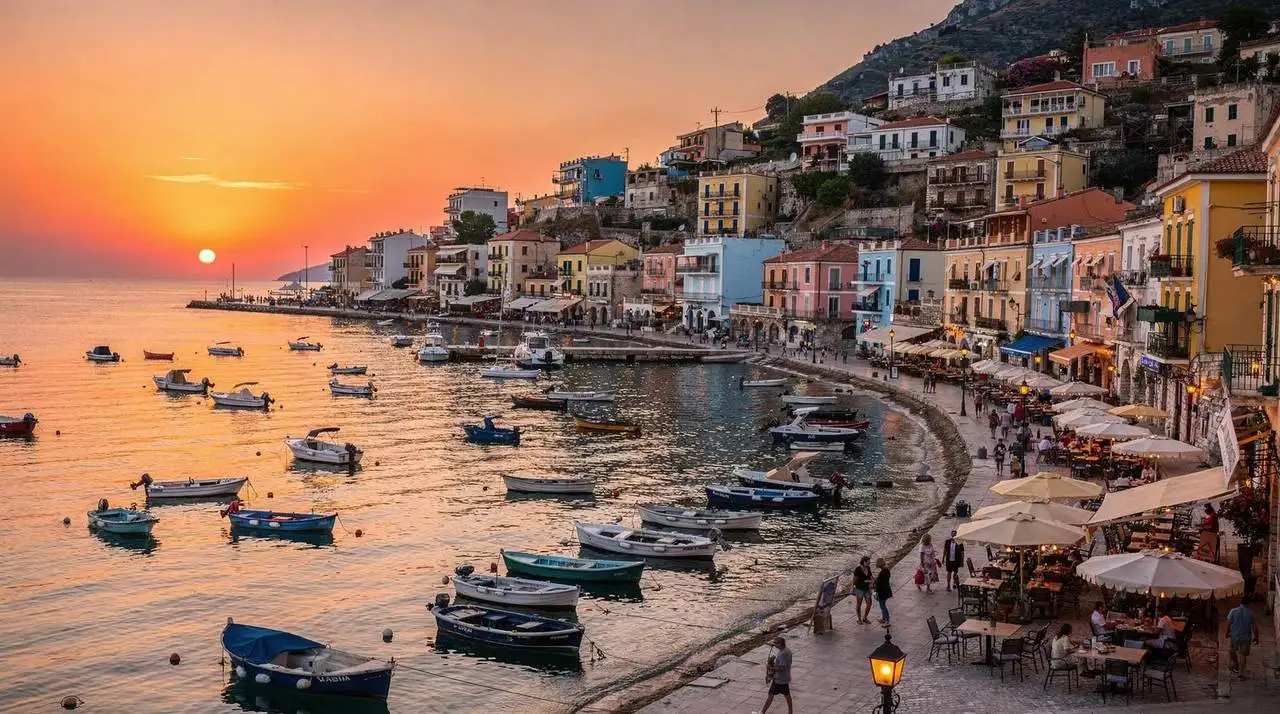
Greek islands in peak season (July-August): Popular Greek islands are extremely crowded. Santorini can feel like a theme park in August — Instagram influencers at every white terrace, queues for sunsets, overbooked hotels. Even Corfu, Mykonos, Rhodes, and Zakynthos have heavy tourist numbers at peak season. The more remote islands (Ikaria, Tilos, Astypalea) remain genuinely quiet but require more effort to reach.
Albanian Riviera in peak season: The Riviera has seen tourist numbers grow significantly in recent years but remains far less crowded than comparable Greek destinations. Ksamil in August has a genuine beach crowd, and the main road through Himara can be congested. But accessible beaches are not remotely comparable in crowding to Santorini or Mykonos peak season. Many coves and beaches 10 minutes on foot from the road remain uncrowded even in peak July.
The verdict on crowds: Albanian Riviera is dramatically less crowded than popular Greek islands. This difference is significant for travelers who find peak-season crowds on Greek islands suffocating. If you want a Mediterranean coastal experience where you do not feel like a sardine, Albania is the current answer.
Food and Dining
Greek island food: Greek cuisine is one of the world’s great food cultures. Fresh fish (grilled, not frozen), seafood (octopus, sea urchin, prawns), mezze (tzatziki, hummus, dolmades, saganaki), moussaka, fresh salads, local cheeses, and excellent wine. On the islands this is complemented by seaside settings that make ordinary meals feel extraordinary. Food quality on Greek islands is generally very good.
Albanian Riviera food: Albanian coastal cuisine is excellent but less internationally celebrated. Fresh fish and seafood from the Ionian are outstanding — the sea bass (levrek) and bream (koce) are exceptional. Grilled meats are consistently good. Local salads, fresh vegetables from Albanian farms, and homemade raki are genuine pleasures. The cuisine is less sophisticated than Greek food culturally but the raw ingredients are comparable quality.
The verdict on food: Greece wins on culinary culture, variety, and international recognition. Albania wins on value for money and the specific pleasure of eating well-prepared fresh fish at a fraction of the Greek island price. See the Albania customs guide for guidance on dining customs and the Albania travel budget guide for food costs.
Nightlife
Greek islands nightlife: Some Greek islands (Mykonos, Ios, Corfu, Zante/Zakynthos) are synonymous with nightlife. Super Paradise Beach on Mykonos, the Laganas strip on Zakynthos, and Corfu town’s nightlife are major tourist draws in their own right. Infrastructure for party tourism (beach clubs, open-air clubs, international DJs) is well-established.
Albanian Riviera nightlife: The Albanian Riviera is not a nightlife destination in the Mykonos sense. Saranda has a developing bar scene on its waterfront. Ksamil has summer beach bars. Himara has music venues that get going after midnight in July-August. But none of this competes with the dedicated party islands of Greece on their own terms.
The verdict on nightlife: Greek islands for dedicated party tourism. Albanian Riviera for relaxed summer evenings with local wine, sunset drinks, and a good night’s sleep.
Getting There and Around
Greek islands: Very well connected. Dozens of international and domestic flights serve major islands from European cities. Ferries from Piraeus (Athens) connect to most islands. Infrastructure is excellent once you arrive.
Albanian Riviera: Tirana International Airport is the entry point, with growing connections to European cities. The Riviera itself is reached by the SH8 coastal highway — a dramatic coastal road — by bus/furgon, or by the Saranda-Corfu ferry for those combining both.
Day trip from Saranda to CorfuThe ferry connection between Saranda and Corfu makes combining both destinations practical. Spend 4-5 days on the Albanian Riviera and cross to Corfu for the Greek island experience — this hybrid itinerary is increasingly popular and delivers both experiences at lower total cost than staying exclusively on Greek islands.
The verdict on transport: Greek islands win on direct international flight connections and ferry network comprehensiveness. Albania is improving and is easy to combine with Greece.
The Corfu Factor
Corfu deserves special mention because of its geographic relationship with the Albanian Riviera. The Greek island is visible from Saranda’s shoreline — 7 km of water separates the Albanian coast from the northern tip of Corfu. The regular ferry crossing (approximately 35 minutes) makes this the most accessible island-to-mainland combination in the Mediterranean.
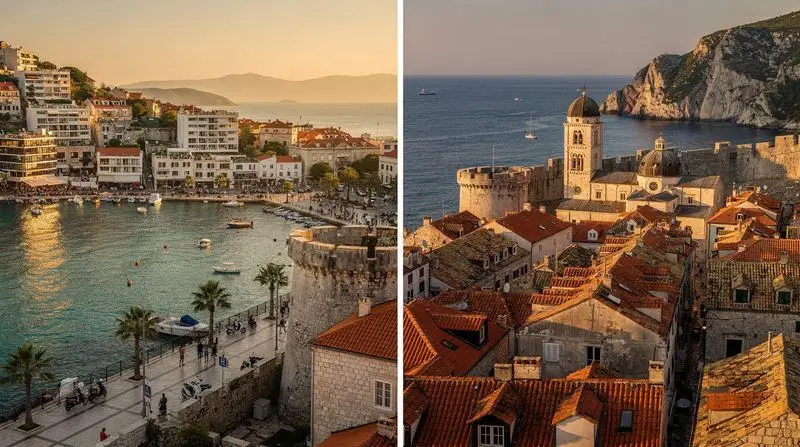
This proximity means travelers can realistically experience both the Albanian Riviera and the Greek islands (at least Corfu) in a single trip. Corfu’s Old Town (a UNESCO World Heritage Site) is one of the best-preserved Venetian colonial towns in the world — genuinely excellent and different from the Albanian experience just across the water.
The combined itinerary: Tirana (2 nights) → Albanian Riviera/Saranda (4 nights) → Corfu ferry (day trip or 2 nights) → return to Tirana or continue south into Greece. This delivers both the Albanian discovery and the Greek island experience.
Who Should Choose What
Choose the Albanian Riviera if you:
- Are budget-conscious and want maximum Mediterranean value
- Prefer less crowded beaches even in peak summer
- Want an authentic local experience rather than a well-oiled tourism machine
- Are interested in combining with Albanian cultural highlights (Berat, Gjirokastër, Tirana)
- Are comfortable with slightly less infrastructure in exchange for fewer tourists
Choose the Greek islands if you:
- Want polished beach resort infrastructure and organized beach facilities
- Are looking for specific nightlife experiences (Mykonos, Zakynthos)
- Want the iconic Santorini sunset/volcanic landscape
- Have limited flexibility and want guaranteed quality and predictability
- Are willing to pay the premium for established destination quality
Choose both if you:
- Have 10-14 days and want the full Ionian experience
- Want to make the Saranda-Corfu ferry crossing
- Are comfortable with a combination itinerary mixing discovery and established tourism
Accommodation Quality Comparison
Greek islands: A full spectrum from budget hostels to luxury clifftop hotels. Santorini’s cave hotels, infinity pool villas, and boutique cliff-edge suites are globally famous. Crete and Rhodes have enormous hotel inventory at all price points. Quality standards are generally high due to decades of tourism competition.
Albanian Riviera: The accommodation market is growing rapidly but at an earlier stage of development. Ksamil and Dhermi have excellent guesthouses and small hotels; some are genuinely excellent. The number of polished boutique options is growing every year. Basic guesthouses (family-run, simple rooms, home cooking) remain common and have their own charm. Luxury options are still limited compared to Greek islands.
The verdict on accommodation: Greek islands win on quantity, variety, and at the luxury end. Albanian Riviera has charm and value but fewer polished mid-market options. This gap is closing year by year as investment follows tourism growth.
The Environmental Comparison
Greek islands: The Greek islands face significant overtourism-related environmental stress. Santorini has famously limited water resources and suffers from cruise ship waste. Plastic pollution on some popular beaches is an issue. Greece has Blue Flag certification programs and environmental regulation but the sheer volume of tourists creates pressure.
Albanian Riviera: The main environmental challenge is different. See the Albania travel tips guide for responsible travel guidance and the Albania scams guide for tourist awareness. Inadequate waste collection infrastructure means plastic waste accumulates on some beaches, particularly after storms. The Riviera is not a pristine wilderness — it is developing alongside tourism, and the environmental management systems have not caught up with visitor numbers. Some beaches require rubbish picking before you want to swim.
The honest comparison: Neither destination is environmentally pristine. The Albanian Riviera’s underdevelopment is both its appeal (fewer tourists) and a problem (less developed environmental management). The Greek islands’ overtourism creates different problems (crowding, resource depletion). Environmentally conscious travelers should pack out what they carry in at both destinations.
The Infrastructure Gap Over Time
It is worth acknowledging that the comparison of Albanian Riviera vs Greek islands is a moving target. Every year the Riviera gains new guesthouses, better restaurants, more organized beach infrastructure, and more international visitor numbers.
The question is not just “which is better now?” but “which stage of development do you want to experience?” There is a genuine argument that visiting Albania now — before the infrastructure arrives fully — gives a more authentic, discovery-oriented experience that will no longer be available in 10-15 years when development has matured. Greek islands experienced the same trajectory decades ago.
Travelers who visited Mykonos in the 1970s or Santorini in the 1980s describe a very different (and many say better) experience than the highly polished, Instagram-packed destination of today. The Albanian Riviera in 2026 may be at a similar stage to those islands in those earlier decades.
Specific Island Comparisons
For travelers choosing between specific Greek islands and Albanian destinations, here is a more detailed matchup:
Ksamil (Albania) vs Lefkada (Greece): Similar level of water clarity and beach beauty. Lefkada’s beaches (Egremni, Porto Katsiki, Kathisma) are world-class. Ksamil’s island-dotted bay is unique. Lefkada has better facilities; Ksamil has lower prices.
Himara (Albania) vs Kefalonia (Greece): Both offer dramatic coastal landscapes. Kefalonia’s Myrtos Beach is one of Greece’s most famous. Himara’s setting between mountains and sea is equally dramatic. Infrastructure and facilities strongly favor Kefalonia; price strongly favors Himara.
Saranda vs Corfu: The ferry crossing makes this comparison particularly live. Corfu has more developed tourism infrastructure, more beach variety, and the magnificent UNESCO World Heritage Old Town. Saranda is cheaper, less crowded, and has Butrint as a unique archaeological asset. Many travelers do both — as described in the Corfu section above.
Practical Planning: Sample Itineraries
One week Albanian Riviera only: Fly into Tirana → bus to Saranda (5 hours) → 2 nights Saranda (Butrint, Blue Eye day trips) → 2 nights Ksamil (beaches) → 2 nights Himara (Riviera beaches, boat tour) → return to Tirana. Cost approximately EUR 400-550 per person including transport, accommodation, and activities.
Consider combining with Albania’s cultural sites — Berat and Gjirokastër are within a day’s reach of the Riviera.
One week Greek islands (Corfu-based): Fly into Corfu → 5 nights Corfu (Old Town, beaches, day trips) → day trip to mainland Epirus (Meteora or Ioannina) → fly out. Cost approximately EUR 700-950 per person.
Two weeks combining both: Fly Tirana → 4 days Albanian Riviera → ferry Saranda to Corfu → 4 days Corfu → ferry Corfu to Patra (Greece mainland) → 2 days Athens → fly home. This gives both experiences with a natural water crossing between them.
Day trip from Saranda to CorfuBest Time to Visit: Season by Season
Timing affects this comparison as much as location does. The table below breaks down how each destination behaves month to month.
| Period | Albanian Riviera | Greek Islands |
|---|---|---|
| May–early June | Warming up, sea still cool, very few crowds, best value | Similarly quiet, sea warmer sooner, prices lower than peak |
| Late June–early July | Getting busy, water warm, still manageable | Busy and rising fast toward peak pricing |
| Mid-July–August | Peak crowds by Albanian standards, still far below Greek peak | Extremely crowded and expensive on popular islands |
| September | Warm sea, thinning crowds, excellent value returns | Warm sea, crowds ease meaningfully after the 15th |
| October | Many businesses closing, sea still swimmable | Shoulder season, many islands winding down |
The clearest takeaway: September is arguably the best month for both destinations, combining warm water with reduced crowds and lower prices, while May and early June offer a similar advantage for travelers who prioritize quiet over guaranteed warmth. Peak August delivers the sharpest contrast — Albania remains busy but tolerable, while the most popular Greek islands reach genuine saturation.
Renting a Car: Which Side Makes It Easier
Self-driving changes the calculus on both coasts. On the Albanian Riviera, a rental car unlocks the coves and viewpoints along the SH8 that buses and furgons skip entirely, and car rental in Albania remains inexpensive by European standards, though the coastal road itself demands cautious, unhurried driving — it is narrow, cliff-edge in places, and shared with slow trucks and the occasional livestock crossing. On the Greek islands, car or scooter rental is the norm for exploring beyond a resort base, particularly on larger islands like Corfu, Crete, or Rhodes where public transport between beaches is limited; smaller islands like Mykonos or Santorini are more walkable but still benefit from a rental for reaching quieter beaches away from the main towns. Both destinations reward having your own wheels, but the Albanian coastal road is the more demanding drive of the two. Fuel prices are broadly comparable across both countries, and international driving permits are generally accepted, though it is worth checking your home country’s specific requirement before travel since enforcement varies. Parking is informal and generally free along much of the Riviera, a contrast to the metered and often scarce parking common on the busier Greek islands in peak season.
The Instagrammability Question
Both destinations generate extraordinary photography. The Greek islands dominate social media imagery because they have been heavily photographed for longer — Santorini’s blue domes and Mykonos’s windmills are among the most reproduced travel images in the world.
Albanian Riviera imagery is growing but is less saturated — meaning that photographs you take in Albania are more likely to be original and distinctive. The Ksamil bay, the mountain-and-sea panoramas from the coastal road above Dhermi, and the sunset over the Corfu channel from Saranda are visually exceptional subjects that have not yet been photographed to exhaustion. The Albania festivals and events guide can help time your visit for additional photographic interest.
For travel photographers and content creators, this is a genuine consideration. Albanian Riviera footage stands out in a way that the tenth Santorini sunset does not. See the drone rules guide for aerial photography options and the Albania backpacking guide for tips on independent travel along the coast.
Water Sports and Activities
Greek islands: Water sports infrastructure is highly developed. Jet skiing, parasailing, paddleboarding, sailing charters, and diving schools are available at virtually every beach of any size. The infrastructure reflects decades of tourism investment. Sailing the Cyclades or the Ionian islands by charter is a world-class experience.
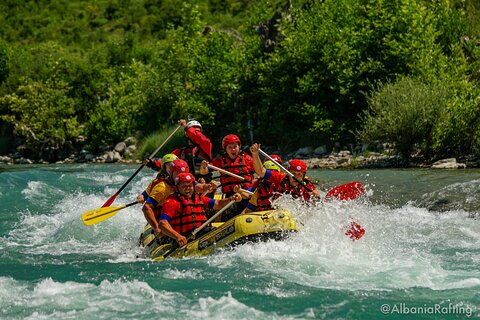
Albanian Riviera: Water sports are developing but less organized. Saranda and the main Riviera beaches have paddleboard hire, kayak rental, and some jet ski operations. The Riviera’s dramatic coastline — including underwater rock formations and caves — makes it excellent for freediving and snorkeling in less crowded conditions.
Albanian Riviera boat tourScuba diving: Greece has the most developed diving infrastructure. Albania has a small number of certified dive operators (based in Saranda and Himara). The Albanian Adriatic and Ionian seabeds include WWII wrecks and interesting underwater topography that are largely undived compared to Greek equivalents.
The Verdict Summary
To crystallize the comparison:
| Factor | Albanian Riviera | Greek Islands |
|---|---|---|
| Cost | Dramatically cheaper | More expensive |
| Crowds | Far fewer | More (popular islands) |
| Water quality | Excellent | Excellent |
| Beach facilities | Developing | Well-developed |
| Historical sites | Butrint (UNESCO) | Multiple sites |
| Nightlife | Minimal | Strong (select islands) |
| Infrastructure | Growing | Established |
| Discovery factor | High | Lower |
| Ease of access | Via Tirana | Direct flights |
Neither destination is objectively superior. The right choice depends entirely on what you value from a coastal Mediterranean holiday.
Currency and Everyday Costs Across the Border
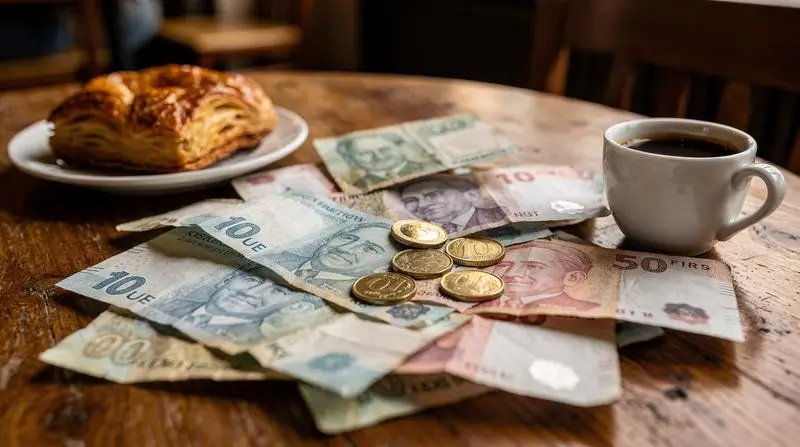
Crossing from Albania to Corfu also means crossing from lek to euro, which sharpens the price contrast in a way that is easy to underestimate before you experience it firsthand. A coffee that costs EUR 1 in Saranda becomes EUR 3–4 the moment you step off the ferry in Corfu Town — the same drink, a different economy. Budgeting for a combined trip works best if you treat the two legs separately rather than averaging a daily figure: plan generously for the Greek days and expect the Albanian days to come in well under whatever you set aside. Carrying some euros for the Corfu leg is sensible, since Albanian lek is not usable in Greece and airport exchange rates on both sides are poor; a local ATM withdrawal in euros on arrival in Corfu Town is the more efficient option. See the Albania travel budget guide for a fuller daily cost breakdown on the Albanian side of the trip.
What First-Time Visitors Underestimate About Each Option
Travelers choosing the Albanian Riviera for the first time consistently underestimate two things: the drive time along the SH8 coastal road, which is dramatic but slow and winding enough that distances that look short on a map can take twice as long as expected, and the variability of facilities beach to beach, where a stunning cove can have zero shade or toilets right next to a fully developed one. Travelers choosing the Greek islands, meanwhile, often underestimate peak-season pricing spikes — a room that costs EUR 80 in June can double in the last two weeks of August — and how far in advance popular tavernas and boat tours need to be booked once late July arrives. Planning around these blind spots, rather than around the headline cost or beach-quality comparison alone, tends to produce the smoother trip.
Frequently Asked Questions About Albanian Riviera vs Greek Islands
Is the Albanian Riviera really as good as the Greek islands?
The water quality and scenery are genuinely comparable in the best locations. What the Albanian Riviera lacks is Greek tourism infrastructure, variety, and global recognition. What it offers in return is lower cost, fewer crowds, and the particular pleasure of discovering somewhere most travelers haven’t been.
How much cheaper is Albania than Santorini or Mykonos?
At peak season, easily 50-70% cheaper for comparable accommodation and meals. Santorini and Mykonos are among the most expensive destinations in the Mediterranean. Albania is one of the cheapest.
Can I combine the Albanian Riviera with a Greek island visit?
Easily, via the Saranda to Corfu ferry (35 minutes). Many travelers spend 4-5 days on the Albanian Riviera and 2-3 days on Corfu for a combined experience. This gives the best of both without the cost of staying exclusively in the Greek islands.
Is the water cleaner at the Albanian Riviera or Greek islands?
Both have excellent water quality in their best locations. The Albanian Riviera’s less developed coastline means less boat traffic and boat pollution near many beaches. In the very best Albanian coves (Gjipe, Ksamil bays), the water quality is exceptional. The Greek islands’ better-monitored Blue Flag beaches also achieve outstanding quality.
What is the Albanian Riviera missing compared to the Greek islands?
The main gaps are: international flight connections (you fly into Tirana, not directly to the Riviera), the depth of organized beach infrastructure (fewer sunbed hire, watersports, beach bar operations), the variety of island-to-island exploration, and the sheer global recognition that draws world-class restaurants and amenities to Greek island destinations.