Accessible Travel in Albania: An Honest Guide for 2026
Honesty first: Albania is not an easy destination for travelers with mobility impairments or other disabilities. Infrastructure for accessibility — ramps, lifts, tactile paving, wheelchair-accessible toilets — is limited and inconsistent throughout the country. The historic cobblestone streets of Berat and Gjirokastra, the mountain terrain of the Albanian Alps, and the stepped hillside villages of the Riviera present genuine physical challenges.
That said, Albania is not impossible for visitors with disabilities, and parts of the country have improved meaningfully over the past five years. This guide gives an honest, practical assessment of what to expect, where accessibility is best, and how to plan a trip that works for you.
| Most accessible base | Tirana, followed by Saranda’s waterfront and Durres |
| Least accessible | Berat/Gjirokastra old towns, Albanian Alps, Riviera pebble beaches |
| Transport | Private driver or rental vehicle strongly recommended |
| Accessible hotels | International chains in Tirana; some Riviera/Durres properties |
| Planning ahead | Contact accommodation 48+ hours before arrival |
The Overall Picture
Albania’s accessibility challenges fall into several categories:
Pavements and footpaths: Even in Tirana, pavements are frequently broken, uneven, or blocked by parked cars and scooters. Wheelchair users and people with balance or mobility issues need to navigate with care. Outside the capital, pavement quality deteriorates further.
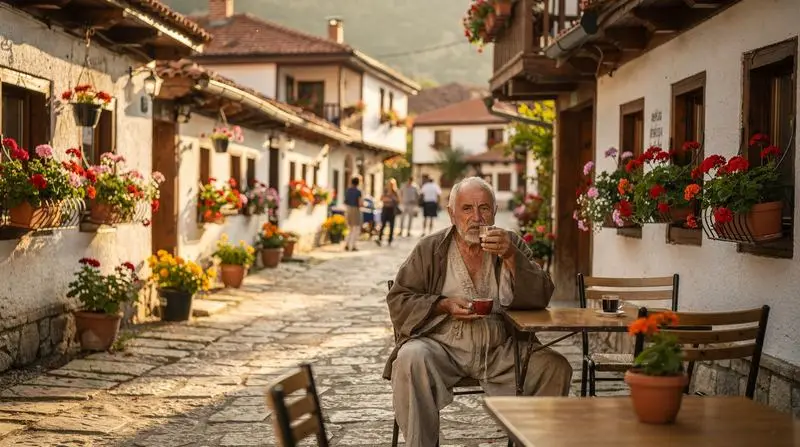
Historic areas: Albania’s most visited historic sites — the UNESCO old towns of Berat and Gjirokastra, the Ottoman quarters, the castle complexes — were built centuries before accessibility was a consideration. Steep cobblestone streets, narrow lanes, and staired entrances are the norm throughout these areas.
Mountain areas: Theth, Valbona, and the Albanian Alps are extremely challenging for anyone with mobility limitations. The terrain is rugged, guesthouses have basic facilities, and road access requires high-clearance vehicles. These areas are not realistically accessible to wheelchair users.
Beach access: Albania’s Riviera beaches are largely pebble and uneven surfaces. Dedicated beach wheelchair provision is extremely limited — see below for what is available.
Attitudes and assistance: One genuinely positive aspect of Albanian culture is the reflexive willingness to help strangers. Albanians will offer physical assistance without being asked and without condescension. This informal human infrastructure compensates partially for the lack of built infrastructure. The Albania customs and etiquette guide explains the hospitality ethic (besa) that underlies this generosity.
Best Accessible Destinations in Albania
Tirana
Tirana is by far the most accessible destination in Albania. The capital has made significant investments in infrastructure over the past decade, and while it falls well short of Western European accessibility standards, it offers meaningful accessibility at several key sites:
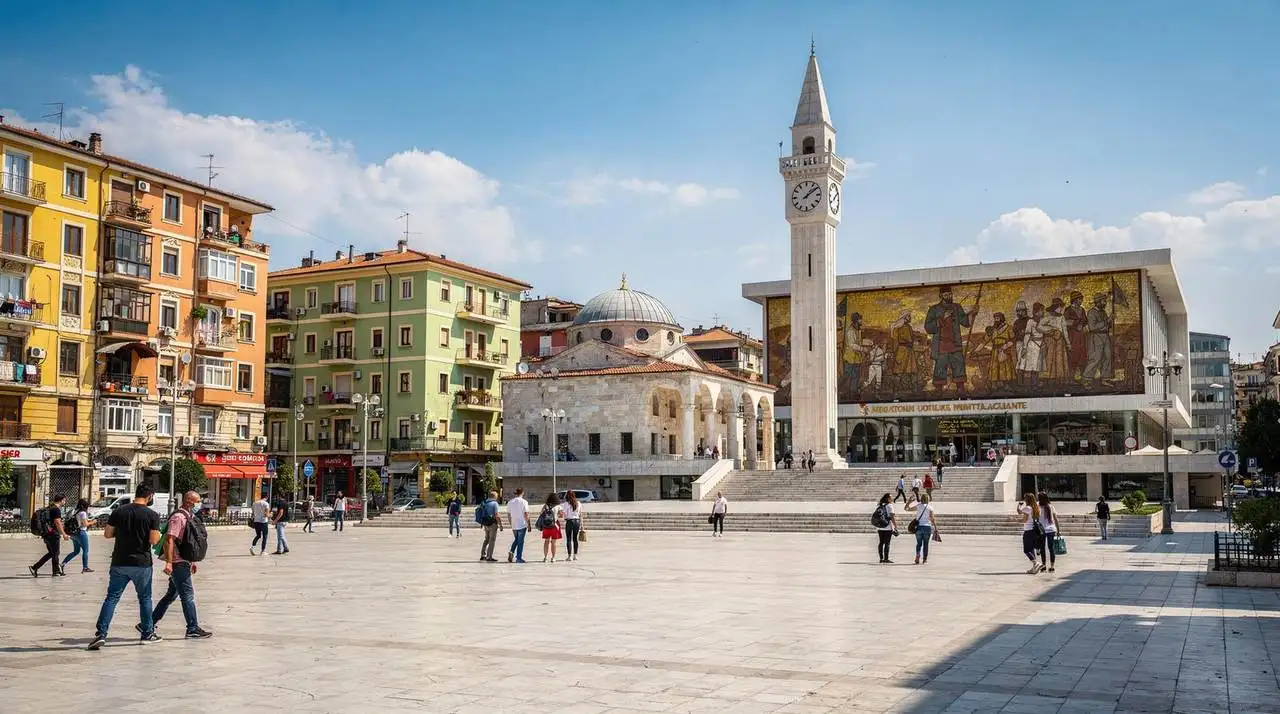
Skanderbeg Square: The renovated central square has flat, even paving and is easily navigable by wheelchair. The plaza surrounding the Skanderbeg statue is the most accessible public space in the country.
Blloku district: The main entertainment area has relatively flat streets and several restaurants and cafes at ground level with step-free entrances. The gentrification of this former communist leadership compound has brought modern fit-out to many of the cafes.
Rinia Park and Grand Park: Both parks have mostly flat paths suitable for wheelchairs, particularly around the artificial lake. Good options for a flat walk in green space.
The National History Museum: Has a ground-floor entrance and some accessible areas, though upper floors via stairs are difficult. The famous mosaic facade is visible from ground level without entering.
Newer hotels: International chains (Marriott, Hilton Garden Inn, and several boutique hotels) in Tirana have accessible rooms with roll-in showers or adapted bathrooms. Specify your requirements when booking.
The main challenges in Tirana remain: parked vehicles blocking pavements and ramps, inconsistent ramp quality, and the general chaos of a rapidly developing city where accessibility retrofitting has not kept pace with construction.
Guided tours of Tirana that include accessible transport can make the city more manageable. Half-day city tours of Tirana use private vehicles for transport between sites, which helps navigate the city without relying on pavements and public transport.
Saranda
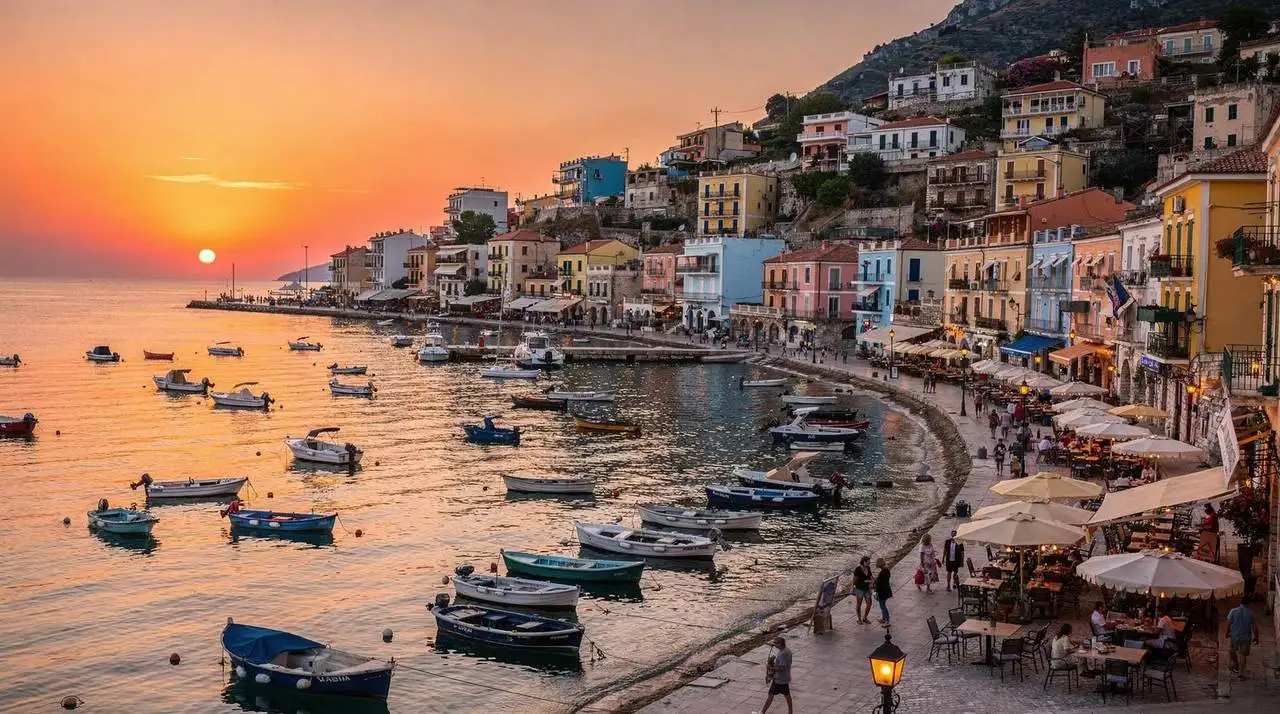
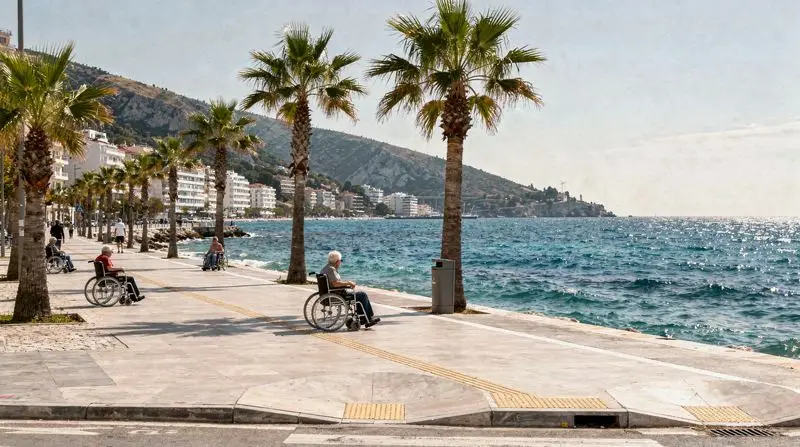
Saranda’s seafront promenade is the most accessible natural attraction on the Albanian Riviera. The recently renovated waterfront walkway runs along the seafront for approximately 2km and is flat, paved, and wheelchair-navigable. The main town has reasonable pavements, and several seafront hotels have accessible ground-floor rooms.
Key accessible features in Saranda:
- Seafront promenade (flat, smooth paving for the full length)
- Several waterfront restaurants at ground level
- Taxi availability for getting around
- Flat terrain in the lower part of town
- Some beach clubs beginning to offer accessible facilities
Challenges: the upper parts of Saranda are hilly; Ksamil beach requires walking on uneven terrain; and Butrint National Park has significant walking on uneven paths, though the site itself is relatively flat.
Durres
Durres, Albania’s main port city and closest beach to Tirana, has a long sandy beach that is significantly more accessible than the pebble Riviera beaches further south. The sandy surface allows wheelchair access with assistance, and sections of the beach walk are paved. The city has better-than-average pavements for an Albanian city.
The archaeological museum and Roman amphitheater in Durres have mixed accessibility — the amphitheater in particular involves steps and uneven ground. The exterior and street-level view of the amphitheater is free and accessible from the road, however.
The Northern Beaches (Velipoja, Shengjin)
The northern beaches of Velipoja and Shengjin have long, flat, sandy beaches — considerably easier for wheelchair access than the southern Riviera. The beach infrastructure here is more modest than the Riviera, but the flat terrain is genuinely accessible and the beaches are uncrowded.
Beach Wheelchair Availability
Beach wheelchair provision is at an early stage in Albania. As of 2025-2026:
- No formal national program exists for beach wheelchair rental
- A small number of beach clubs on the Riviera and in Saranda have experimented with beach wheelchair provision as part of seasonal disability access programs
- Contact specific beach clubs directly before visiting to ask about availability — this provision is improving incrementally and the situation changes each season
- Saranda beach clubs are most likely to have or be able to source beach wheelchair access
Bringing your own beach wheelchair (a specialty item designed for soft surfaces) is the most reliable option for anyone who needs this.
Transport Accessibility
Flying Into Albania
Tirana International Airport has standard international accessibility facilities: wheelchair assistance can be requested from your airline at booking, the terminal has lifts and ramps, and accessible toilet facilities are available. Request wheelchair assistance when booking for the smoothest experience through the airport. The airport transfers Tirana guide covers transport options from the airport.
Taxis and Private Transfers
Standard Albanian taxis do not have wheelchair accessibility. However, hiring a private transfer vehicle — particularly a minivan — provides flexibility. Private transfer drivers are generally willing to assist with loading wheelchairs and luggage. Book private transfers rather than using street taxis, and specify your mobility needs when booking.
Bolt (the main ride-hailing app in Albania) does not currently offer wheelchair-accessible vehicle options.
Buses and Furgons
Albania’s public bus and furgon network is not accessible for wheelchair users. Furgons are minibuses with no space for wheelchairs, and the boarding process — stepping up into a vehicle — is a significant barrier. The buses and furgons guide covers public transport, which is not a realistic option for most accessibility needs.
For accessible travel in Albania, a rented vehicle or private driver is the only realistic transport option.
Accessible Vehicle Rental
Vehicles with hand controls are not readily available through standard car rental agencies in Albania. Options:
- Bring your own hand controls that clip onto a standard rental car. Some travelers do this successfully; confirm with the rental agency that you can use personal adaptations on their vehicle.
- Hire a private driver for the duration of your trip. A driver for 7-10 days in Albania costs EUR 300-600 depending on distance and negotiation. This eliminates the transport accessibility problem entirely and provides flexibility. Many drivers are willing to assist with physical boarding.
Accessible Accommodation
What to Look For
When booking accommodation in Albania, the following factors matter for accessibility:
- Ground floor room: Most important for mobility, as lifts are absent from many smaller guesthouses and older hotels
- Roll-in shower vs bathtub: Specify when booking. Only larger hotels reliably have roll-in showers
- Wide doorways: Standard doorways in older buildings can be narrow — ask specifically
- Firm, level flooring: Avoid guesthouses with steps between rooms or uneven floor surfaces
- On-site parking close to the entrance: Minimizes the distance between vehicle and room
International hotel chains in Tirana are the most reliable for accessibility. Booking.com allows filtering for accessible rooms — use this filter and then call the hotel directly to verify specifics before confirming.
In Tirana: International chain hotels (Marriott, Hilton Garden Inn) have dedicated accessible rooms with roll-in showers, grab bars, and appropriate room layouts at EUR 90-160 per night. Several boutique hotels have ground-floor rooms with wider doorways — verify directly.
In Saranda: Newer seafront hotels have the best accessibility. Older hotels up the hill are less suitable.
In Durres: Beach-facing hotels on the main strip are largely ground-floor or have lifts. These are generally the best accessible beach hotel options in Albania.
Attractions and Their Accessibility
| Attraction | Accessibility | Notes |
|---|---|---|
| Skanderbeg Square, Tirana | Good | Flat, even modern paving |
| National History Museum, Tirana | Partial | Ground floor accessible; upper floors via stairs |
| Berat old town | Very difficult | Steep cobblestones throughout |
| Gjirokastra castle | Very difficult | Extremely steep, uneven stone paths |
| Butrint National Park | Moderate | Relatively flat site but uneven dirt paths |
| Blue Eye Spring | Moderate | Short walk on dirt path; some boardwalk sections |
| Llogara Pass | Good | Roadside viewpoint, no walking required for the view |
| Saranda waterfront | Good | Flat promenade, smooth paving |
| Durres beach | Moderate | Sandy, flat; easier than pebble beaches |
| Albanian Alps (Theth, Valbona) | Not accessible | Extremely rugged terrain |
| Ksamil beach | Difficult | Uneven pebble and sand surface |
| Kruja bazaar | Difficult | Steep cobblestone approach |
Practical Tips for Travelers with Specific Disabilities
Wheelchair Users
- Contact your accommodation at least 48 hours ahead to confirm ground-floor room availability and confirm what accessible facilities are actually in place
- Consider hiring a private driver for the entire trip rather than relying on public transport or taxis
- Carry a portable ramp for navigating small steps at restaurant and shop entrances — these are common throughout Albania
- Plan your itinerary around Tirana, Saranda, and Durres as primary bases
- Accept that Albania’s most famous historic sights (Berat old town, Gjirokastra) are extremely difficult but not necessarily impossible — manual wheelchair users with a strong companion can navigate some sections with assistance
Visual Impairments
Albania has very limited tactile paving or audio signals at crossings. Sighted guide assistance is essential in cities. The main hazard is traffic — Albanian drivers are not reliably pedestrian-aware, and crossing roads requires caution. The Albania safety guide covers pedestrian safety in cities.
Hearing Impairments
No particular additional challenges beyond the language barrier. Visual translation apps (Google Lens) work well for reading menus and signs in Albanian. The visual orientation of the major sites means that most sightseeing is independent of audio guides.
Cognitive and Sensory Considerations
Albania’s cities can be noisy, chaotic, and visually overwhelming — particularly Tirana and the Riviera resorts in summer. Quieter alternatives exist: Berat in the early morning, the Prespa Lakes region in the east, smaller mountain villages outside of hiking season. Planning plenty of rest time and choosing accommodation away from main nightlife streets helps significantly.
Medical Facilities for Travelers with Medical Needs
Tirana: The American Hospital of Tirana is the main private hospital with English-speaking staff and international standards. Several specialist clinics operate in the capital. This is the only facility in Albania that reliably meets Western European medical standards.
Outside Tirana: Medical facilities diminish significantly in quality and availability. Saranda and other large towns have polyclinics, but for serious medical issues, transfer to Tirana is necessary.
Comprehensive travel insurance including medical evacuation is essential for any traveler with medical needs. See the Albania travel insurance guide for policy recommendations and what to look for. Travelers with medical devices or medications should bring sufficient supply for the trip plus a buffer, as specific medications and equipment may not be available in Albania.
Getting Help: The Human Infrastructure
Albanian people are genuinely helpful. If you are struggling — with steps, with terrain, with finding your way — asking for help produces results. The cultural reflex toward assisting guests, strangers, and visitors in difficulty is strong and genuine.
This is not a small consideration. The informal assistance of people you meet can make the difference between a trip that feels impossible and one that works. An Albanian stranger who helps you navigate steps, carries a wheelchair over an obstacle, or finds you a ground-floor seat when none was obvious is an extension of the besa hospitality ethic — it is genuine, and it is reliable.
Organizing Accessible Tours
For specific sites and activities, organized tours with private vehicles and guides make accessibility more achievable than independent travel. The guide handles the logistics and can often arrange access that an independent visitor might not be able to negotiate.
For Tirana, Tirana walking tours can be adapted to private vehicle tours for accessibility — contact the operator before booking to discuss your needs.
For the best approach to Albanian cultural experiences in accessible formats, building an itinerary around Tirana’s museums and cafes, Saranda’s waterfront, and some coastal viewpoints from a vehicle window gives access to Albania’s character without requiring the challenging terrain of the historic cities and mountains.
Honest Summary
Albania rewards travelers who plan carefully for accessibility needs and are prepared to accept that some iconic experiences will be difficult or impossible. The country is not yet a destination that accessibility-focused travel agents confidently recommend without significant caveats.
What Albania offers that is genuinely accessible: a fascinating capital city with improving infrastructure, a scenic waterfront in Saranda, flat sandy beaches at Durres and Velipoja, some of the most beautiful coastal road views in Europe from a vehicle window, and extraordinary food and hospitality available at accessible restaurants throughout the country.
What requires either significant physical effort, assistance, or must be skipped: the UNESCO old towns at their most characteristic, the mountain regions, and most of the Riviera pebble beaches.
Plan accordingly, be flexible, and read the Albania travel tips guide for broader practical guidance before you go. Albania’s warmth, food, and accessible natural beauty remain available to travelers with disabilities — it requires more planning than most European destinations, but the rewards are proportionate to the effort.
Communicating Your Needs in Albania
Albania’s tourism industry is still developing standardized accessibility terminology, so specific, concrete questions get better results than general ones. Instead of asking “is it accessible?”, ask “is there a step at the entrance?”, “how many centimetres wide is the bathroom doorway?”, or “is the shower a roll-in type or does it have a step?”. Albanian hospitality means hosts genuinely want to help and will often go out of their way to accommodate a clearly stated need — the gap is usually in infrastructure, not willingness.
For travellers who don’t speak Albanian, WhatsApp messaging (widely used for business communication in Albania) combined with a translation app works well for pre-arrival questions, since it gives hosts time to check details and respond thoughtfully rather than fielding questions under pressure at a reception desk. Confirming these details in writing also gives you something to refer back to if the reality on arrival doesn’t match what was promised.
Planning an Itinerary Around Accessibility
Rather than trying to force Albania’s least accessible sites into a trip, the more successful approach is to build the itinerary around what genuinely works: Tirana as a base with two or three nights, a day or two in Durres or Saranda for the seafront, and a driven day trip along the coastal road to see the Riviera’s viewpoints from the car rather than attempting beach access on foot. This delivers a real sense of the country’s character — the food, the history, the coastline, the hospitality — without the frustration of repeatedly hitting terrain that simply doesn’t work for a wheelchair or significant mobility limitation.
If Berat and Gjirokastra’s old towns are a priority despite the difficulty, visiting with a companion, allowing significantly more time than a typical visit, and accepting that some areas will need to be viewed rather than entered is a realistic middle path. Several visitors with mobility aids report that a slow, assisted visit to the lower streets of these towns — without attempting the steepest upper lanes — still delivers a meaningful sense of the architecture and atmosphere.
A sample four-day accessible itinerary: two nights in Tirana (Skanderbeg Square, Blloku, the National History Museum ground floor), a day trip along the coastal road to view the Riviera and Llogara Pass from the car, and a final night in Durres or on Saranda’s waterfront. This covers Albania’s capital, its most dramatic coastal scenery, and a genuinely accessible beach stretch — a realistic, rewarding trip without forcing terrain that won’t cooperate.
Insurance and Emergency Planning
Given the gaps in both physical infrastructure and medical facilities outside Tirana, insurance and emergency planning deserve extra attention for travellers with disabilities or ongoing medical needs. Confirm that your travel insurance policy explicitly covers medical evacuation from Albania to a facility with appropriate standards, and carry a written summary of any relevant medical conditions, medications, and emergency contacts in both English and, ideally, translated into Albanian. The Albania travel insurance guide covers what to look for in a policy, and the Albania safety guide has broader guidance on emergency numbers and when to seek care.
Frequently Asked Questions About Accessible Travel in Albania
Is Albania accessible for wheelchair users?
Albania presents significant accessibility challenges for wheelchair users. Tirana has the best infrastructure, with some accessible hotels, restaurants, and pavements in the central areas. Outside the capital, cobblestone old towns (Berat, Gjirokastra), mountain terrain, and pebble beaches create serious barriers. Accessibility has improved in recent years but lags considerably behind Western European standards.
Which parts of Albania are most accessible for disabled travelers?
Tirana city center, the Durres seafront, and the flatter sections of Saranda’s waterfront are the most accessible areas. Some of the larger Riviera hotels have accessible rooms and paved pool areas. The UNESCO old towns of Berat and Gjirokastra are largely inaccessible due to steep cobblestone streets. The Albanian Alps mountain terrain is inaccessible for most mobility-impaired travelers.
Are Albanian beaches accessible?
Most Albanian beaches are pebble or coarse sand and are not accessible by standard wheelchair without assistance. A few of the larger organized beach clubs on the Riviera have made some accessibility improvements with compacted pathways. Travelers with mobility challenges should contact accommodation providers directly to discuss specific access needs before booking.
Do Albanian hotels have accessible rooms?
Larger and newer hotels in Tirana and some Riviera properties have accessible rooms with wider doors and adapted bathrooms. Smaller guesthouses, mountain bujtina, and traditional accommodation in historic buildings typically do not have accessible facilities. Always communicate specific requirements when booking and confirm by phone or email rather than relying solely on booking platform descriptions.