Albania Pharmacy and Healthcare Guide for Travelers
Albania has a functioning healthcare system that is fully capable of handling the medical needs that arise during a typical tourist visit — minor injuries, infections, stomach upsets, allergic reactions, and similar. For more serious conditions, Tirana’s private hospitals provide a level of care comparable to regional European standards. The system is affordable by any comparison.
This guide covers where to find pharmacies, what medications are available over the counter, the locations of hospitals nearest to tourist areas, emergency contact numbers, and how to handle health insurance claims in Albania.
| Emergency number | 112 (ambulance 127, police 129, fire 128) |
| Best hospitals | Hygeia and American Hospital, Tirana |
| Pharmacy hours | Around 08:00-20:00 weekdays, on-call rotation overnight |
| GP consultation cost | Around EUR 20-40 |
| Insurance | EHIC/GHIC not valid — private travel insurance essential |
Albanian Pharmacies: What to Expect
Finding a Pharmacy
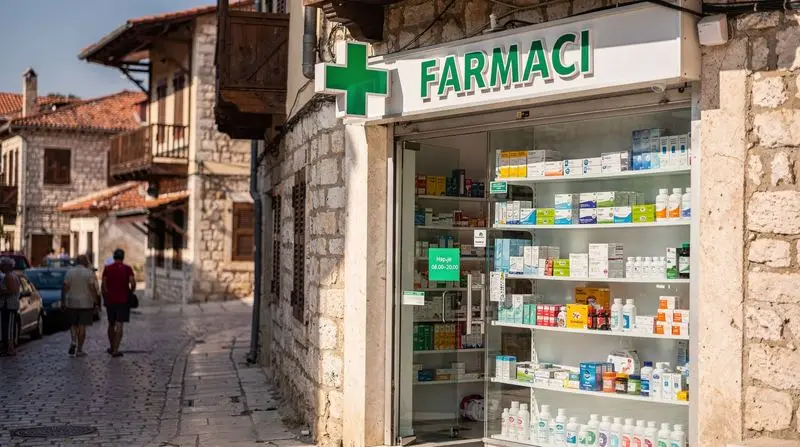
Pharmacies in Albania are called farmaci and are identified by a green cross sign — the same symbol used throughout Europe. In any Albanian city, finding a pharmacy is straightforward: they are present on every main shopping street.
Hours: Standard pharmacy hours are approximately 08:00-20:00 on weekdays and 08:00-14:00 on Saturdays. Many pharmacies in cities operate 24-hour shifts (farmaci e gatshme — on-call pharmacy) on a rotating basis. The on-call pharmacy for any given night is typically posted on the doors of other pharmacies in the area.
24-hour pharmacies in Tirana: Multiple pharmacies near the main hospital areas and in central Tirana operate 24 hours. Asking your hotel or guesthouse for the nearest night pharmacy is the fastest approach.
Rural areas: In very small villages and mountain areas (Theth, Valbona), there are no pharmacies. Stock up on any medications you might need before heading into remote areas.
Staff and Language
In cities, pharmacists often speak basic English. In Tirana and Saranda (given the tourist traffic), English is commonly functional. In smaller towns, an Albanian-English translation app on your phone is useful. Showing the packaging of a medication you need, or the generic/chemical name rather than a brand name, usually solves language barriers.
Pharmacists in Albania are generally knowledgeable and helpful. They are willing to recommend over-the-counter solutions for common conditions without requiring a prescription.
Over-the-Counter Medications Available
Albania has relatively permissive OTC (over-the-counter) medication rules compared to Western Europe. Many medications that require prescriptions elsewhere are available without one:
Available without prescription:
- Antibiotics (some, particularly amoxicillin and common broad-spectrum antibiotics — though antibiotic resistance is a global concern and overuse should be avoided)
- Antifungal medications
- Antiparasitic treatments
- Antihistamines (full range including sedating and non-sedating types)
- Anti-inflammatories (ibuprofen, diclofenac, naproxen)
- Antidiarrheal medications (loperamide, oral rehydration salts)
- Antinausea medications
- Blood pressure medications (some)
- Proton pump inhibitors for acid reflux
- Topical steroid creams
- Eye drops (antibiotic and lubricating)
- Pain medications including stronger codeine-containing products (in some pharmacies)
What this means practically: For travelers dealing with a traveler’s stomach, a skin infection, a UTI, or similar common travel conditions, Albanian pharmacies can usually provide effective treatment without a doctor’s visit. However, self-prescribing antibiotics for conditions that might not be bacterial is not advisable.
Prescription medications from home: Bring an adequate supply of any regular prescription medications with a copy of your prescription. Most brand names differ from Albanian equivalents, so have the generic (chemical) name available.
Hospitals and Medical Facilities
Tirana: Best Medical Facilities in Albania
Tirana has Albania’s most developed medical infrastructure. For serious conditions, getting to Tirana is strongly recommended.
University Hospital Center “Mother Teresa” (QSUT): The main public teaching hospital and the country’s primary trauma center. Located at Rruga e Dibrës. Handles emergency cases from across the country. The standard of care is functional but facilities are aging. English-speaking staff varies.
Hygeia Hospital Tirana: The highest-quality private hospital in Albania, affiliated with the Hygeia Group. English-speaking doctors and staff. Modern facilities. Recommended for non-emergency specialist care, diagnostic tests, and surgery. Located in the western part of Tirana. Address: Rruga Siri Kodra. Website available for appointments.
American Hospital Tirana: Another well-regarded private hospital catering to international patients. English-speaking staff. Good standard of diagnostic and general care. Located in central Tirana.
American Medical Center (AMC): An outpatient private clinic offering GP consultations, specialist referrals, and basic diagnostics. Good for non-emergency consultations. English-speaking.
For tourists: For any medical matter requiring more than pharmacy-level care, Hygeia or American Hospital Tirana are the recommended first choices. They accept walk-ins and have doctors on duty.
Saranda: Nearest Facilities to the Riviera
Saranda Regional Hospital: Handles emergency and general care for the south. Located on the hillside above the town center. Adequate for emergency stabilization. For serious conditions, the proximity to Corfu (35-minute ferry) means transfer to Greek hospitals is possible and sometimes used.
Medical clinics in Saranda: Several private medical clinics in the town center offer GP-level consultations in summer and cater to the international tourist population. Ask your hotel for current recommendations.
Corfu, Greece: For medical emergencies requiring specialist care while in Saranda, Corfu General Hospital is accessible via the regular Saranda-Corfu ferry. If your condition is serious and you have EU/UK health coverage, Greece is a viable option.
Berat: Regional Hospital
Berat Regional Hospital (Spitali Rajonal Berat): Located on the western edge of Berat town. Handles emergency and general medical cases for the region. Reasonable standard for emergencies and basic procedures. For specialist care, Tirana (2 hours) is preferable.
Shkodra: Northern Regional Center
Shkodra Regional Hospital (Spitali Rajonal Shkodër): The northern regional hospital. Handles all emergency cases and has a reasonable range of specialist departments. Private medical clinics in the city center also offer consultations.
Albanian Alps (Theth and Valbona)
There are no medical facilities in Theth or Valbona villages. The nearest hospitals are in Shkodra (approximately 2.5-3 hours from Theth by 4WD) and Bajram Curri (approximately 1-1.5 hours from Valbona).
For mountain emergencies involving injuries on trails, mountain rescue coordination goes through police (129) or the general emergency number (112). Response times in the Alps are long due to terrain and distance. This reinforces the importance of:
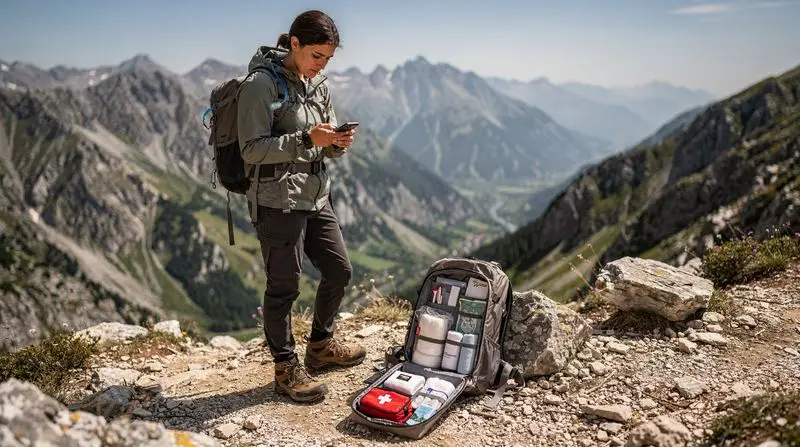
- Carrying a first aid kit
- Having travel insurance with mountain rescue cover
- Informing your guesthouse of your planned route and expected return time
Gjirokastra
Gjirokastra Regional Hospital: Regional hospital in the lower part of the city. For serious conditions, Saranda (1 hour) or Tirana (4-5 hours) are preferable.
Vlora
Vlora Regional Hospital: Reasonable standard for a regional hospital. The medical infrastructure for the Riviera south of Vlora is centered here.
Emergency Numbers
112: Universal emergency number for ambulance, police (polici), and fire brigade (zjarrëfikëse). Operators speak Albanian. English-speaking operators are available in Tirana but may not be guaranteed at all hours elsewhere.
127: Direct ambulance line (QSUT Tirana ambulance service).
129: Police direct line.
128: Fire brigade direct line.
Practical advice for tourists: When calling 112, speak slowly and clearly. Give your location as specifically as possible — city, street name, nearest landmark. If you do not speak Albanian, say “English” (anglisht) immediately and the operator will attempt to assist or connect you.
Your travel insurance emergency line: This is arguably more immediately useful than local emergency services for non-life-threatening situations. Your insurer’s 24-hour emergency assistance line can direct you to the nearest appropriate facility, assist with language, and coordinate payment or guarantee of payment. Save this number before you travel.
Health Insurance in Albania
European Health Insurance Card (EHIC)
Albania is not a member of the EU or the European Economic Area, so the European Health Insurance Card (EHIC) is not valid in Albania. EU travelers cannot use EHIC to access free or subsidized care in Albanian public hospitals.
UK Global Health Insurance Card (GHIC)
Similarly, the UK GHIC does not apply in Albania. UK travelers should not rely on GHIC for healthcare in Albania.
What This Means
Every traveler to Albania should have private travel insurance with healthcare and medical evacuation cover. The cost of private healthcare in Albania is low (a GP consultation: EUR 20-40; an emergency room visit: EUR 30-80; a simple diagnostic test: EUR 10-30) but serious conditions requiring hospitalization, surgery, or air evacuation can be very expensive without insurance.
Making an Insurance Claim
Before treatment (if possible): Contact your insurer’s emergency assistance line before going to a private hospital. They can provide a guarantee of payment to the facility, which simplifies billing.
Keep all receipts and documentation: Albanian private hospitals issue itemized receipts. Keep every document for your insurance claim. Public hospitals may be less consistent about documentation — request a written record of treatment.
Repatriation: For serious conditions, your travel insurer coordinates medical evacuation. Medical repatriation to your home country can be arranged if you are medically stable enough to travel. Air ambulance evacuation, if required, is covered under most comprehensive travel insurance policies.
See the Albania travel insurance guide for detailed policy recommendations.
Common Health Concerns for Travelers
Gastrointestinal issues: Albanian tap water in major cities is treated but travelers with sensitive stomachs sometimes react to unfamiliar water. Buying bottled water is a reasonable precaution, particularly in the first days. Food hygiene in established restaurants is generally good. Street food and market stalls have lower hygiene standards — use judgment.
Heat: Summer temperatures in coastal areas and cities can reach 36-40°C. Heat exhaustion is a real risk for travelers unaccustomed to this climate. Drink more water than you think you need, avoid intense activity in peak midday heat (12:00-16:00), and seek shade.
Sun: The Albanian sun is strong May through September. High-SPF sunscreen and a hat are essential. Sunburn severe enough to require medical attention is easily prevented.
Ticks: In mountain and forested areas, ticks are present. Check yourself for ticks after hiking through long grass or scrub. If bitten, remove the tick with tweezers, pulling straight out. Monitor for any rash over the following weeks. Tick-borne encephalitis and Lyme disease exist in the region — preventive tick spray (available at Albanian pharmacies) is advisable for hikers.
Insect bites: Mosquitoes are active in summer near standing water and in forested areas. In coastal marshy areas (near Butrint, for example), they can be persistent. Mosquito repellent and keeping arms and legs covered in the evening reduces bites.
Altitude: The Albanian Alps go above 2,500m. For travelers not accustomed to altitude, light headaches are possible. Altitude sickness serious enough to require treatment is rare at the altitudes accessible to normal tourists in Albania.
What to Bring in Your Medical Kit
The Albania packing list guide covers general packing. For health specifically:
- Sufficient supply of any regular prescription medications
- Written copy of any regular prescriptions (generic names)
- Antihistamine tablets
- Ibuprofen or paracetamol
- Antidiarrheal medication (loperamide)
- Oral rehydration salts
- Antiseptic wipes and small bandages
- Blister plasters (essential for walking in historic towns on cobblestones)
- High-SPF sunscreen
- Insect repellent with DEET
- Tick removal tweezers
- Any personal medications
Health Considerations for Specific Traveler Groups
Travelers with chronic conditions: Bring a full trip’s supply plus a buffer of at least a week for any regular medication, along with a written prescription listing generic (chemical) names. Albanian pharmacists work more reliably from generic names than Western brand names. For diabetes, cardiac conditions, or other conditions requiring regular monitoring, identify the nearest appropriate hospital for your itinerary before you travel — Tirana for anything specialist, with Hygeia and American Hospital as the go-to private options.
Travelers with children: Pediatric care is available in Tirana’s private hospitals and larger regional hospitals, though English-speaking pediatric specialists are concentrated in the capital. Standard childhood medications (fever reducers, rehydration salts) are available over the counter at any pharmacy. See the Albania family travel guide for broader family health and safety planning.
Older travelers: Albania’s private hospitals in Tirana handle routine and urgent care well, but response times outside the capital are longer. The Albania seniors guide covers accessibility and medical facility planning by region in more depth.
Dental Care in Albania
Dental treatment is one of Albania’s better-value healthcare options, and dental tourism to Albania has grown as prices remain far below Western Europe. Tirana has numerous private dental clinics with modern equipment, and several specifically market to international patients for procedures such as implants and crowns. For a simple emergency repair or extraction while traveling, a Tirana dental clinic typically charges EUR 30-80 — inexpensive enough that many travelers do not bother claiming on insurance. Ask your hotel or the Albania medical tourism guide for clinic recommendations if you are considering planned dental work alongside a trip.
Managing a Minor Illness on the Road
Most travel-related illness in Albania resolves with pharmacy-level treatment and a day of rest. The practical sequence: identify the nearest farmaci (ask your guesthouse — they always know), describe symptoms in simple terms or show the pharmacist a translation app screen, and follow their OTC recommendation. If symptoms do not improve within 24-48 hours, or if you develop a fever, escalate to a clinic visit rather than continuing to self-treat. In Tirana or Saranda this means one of the private clinics listed above; in smaller towns, the regional hospital’s outpatient department handles walk-ins for non-emergency cases. The Albania travel insurance guide explains how to get insurer sign-off before a clinic visit so reimbursement is straightforward.
Frequently Asked Questions About Healthcare in Albania
Is healthcare in Albania good enough for tourists?
For minor conditions (infections, injuries, stomach problems), Albanian pharmacies and basic medical clinics are fully adequate. For more serious conditions, Tirana’s private hospitals (Hygeia, American Hospital) provide good standard care with English-speaking staff. For major emergencies, medical evacuation is an option under travel insurance.
Do Albanian pharmacists speak English?
In Tirana and tourist-heavy cities like Saranda, many pharmacists speak basic to functional English. In smaller towns and rural areas, English capability is limited. Showing the generic name of a medication, its packaging, or using a translation app on your phone solves most communication barriers.
Can I get prescription medications without a prescription in Albania?
Many medications that require prescriptions in Western Europe are available over the counter in Albanian pharmacies, including some antibiotics. This does not mean you should take medications without medical guidance, but it does mean that travelers who have been prescribed a medication before and know what they need can often access it directly. Narcotic analgesics and controlled substances require prescriptions.
What should I do if I have a medical emergency far from a hospital?
Call 112 immediately. Describe your location as precisely as possible. If you are in the Albanian Alps, inform your guesthouse host — they have experience with mountain emergencies and know the local response contacts. Contact your travel insurance emergency line in parallel — they can coordinate assistance and provide translation support if needed.
How much does a private hospital visit cost in Albania?
At Tirana’s private hospitals (Hygeia, American Hospital), a GP consultation typically costs EUR 20-40, an emergency room visit EUR 30-80, and a simple diagnostic test EUR 10-30. These prices are low by European standards, but hospitalization, surgery, or medical evacuation can be significantly more expensive — travel insurance remains essential for anything beyond routine care.