Medical and Dental Tourism in Albania: The Complete 2026 Guide
Albania has emerged as one of Europe’s most cost-effective destinations for medical and dental tourism. Patients from Italy, Germany, the UK, and beyond are traveling to Tirana for dental work, cosmetic procedures, and elective treatments — returning home with treatment completed at 50-70% of what they would have paid at home, often with comparable or superior clinical outcomes.
This guide covers the reality of medical tourism in Albania: which procedures make sense, which clinics are reputable, realistic cost comparisons, what to watch out for, and how to plan a combined medical and tourism trip that makes the most of the visit.
| Typical savings | Around 50-80% vs Western Europe |
| Base city | Tirana |
| Most common procedures | Dental implants, crowns, veneers, cosmetic surgery |
| Trip length | 2-10 days depending on procedure |
| Best time to combine with tourism | Spring or autumn |
| Top-tier option | American Hospital Tirana (JCI accredited) |
Why Albania for Medical Tourism?
The Cost Advantage
The fundamental driver of Albanian medical tourism is pricing. Albanian medical professionals earn significantly less than their Western European counterparts, and clinic overhead costs — rent, staff salaries, equipment leasing, insurance — are a fraction of costs in Germany or the UK. These savings pass directly to patients.
Crucially, many Albanian dentists and surgeons trained at European universities or completed postgraduate training in Italy, Germany, or Turkey. Equipment in Tirana’s private clinics is modern — the same brands and models used in Western Europe. The cost difference reflects labour costs and overhead, not quality of care or clinical outcomes.
Language Accessibility
Italian is a de facto second language in Albania — decades of Italian television, emigration patterns, and commercial ties mean that Italian speakers can communicate with Albanian medical staff more easily than almost anywhere outside Italy. English is widely spoken among university-educated medical professionals in Tirana. Many clinic websites and patient communications are conducted in Italian and English as a matter of standard practice.
Short Travel Distances
For patients from Italy, the 45-minute flight from Bari or Rome to Tirana makes Albania logistically comparable to traveling to a domestic city. For UK patients, the Tirana flight is 2.5-3 hours from London. For German patients, Tirana is 2.5 hours from Munich or Frankfurt. The treatment can be combined with 3-5 days of genuine tourism in one of Europe’s most rewarding destinations — making the trip feel less like a medical journey and more like a medical holiday.
The Tourism Combination
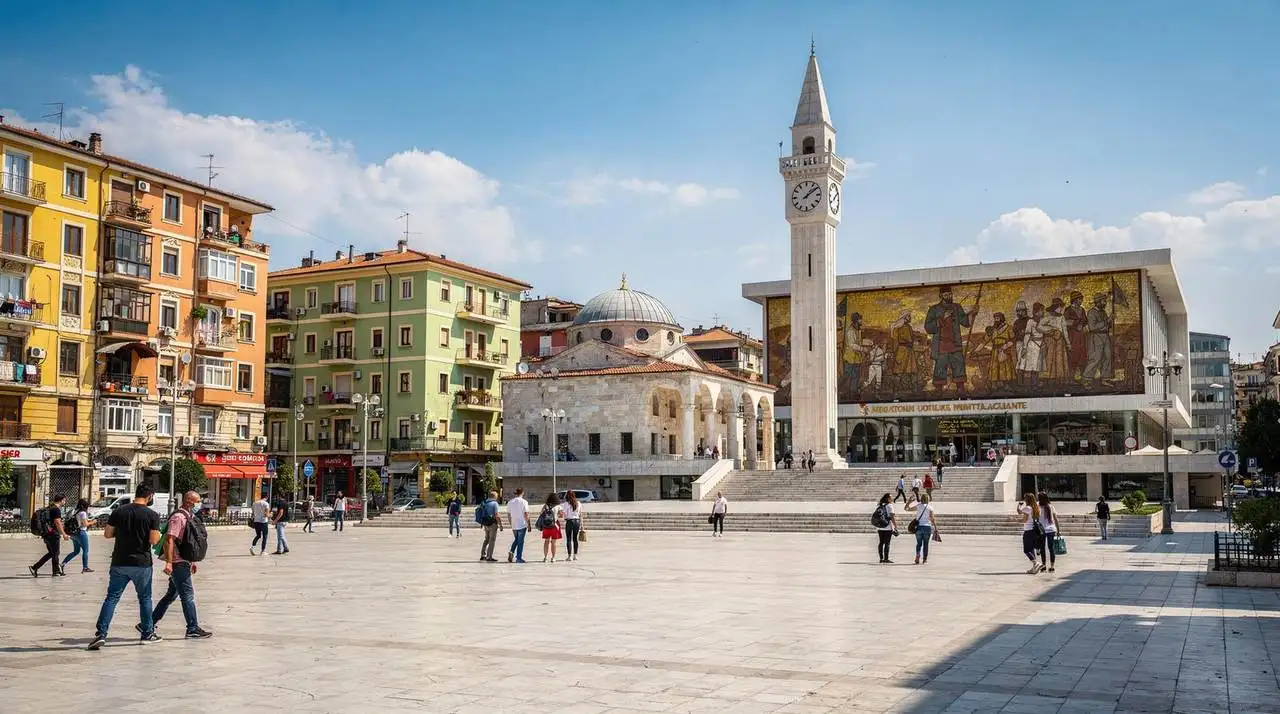
The combination of medical treatment and tourism is one of the most underappreciated aspects of Albanian medical tourism. Tirana is a genuinely interesting city with excellent food, museums, nightlife, and easy access to day trips to Berat and other destinations. Patients undergoing multi-appointment dental work typically have a day or two between appointments — time that is easily filled with rewarding exploration rather than waiting in a hotel room.
See the Tirana destination guide for the city’s restaurants, galleries, museums, and day trip options that fill the gaps between appointments with something memorable.
Dental Tourism in Albania
Dental care is the primary driver of Albanian medical tourism and arguably offers the best value proposition for foreign visitors. The combination of high-quality implant systems, skilled Albanian dentists trained in European institutions, and dramatically lower per-unit costs produces savings that can be transformative for patients needing extensive work.
Cost Comparison Table
| Procedure | UK Cost | Germany Cost | Italy Cost | Albania Cost | Saving |
|---|---|---|---|---|---|
| Single dental implant (complete) | EUR 2,500-3,500 | EUR 2,000-3,000 | EUR 1,800-2,800 | EUR 600-900 | 65-75% |
| Full arch implants (All-on-4) | EUR 16,000-22,000 | EUR 14,000-20,000 | EUR 12,000-18,000 | EUR 5,000-8,000 | 60-70% |
| Porcelain crown | EUR 800-1,500 | EUR 700-1,200 | EUR 600-1,000 | EUR 150-300 | 70-80% |
| Veneers (per tooth) | EUR 900-1,500 | EUR 700-1,200 | EUR 600-1,100 | EUR 200-400 | 65-75% |
| Full set of veneers (10-12 teeth) | EUR 9,000-18,000 | EUR 7,000-14,000 | EUR 6,000-13,200 | EUR 2,000-4,800 | 65-75% |
| Root canal treatment | EUR 500-1,500 | EUR 400-1,200 | EUR 350-1,000 | EUR 100-200 | 75-85% |
| Teeth whitening (professional) | EUR 300-800 | EUR 250-700 | EUR 200-600 | EUR 80-150 | 70-80% |
| Full dental examination | EUR 80-200 | EUR 60-150 | EUR 60-150 | EUR 20-40 | 70-80% |
For a patient needing six implants, the Albanian saving covers the cost of flights, a week’s accommodation in a comfortable hotel, and several days of tourism multiple times over. At the lower end — a patient needing four to six crowns — the savings still typically exceed the cost of travel.
Understanding What Drives the Prices
The Albanian price differential reflects genuine structural differences rather than compromises on materials. The key factors:
Labor costs: A senior Albanian dentist’s annual income is a fraction of a UK or German equivalent. This is the largest single factor in the price difference.
Overhead costs: Clinic rent in Tirana, even at prime locations, costs a fraction of equivalent premises in London, Munich, or Milan. Administration, insurance, and regulatory compliance costs are also lower.
Materials: The better Albanian clinics use identical implant systems (Straumann, Nobel Biocare, Zimmer Biomet) and ceramic materials (Vita, Ivoclar) as their Western European counterparts. This is a key differentiator from clinics that undercut costs by using cheaper systems — always ask which implant brand the clinic uses before committing.
Laboratory work: Albanian dental laboratories, which produce crowns, bridges, and implant prosthetics, operate at lower cost while many have invested in the same CAD/CAM milling equipment as European laboratories. Some Albanian clinics use Italian or German laboratories for the final prosthetics while doing the clinical work in Tirana — ask about this if laboratory quality is your primary concern.
Reputable Dental Clinics in Tirana: How to Find Them
Albania’s dental clinic landscape ranges from excellent to highly variable. No reliable official accreditation list for tourist-facing dental clinics exists, which makes the vetting process patient-driven. The following criteria help identify reputable clinics:
Credentials to look for:
- Lead dentist with verifiable European university qualification (degree and any postgraduate specialization)
- Membership in the Albanian Medical Chamber and the Albanian Association of Stomatology
- ISO 9001 certification or other quality management certification
- English or Italian language capability throughout the team
- Clear, itemized price lists available before treatment commences
- Professional-quality clinic facilities visible in photographs and on the clinic visit
Implant systems: Ask specifically which implant system the clinic uses. Straumann, Nobel Biocare, Zimmer Biomet, and Osstem are all acceptable systems with established track records. Clinics that cannot name the implant system they use, or that offer prices substantially below Albanian market rates, are a red flag.
Guarantee: Ask what guarantee the clinic provides on implant work and what the guarantee covers. Reputable clinics offer two to five year guarantees on implants that cover implant failure under normal conditions.
Reviews: Google reviews in Italian, English, and German are a reasonable proxy for international patient experience. Dental tourism platform reviews (Dental Departures, WhatClinic, Dentacoin) aggregate patient feedback specifically. Look for clinics with a substantial volume of reviews (100+) and consistent positive experience reports across multiple years.
Questions to Ask Before Booking
Before committing to treatment, ask:
- Which university did the lead dentist attend and in which year did they qualify?
- Do you have specialist training in implantology (for implant cases)?
- Which implant system do you use, and what is the guarantee?
- Is the crown or prosthetic work done in an Albanian laboratory or sent abroad?
- What is included in the quoted price — all consultations, all materials, temporary restorations, follow-up appointments?
- Can you provide contact details for previous international patients who are willing to be contacted?
- What happens if I develop a complication after returning home?
A reputable clinic answers all of these questions fully and without hesitation. Evasion or vagueness on materials, implant brands, or guarantees should move a clinic down your consideration list.
Planning Your Dental Tourism Trip
Online consultation first: Most Albanian clinics now offer online consultations. Send your dental records, recent X-rays (panoramic OPG and any periapical X-rays), and photographs of your concerns. A reputable clinic provides a treatment plan and itemized quote before you book flights. This consultation should be free.
Trip duration guide:
- Consultation and straightforward treatment (fillings, extractions, whitening): 2-4 days
- Crowns and bridges (laboratory work required): 5-7 days — allow time for impressions, laboratory fabrication, and fitting
- Single implants: The placement appointment is straightforward (1-2 hours), but the healing period (osseointegration) takes 3-6 months. This typically requires two trips: first for implant placement and temporary restoration, second for the permanent crown
- Full arch reconstruction (All-on-4): 7-10 days for the first trip, second trip 3-6 months later for the final implant-supported prosthetics
Accommodation during treatment: Choose a hotel close to your clinic to minimize travel on days when you have had dental procedures. Central Tirana has multiple comfortable mid-range hotels at EUR 50-90 per night — cheap enough that staying for a week adds minimally to the total cost. Serviced apartments are worth considering for stays over five days, particularly if you want kitchen access for soft foods in the days after procedures.
Tourism during treatment gaps: Use the gap between appointments well. The Albania travel budget guide confirms that Tirana’s restaurants, museums, and experiences are excellent value. A day trip to Berat or a guided Tirana food tour between dental appointments transforms a medical trip into a genuine travel experience.
Cosmetic and Aesthetic Procedures
Albania’s private clinics offer a growing range of cosmetic and aesthetic procedures at significantly lower costs than Western Europe. The same factors that drive dental cost advantages — lower labor and overhead — apply across all clinical specialties.
Cosmetic Surgery
The following are indicative price comparisons for 2026. Individual cases vary based on complexity, surgeon, and specific procedure requirements.
Rhinoplasty (nose reshaping): EUR 2,000-3,500 in Albania vs EUR 5,000-12,000 in Western Europe
Blepharoplasty (eyelid surgery): EUR 800-1,500 in Albania vs EUR 2,500-6,000 in Western Europe
Liposuction (per area): EUR 1,000-2,000 in Albania vs EUR 3,000-7,000 in Western Europe
Breast augmentation: EUR 2,500-4,000 in Albania vs EUR 5,000-10,000 in Western Europe
Abdominoplasty (tummy tuck): EUR 2,500-4,500 in Albania vs EUR 6,000-12,000 in Western Europe
Important caution: Cosmetic surgery is higher-risk than dental work and requires more thorough vetting of the surgeon and clinic. Ask specifically for surgeon credentials (including fellowship training abroad), board certification, complication rates, and a gallery of before-and-after cases. The cost savings are real but so is the risk of poor outcomes with underqualified surgeons operating in inadequately equipped facilities. The American Hospital Tirana is the safest option for higher-risk procedures given its international accreditation. For elective cosmetic surgery at other clinics, in-person pre-operative consultation before final booking is essential.
Non-Surgical Aesthetics
Botox, dermal fillers, laser treatments, PRP (platelet-rich plasma) hair loss treatment, and similar non-surgical procedures are significantly cheaper in Albania than in Western Europe while using the same product brands. The lower risk profile of these procedures makes Albania a more straightforwardly sensible choice for non-surgical aesthetics than for major surgery.
Botox (per area): EUR 50-80 in Albania vs EUR 200-400 in UK or Germany
Dermal filler (per syringe): EUR 150-250 in Albania vs EUR 400-700 in UK or Germany
Laser hair removal (per area, per session): EUR 30-60 in Albania vs EUR 80-200 in UK or Germany
Non-surgical aesthetic clinics in Tirana have proliferated rapidly in recent years and range widely in quality. Look for clinics with qualified aesthetic physicians (not just beauty therapists) and who use named brand products (Allergan, Ipsen, Galderma for botulinum toxin; Juvederm, Restylane, Sculptra for fillers).
The American Hospital Tirana: The International Standard Option
The American Hospital Tirana is the country’s leading private hospital facility with Joint Commission International accreditation — the gold standard for international hospital accreditation, applied by American standards globally. It operates to standards recognizable to Western European and North American patients:
- English-speaking medical staff throughout
- International protocols for infection control, patient safety, and surgical standards
- Comprehensive diagnostic facilities including MRI, CT, and full laboratory services
- Emergency services with international-standard emergency medicine
- Full range of surgical specialties with trained consultants
- International patient coordination service for medical tourists
For complex procedures, for patients with underlying health conditions requiring careful management, or simply for those who want the security of internationally accredited care, the American Hospital is the right choice. Prices are higher than private Albanian clinics but still substantially below Western European equivalents — a complex procedure at the American Hospital might cost 40-50% of the Western European equivalent, compared with 25-30% at a private Albanian clinic.
Contact: www.spitalamerikan.com provides full specialty listings and appointment booking. The hospital has English-speaking patient coordinators who handle international patient inquiries.
Ophthalmology: LASIK and Eye Surgery
Albania has a small but growing ophthalmology sector for LASIK and cataract surgery. LASIK laser eye correction in Albania costs EUR 600-1,000 per eye versus EUR 1,500-2,500+ per eye in the UK or Germany — savings of 50-70%.
For straightforward LASIK cases in young patients with good candidacy profiles, the Albanian option is worth investigating. Choose only clinics with verifiable experience (how many LASIK procedures per year?), modern laser equipment (Alcon WaveLight or Zeiss VisuMax systems are the current standard), and proper pre-operative assessment including corneal topography and wavefront analysis. The same due diligence principles that apply to dental work apply here — ask about equipment, surgeon experience, and outcomes before committing.
Cataract surgery in Albania costs EUR 800-1,500 per eye versus EUR 2,000-3,500+ in Western Europe. For patients on long waiting lists in their home country’s public health systems, this combination of cost savings and immediate access can be compelling.
Fertility Treatment
Albania has fertility clinics offering IVF treatment. Albanian law on assisted reproduction is relatively permissive compared to some EU member states, making it a destination for patients whose treatment options are restricted at home — including egg donation (where regulations are more permissive than in many EU countries) and treatment for same-sex couples.
IVF treatment costs in Albania range from EUR 2,000-3,500 per cycle versus EUR 4,000-7,000+ in Western Europe. Success rates vary by clinic — look for clinics that publish their ESHRE-standard statistics (clinical pregnancy rate per embryo transfer, by age group) transparently. Clinics that decline to share success rate data raise obvious concerns.
The fertility tourism sector requires careful clinic selection and clear communication about the legal aspects of treatments that vary by jurisdiction. Consulting a fertility law specialist regarding any cross-border implications before beginning treatment is advisable.
Practical Logistics for Medical Tourists
When to Plan Your Trip
Spring (April-May) and Autumn (September-October): The optimal combination of good weather, manageable tourist numbers, and genuinely pleasant tourism opportunities between appointments. Spring brings wildflowers and clear mountain views; autumn brings golden light and cooler temperatures.
Summer: Hot in Tirana (July-August temperatures regularly reach 35°C). The city itself is somewhat quieter than the coast in high summer, which can make navigation and accommodation easier. Post-procedure comfort may be lower in heat.
Winter: Tirana functions normally and accommodation is cheapest. If the primary purpose is medical with minimal tourism, winter works well. The city is uncrowded and the cultural attractions are unaffected by season.
Accommodation for Medical Tourists
Recovery accommodation in Tirana is affordable by any standard:
Mid-range hotel (central Tirana): EUR 50-90 per night, typically including breakfast. The Hotel Tirana International and several boutique hotels near Skanderbeg Square offer good options.
Serviced apartment: EUR 40-70 per night with kitchen access — better for stays of five days or more, particularly if dietary restrictions post-treatment require cooking control.
Near the American Hospital: The hospital is in the southern part of Tirana. Several hotels in the Blloku neighborhood are within reasonable distance.
Post-dental procedure: in the 24-48 hours after implants, extractions, or extensive crown work, choose accommodation with nearby food delivery or a hotel with room service. Soft foods — yoghurt, soup, mashed dishes — are the practical constraint in the first day or two after major dental procedures.
Travel Insurance and Medical Tourism
Standard travel insurance policies often exclude pre-planned medical procedures, and this matters for medical tourists. If a complication arises — from the procedure itself or unrelated illness — standard travel insurance may not respond.
Options for coverage:
- Specialist medical tourism insurance: Policies specifically covering planned procedures, complications arising from treatment, extended stays if required, and medical evacuation if necessary. Providers include ALC (All-Clear), SafeTrip, and specialist medical tourism insurers.
- Hybrid policies: Some standard travel insurance policies cover emergency complications arising from elective procedures. Verify specifically with your insurer before travel.
Read the Albania travel insurance guide for general travel insurance recommendations, but for medical tourism specifically, contact a specialist medical tourism insurance broker who can advise on the coverage gaps that standard policies typically have.
Bringing Your Medical Records
Bring all relevant records. For dental work: panoramic X-ray (OPG) is essential for implant planning — most clinics accept digital DICOM files by email ahead of your visit. Recent dental records and any prior implant records.
For surgical procedures: recent blood tests (full blood count, coagulation screen, metabolic panel), ECG if over 50, and any anaesthesia records from previous procedures. Your surgeon will specify what is required at the pre-operative consultation.
For ophthalmology: previous spectacle or contact lens prescriptions covering the past two to three years, and any prior eye surgery records.
Combining Medical Treatment with Albanian Tourism
The most efficient approach to Albanian medical tourism integrates the tourism thoughtfully rather than treating it as an afterthought.
Before treatment: Use the day of arrival and the pre-treatment period to explore Tirana. The Bunk’Art museums, the National History Museum, the New Bazaar, and the Blloku neighborhood restaurants provide an excellent introduction to the city. Start with the easiest, most enjoyable experiences before the medical appointments begin.
During treatment gaps: Use gaps between appointments for Tirana’s museums, cafes, and day trips to nearby destinations. A day trip to Berat (two hours by road) or Kruja (45 minutes) fits easily into a week of dental treatment. The day trips from Tirana guide covers all the practical logistics.
After treatment: Plan a day or two of gentle recovery tourism after major procedures. Walking the Blloku neighborhood, visiting the Museum of National History, or a meal at one of Tirana’s better restaurants is easy and rewarding even in the first days post-procedure.
Planning your food: Albanian cuisine, with its extensive range of soft dishes — tavë kosi (baked lamb and yoghurt), soups, yoghurt-based preparations — is well-suited to the dietary constraints of post-dental treatment. The Albanian food guide covers the full range of what to expect on Albanian menus.
For tours that cover Tirana’s cultural highlights during your stay, Tirana walking tours can be scheduled for days between appointments and provide cultural context for a city that is genuinely worth understanding.
Honest Assessment: What Can Go Wrong
Medical tourism has genuine risks that no guide should minimize.
Communication errors: Misunderstandings about treatment scope, materials, or post-treatment care instructions can occur in cross-language consultations. Confirm treatment plans in writing in English and ask for clarification on anything that is unclear before the procedure begins. Do not proceed if you are uncertain what you have agreed to.
Follow-up complexity: If a complication develops after you return home, managing it from abroad is challenging. Your home dentist or doctor may be reluctant to take over treatment begun elsewhere, or may charge significantly for doing so. Factor this into your planning — ask the Albanian clinic what support they can provide remotely if problems arise, and identify a home practitioner who is willing to assist with follow-up before you leave.
Quality variability: Not all Albanian clinics are equal. The low-price segment of the market includes clinics that achieve low prices through inferior materials, inadequate sterilization, insufficient clinical experience, or poor case selection. The vetting process described in this guide is not optional — it is the essential investment that separates a successful medical tourism experience from a problematic one.
Recovery time: Some patients arrive expecting to be fully functional the day after a major procedure. Build realistic post-treatment time into your itinerary. Implant surgery typically allows normal activity within a day or two; full arch reconstructions require more significant recovery time.
Regulatory oversight: Albania’s medical regulatory framework is developing but less mature than in EU member states. Patient recourse in the event of malpractice is more limited. This is not a reason to avoid Albania, but it reinforces the importance of choosing reputable, accredited clinics from the outset.
For straightforward dental work — crowns, veneers, implants at a reputable clinic using quality materials — the risk profile is manageable and the savings are very real. The combination of Tirana’s genuinely interesting city experiences and the savings on treatment makes Albania medical tourism a compelling option for Europeans who approach it with appropriate research and preparation.
Hair Transplants and Additional Specialties
Hair transplant clinics have grown rapidly in Tirana in recent years, following the wider Balkan trend toward affordable FUE (follicular unit extraction) procedures. A full FUE hair transplant in Albania typically costs EUR 1,500-2,800 versus EUR 4,000-8,000+ in the UK or Germany — savings in the same 60-70% range as dental and cosmetic work. As with cosmetic surgery, the vetting principles apply directly: ask about the clinic’s graft survival rates, whether the procedure is performed by a qualified surgeon or technicians, and request before-and-after cases from patients with a similar hair pattern to your own.
Other growing specialties include bariatric (weight-loss) surgery and orthopaedic procedures such as hip and knee replacement, both offered at the American Hospital Tirana and a small number of accredited private clinics at 40-60% of Western European costs. These are higher-risk, longer-recovery procedures than dental or non-surgical aesthetic work, and the same due-diligence standard — accreditation, surgeon credentials, published outcomes — applies with even more weight given the complexity involved.
Choosing Between a Private Clinic and the American Hospital
| Private specialist clinic | American Hospital Tirana | |
|---|---|---|
| Typical savings vs Western Europe | 65-80% | 40-50% |
| Best for | Dental, non-surgical aesthetics, straightforward cosmetic work | Complex surgery, patients with health conditions, higher-risk procedures |
| Accreditation | Varies — vet carefully | JCI accredited |
| Language support | English/Italian common, varies by clinic | English-speaking throughout |
| Emergency backup | Limited | Full emergency department on-site |
For most straightforward dental or non-surgical aesthetic treatment, a well-vetted private clinic offers the better value. For anything complex, or if you have underlying health conditions, the American Hospital’s accreditation and emergency infrastructure are worth the higher price.
Frequently Asked Questions About Medical Tourism in Albania
Is dental work in Albania actually safe?
At reputable, well-vetted clinics, yes — many Albanian dentists trained in Italy, Germany, or Turkey, use the same implant brands (Straumann, Nobel Biocare) as Western Europe, and offer multi-year guarantees. The risk lies in choosing an unvetted, unusually cheap clinic rather than in Albanian dental care generally. Following the vetting criteria in this guide — credentials, named implant systems, itemized pricing, and reviews — significantly reduces the risk.
How much can I realistically save on dental implants in Albania?
Typically 60-75% compared to the UK or Germany. A single complete implant that costs EUR 2,500-3,500 in the UK runs around EUR 600-900 in Albania at a reputable clinic. For a patient needing multiple implants or a full-arch reconstruction, the savings comfortably cover flights and accommodation multiple times over.
Do I need travel insurance specifically for medical tourism in Albania?
Yes, in most cases. Standard travel insurance policies typically exclude complications from pre-planned elective procedures. Specialist medical tourism insurance, or a confirmed hybrid policy that explicitly covers your specific treatment, is the safer route — check the Albania travel insurance guide for general policy guidance, then confirm the medical tourism gap specifically with your insurer or a specialist broker before booking flights.
Can I combine medical tourism with a proper holiday in Albania?
Yes, and most patients do. Tirana alone offers enough museums, food, and neighbourhood exploration to fill the days between appointments, and day trips to Berat or Kruja fit comfortably into a week-long dental trip. Spring and autumn are the best seasons to combine treatment with genuine sightseeing, given milder weather for recovery walks.
See the Albania travel budget guide for overall cost context, and the Tirana destination guide for the city that will be your base throughout the treatment period.