Albania Drinking and Nightlife Rules: The Complete Guide
Albania has a genuinely good nightlife scene — Tirana’s Blloku neighborhood is one of the most interesting bar districts in the western Balkans, the summer Riviera beach parties are memorable, and Albanian hospitality culture means drinks appear at social occasions without being asked for. Understanding the legal and social rules governing drinking and nightlife in Albania helps you have a good time without complications.
This guide covers the legal drinking age, drink-driving rules (important — Albania has near-zero tolerance), where to buy alcohol, public drinking regulations, bar and club culture, smoking rules, and dress codes.
| Legal drinking age | 18 |
| Drink-driving BAC limit | 0.01% (effectively zero) |
| Bar entry | Usually free; clubs around EUR 5-15 for events |
| Peak nightlife hours | 23:00-04:00 (Tirana), later on weekends |
| Best area | Blloku, Tirana; Dhermi and Himara on the Riviera in summer |
The Legal Drinking Age
The legal minimum age for purchasing and consuming alcohol in Albania is 18 years. This applies to:
- Purchasing alcohol from shops and supermarkets
- Being served alcohol in bars, restaurants, and clubs
- Attending events where alcohol is served
In practice, age verification is not as consistently enforced in Albania as in Western European countries. However, the legal standard is clear — 18 is the threshold, and venues can refuse service to those who appear underage.
There is no specific legal provision for parental permission allowing under-18s to drink — the minimum is a hard 18.
Drink-Driving: The BAC Limit
Albania operates one of the strictest drink-driving laws in Europe:
The Blood Alcohol Concentration (BAC) limit is 0.01% — effectively zero tolerance.
This is not 0.05% (the standard EU limit) or even 0.02% (the strict Nordic standard). The Albanian limit of 0.01% means that consuming any meaningful amount of alcohol and driving is a criminal offense. A single beer can take a 70 kg person above 0.01% BAC.
Penalties for drink-driving in Albania:
- BAC between 0.01% and 0.08%: Fine and license suspension
- BAC above 0.08%: Criminal charges, higher fines, license confiscation, possible imprisonment
- Repeat offenses: Significantly enhanced penalties
Enforcement: Police checkpoints are common on Albanian roads, particularly at night and on holiday weekends. Breathalyzer testing is standard at these checks.
The practical implication: If you plan to drive in Albania at any point during your trip, do not drink alcohol that day. If you are in a group, designate one person as the driver for any day involving car travel. The 0.01% limit leaves no margin.
If you want to drink in Tirana or other cities, use Bolt (the ride-hailing app, available throughout Albania). A Bolt across Tirana costs EUR 1.50-3. This is the correct solution. See the driving in Albania guide for more on road rules.
Public Drinking
Albanian law does not have a blanket prohibition on drinking in public, but the practical and social rules are:
Broadly acceptable:
- Drinking at outdoor café terraces and bar gardens
- Drinking at festivals, public events, and beach areas
- A beer on a park bench or in a public square is generally not an issue
Not appropriate:
- Loud, visibly intoxicated behavior in public spaces
- Drinking in religious sites and their immediate vicinity (mosques, church grounds)
- Drinking in government buildings, schools, and similar formal spaces
The cultural context: Albania is a Muslim-majority country (approximately 57% of the population), but the tradition of Albanian religious moderation means that alcohol is widely accepted and alcohol consumption is a normal part of social life even in Muslim-majority areas. You will see alcohol sold and consumed everywhere in Albania without social tension. However, visibly drunken behavior in public is considered disrespectful across all communities — not just by Muslims.
Albania has the social tolerance for drinking that characterizes most Mediterranean countries: wine and beer with meals, raki as a social lubricant, bar culture as normal civic life. What it does not tolerate is the performative, aggressive, or incapacitated intoxication associated with some British and northern European party tourism.
Where to Buy Alcohol
Alcohol is widely available throughout Albania. There are no restricted sale hours for most of the day and no licensing system equivalent to UK pub hours.
Supermarkets and Shops
All major supermarkets (Conad, Spar, and local equivalents) sell alcohol: beer (domestic Birra Tirana, Birra Korçë, Birra Stela, plus imports), wine (Albanian and imported), raki, and spirits. Prices are low:
- Birra Korçë (330ml) from supermarket: 80-100 ALL (approximately EUR 0.70-0.90)
- Birra Tirana (500ml): 100-150 ALL
- Local wine (bottle, 750ml): 400-800 ALL for decent Albanian wine
- Raki (domestic, 700ml): 400-800 ALL
Petrol stations also typically sell alcohol and operate extended hours. In cities, convenience stores and minimarkets (called “mini market” in Albanian) are open late and sell beer and wine.
Bars and Restaurants
Bars operate throughout Albanian cities and are not subject to strict closing times in the way UK or German bars are. In Tirana, bars in Blloku typically operate until 02:00-04:00, with clubs sometimes running until dawn. There is no universal Albanian equivalent of “last orders.”
A beer at a typical Albanian bar costs 200-350 ALL (EUR 1.80-3). Raki: 100-200 ALL per shot. Local wine by the glass: 150-300 ALL.
In Rural and Mountain Areas
In the Albanian Alps and rural highland areas, alcohol is available at guesthouses (always) and sometimes at village shops. Guesthouses universally offer raki — it is part of the hospitality tradition. See the raki guide for what to expect.
Albanian Nightlife Culture
The Schedule
Albanian social life, and particularly nightlife, runs very late by Northern European standards:
- Cafés and aperitivo culture: Active from approximately 08:00 (for morning coffee — Albania runs on espresso) through to evening
- Dinner: 20:00-22:00 is the normal dinner hour; many Albanians eat late by instinct
- Bar scene: Active from approximately 22:00
- Clubs: Typically don’t fill until midnight or 01:00; peak is 01:00-04:00
Going to a bar at 20:00 and expecting it to be busy will disappoint. Going at 23:00 is correct.
Tirana’s Blloku Neighborhood
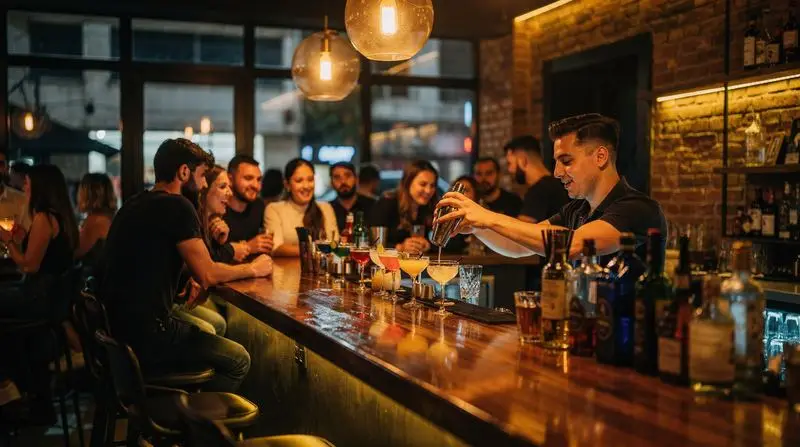
Blloku is the heart of Tirana nightlife. The neighborhood — the former Communist Party elite residential district, sealed off from ordinary Albanians until 1991 — is now covered in bars, clubs, terraces, and restaurants on every block.
Character: Blloku combines sophisticated cocktail bars with unpretentious beer-and-raki spots, upmarket clubs with open-air terraces, and everything in between. The clientele is young, international in outlook, and casually dressed. The atmosphere is inclusive and energetic.
Free entry: Most Tirana bars have no cover charge. Some clubs charge entry (EUR 5-15) for specific events or DJ nights; many are free on weekdays and lower-charge at weekends.
Safety: Blloku is generally safe. The main caution is the same as any European nightlife area — keep track of your belongings, particularly your phone, in crowded bars.
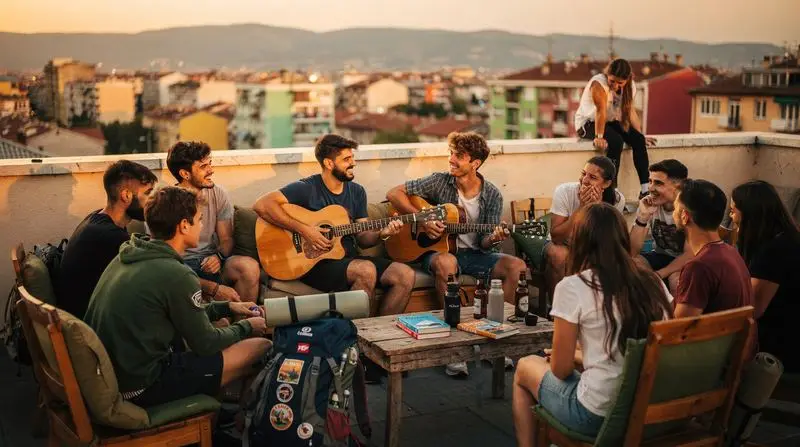
The Albanian Riviera Summer Scene
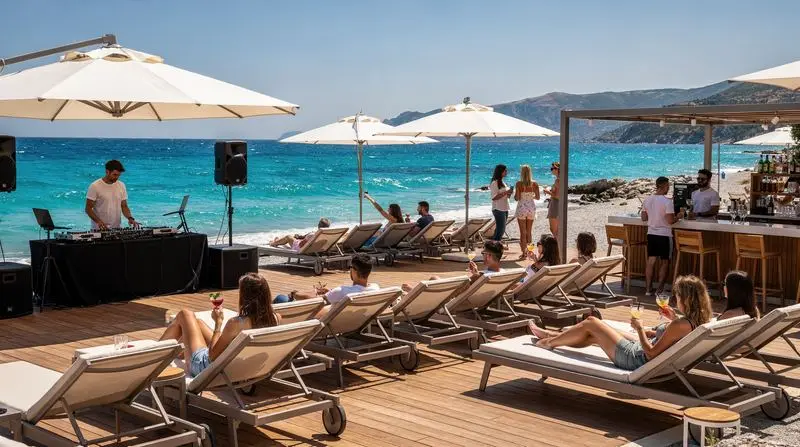
The summer Riviera (July-August primarily, with some activity in June and September) brings an outdoor club and beach bar scene to the coast. Dhermi and Himara are the centers of the Riviera party scene. Open-air bars run through the night with music, the sea immediately adjacent, and prices significantly lower than comparable beach party destinations in Croatia, Greece, or Ibiza.
The beach club scene is documented in the beach clubs in Albania guide.
Other Cities
Shkodra: University city with a younger population. A modest but active bar scene centered on the old town and the Boulevard Gjergj Kastrioti.
Saranda: Tourist-heavy summer scene. The waterfront has bars and outdoor terraces active through summer evenings.
Berat: Beautiful old-town bar scene but small-scale. More appropriate for quiet evening drinks than late nights.
Gjirokastra: Very limited nightlife. Old bazaar restaurants and a few bars. Not a nightlife destination.
Nightlife by City: Quick Comparison
Nightlife intensity varies enormously between Albanian cities, and matching expectations to the right city avoids disappointment.
| City | Nightlife style | Best nights | Typical crowd |
|---|---|---|---|
| Tirana (Blloku) | Cocktail bars, clubs, terraces | Thu-Sat | Young, international, mixed locals |
| Riviera (Dhermi, Himara) | Beach clubs, open-air DJ sets | Jul-Aug nightly | Summer tourists, young Albanians |
| Saranda | Waterfront bars, casual | Jun-Sep evenings | Tourist-heavy, family-friendly by day |
| Shkodra | Old-town bars, low-key | Fri-Sat | University students, locals |
| Berat / Gjirokastra | Quiet evening drinks | Any evening | Couples, culture-focused travelers |
If nightlife is a priority for your trip, base yourself in Tirana or the summer Riviera rather than the historic old towns — Berat and Gjirokastra reward slow evenings with wine and a view rather than late-night energy. See the Albania customs and etiquette guide for the broader social rules that shape how Albanians socialize.
Non-Alcoholic and Halal-Friendly Options
Albania’s Muslim-majority population means non-drinkers are entirely unremarkable, and no one will pressure you to drink. Every bar and restaurant serves a full range of soft drinks, fresh juices, and Albanian-style Turkish coffee, and ordering a coffee or a Boza (a mildly fermented, low-alcohol traditional drink some venues stock) instead of a beer draws no attention at all. Blloku’s newer cocktail bars increasingly offer proper zero-proof cocktail menus, though this is still inconsistent outside Tirana. If you are traveling during Ramadan, note that some smaller, more traditional restaurants may adjust their alcohol service hours or availability, though tourist-facing venues in Tirana and the Riviera operate normally year-round. Students and younger travelers exploring the country on a budget will find the Albania students and gap year guide useful for combining nightlife with broader budget planning, and the Albania solo travel guide covers navigating bars and clubs alone.
Dress Codes for Albanian Bars and Clubs
Albanian nightlife dress codes are more relaxed than Southern European norms in most venues:
Regular bars (Blloku and equivalent): No formal dress code. Casual smart is universal — jeans, clean trainers, a decent top. Shorts are fine in summer. You will not be turned away from ordinary bars.
Upmarket clubs and events: Some Tirana clubs have smarter dress expectations for entry, particularly for special events. “Smart casual” covers most situations: avoid football shirts, worn-out tracksuit bottoms, and beach flip-flops. For women, no specific formality is required — the range from casual chic to dressed-up is equally welcome.
Beach clubs (Riviera in summer): Cover-ups over swimwear, or summer clothes, are appropriate for entering beach clubs that are not directly on the sand. On the beach itself, normal beachwear is fine.
Smoking in Bars and Clubs
Albanian law prohibits smoking in enclosed public spaces including bars and restaurants. Indoor smoking in bars is technically illegal.
Reality in practice: Enforcement of the indoor smoking ban is inconsistent, and some bars (particularly smaller, older establishments) still have indoor smoking. In newer, more upmarket venues, the ban is better observed. Most bars with outdoor terraces have designated smoking areas outside.
For non-smokers: Tirana’s newer bars and restaurants in Blloku generally enforce the indoor ban well. The terrace culture that dominates Albanian bar life (tables outside on the street or on rooftops) means outdoor smoking is simply part of the experience.
Hookah (nargile/shisha): Hookah bars are common in Albanian cities, particularly in areas with Turkish-influenced culture. These operate in a different legal category from standard bars.
Public Intoxication
Public intoxication is not specifically criminalized in Albanian law as a standalone offense, but:
- Being visibly and disruptively drunk in public can result in police attention
- Causing disturbances, damage, or threatening behavior while intoxicated is subject to standard criminal law
- The cultural expectation is that intoxication does not become visible public disorder
The Albanian social norm is drinking socially without becoming incapacitated in public. This is well-observed across Albanian society — you rarely see aggressive drunkenness in Albanian public life.
For foreign tourists, the equivalent expectation applies. Albania has not had the “stag party disaster tourism” problems of some European capitals, partly because the culture and social structure are inhospitable to it, and partly because the country has not yet marketed itself that way. Maintaining a respectful standard of behavior keeps it that way.
Raki: The Albanian National Drink
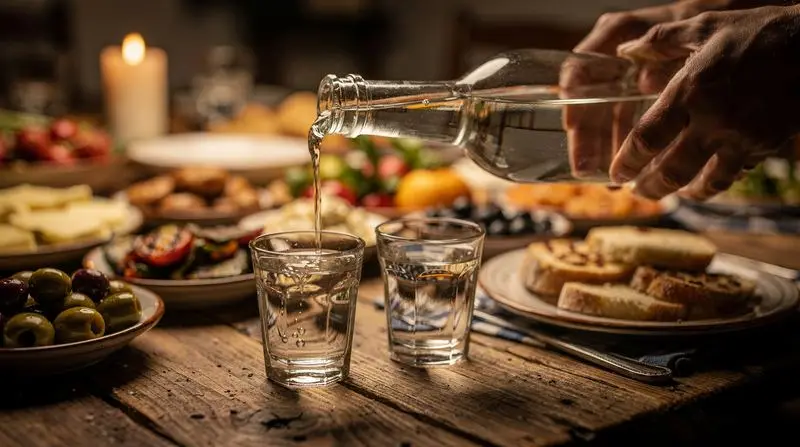
No guide to Albanian drinking is complete without raki. This grape or fruit brandy is the universal Albanian social lubricant — offered at every guesthouse, before every meal in rural homes, at celebrations, and as an expression of hospitality.
Home-distilled raki (raki shtëpie) is technically outside the commercial alcohol licensing system. It circulates widely and is universally offered. The quality ranges from smooth and exceptional to rough and incendiary. Accepting a glass is polite; drinking it is your choice.
Commercial raki (sold in shops and bars) is legal, taxed, and consistently good. Albanian wines are also well worth exploring — particularly the reds from Berat region.
Alcohol on the Road: Important Repeat Warning
Given the 0.01% BAC limit, this point deserves emphasis: do not drink and drive in Albania under any circumstances. The limit is effectively zero. The penalties are real and the roads are unpredictable enough that impaired driving is genuinely dangerous. Bolt is cheap and available in all cities. Guesthouses in rural areas will arrange taxis. There is no situation where driving after drinking in Albania is acceptable.
Frequently Asked Questions About Albania Drinking and Nightlife
What is the drink-driving limit in Albania?
Albania’s Blood Alcohol Concentration (BAC) limit for drivers is 0.01% — effectively zero tolerance. This is one of the strictest limits in Europe. Any meaningful alcohol consumption before driving constitutes an offense. If you plan to drink, use a taxi or ride-sharing service (Bolt is widely available) or arrange a designated non-drinking driver.
What time does nightlife start in Tirana?
Tirana bars begin filling from approximately 22:00-23:00. Clubs typically don’t peak until 01:00-03:00. This is genuinely late by Northern European standards — arriving at a Blloku bar at 20:00 will find it nearly empty. The Albanian coffee culture guide explains the broader culture of Albanian social timing.
Are there dress codes at Albanian clubs?
Most Albanian bars and clubs have relaxed dress standards. Smart casual (clean clothes, no beachwear) is appropriate for standard venues. Some upmarket Tirana clubs have stricter door policies for special events. The general principle is: dress as if you are going out for dinner in a European city, and you will not have a problem.
Can I smoke in Albanian bars?
Indoor smoking in bars and restaurants is technically prohibited by Albanian law. In practice, enforcement is inconsistent, and some smaller bars still permit indoor smoking. Most venues have outdoor terraces where smoking is permitted. Newer and more upscale Tirana venues generally observe the indoor ban.
Is Albania’s nightlife safe for solo travelers?
Yes — Blloku and the main Riviera nightlife strips are well-populated, well-lit, and generally safe by European standards. The usual precautions apply: keep track of your drink and belongings in crowded venues, use Bolt rather than unofficial taxis late at night, and pace yourself if drinking alone in an unfamiliar bar. Many solo travelers find Albanian nightlife easy to navigate socially, since striking up a conversation at a bar is normal and welcomed.
Do Albanians expect you to drink raki when offered?
No, but accepting a small glass when offered by a host is considered polite, especially in guesthouses and rural areas where raki is part of the hospitality tradition. You are never expected to finish it or to drink more than you want — a polite sip or a clear “just a little” is entirely acceptable, and Albanian hosts are not offended by moderation.