We get this question a lot. Someone stumbles across our site, reads a sentence or two, and then sends us a message that goes something like: Albania? Really? Are you sure?
Yes. We are sure. We have been sure for years, and every time we go back we come away more convinced than ever. Albania is the kind of place that genuinely surprises people — not in a gentle, pleasant-surprise way, but in a jaw-dropping, why-has-nobody-told-me-about-this way. If you are reading this, consider this your formal notification.
Here is why Albania needs to be on your list, and why you should probably book before everyone else figures it out.
| Cost | Around €50-70/day for two, mid-range |
| Beaches | Albanian Riviera, Vlora to Saranda |
| Mountains | Albanian Alps, Theth-Valbona hike |
| History | UNESCO Berat and Gjirokastra, Illyrian, Greek, Roman, Ottoman, communist layers |
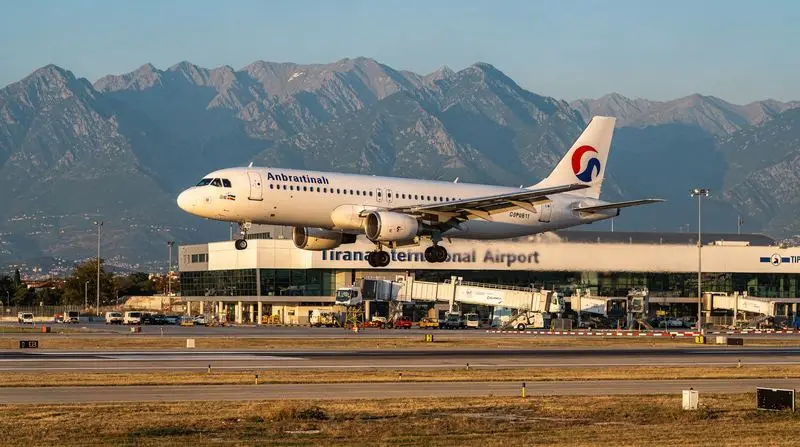
| Getting there | Direct flights to Tirana from most major European hubs |
The Prices Are Genuinely Shocking
Let us start with the practical, because we know it matters. Albania is the most affordable destination in Europe — not by a small margin, but by a significant one. We are talking about a country where a sit-down dinner for two with wine costs around ten to fifteen euros, where guesthouses in beautiful mountain villages charge twenty euros per night, and where a coffee costs around a euro in Tirana and fifty cents in the villages.
For comparison, we have paid more for a single glass of wine in Dubrovnik than we spent on an entire evening out in Saranda. That is not an exaggeration. Albania operates on a price level that feels almost surreal if you have been traveling elsewhere in the Mediterranean.
And crucially, the low cost does not translate into low quality. Albanian accommodation has improved enormously over the past decade. The food is excellent. The beaches along the Albanian Riviera are stunning. The infrastructure, while still developing in places, is perfectly functional for independent travel. You get an enormous amount for your money here. Our Albania travel budget guide breaks down what to expect at different spending levels, from backpacker guesthouses to boutique hotels.
The Beaches Will Make You Reconsider Everything
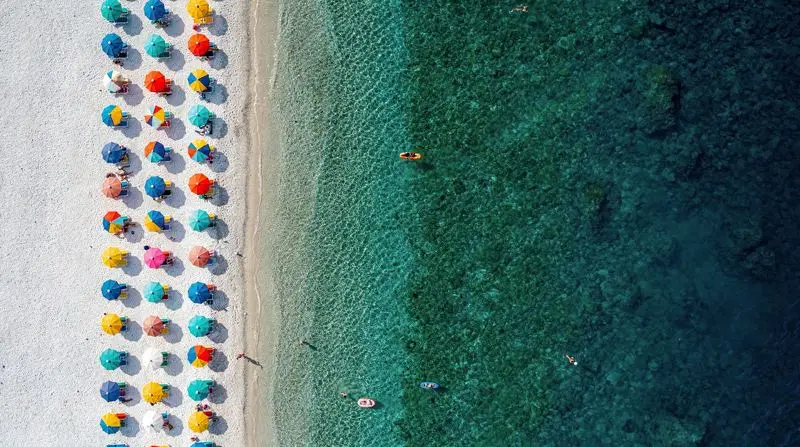
If someone told you there was an undiscovered stretch of Ionian coastline with clear turquoise water, white pebble beaches, and almost no crowds, you would probably be skeptical. Then you would arrive at Gjipe Beach and eat every word.
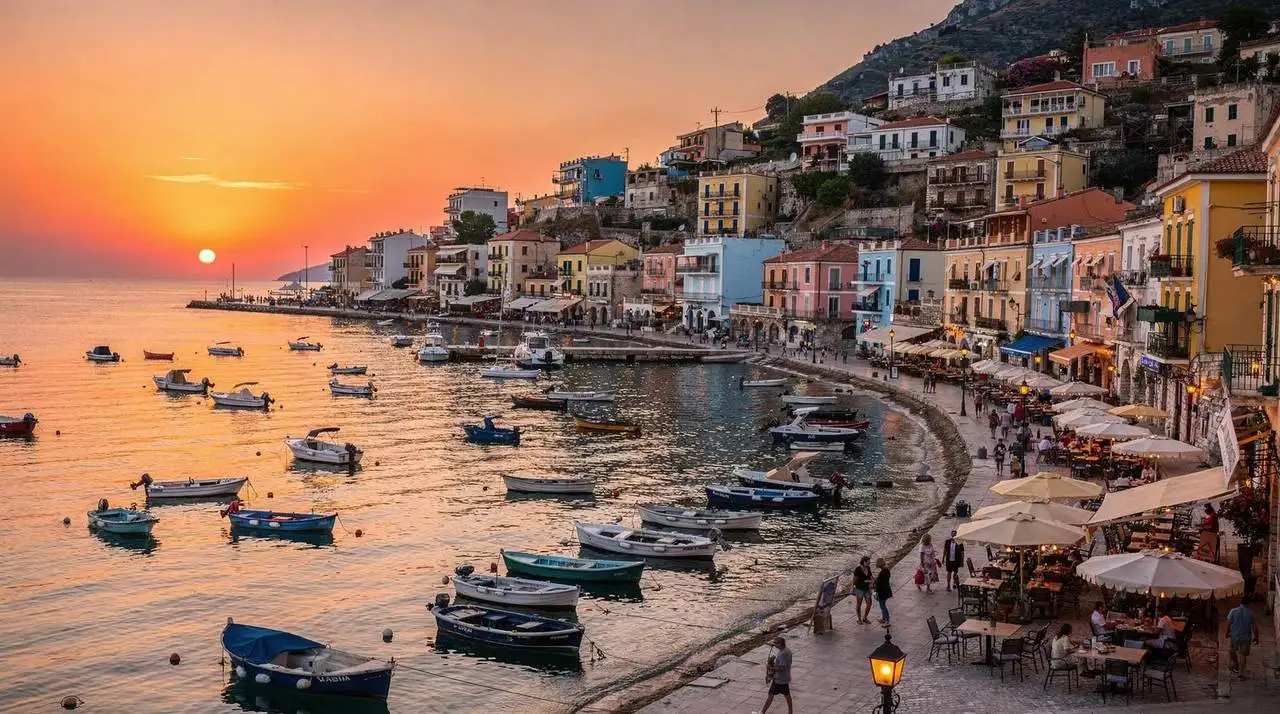
The Albanian Riviera runs from Vlora in the north down to the Greek border at Saranda, and along the way it passes through some of the most beautiful coastal scenery in Europe. The water is exactly the blue you dream about. The mountains come right down to the sea in places, creating dramatic coves that feel hidden from the rest of the world.
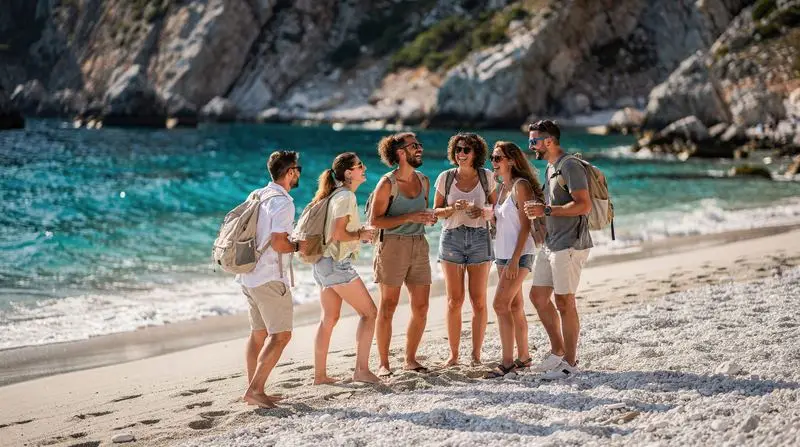
Saranda is the main hub, a lively town across the water from Corfu with good restaurants and a proper tourist infrastructure. But the real magic is in the smaller spots: the village of Ksamil with its tiny offshore islands, the windswept curves of Dhermi, the remote cove at Palasa where the road zigzags down through olive groves. These places exist, they are accessible, and they are still mercifully quiet compared to what you would find anywhere equivalent in Croatia or Greece.
From the coast, boat tours are the best way to reach the most spectacular beaches and sea caves that no road can access. Albanian Riviera boat tours from Himara take you along the most dramatic sections of the coast to coves, sea caves, and swimming spots that are simply not reachable any other way. This is where you find the beaches that look like the ones in the photographs, with the water that truly does not look real until you are in it.
The Mountains Are World-Class
Albania’s other great secret is its highlands. The Albanian Alps in the north — the Accursed Mountains, as they are dramatically named — contain some of the most spectacular hiking terrain on the continent. The valleys of Theth and Valbona are the kind of landscapes that appear in coffee-table books, all glacial rivers and limestone peaks and tiny villages perched improbably on steep hillsides.
The hiking in the Albanian Alps is genuine wilderness territory. Trails connect remote communities that were almost entirely cut off from the outside world until a few decades ago. The culture up here is unlike anything else in Europe — ancient, proud, and extraordinarily welcoming to visitors who make the effort to reach it. The famous hike between the valleys of Theth and Valbona crosses a pass at nearly 1,800 meters and is consistently described by everyone who does it as one of the finest single days of mountain walking they have ever experienced.
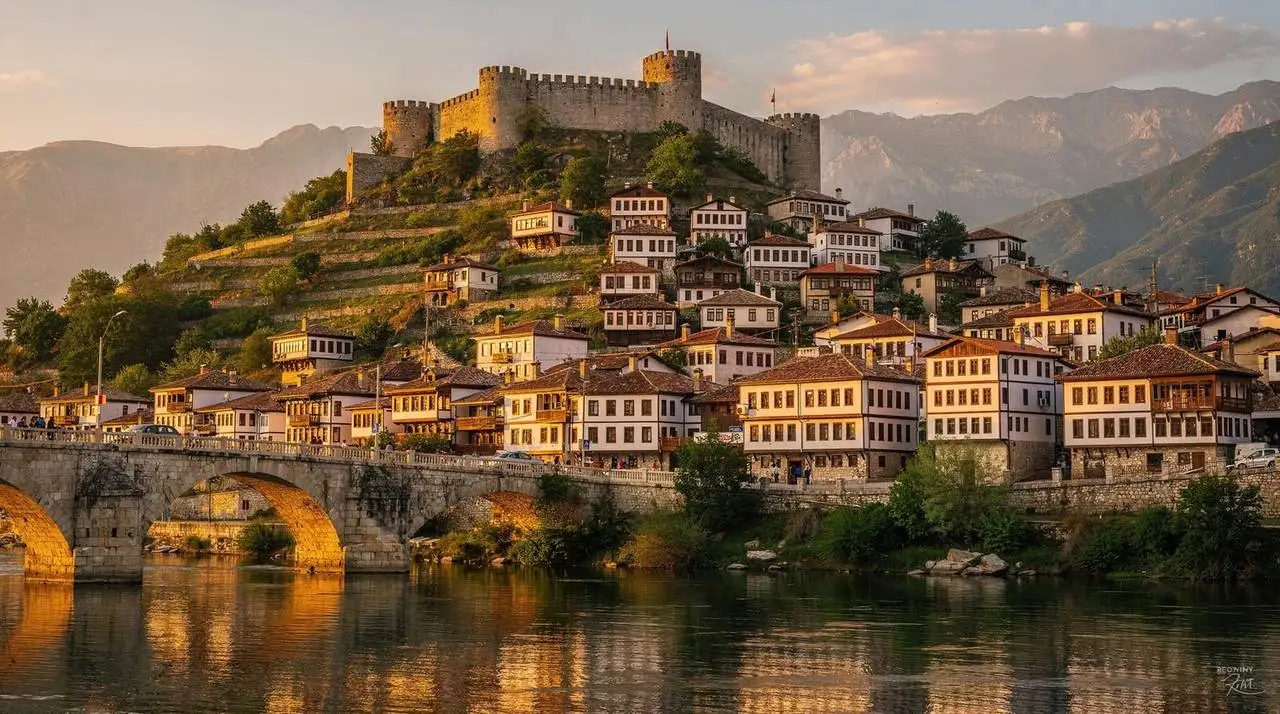
Even beyond the Alps, Albania’s interior is remarkably beautiful. The landscapes around Berat and Gjirokastra combine Ottoman architecture with dramatic hillside settings. The Vjosa River, now protected as Europe’s first wild river national park, runs through southern Albania with a wildness and clarity that managed rivers simply cannot replicate. Lake Ohrid, shared with North Macedonia, is one of the oldest and deepest lakes on earth.
The History Is Layers Deep
Albania is not a country with one history — it is a country with dozens of them, stacked on top of each other over three thousand years. Illyrian ruins sit next to Greek amphitheatres. Roman roads pass through Ottoman bazaars. Byzantine churches stand a few miles from communist-era bunkers. This accumulated layering gives the country an archaeological richness that is largely unrecognized internationally.
The city of Berat is UNESCO-listed for its extraordinary ensemble of Ottoman-era architecture — white multi-windowed houses climbing up to a castle that has been continuously occupied since the fourth century BC. Gjirokastra is another UNESCO site, a stone city on a steep hillside with an imposing castle overlooking the valley. Apollonia, near Fier, is one of the best-preserved ancient Greek cities in the Balkans, and on a typical day you might have the ruins almost to yourself.
Then there are the bunkers. More than 170,000 concrete bunkers were built across Albania during the Hoxha regime — one for roughly every four citizens. They appear in fields, on beaches, on mountain passes, in the middle of roundabouts. They are a physical reminder of one of Europe’s most extreme communist dictatorships, and they give the landscape a peculiar, unforgettable quality that no other country can match.
Understanding the communist era that produced these bunkers is one of the most rewarding things you can do on a visit to Albania. In Tirana, the BunkArt museums make the history tangible in a way that books cannot. A communist Albania tour with BunkArt museum visit gives you the historical framework — the surveillance networks, the paranoia, the physical scale of the regime’s preparations for war — that makes everything else you see in Albania make more sense. Walking out of BunkArt and then encountering a bunker on a beach, or seeing Hoxha’s villa converted into a public foundation in the Blloku neighbourhood, lands differently when you have that context.
The Food Is an Underrated Pleasure
Albanian cuisine draws on Mediterranean freshness, Ottoman depth, and Balkan heartiness. The byrek — a filo pastry filled with cheese, spinach, or meat — is one of the great breakfast foods in Europe. The lamb dishes are exceptional. The seafood along the coast is as fresh as it gets. And the setting for meals is invariably convivial: Albanians take hospitality seriously, and a visitor who shows genuine interest in the food will almost always be rewarded with extra dishes, recommendations, and often stories.
The coffee culture alone is worth the visit. Albania runs on espresso, and Albanians take their coffee seriously. A morning spent in a Tirana cafe, watching the city wake up, is one of the pleasanter experiences the continent offers.
A Tirana food tour with meals included is one of the best investments you can make in your Albania trip. The guide takes you through the New Bazaar, into traditional restaurants, and through the food markets with context that transforms your understanding of what you are eating for the rest of the trip. We always recommend doing this on day one in Tirana rather than near the end — the knowledge accumulates and pays dividends in every meal that follows.
For a deeper dive into what Albanian cuisine has to offer across different regions, our Albanian food guide covers the dishes, the regional variations, and what to order where.
Off the Well-Worn Path
Even within Albania, the country still has corners that feel genuinely undiscovered even by Albania’s already-modest standards. Our Albania off the beaten path guide and hidden gems in Albania guide both cover spots we would not have found on our own first trip — inland villages, lesser-known canyons, and stretches of coast that even the growing Riviera crowds have not reached yet. If part of what draws you to Albania is the idea of discovery, these are the guides to read once you have the fundamentals of a first trip sorted.
How Albania Compares to Its Neighbours
We get asked constantly how Albania stacks up against the destinations people already know. Here is our honest, quick take:
| Compared to | The honest take |
|---|---|
| Croatia | Similar coastline drama, noticeably lower prices, fewer crowds — see our Albania vs Croatia guide |
| Greece | Comparable islands-and-ruins appeal at a fraction of the cost — see our Albania vs Greece guide |
| Montenegro | Both dramatic and mountainous; Albania is larger and less discovered — see our Albania vs Montenegro guide |
| North Macedonia | Complementary rather than competing — easy to combine on one trip, see our Albania vs North Macedonia guide |
For a fuller sense of whether Albania fits your particular trip, our is Albania worth visiting guide and Albania bucket list guide both go deeper than we can in a single comparison table.
For Different Kinds of Travellers
Albania is not a one-size-fits-all destination, and part of what makes it worth recommending broadly is how differently it rewards different kinds of trips. Solo travellers, and solo women specifically, generally report feeling safer and more welcomed than expected — our Albania solo female travel guide covers this in more honest detail than the general safety guides usually do. Couples looking for something between adventure and relaxation find the combination of coast and mountains hard to beat, and our Albania for couples guide covers where that balance works best. Families weighing whether the driving and logistics are manageable with children should read our Albania family travel guide before ruling it out — most of the concerns are addressable with a bit of planning.
The People Make the Difference
Travel writing is full of claims that the people of wherever are the friendliest in the world. We try to be careful with those kinds of superlatives. But Albanian hospitality — besa, as it is called, the code of honor and guest protection that runs deep in the culture — is something genuinely unusual.
People go out of their way to help. Strangers invite you for coffee. Guesthouse owners cook you dinner and then sit down to eat with you. Farmers wave from hillside terraces. In the mountains especially, the tradition of hospitality toward guests is deeply embedded in the culture and feels completely authentic.
This is not yet a country that has developed a transactional relationship with tourists. Tourism is still new enough here that visitors are genuinely welcomed rather than merely tolerated. That will change as visitor numbers grow, which is all the more reason to go now rather than later.
Starting in Tirana: Why It Sets You Up for Everything Else
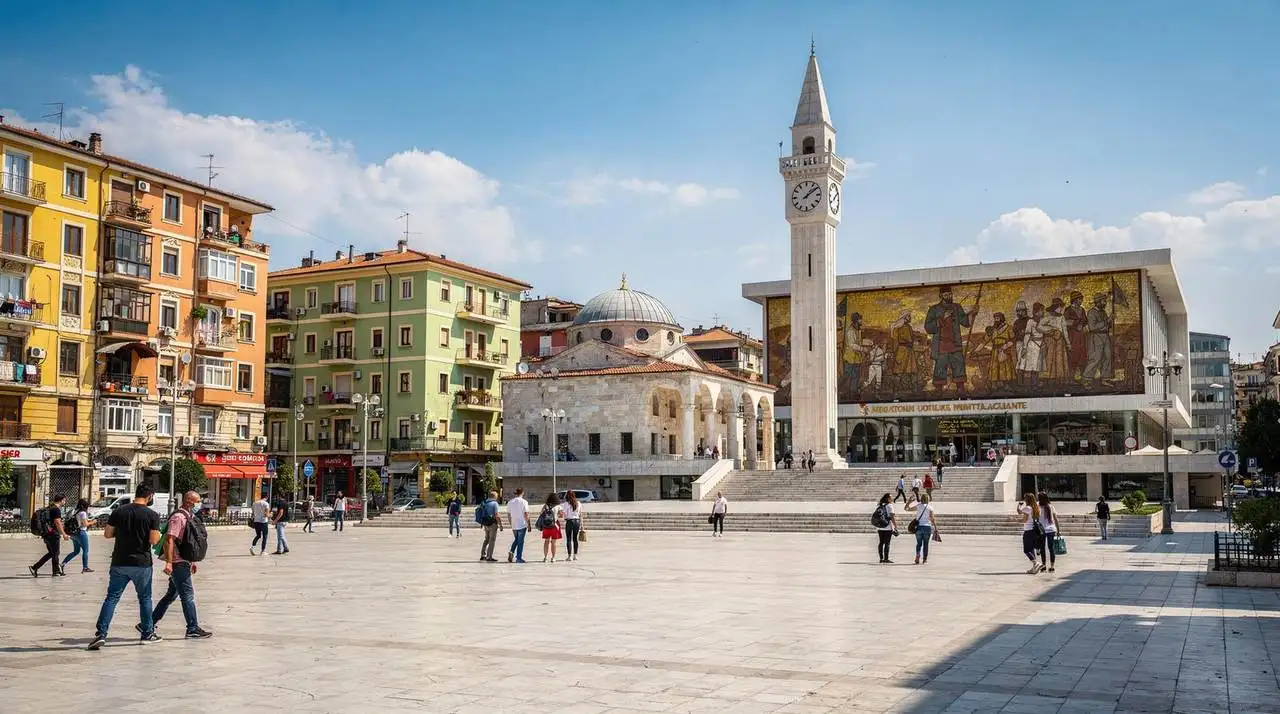
Whatever itinerary you build for Albania, we consistently recommend starting in Tirana. The capital is the orientation point — the place where Albanian history, culture, contemporary life, and national identity are most legibly on display. Two days in Tirana before heading anywhere else means you arrive in Berat or on the Albanian Riviera with context that makes everything you see more meaningful.
The city’s own transformation — from communist grey to one of Europe’s most colorful capitals — is a story worth understanding. The Blloku neighbourhood, once the exclusive preserve of party elite and now the city’s most vibrant social hub. The painted apartment blocks that turned an entire aesthetic philosophy into an urban intervention. The Pyramid, remade from a dictator’s mausoleum into a technology education center. These things are interesting on their own; they are extraordinary when you understand what they replaced.
A guided walking tour of Tirana on the first morning is the single best investment in an Albania trip. A local guide who can explain the layers of the city — Ottoman remnants, communist impositions, post-1990 reinventions — gives you a framework that shapes how you understand the whole country. We have done this tour multiple times and recommended it to everyone we know who visits.
The Window Is Open, But It Will Not Stay That Way
Every year more people discover Albania. Every year new hotels open, more tour companies begin operating, flight connections improve, and the word spreads further. The country that exists today — affordable, authentic, uncrowded, genuinely surprising — is a product of its late arrival to the tourism map.
That will change. We are not saying it will be ruined, or that it will become another over-touristed nightmare. But the prices will rise, the crowds will increase, and the particular magic of arriving somewhere before the rush — that feeling of being slightly ahead of history — will fade.
If you have been thinking about Albania, now is the time. Getting to Albania is easier than you might think — direct flights from major European cities are available year-round, and the airport is efficient. The Albania safety guide addresses the concerns that first-timers often bring with them from outdated news coverage. And our 14-day Albania itinerary gives you a ready-made structure for seeing the whole country, from Tirana and the Albanian Alps in the north to the Riviera and the historic southern cities.
Tirana makes an excellent base for a first visit. Start there, then let the country unfold.
You will not regret it. We never have.