We take a lot of photographs in Albania. More than anywhere else we travel, and we have traveled a lot. The country has a quality that makes photographers — amateur and professional alike — slightly frantic: there is always another angle, another light, another detail that the last frame missed.
Over several trips we have developed habits and preferences that have made our photographs better and our experience of taking them more deliberate. Here is what we have learned.
| Best light | First hour after sunrise (Berat, mountains); last two hours before sunset (coast) |
| Best season | May-June or September for softer light and fewer crowds in frame |
| Must-bring | Wide-angle for old towns, telephoto for mountains, extra batteries |
| Drones | Check current rules before flying — see our drone rules guide |
Understanding the Light
Albanian light is specific and worth understanding before you arrive. The country’s position on the Adriatic and Ionian coasts means it gets strong Mediterranean sun for most of the year — the kind of light that, in the middle of the day, is too harsh and contrasty for most subjects. Midday in Berat or on the Riviera produces flat, bleached images with hard shadows. Midday is for swimming and eating.
The golden hours are where Albania gives you what you came for.
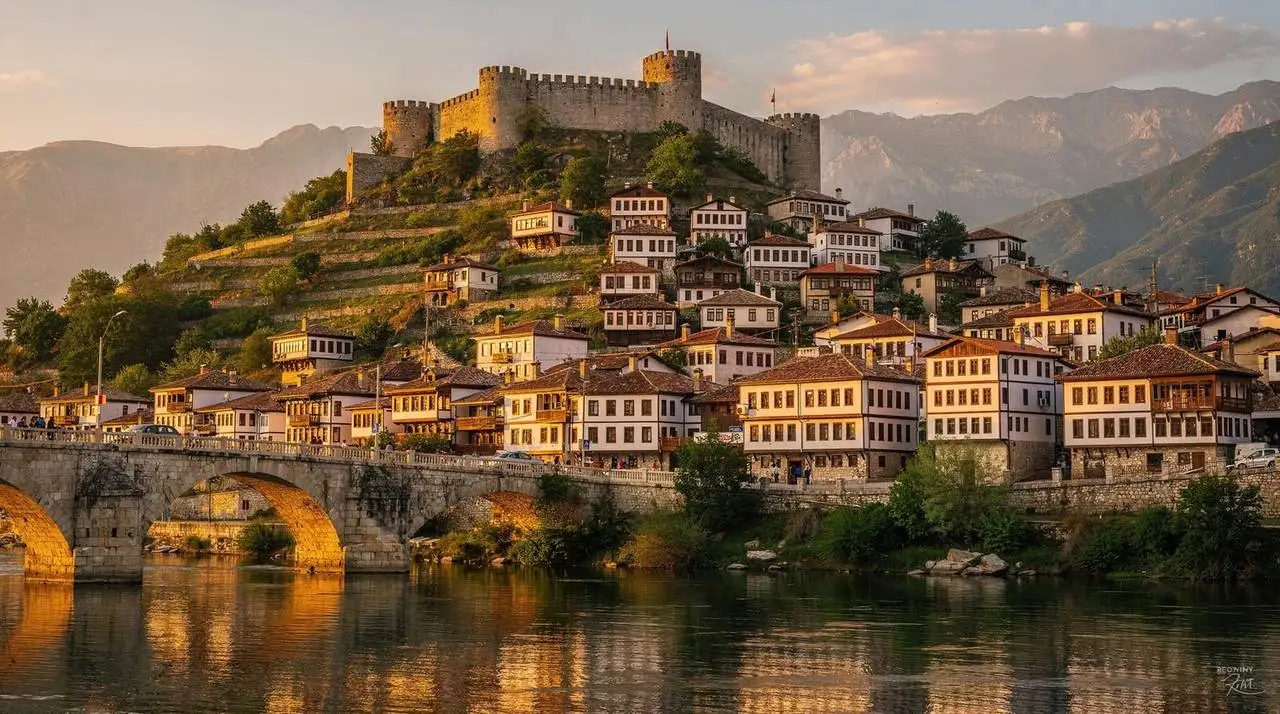
Morning light in the mountains and historic cities is cooler in color temperature and rakes across stone surfaces at a low angle that reveals texture and depth. The castle in Berat in the first hour after sunrise, when the sun comes over the eastern ridge and hits the white Ottoman houses, produces a warmth and dimension that disappears within ninety minutes. We have set multiple alarms over the years to be in position for this light.
Evening light on the coast is the compensation for hot afternoons. The sun dropping toward the Ionian creates the conditions — the water going from blue to silver to gold, the mountains going rose, the villages and beaches caught in a warmth that a camera renders faithfully enough to be believed.
The shoulder season — May, June, September, October — often produces the best light overall. Softer sun, more atmospheric haze at the right times, and skies that do things in the evening that clear-blue summer skies do not.
The Best Locations for Photography
Berat: The single most photographically rewarding place in Albania. The combination of the Ottoman houses, the castle, the river reflection, and the quality of the light at the right times of day creates endless opportunities. Our specific favorites:
The bridge over the Osum River at dawn, before anyone else is up, with the reflection of the Mangalem quarter in the still water. This requires arriving when it is still dark and waiting — it is worth it.
The view from inside the castle looking down over the rooftops, ideally in afternoon light when the shadows create depth across the layered houses.
Details in the Mangalem quarter: carved wooden window frames, geraniums against white plaster, the patterns of stone paving, cats on ledges. Berat rewards a slow camera and patient observation.
A cooking class in Berat provides unexpected photography opportunities — the process of preparing traditional Albanian dishes in a stone kitchen is visually rich. A Berat cooking class gives you access to domestic spaces and food preparation that most travel photographers never see.
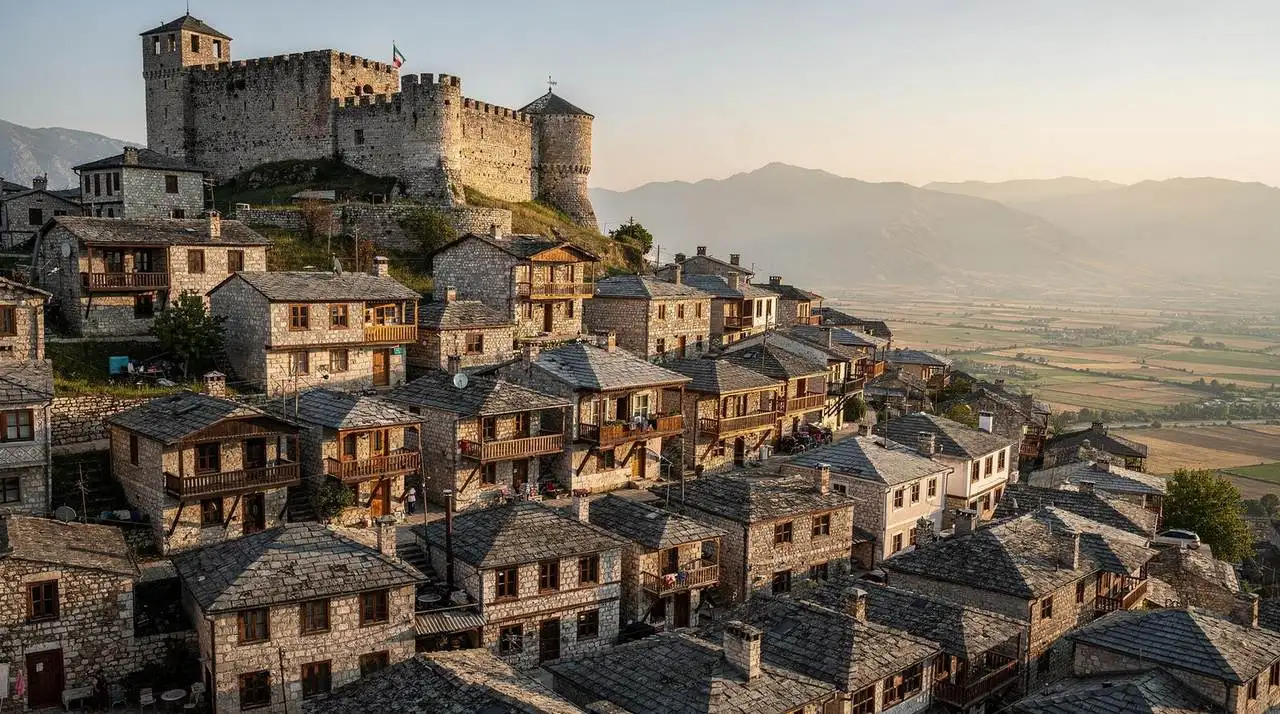
Gjirokastra: Gjirokastra is harder to photograph well because the grey stone, while visually dramatic in person, can look flat and cold in images. The solution is to shoot when the light is warm — early morning and late afternoon — and to embrace the shadows rather than fight them. The castle at dusk, with the valley going blue below and the walls still catching the last orange light, is one of the strongest single images available in Albania.
The bazaar area at street level, with its mix of old stone buildings and human activity, rewards a wide-angle lens and patience. Wait for the right combination of people, light, and composition. A guided Gjirokastra city tour opens doors — literally — to interior spaces, the castle rooms, and viewpoints that are not obvious from the street.
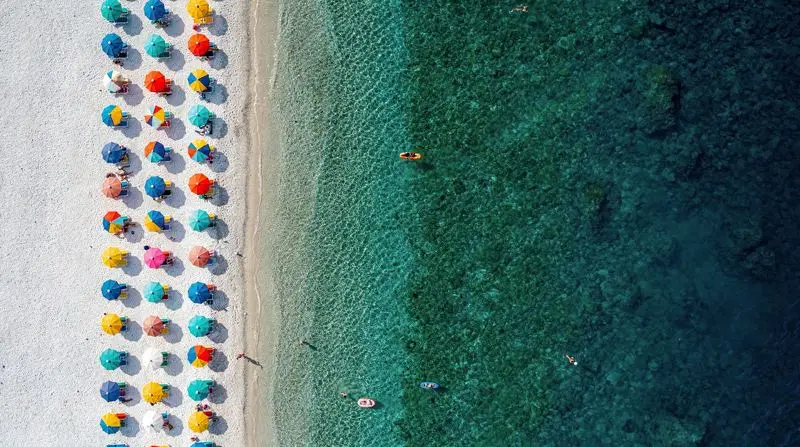
The Albanian Riviera: Coast photography is primarily about light and water color. The best coastal images in Albania come in the two hours before sunset when the sea is at its richest color. Shoot toward the light when possible — the backlit water gives you the turquoise saturation that makes these images recognizable.
The offshore islands at Ksamil silhouetted against a golden-hour sky make a strong, simple image. The cove at Gjipe with its limestone walls in late afternoon light is genuinely extraordinary if you can position yourself properly.
The Albanian Riviera by boat opens entirely different photographic perspectives. From the water, you can see the full sweep of the coastline, the way the mountains drop to the sea, and angles that are simply impossible from the road. An Albanian Riviera boat tour from Himara gives you several hours on the water with access to sea caves and hidden coves — some of the best photography opportunities along the entire coast.
Drone photography, if you carry a drone and comply with local regulations, opens entirely new possibilities along the coast — the aerial view of the coastline at the right time of day produces images that are very difficult to achieve from ground level. Registration and no-fly zones do apply in Albania, particularly around airports, military sites, and some archaeological areas, so check the current rules before you travel rather than assuming your home country’s regulations transfer — our drone rules Albania guide covers what to check and where flying is restricted.
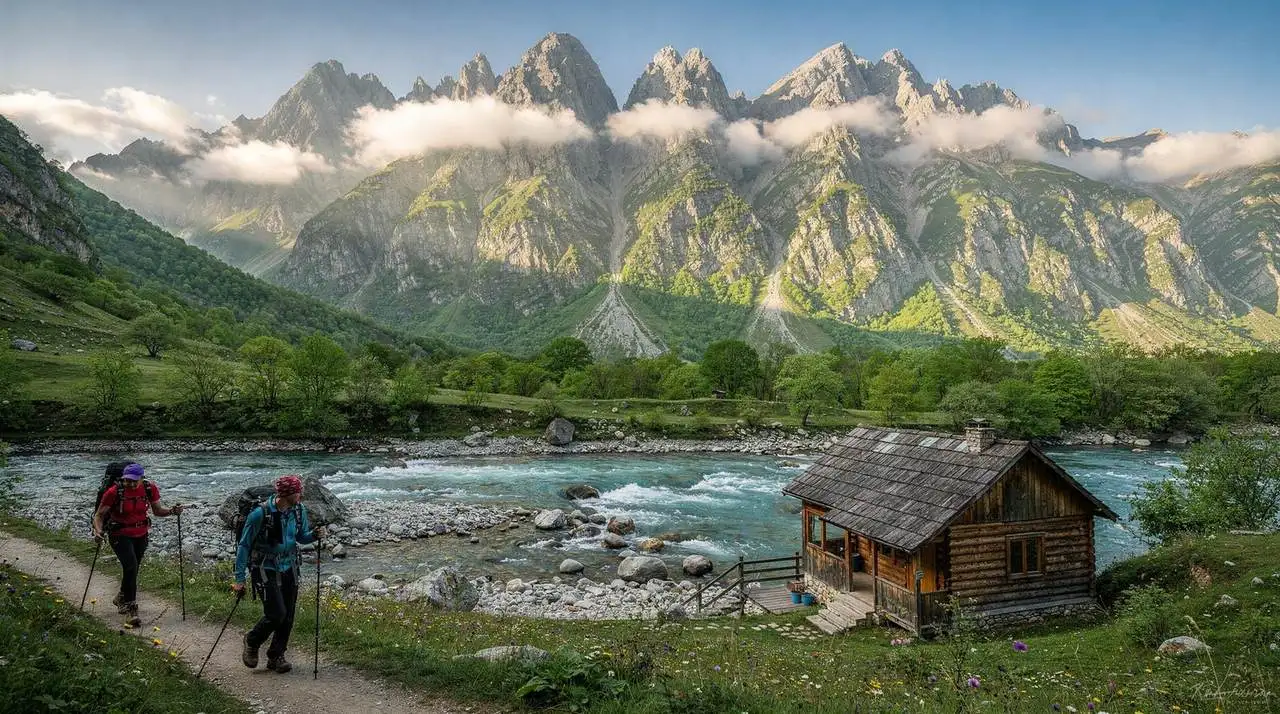
Valbona and the Albanian Alps: Mountain photography in Albania is primarily about scale and mood. The Valbona Valley in morning mist — the kind of mist that rises from the river and softens the peaks behind it — is one of the most atmospheric subjects we have found in the country. A telephoto lens, compression, layers of mountain behind mountain. This requires being up early and patient.
The Theth-Valbona trail across the pass provides opportunities at every stage of the ascent: forest light in the lower sections, open alpine views in the upper sections, the dramatic double panorama from the pass itself. Carry enough memory card capacity — you will shoot more than you plan.
Koman Lake: The ferry journey across Koman Lake is one of the great photography opportunities in Albania. The turquoise water of the reservoir, the limestone gorge walls rising hundreds of metres above, the forested slopes and the occasional village perched impossibly on the hillside — it is a two-and-a-half hour sequence of strong images. Be on the upper deck regardless of weather.
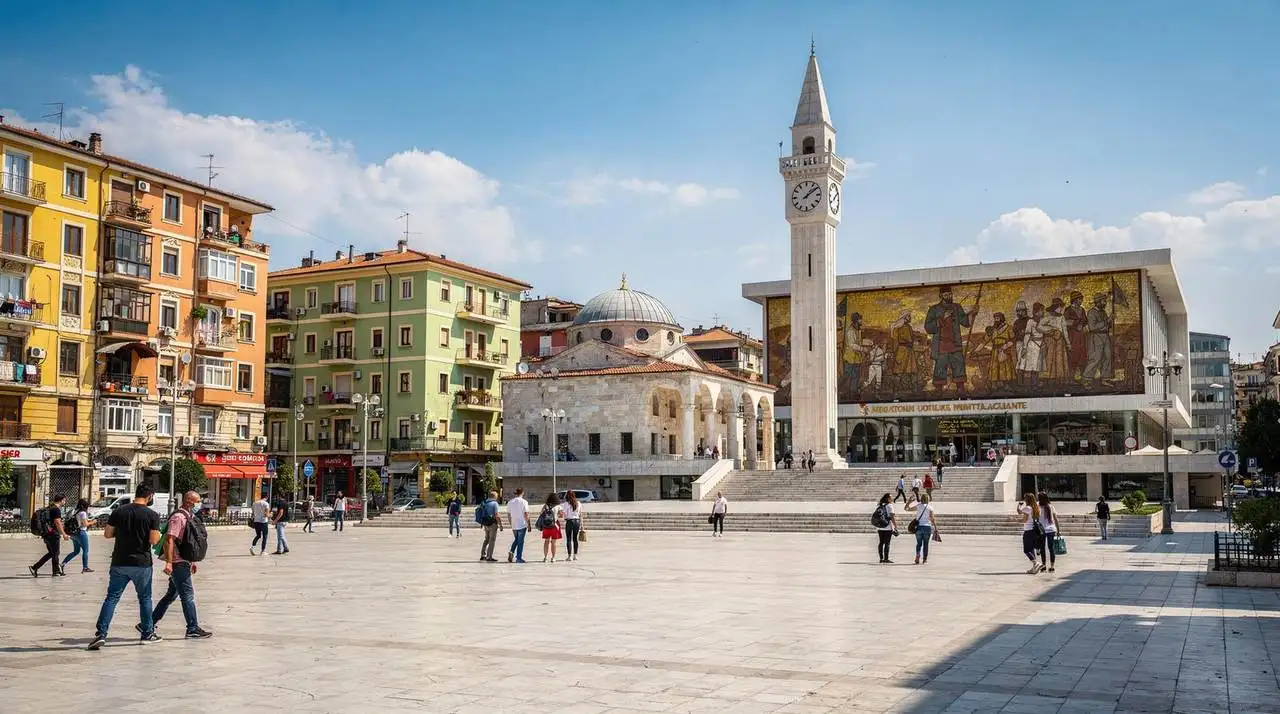
Tirana: Tirana is underrated as a photography destination. The painted apartment blocks are the obvious subject, but the more interesting images come from juxtaposition: communist-era concrete adjacent to a brightly colored building adjacent to a new glass tower. The BunkArt museums offer interior photography opportunities that are unusual and evocative. The Pazari i Ri market in the morning is alive with color, texture, and human activity.
Street photography in Tirana rewards time and patience. The cafes of the Blloku neighborhood in the early evening have a particular social energy that translates well if you have a camera that performs in lower light.
Permet and the Vjosa Valley: The Permet valley in spring is one of the most photogenic landscapes in Albania — the river running high and blue-green, the surrounding mountains still snowcapped, wildflowers covering the lower slopes. The Benja thermal baths in the Lengarica gorge have a dramatically photogenic setting: steam rising from hot springs in a narrow canyon with Ottoman stone bridges nearby.
Equipment Considerations
You do not need specialist equipment to photograph Albania well. A capable smartphone will get you excellent images of the coastal scenery, the city streets, and the food culture. But a few items make specific things easier:
A wide-angle lens is useful in the narrow streets of Berat and Gjirokastra, where the buildings are close and the temptation to include everything is strong. A 16-24mm equivalent on a full-frame camera handles these spaces well.
A telephoto zoom (70-200mm equivalent or similar) is valuable in the mountains, where distances are large and compression can produce striking images of layered peaks. Also useful for wildlife — the eagle population in the Albanian Alps is substantial and occasionally close enough to photograph.
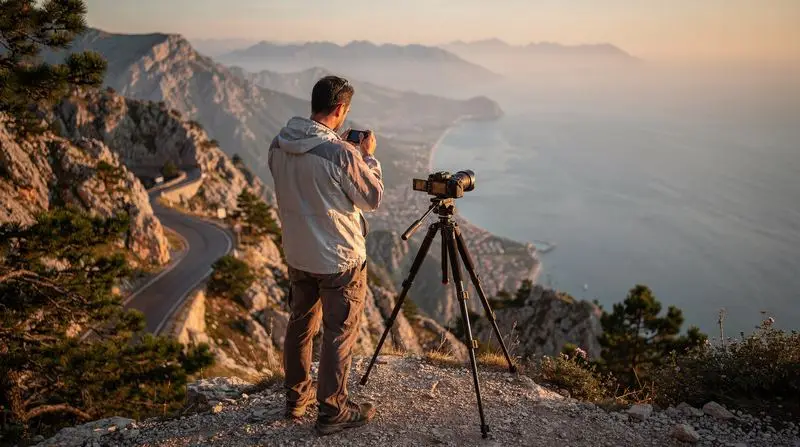
A tripod is worth the weight if you are serious about dawn and dusk photography. The low light of golden hour, combined with the need to keep shutter speeds high enough for sharp images, means you will either use a tripod or push your ISO higher than you would prefer.
ND filters for coastal photography, if you want to work with slower shutter speeds to smooth water movement. Not essential but useful.
Extra batteries and memory cards. This sounds obvious and is often overlooked. Remote areas of Albania have limited charging opportunities, and the combination of cold mountain air (which drains batteries faster) and the temptation to shoot constantly means you can exhaust equipment faster than you expect.
Photographing People
Albanian people are generally camera-friendly, but good manners remain essential. Make eye contact and gesture toward your camera before photographing anyone directly. In most cases, the response is a smile and permission. In some cases — particularly with older people in rural areas — the answer is a shake of the head, which you should respect without discussion.
The hospitality culture in Albania means that asking permission often leads to something more: an invitation in for coffee, a conversation, a portrait in a proper context. We have had some of our best people photographs in Albania because asking led to an actual relationship rather than a stolen shot.
Children photograph beautifully everywhere in Albania and are usually enthusiastic about the camera. Their parents, predictably, require courtesy.
Guesthouse and restaurant owners, when asked, are almost always willing to let you photograph the kitchen, the food, the view from the terrace. These images often tell more of the story of a place than any landscape shot. A cooking class — like the one available in Berat — gives you legitimate, welcomed access to exactly this kind of photography.
Planning Your Photography Trip
The best photography trips in Albania combine at least one mountain location, one historic city, and time on the coast — giving you the full range of subjects the country offers. A itinerary that puts you in Tirana for two days, then Berat for two nights, then the Albanian Riviera for three days, then north to the mountains for two days covers nearly everything worth photographing in the country.
For the mountains specifically, the hiking in the Albanian Alps guide covers logistics and timing — going in late June or early September gives you the best combination of accessible trails, good light conditions, and manageable crowds.
The best beaches guide is worth reading before planning your coastal photography time — the beaches vary significantly in their photographic potential, and knowing which ones to prioritise given your timing and interest saves a lot of driving.
Seasonal Light Cheat Sheet
| Season | Light quality | Best for |
|---|---|---|
| Winter (Dec-Feb) | Clear, low, dramatic in the mountains | Snow-capped Alps, empty old towns |
| Spring (Mar-May) | Soft, atmospheric, occasional haze | Vjosa valley wildflowers, Berat |
| Summer (Jun-Aug) | Harsh midday, spectacular golden hour | Coastal sunsets, Riviera water color |
| Autumn (Sep-Nov) | Warm, long shadows, fewer crowds | Everything — often the best all-round window |
Editing and Getting Images Home Safely
Backing up on the road matters more in Albania than in destinations with denser hotel WiFi and easy cloud access. Connectivity has improved significantly along the coast and in Tirana — our Albania eSIM guide covers current data options — but mountain guesthouses near Theth and Valbona still have patchy or no signal, so plan to back up to a laptop or portable drive daily rather than relying on cloud sync catching up automatically. A simple habit: transfer cards each evening regardless of how tired you are after a long shooting day, and carry at least one spare card reader, since losing a full day’s shoot to a corrupted card is the kind of mistake that only happens once but stings for years.
The Photograph That Gets Away
Every photographer in Albania has a photograph that got away. We have several. The mist burning off the Valbona Valley at seven in the morning, seen perfectly from our guesthouse window, by the time we had assembled our camera. The light on the Gjirokastra castle at exactly the right moment, thirty seconds before a cloud covered the sun for the rest of the evening. The kingfisher on the Vjosa that sat still long enough for us to see it but not long enough for us to photograph it.
This is not a failure of technique or equipment. It is the cost of being present in a place that is genuinely beautiful and genuinely unpredictable. Albania rewards the photographer who is patient, who goes back to the same place multiple times, who learns the light of a specific location by being there repeatedly.
Take the photographs. But also, sometimes, put the camera down and just see where you are. The best images of Albania we have are in our memories, and they are unfailingly better than the ones we managed to capture.
Bring both kinds of attention. The country deserves them.