Easter in Albania: A More Interesting Story Than You Might Expect
Albania is not the country most people think of when they think of Easter celebrations. Greece comes to mind. Italy, Spain, perhaps the Serbian or Bulgarian Orthodox traditions. Albania, with its complicated religious history — majority Muslim, with significant Orthodox and Catholic communities, and decades of state-enforced atheism — does not feature in most people’s mental image of Easter.
This is a missed opportunity. Easter in Albania is genuinely interesting, and not just for the devout. It is a window into how a country with a uniquely layered religious identity navigates shared celebration, how different communities have maintained distinct traditions through difficult historical periods, and how Albanian culture has a way of turning religious occasions into expressions of the hospitality and food culture that defines the country regardless of faith.
We have spent time in Albania around Easter in multiple years, in different regions and different communities. Here is what we have found.
| Where | Orthodox: Berat, Gjirokastra, Permet — Catholic: Shkodra |
| When | Orthodox Easter often falls 1-5 weeks after Catholic Easter |
| Best for atmosphere | Holy Saturday evening in Berat or Gjirokastra |
| Book ahead | 2-3 months for Easter-week guesthouses in old-town Berat/Gjirokastra |
Orthodox vs Catholic Easter: What to Expect Where
| Orthodox (south) | Catholic (north) | |
|---|---|---|
| Where | Gjirokastra, Berat, Permet | Shkodra |
| Calendar | Julian, later date | Western, earlier date |
| Atmosphere | Village fires, communal roasted lamb | Formal processions, church-centred |
| Best moment | Holy Saturday midnight liturgy | Palm Sunday procession |
The Religious Landscape: Context You Need
Before understanding Easter in Albania, you need to understand what religion actually means here. Albania is officially around 57% Muslim, 17% Orthodox Christian (concentrated in the south and particularly in cities like Berat, Permet, and Gjirokaster), and 10% Catholic (concentrated in the north around Shkodra). There are also Bektashi communities and a significant proportion of people who identify culturally with a religion without practising it actively.
This breakdown was fundamentally disrupted by the communist era. From 1967 to 1990, Enver Hoxha’s regime banned all religious practice, closed and demolished mosques and churches, prohibited religious education, and imprisoned and executed clergy. Albanian religious life went underground for over two decades. When the regime collapsed in 1991, the religious reconstruction that followed was genuine but layered: communities rebuilding practices that had been interrupted, sometimes discovering that what they remembered and what they practised had diverged over a generation.
The result of all this is a religious culture that is genuinely unlike what you find in Greece, Italy, or Turkey. Albanian families commonly include members of multiple faiths. The national identity is fundamentally secular. Religious celebration often functions as cultural tradition as much as spiritual observance. And the characteristic Albanian tolerance — “the religion of Albanians is Albanianism,” as the 19th-century poet Vaso Pasha famously wrote — means that Easter, Eid, and Christmas all exist within a shared cultural calendar without necessarily being sharp dividing lines.
Orthodox Easter in the South
Orthodox Easter follows the Julian calendar, typically falling one to five weeks after Catholic Easter. The celebration is most visible in the predominantly Orthodox south — in Gjirokastra, Berat, and the surrounding villages — and in the Permet valley.
The Orthodox Easter tradition in Albanian villages involves a sequence of observations that blend the liturgical and the festive without clear separation. Holy Week sees the churches open and attended. On Holy Saturday evening, the midnight liturgy marking the resurrection is attended by many community members regardless of daily religious practice — this is one of those occasions where cultural belonging matters more than active faith.
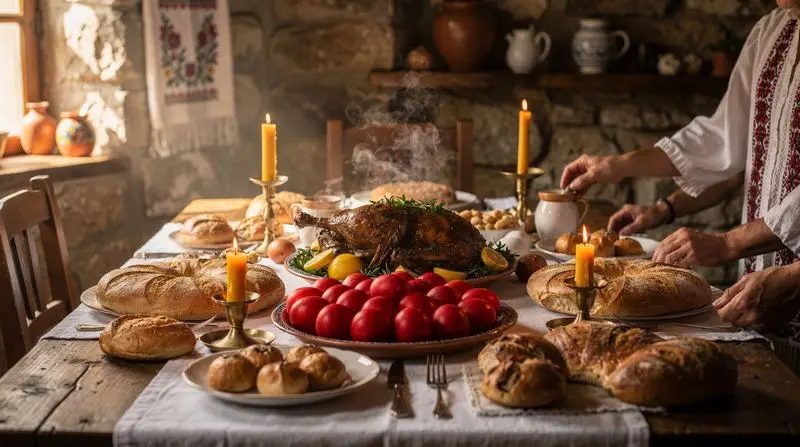
Easter Sunday itself revolves around food in a way that is entirely Albanian. The central element is lamb: whole-roasted, prepared in the outdoor communal fires that are lit in village squares and family courtyards. The preparation begins early — in traditional communities, the lamb may have been selected weeks in advance from the family’s own livestock. The roasting takes most of the morning and creates a social occasion around the fire that brings neighbours together in a way that mirrors the community barbecue traditions of other cultures but with a specifically Albanian character.
Easter eggs are dyed red — the traditional colour representing the blood of Christ in Orthodox practice — and the cracking of eggs against each other (each person tries to crack the other’s egg without cracking their own) is a game played with genuine competitiveness and considerable ceremony.
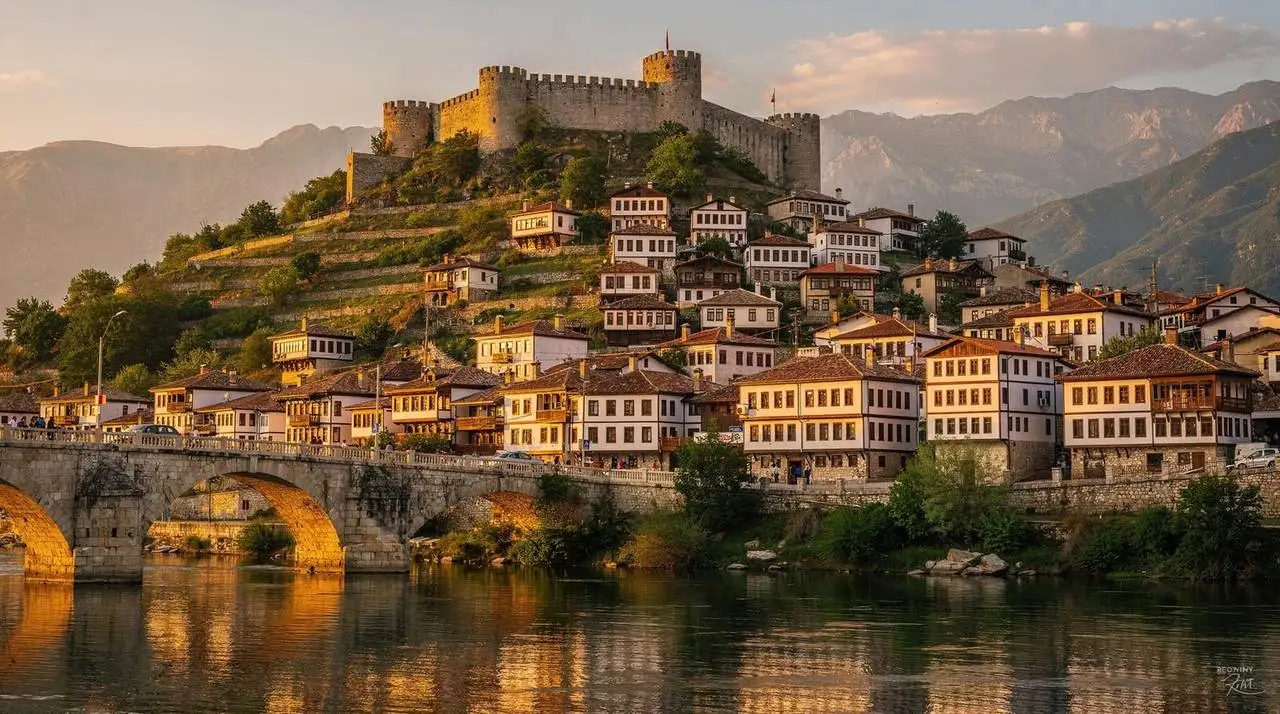
In Berat, the Easter period is worth visiting specifically because the Orthodox community here is one of the most active in the country and the celebrations in the old town take on an atmosphere that the city’s already extraordinary architecture amplifies significantly. The evening of Holy Saturday, with the churches open and candles moving through the narrow streets of Mangalem, is the kind of scene that stays with you. Our Berat destination page covers accommodation and the best areas to stay for the Easter period.
If you are visiting Berat for Easter, you might consider also booking a Berat cooking class — a cooking class in Berat during Easter week often focuses on the traditional Easter dishes and gives you hands-on experience with the food culture that is central to the celebrations.
Catholic Easter in the North
The Catholic community in Albania is concentrated in the north, particularly in and around Shkodra, which has been the centre of Albanian Catholicism for centuries. The Catholic Easter follows the Western calendar and takes a different character from the Orthodox celebrations in the south — more formal church observance, processions in the city, and a strong connection between Easter and family gathering.
Shkodra’s Easter celebrations include Palm Sunday processions that draw significant participation, and the city’s Catholic churches hold services throughout Holy Week that are open to visitors who observe appropriate respect. The Easter Sunday mass at the main cathedral is attended by both the devout and the culturally connected.
The food traditions around Catholic Easter in the north overlap with Orthodox traditions in interesting ways — lamb again features prominently, as does a particular unleavened bread specific to the Easter period. The northern Easter has a quieter, more domestic character than the village celebrations of the south.
Shkodra is worth visiting regardless of the Easter calendar — it is one of Albania’s most historically significant cities, with the magnificent Rozafa Castle, a strong arts tradition, and a lakeside setting on Lake Shkodra that is beautiful in spring. Our Shkodra destination page covers the city in detail.
Muslim Eid and Its Relationship to Easter
Albania’s Muslim majority celebrates Eid Al-Fitr (the end of Ramadan) and Eid Al-Adha, which may or may not coincide with Easter in any given year depending on the Islamic calendar. When they do fall close together, Albanian cities have a particular energy — different communities celebrating different occasions, streets that on any given day might see both Easter lamb preparations and the preparations for communal Eid prayers.
What strikes visitors who experience this is the genuine ease of coexistence. This is not merely tolerance in the sense of putting up with difference. It is the expression of a cultural identity that genuinely encompasses multiple traditions. An Albanian family where the grandmother is Orthodox and the husband’s family is Muslim navigating Easter and Eid in the same week is not unusual. The celebration of both, or of one out of respect for the other, is common.
This is the aspect of Albanian religious life that most surprises visitors from countries with more homogeneous religious cultures. It is worth seeking out and understanding.
Easter Food: Beyond the Lamb
The lamb is central but not the complete picture. Other foods that appear specifically around Easter in Albania:
Qumësht i pjekur: A baked milk pudding with a golden crust, served as a dessert at Easter gatherings in southern Albanian communities. Rich, simple, made from whole milk and eggs. Deeply delicious.
Lakror: A filo-based pie with regional variations that appear at Easter, sometimes filled with spinach and egg combinations that reflect the end of Lenten restrictions for Orthodox families.
Trilece: The Albanian three-milk cake that has become ubiquitous at celebrations of all kinds, but which appears with particular frequency at Easter gatherings in both north and south.
Easter bread: Various regional sweet breads, decorated with braided dough and sometimes incorporating dyed eggs into the presentation, appear in both northern Catholic and southern Orthodox traditions.
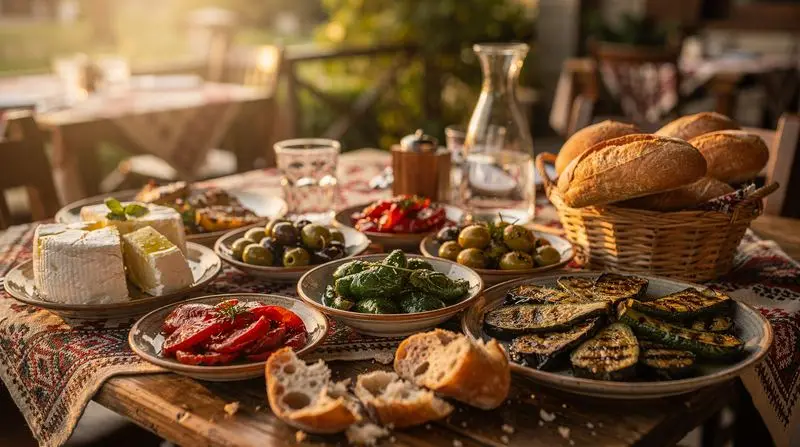
Raki: The homemade spirit that appears at every Albanian gathering of significance. Easter Sunday gatherings in Albanian villages begin with a glass of raki from the family’s own distillation, often accompanied by olives, cheese, and cured meats before the main meal.
The Albanian food guide covers the broader food culture in detail, but Easter is one of the occasions where the full range of traditional Albanian cooking appears most completely. If you are in Albania over Easter, say yes to everything that is offered.
Gjirokastra: Holy Week in the Stone City
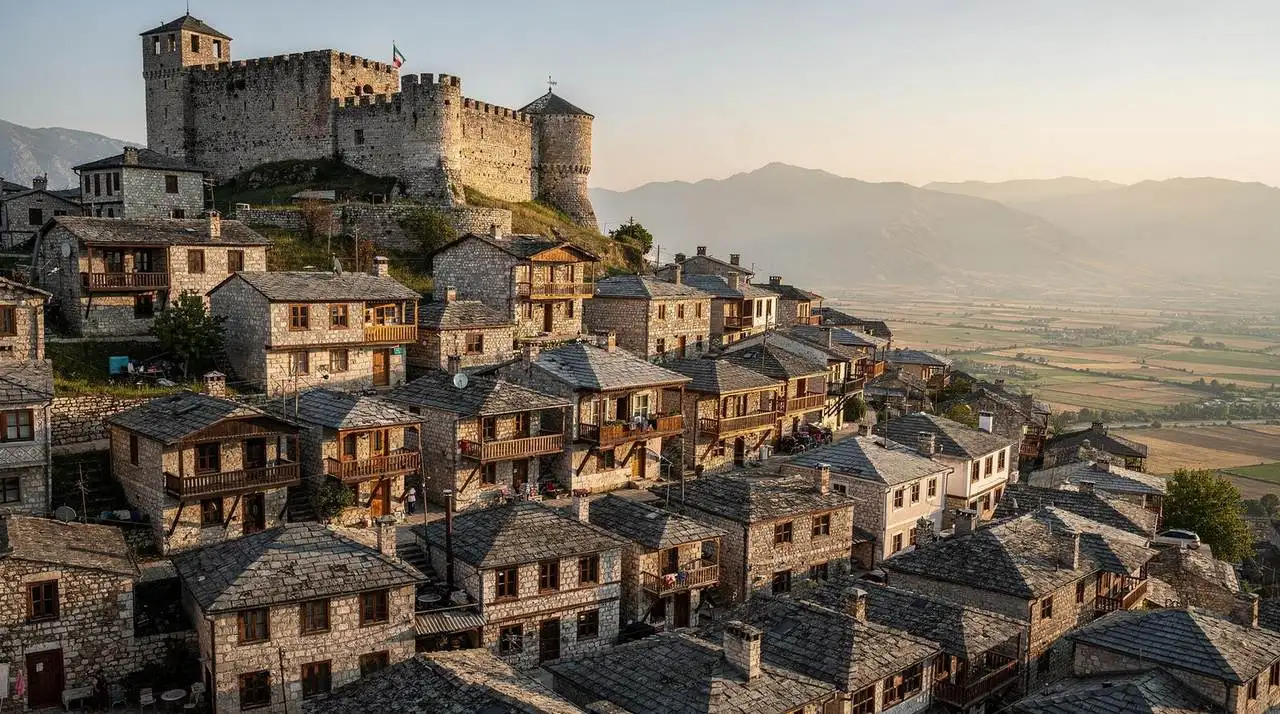
Gjirokastra during Holy Week is one of the most atmospheric places in Albania. The UNESCO stone city’s Orthodox churches hold services throughout the week in buildings of genuine historical significance. The Good Friday observances in particular draw community participation that gives visitors a window into the living tradition of Albanian Orthodoxy.
The castle, the bazaar, the old Ottoman houses — all of these take on additional depth when the community around them is engaged in observance rather than simply daily life. We have found that visiting Gjirokastra during Easter week slows us down in the best possible way: the city’s atmosphere encourages a kind of reflective attention that pure sightseeing rarely achieves.
Book accommodation at least two to three months in advance for Easter week in Gjirokastra. The limited number of guesthouses in the old town fill quickly for this period, and the best ones — the restored Ottoman houses with views over the valley — are always the first to go.
Permet: Easter in the Vjosa Valley
Permet is one of the most rewarding Easter destinations in Albania for visitors who want to experience the celebrations in a genuinely local context. The small town celebrates Easter with a warmth that reflects the community’s predominantly Orthodox character, and the spring landscape of the Vjosa valley provides a backdrop that amplifies everything.
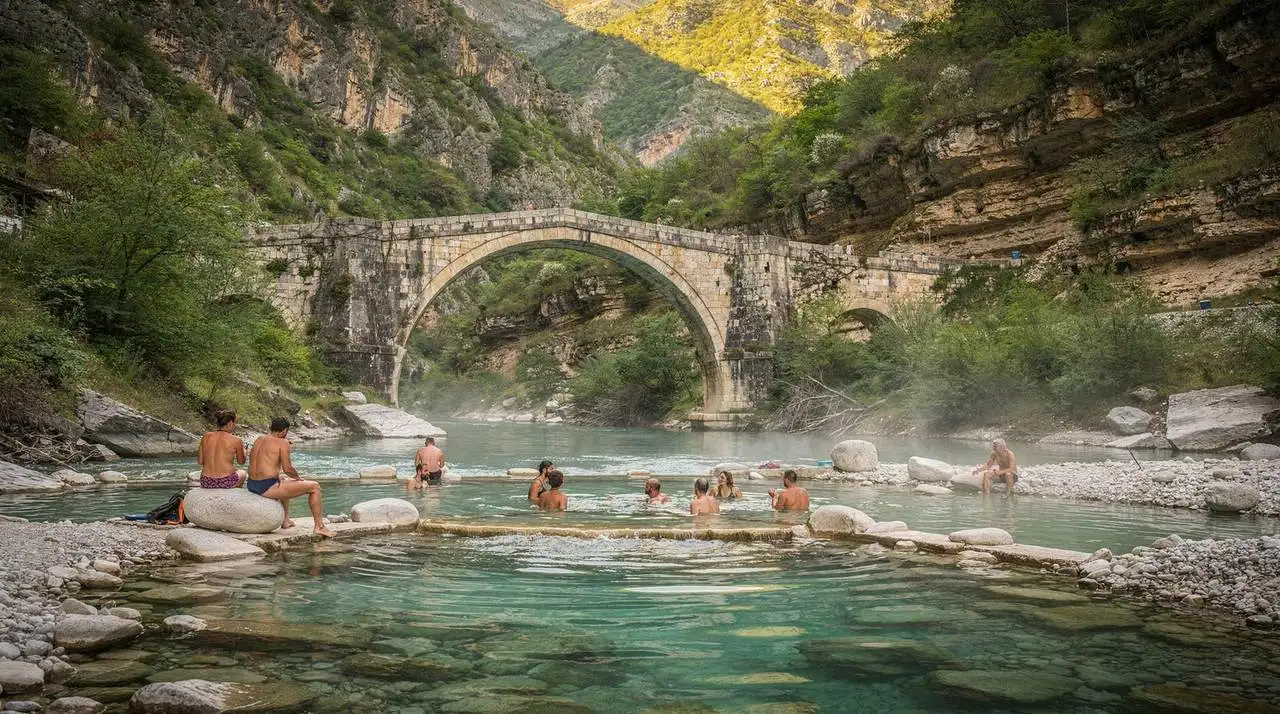
The combination of Easter celebrations and peak spring wildflowers in the valley makes this one of the most visually extraordinary weekends in Albania’s calendar. The surrounding mountains may still carry patches of snow on the upper slopes in early April, while the valley floor is in full bloom. The Benja thermal baths near Permet are especially atmospheric in spring — soaking in 30-degree natural pools while snow-capped peaks rise above the gorge is one of those Albanian experiences that is hard to describe adequately.
Combine Permet with Gjirokastra for a southern Albania Easter itinerary that most visitors never assemble. Both towns are within reasonable driving distance of each other, both are extraordinary, and in spring both are thoroughly manageable. Our 7-day south itinerary includes both cities.
Tirana: Easter in the Capital
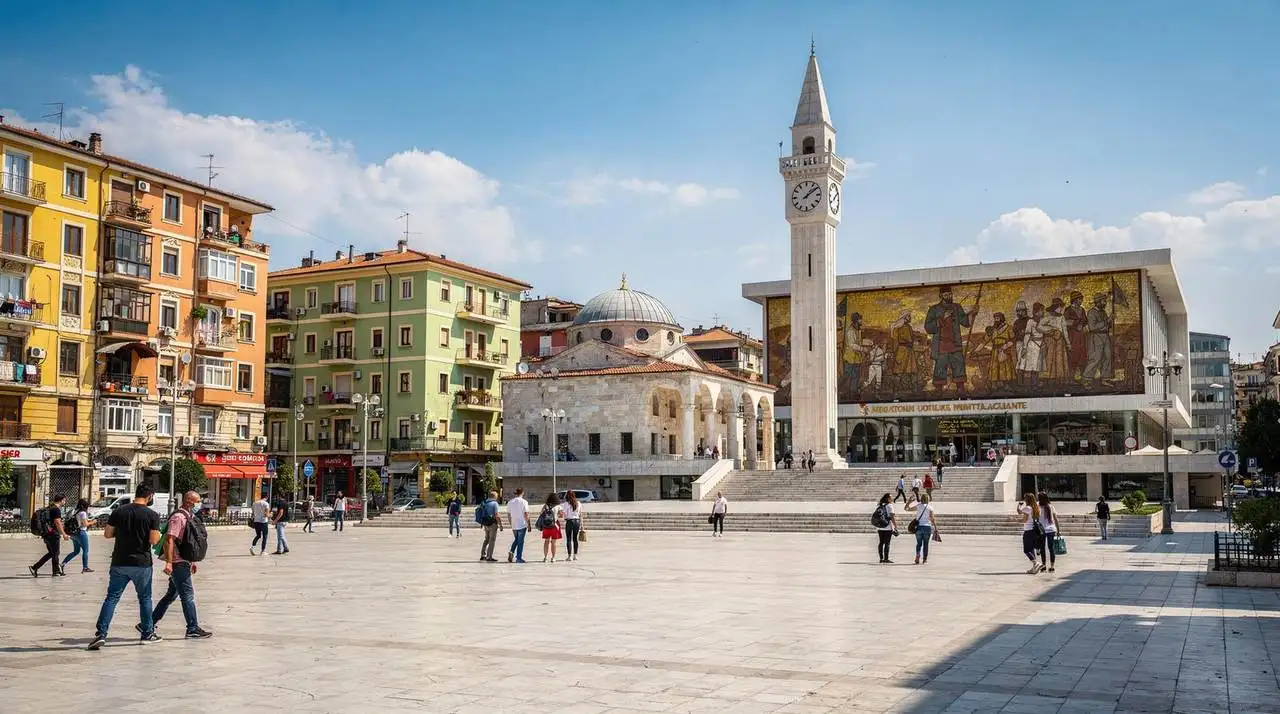
Tirana reflects the full diversity of Albanian religious practice. Orthodox services at the Resurrection of Christ Cathedral, Catholic services at the Church of Our Lady of the Good Counsel, and Eid celebrations in the Muslim community can all be found within the city. The cultural mixing that is Albania’s most distinctive religious characteristic is most visible here.
Tirana during Easter also has a practical advantage: the full range of accommodation, restaurants, and services remains available, unlike in smaller towns where some businesses close for the holiday. If you are using Tirana as a base and making day trips to Berat for the Easter celebrations, this works well logistically.
A walking tour of Tirana that includes the religious sites and some context for the city’s complex religious history is a good starting point. A guided Tirana walking tour that covers the communist-era history alongside the religious sites helps make sense of how Albania navigated faith through the atheist regime and what the reconstruction of religious life after 1991 has meant for the country’s culture.
If You Want Easter Without the Crowds
Berat and Gjirokastra are the atmospheric choices, but they are also the ones that fill up fastest. If your priority is experiencing genuine Orthodox Easter traditions without competing for guesthouse rooms months in advance, Permet and the smaller villages around it are the better bet — the celebrations are just as authentic and the accommodation pressure considerably lower. On the coast, Himara and Saranda have smaller Orthodox communities that mark Easter more quietly, which can suit visitors who want to combine the holiday with a beach trip rather than a full cultural immersion. Whichever you choose, the Albania in April guide covers the wider spring picture — weather, crowds, and what else is in season alongside Easter itself.
What to Pack for an Albanian Easter
A few extra items are worth adding to a standard spring packing list if Easter is part of your trip. A light scarf or shawl for covering shoulders in church services, smart-casual layers since Easter Sunday gatherings often run more formal than an average day of sightseeing, and a small gift if you have been invited into someone’s home for the Easter meal — a bottle of wine or something from your home country is generally well received and never expected but always appreciated. Comfortable shoes still matter, since Holy Week in towns like Berat and Gjirokastra means a lot of standing and slow walking between churches, the bazaar, and wherever the communal fires are lit.
Visiting Albania at Easter: Practical Notes
Easter is a public holiday in Albania for Orthodox Easter (Good Friday through Easter Monday). Government offices and banks close. Many restaurants and shops reduce hours. Transport continues but schedules may vary.
Accommodation in Berat and Gjirokastra during Orthodox Easter weekend books up — particularly the guesthouses in the old town areas that provide the most atmospheric settings. Book at least two to three months ahead for stays in these locations at Easter.
The overlap of Easter with spring travel season, which sees growing visitor numbers, means that 2026 Orthodox Easter (typically in late April or early May) will see more visitors than in previous years. Go early in the Easter week rather than arriving on Easter Sunday if you want the celebrations without the crowd.
Dress modestly if attending church services. Covering shoulders and knees is standard expectation for both Orthodox and Catholic services. Carry a light scarf or layer. Be quietly present rather than photographically obtrusive. Albanian communities welcome visitors to their celebrations with genuine warmth, and the appropriate response is genuine respect.
Spring in Albania is also one of the best times to visit purely for the weather and landscape — our 7-day south itinerary covers the south at its spring best, and the Albanian Riviera road trip offers a coastal route that works beautifully in April and May.