Albania and Coffee: A Love Story That Surprised Us
We did not go to Albania expecting to learn something profound about coffee. We went for the beaches and the mountains and the absurdly underrated food. But within forty-eight hours of our first visit, it became clear that if you want to understand Albania, you need to understand its relationship with coffee — because that relationship is unlike anything else in Europe.
Albania ranks among the highest coffee-consuming nations on the continent, not just per cup but per social occasion, per hour of the day, per conversation, per excuse to sit down. Coffee here is not a morning habit. It is a cultural institution, a social lubricant, and in many ways the organising principle of Albanian public life.
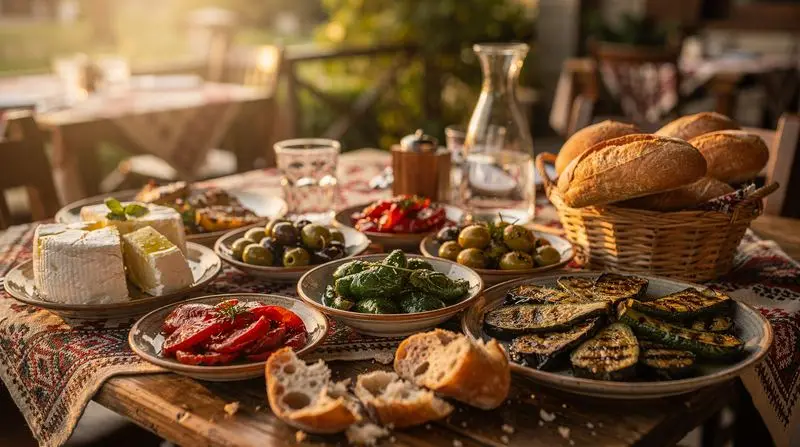
This is our attempt to explain why — and to point you toward where and how to experience it properly. For a broader introduction to Albanian food culture, our Albanian food guide covers the full picture, but coffee deserves its own treatment here.
| What to order | ”Nje kafe” gets you a macchiato or espresso, Italian-style |
| Cost | Around 60-100 lek (roughly 60 cents to 1 euro) in most cafes |
| Where | Blloku and Myslym Shyri in Tirana, the Gjirokastra bazaar, Berat’s riverfront |
| Etiquette | Whoever invites pays; stay as long as you like |
The Numbers That Made Us Do a Double Take
The statistics on Albanian coffee consumption are genuinely startling. Various surveys of European coffee consumption have placed Albania at or near the top for per-capita coffee drinking, despite it being one of the smaller and less wealthy countries on the continent. Albanians drink an average of somewhere between two and four coffees per day — and that is an average that includes people who do not drink coffee at all, which means the coffee drinkers are consuming considerably more.
We asked a friend in Tirana about this. She is a graphic designer who works from coffee shops most mornings. Her answer: “What else would we do? This is where life happens.”
She is not wrong. Albanian social life is organised almost entirely around coffee. When someone says “le te pime nje kafe” — let us drink a coffee — they do not necessarily mean they are going to drink coffee. They mean they want to spend time with you. They want to talk. The coffee is the reason, the table is the space, and the conversation is the point.
The Ottoman Foundation
The depth of Albanian coffee culture is inseparable from five centuries of Ottoman rule. The Ottoman Empire gave the Balkans not just the practice of drinking coffee but an entire architecture around it: the cafe as social institution, the coffee house as male gathering space, the ritual of preparation as a form of respect.
Traditional Albanian coffee — still served in the older cafes and most homes — is prepared in a small copper or brass pot called a xhezve (or dzezva in the regional variant). Fine-ground coffee is simmered with water, sometimes with sugar added during brewing, and poured slowly into small cups, leaving the grounds to settle at the bottom. You do not stir it. You wait for the grounds to sink. You drink slowly.
This preparation is almost identical to Turkish coffee, and it arrives unsolicited in many Albanian homes when you visit. Being served coffee this way is an act of hospitality. Declining it is, at minimum, mildly impolite.
The communist era, for all its deprivations, did not kill coffee culture — it adapted it. When Albania was sealed off from the outside world and real coffee became scarce, people found substitutes. But when the regime collapsed in 1991 and the borders opened, one of the first things that came flooding back in was coffee. Good coffee. Italian espresso machines. And a population that already had the social infrastructure for sitting in cafes and had no intention of losing it.
The Italian Influence
Here is something that surprises many visitors: despite the Ottoman foundation, the coffee you are most likely to drink in a modern Albanian cafe is Italian-style espresso. Albania’s relationship with Italy — visible in the language that many Albanians speak, in the television programmes that came in over satellite dishes during the 1990s, in the enormous Albanian diaspora in Italian cities — profoundly shaped what “good coffee” came to mean here.
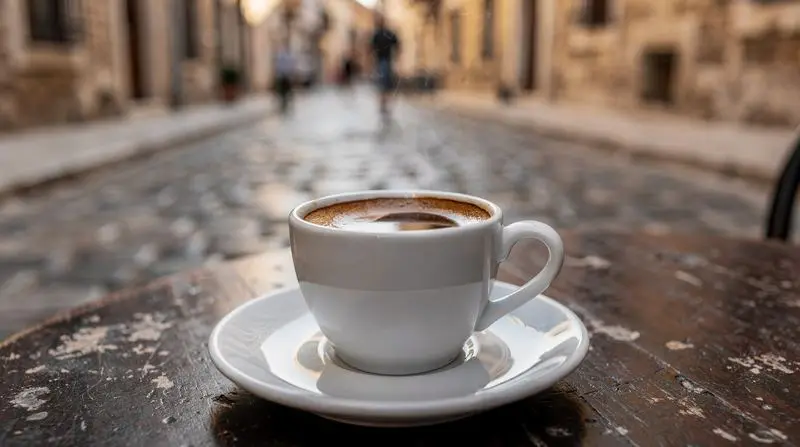
The standard Albanian cafe coffee is a macchiato. Not the large, elaborate Starbucks interpretation, but a small espresso with a dash of foamed milk — the Italian macchiato. Order “nje kafe” in most Albanian cafes and you will get either this or a straight espresso. The quality, driven by Italian-standard machines and freshly ground beans, is frequently excellent.
In Tirana particularly, the coffee scene has developed genuine sophistication. There are specialty roasters, filter coffee bars, and places running single-origin pour-overs. But the vast majority of coffee consumed in Albania is still that simple macchiato or espresso, drunk fast or savoured slowly depending on the occasion, and always cheap.
If you want to explore Albanian coffee culture in the context of a broader food experience, a Tirana food tour with meals included typically weaves in the coffee culture alongside the market stops and restaurant tastings, giving you a rounded understanding of how Albanians eat and drink throughout the day.
The Price of Coffee: A Deliberate Choice
In Tirana, a macchiato in a regular cafe costs 60 to 80 lek — roughly 60 to 80 euro cents. In smaller towns and villages, it is sometimes less. This is not cheap by accident. Cafe owners in Albania are not failing to notice that they could charge more. The price of coffee is partly a competitive norm and partly a social contract: coffee must be accessible to everyone. A society that runs on coffee cannot afford to price its working people out of the cafe.
We have read commentary suggesting that Albanian coffee prices will inevitably rise with tourism and gentrification. This may be true in the upmarket specialty coffee shops that are opening in Tirana’s Blloku neighbourhood. But we suspect it will take a very long time for the standard neighbourhood cafe to significantly increase the price of a macchiato. Social pressure is a powerful economic force.
Sitting in a Cafe: The Actual Experience
One of the adjustments visitors need to make in Albania is recalibrating their sense of how long it is acceptable to stay at a cafe table. The answer is: as long as you like. Albanian cafes are not businesses that need to turn tables to survive — their model depends on loyal regulars who come every day, and regulars need to feel comfortable staying.
Order a coffee. Sit. Watch the street. No one will hover. No one will bring the bill without being asked. No one will give you the look that says “are you done yet?” If you want to stay for three hours over two coffees and a water, that is entirely normal. If you want to do it again tomorrow, you will likely be recognised and perhaps even greeted by name.
This slowness is what we love most about the Albanian coffee experience. In a world that increasingly seems to want everything to go, Albania insists that coffee is for sitting. It is one of the most stubbornly civilised things about the country.
Where to Experience Albanian Coffee Culture
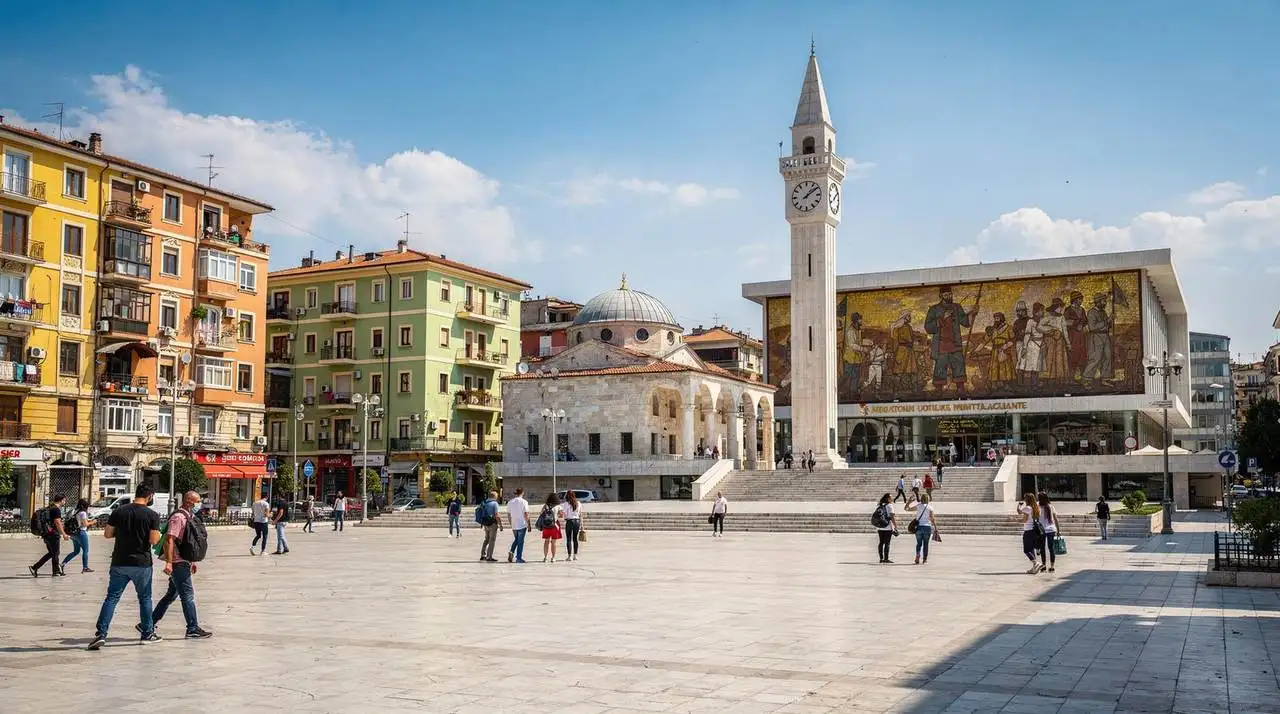
Tirana, Blloku neighbourhood: The densest concentration of cafes in the country, ranging from traditional spots with xhezve coffee to serious specialty roasters. The main boulevard through Blloku is lined with terraces that fill up from morning until midnight. Our Tirana destination page has neighbourhood details. A Tirana walking tour often passes through Blloku and gives you the historical context for why this neighbourhood’s cafes feel so significant — they were off-limits to ordinary citizens during the communist era.
Tirana, Rruga Myslym Shyri: One of the city’s most pleasant walking streets, lined with cafes that have table service and terrace seating. More neighbourhood-feeling than Blloku, good for watching local life unfold without the tourist density of the main boulevards.
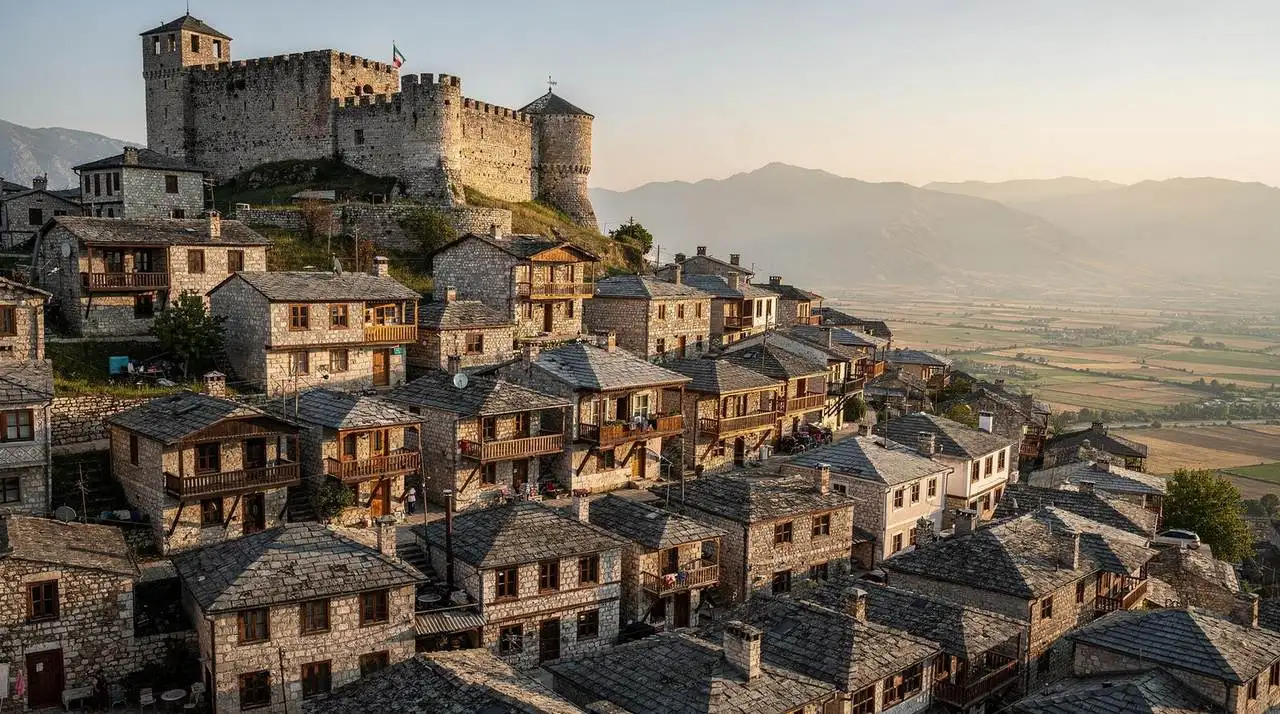
Gjirokastra bazaar: The old bazaar has a handful of traditional cafes that still serve xhezve coffee in the Ottoman manner. Worth seeking out for the atmosphere as much as the coffee itself. The Gjirokastra destination page covers the bazaar and old town in detail. Sipping xhezve in a stone-arched cafe in one of Europe’s best-preserved Ottoman cities is an experience that earns its place in any Albania itinerary.
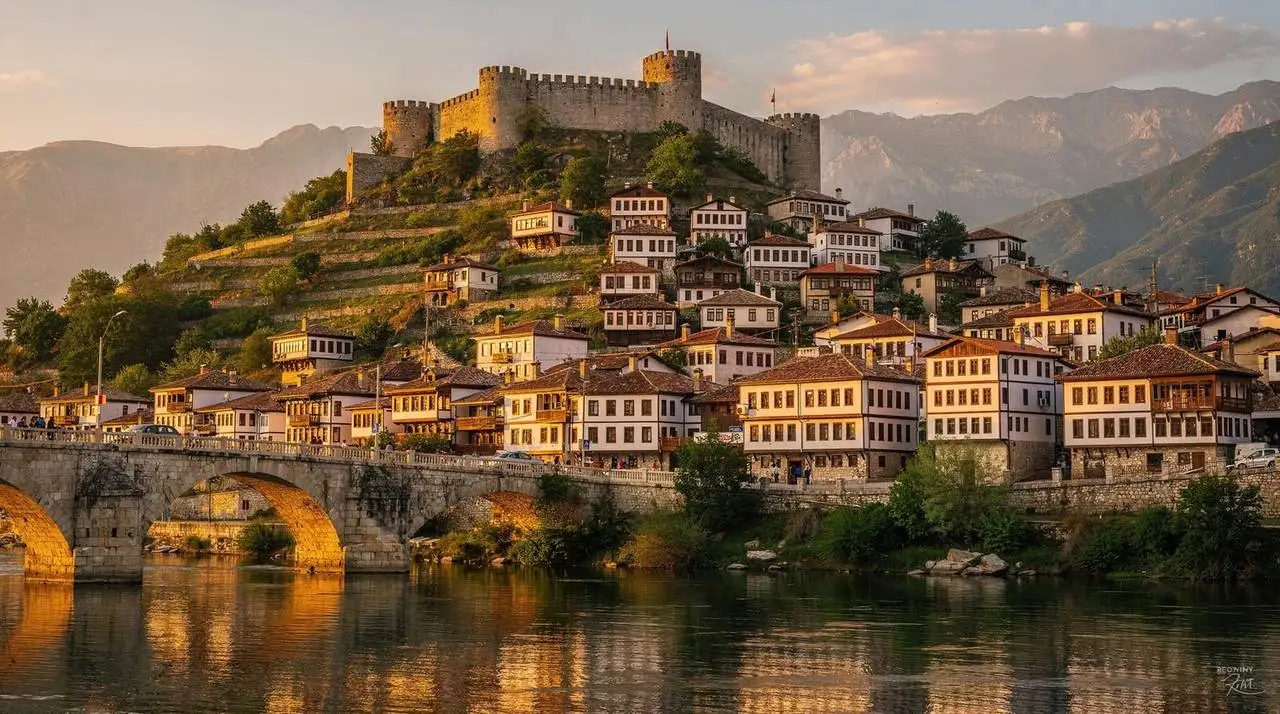
Berat: The cafes along the Osum riverfront in Berat are some of the most pleasant in the country for a long morning sit. Good coffee, beautiful setting, minimal tourist pressure outside peak season. The reflection of the Mangalem quarter in the river provides a backdrop that makes even a quick coffee stop feel memorable.
Permet: The small town cafes in Permet feel completely unchanged from twenty years ago. Plastic chairs on the pavement, strong espresso, the same group of men who have been sitting there every morning since 1995. Genuine, unhurried, and representative of Albanian cafe culture at its most authentic.
Saranda waterfront: The cafes along Saranda’s promenade are busier and more tourist-oriented than those further inland, but they have the compensation of a view across to Corfu and the particular energy of a southern Albanian coastal town in summer. Good for an evening coffee as the sun goes down.
The Social Rituals Around Coffee
A few customs worth knowing before you sit down:
Who pays: The person who invites pays. If an Albanian suggests going for coffee, they will pay. The offer to split the bill will be politely but firmly declined. The correct response is to invite next time.
Coffee and business: Albania does not have a strong separation between social and professional conversations. Business meetings very often happen over coffee rather than in formal settings. This is not procrastination — it is the appropriate way to establish the relationship before discussing the matter at hand.
The morning coffee: Albanian workdays effectively begin at the cafe. Before offices open properly, before anything official happens, there is the morning coffee at the cafe nearest the workplace. This is not negotiable. Understanding this explains why cafe terraces in Tirana are full at 8am on a weekday.
Raki with coffee: In certain traditional contexts — typically rural, typically male, typically in the morning — you will encounter raki served alongside coffee. Do not read this as a sign of a drinking problem. Read it as a centuries-old ritual that predates any modern concern about alcohol at breakfast. You are not obligated to participate, but if someone is offering you raki at 9am, you are being shown considerable trust.
The Coffee Route: Building It Into Your Itinerary
The most satisfying way to experience Albanian coffee culture is to build deliberate cafe time into each destination on your route. Not as dead time between activities, but as a core activity. In Tirana, pick a morning for the Blloku terraces — you will understand the city better in two hours here than in a day of sightseeing. In Gjirokastra, find the traditional cafe in the old bazaar and order xhezve, even if you normally drink espresso. In Permet, sit somewhere with a view of the mountains and let an hour pass without guilt.
The Albania nightlife guide covers the evening side of Albanian social life, which emerges from the same coffee-culture foundations — the cafes simply stay open later and the drinks evolve as the evening progresses.
Ordering Like You Belong There
Cafe menus in Albania can look intimidatingly long, but the core vocabulary is small. “Kafe” alone gets you the standard macchiato-style coffee most Albanians drink. “Espresso” gets you a straight shot. “Kafe turke” or “kafe shqip” gets you traditional xhezve-brewed coffee, thicker and stronger, best ordered when you have time to let the grounds settle. “Kafe me qumesht” is closer to a milkier flat white. If you want it without sugar, say “pa sheqer” when you order — most Albanian coffee comes pre-sweetened unless you specify otherwise, particularly the traditional style. None of this requires fluency; cafe staff in tourist areas are used to visitors and will happily point at the menu if your pronunciation is shaky.
Decaf, Alternative Milk, and Modern Preferences
Tirana’s specialty cafes, particularly in Blloku, have caught up with international coffee trends — oat milk, decaf, and cold brew are all findable without much searching, though the traditional neighbourhood cafe outside the capital is less likely to stock them. If dietary preference or caffeine sensitivity matters to your trip, it is worth asking directly (“keni qumesht tranguj?” for plant milk options is a stretch, but pointing and asking “a keni…?” — do you have…? — with the item named in English usually works) rather than assuming availability. Traditional xhezve coffee is, by nature, always fully caffeinated and made with dairy or nothing; if you want a decaf alternative, a modern Blloku or coastal specialty cafe is a more reliable bet than a village bazaar spot.
A Coffee Crawl Worth Planning Around
If the coffee culture is part of why you are visiting, it is worth treating it as its own micro-itinerary rather than an afterthought between sights. Start in Tirana’s Blloku for the contrast between old-guard terraces and the specialty roasters that have opened in the last few years — our Tirana destination page has neighbourhood specifics. Break the journey south with an unhurried cafe hour in Berat’s riverside quarter, then seek out the xhezve cafes in the Gjirokastra bazaar before continuing on toward the coast. If your route includes Korça, its Austro-Hungarian-influenced old town has its own distinct cafe atmosphere, worth a detour if coffee culture and architecture both interest you. Our 7-day south itinerary already threads through most of these towns, so building in deliberate cafe time is mostly a matter of not rushing between them.
Our Honest Recommendation
If you are visiting Albania for any length of time, build cafe time into your itinerary. Not as dead time between activities, but as an activity in itself. Sit somewhere with a view of the street. Order a macchiato. Watch what happens around you. You will learn more about Albanian society in two hours at a cafe table than you will in a day of sightseeing.
The food is extraordinary — our Albanian food guide covers the eating side in depth. The history is rich. The scenery is dramatic. But the coffee is where the country really shows you who it is.
Every Albanian city and village has its cafe culture, and each one is slightly different in character. Tirana’s cafes are cosmopolitan and fast-moving. Gjirokastra’s are ancient and reflective. Permet’s are genuinely, pleasingly frozen in time. Following the coffee from city to village to mountain town gives you a thread to follow through the country — a way of understanding the places you pass through that no guidebook maps quite catch.
Drink slowly. Stay as long as you like. Come back tomorrow.