Albania with Kids: The Perfect Family Holiday
Albania is an excellent family destination and one of Europe’s most underrated choices for a holiday with children. The country offers the things that make family travel genuinely enjoyable: beaches with calm, warm, crystal-clear water; castles and fortresses with genuinely interesting history; mountains with cable cars and wildlife; ancient ruins that even young children can explore; and a local culture that is exceptionally warm toward children. In restaurants, children are welcomed rather than tolerated; menus adapt without fuss; and Albanian families travel in large, multigenerational groups that make foreign families feel immediately at ease.
This itinerary runs 7 days at a comfortable pace for families with children aged approximately 5–15. It can be extended to 10 days by adding extra beach time in Ksamil or Dhermi. The itinerary avoids anything that requires long hikes, difficult logistics, or sustained adult-focused sitting — every stop has something genuinely engaging for younger travellers.
Costs below assume two adults and two children sharing accommodation; family rooms are widely available in Albanian hotels and guesthouses.
| Where | Tirana → Dajti → Kruja → Berat → Saranda → Butrint → Ksamil |
| Duration | 7 days at a comfortable pace, 10 with extra beach time |
| Cost | Around EUR 600–810 for a family of four (budget) |
| Getting around | Bus and private taxi; a rental car helps for the Riviera extension — see driving in Albania |
| Best time | June or September for warm water without the peak-August heat |
| Ages | Comfortable for children roughly 5–15; beach resorts also suit toddlers |
Family Travel Practicalities
Age considerations: Albania is suitable for children of all ages. Infants and toddlers do well at the beach resorts and larger hotels. The UNESCO city tours and castle visits work best for children aged 5+. The cable car and mountain elements are fun for all ages.
Food: Albanian food is generally family-friendly: grilled meats, fresh bread, salads, pasta, pizza (widely available), and excellent fresh fruit and vegetables. Fussy eaters do fine. Vegetarian options are limited outside Tirana and Saranda.
Sun and heat: In July–August, Albania is very hot (35–40°C on the coast). Start outdoor activities by 9am, rest during the hottest part of the afternoon (1–4pm), and be rigorous about sunscreen and hats for children.
Medical: Tirana has good private hospitals (AHI — American Hospital International is the most reliable for English-speaking care). Berat and Saranda have medical facilities. Travel insurance with medical cover is essential.
Strollers: The cobblestone streets of Berat and Gjirokastra are not stroller-friendly. Carry a backpack carrier for young children or leave strollers at the hotel for these sections.
Day 1: Tirana — Arrival and Skanderbeg Square
Afternoon: First Impressions
Arrive at Tirana International Airport (taxi to centre: 2,500–3,000 lekë) and check into your family accommodation. For families, Tirana has several hotels with family rooms: Hotel Kalemi 2, Hotel Mondial, and the Tirana International Hotel all have appropriate options.
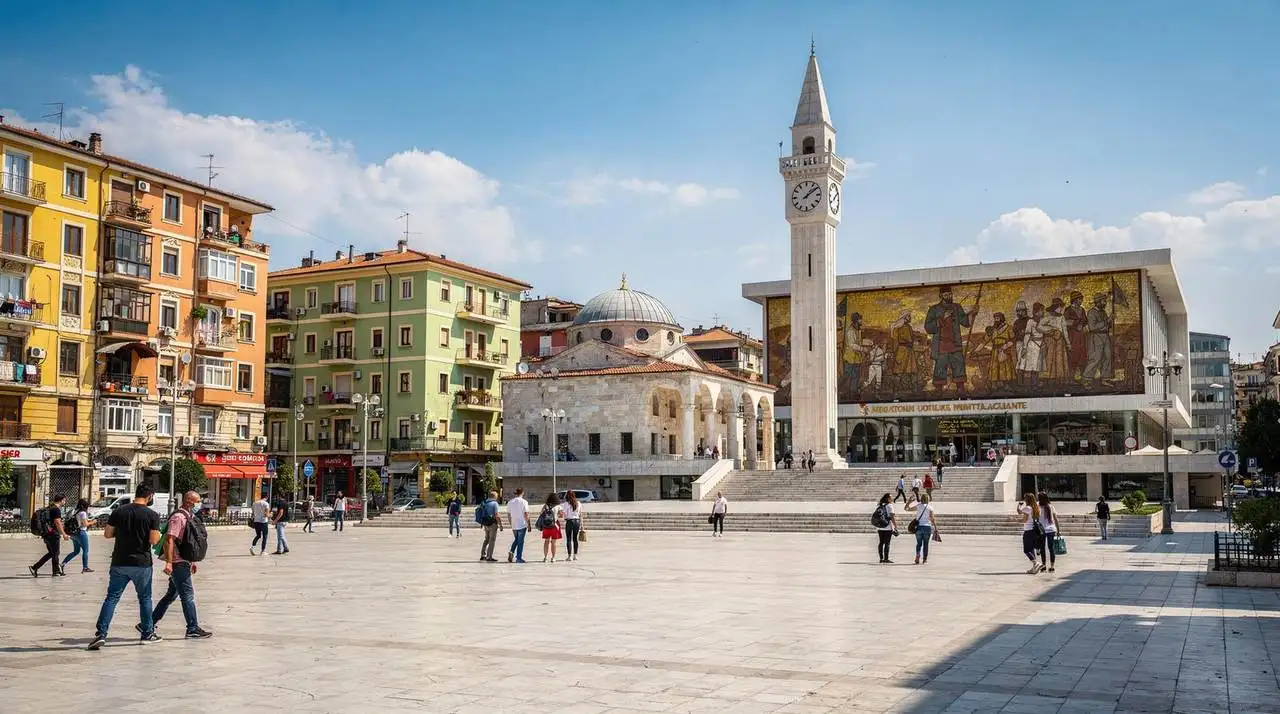
Spend the afternoon at Skanderbeg Square — vast, pedestrianised, and child-safe. Children enjoy the scale of the square, the equestrian statue (good photo opportunity), and the Clock Tower (climb the internal staircase for views, 200 lekë). The Et’hem Bey Mosque is a gentle introduction to Ottoman architecture: the naturalistic interior frescoes (landscapes, rivers, trees) are surprisingly engaging for children expecting something abstract.
Walk south through the Blloku neighbourhood and find a gelato or pastry shop. Albanian ice cream shops (akullorejë) are excellent; look for the locally made varieties rather than international chains.
Evening: Family Dinner
For families, Era Restaurant in the centre or the Garden Restaurant near the Lake serve reliable, kid-friendly Albanian food: roasted chicken, grilled vegetables, lamb chops, and excellent bread. A family dinner (2 adults, 2 children) at a mid-range restaurant: approximately 3,000–5,000 lekë.
Day 2: Dajti Mountain Cable Car and BunkArt
Morning: Dajti Ekspres Cable Car
The Dajti Ekspres cable car is one of the highlights of a family visit to Tirana. Take a taxi to the lower station in Farka (600–700 lekë) and ride up to 1,613 metres above the city — a 15-minute ride with spectacular views over Tirana and the plains. Children love cable cars universally; the views are excellent and the journey memorable.
Book a combined Tirana walking tour and Dajti cable car experience — this includes a city walk before the cable car and is an efficient way to cover both with a guide explaining Albanian history at child-appropriate level.
At the top: walk the forest trails (short, easy, suitable for all ages), spot Alpine wildlife (deer, eagles, and various forest birds inhabit the park), and have lunch at the summit restaurant (1,000–1,500 lekë per person, basic but good views).
Afternoon: Tirana City Walk and Pazari i Ri
Return to the city for an afternoon at Pazari i Ri — the covered market where children can experience the sights, sounds, and smells of Albanian daily commerce. Buy byrek (flaky pastry, universally popular with children) from a market vendor and explore the produce stalls.
Walk to the Pyramid of Tirana — the bizarre former communist mausoleum now used as a youth centre. The sloping concrete sides are climbable (children do this constantly and with great enthusiasm), and the views from the top are free and good.
Evening: BunkArt 2 (for older children)
For children aged 10+, BunkArt 2 (600 lekë) — the communist secret police bunker museum — is genuinely fascinating and slightly spooky in a way that older children enjoy. The exhibits on surveillance technology, the cold war, and the human cost of the secret state are sobering and educational. For younger children, skip this and head for a gelato instead.
Day 3: Kruja — The Castle of Skanderbeg
Morning/Afternoon: Kruja Castle and Old Bazaar
Take a morning furgon to Kruja (30 km north of Tirana, 45–60 minutes, 200 lekë per person) or join a guided day trip from Tirana. Kruja is Albania’s most child-friendly historic site: a hilltop fortress town where the national hero Skanderbeg held off the Ottoman army for 25 years in the 15th century — a story that even young children find engaging when well told.
The Skanderbeg Museum inside the reconstructed castle tells the story of the resistance in child-accessible terms: weapons, armour, battle maps, and dramatic dioramas. The Ethnographic Museum in an original Ottoman mansion shows how Albanian families actually lived. The Old Bazaar below the castle is one of the best-preserved Ottoman bazaars in Albania — wide enough and interesting enough for children to wander with real curiosity.
Buy your children a small souvenir from the bazaar’s craft vendors: a copper dish, a small kilim weaving, or one of the wooden carved toys. These are authentic local crafts at very reasonable prices.
Evening: Return to Tirana
Return by furgon (last services run until mid-evening). Dinner in Tirana — tonight, try a pizza or pasta restaurant for the benefit of younger palates. Albanian-Italian fusion restaurants are common and generally good quality.
Day 4: Tirana to Berat
Morning: Travel and First Exploration
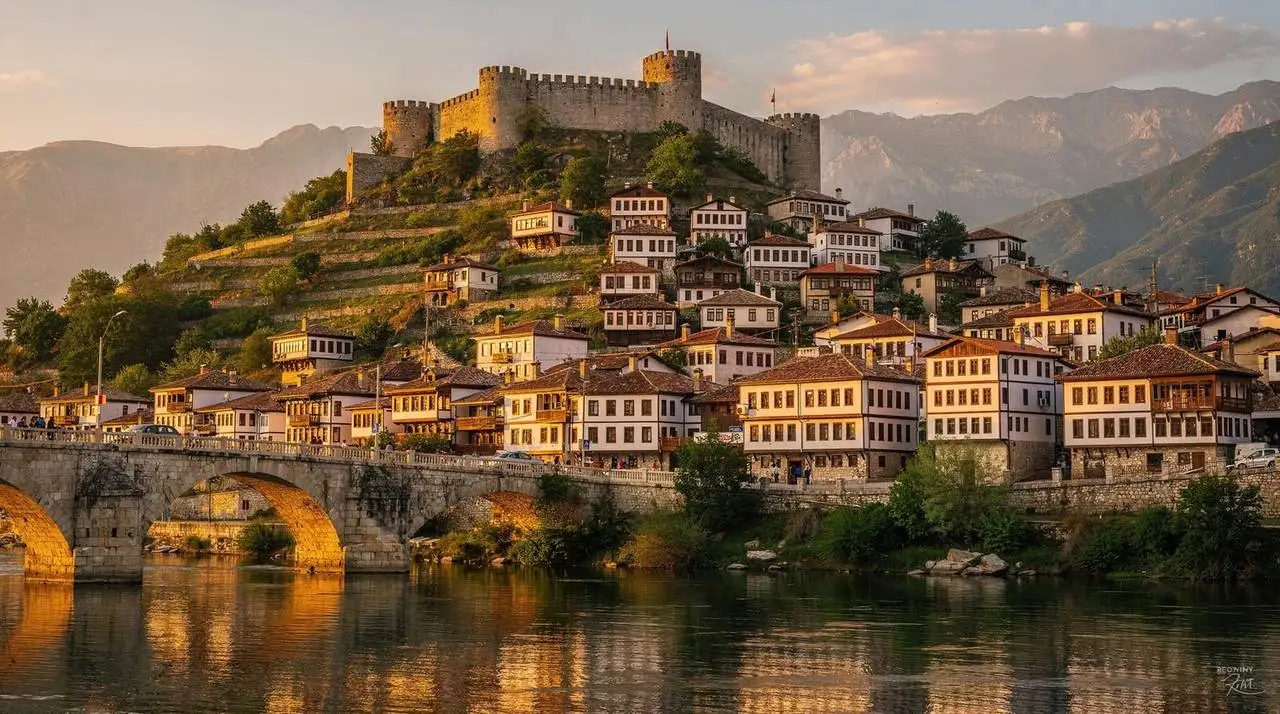
Morning bus to Berat (2 hours, 400 lekë per person). Berat is immediately engaging for children: a city that looks like something from a fairy tale, with its hillside of white houses and huge windows climbing toward a castle that people actually live in.
Check into your family guesthouse in Mangalem. Most guesthouses in the Berat old town can accommodate families in larger rooms or by combining rooms.
Afternoon: Kalaja Castle Adventure
Children love Kalaja — Berat’s inhabited castle. The combination of ancient walls and towers, working churches, a neighbourhood of real residents going about daily life inside a medieval fortress, and the excellent views makes it feel like an adventure rather than a museum visit. Let children run along the castle walls (safely; there are drop-offs in places, keep younger children close) and explore the various church interiors and cisterns.
The Onufri Museum (400 lekë each) with its glowing icons works better with children than expected — the vivid reds and golds of Onufri’s paintings are visually striking, and explaining “this painter invented his own special red colour that no one else could copy” gives children something concrete to engage with.
Evening: Riverside Dinner
Dinner at a restaurant on the Osum River bank — watch the water while you eat. Albanian restaurants are universally comfortable with children and will adapt dishes without complaint. Grilled chicken, lamb chops, chips, and fresh salad are reliable family options available everywhere.
Day 5: Berat to Saranda — Journey Day
Full Day: Travel South
This is the longest travel day of the itinerary. Take the morning bus from Berat toward Fier and then Saranda (approximately 4–5 hours total, changing buses if necessary; or take a private taxi — approximately 8,000–12,000 lekë for the full journey with a family, comfortable and worth it).
Alternatively, stop in Gjirokastra for 2–3 hours (another castle, highly child-accessible, the captured US Air Force jet in the castle courtyard is a guaranteed hit with children) and continue to Saranda by late afternoon.
Arrive in Saranda and check into your hotel. For families, hotels with pools (several exist in Saranda and nearby Ksamil) are strongly recommended — children can swim while parents rest. Hotel Porto Eda and Hotel Butrinti both have family facilities.
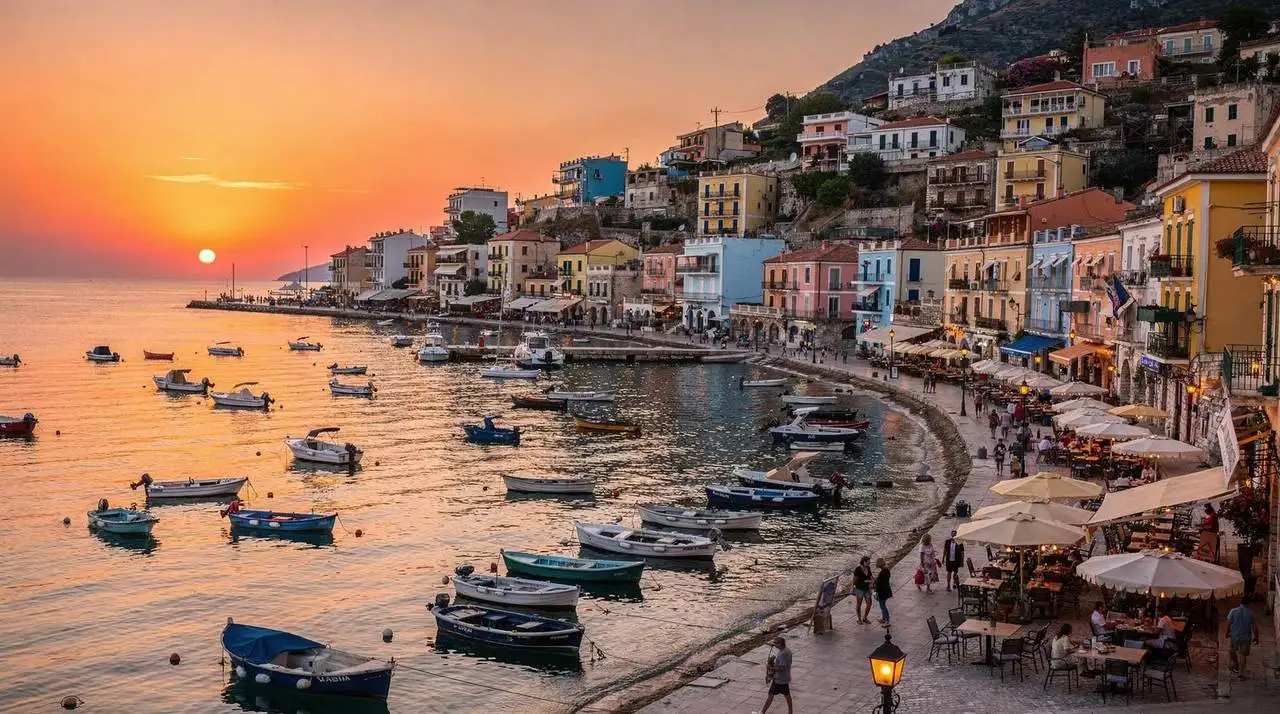
Dinner on the Saranda waterfront: the promenade is lively and safe, ice cream shops line the esplanade, and the restaurants are accustomed to families. Fresh grilled fish, squid, and chips for children: approximately 3,000–5,000 lekë for a family of four.
Day 6: Butrint and Ksamil
Morning: Butrint Archaeological Site
Take a morning taxi (700–800 lekë) or tour to Butrint UNESCO site. Butrint works exceptionally well with children: it’s a manageable 2 km walk through ancient forest on a wooded promontory, with clearly visible and dramatic ruins at every turn.
Book a Butrint Archaeological Park and Ksamil day trip from Saranda — an efficient combination that handles transport and includes a guide who can explain the site in engaging terms for younger visitors.
The Greek theatre (children can sit in the ancient seats and imagine the crowd), the baptistery mosaic (one of the best-preserved early Christian mosaics in the region), the city walls (walkable and dramatic), and the Venetian tower all offer genuinely engaging experiences for children. Bring water and snacks — the Butrint cafe is limited and pricey.
Afternoon: Ksamil Beach
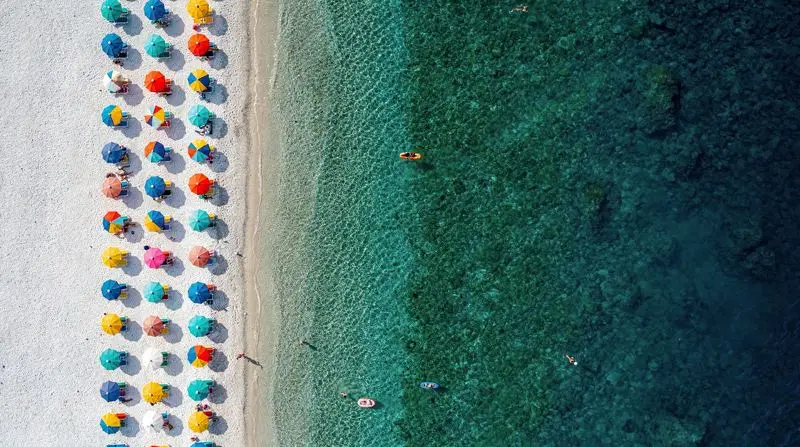
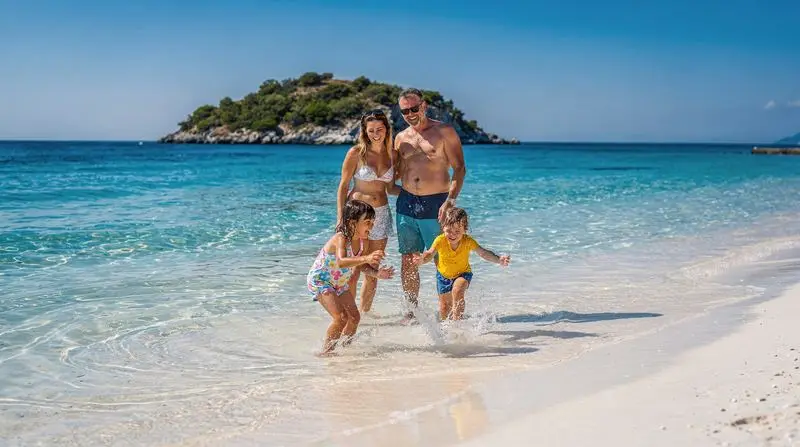
After Butrint, continue to Ksamil (15 minutes from Butrint by taxi) for the afternoon beach. Ksamil has three small offshore islands reachable by short boat trip (500–700 lekë return, children find this enormously exciting), shallow warm water ideal for young swimmers, and sandy beaches with gentle entry. The water is clear enough to see the bottom clearly at 2–3 metres depth — excellent for children learning to snorkel.
Spend the afternoon at the beach. Rent a pedalo or kayak from the beach rental stations (800–1,200 lekë/hour). Buy ice creams from the beachside kiosks. This is peak family holiday mode.
Evening: Ksamil Dinner
Stay for dinner in Ksamil at one of the beachside restaurants — fresh grilled fish, pizza, pasta, and Albanian staples. The beach restaurants cater heavily to families in summer.
Day 7: Saranda and Blue Eye
Morning: Blue Eye Spring
Take a morning taxi to the Blue Eye (Syri i Kaltër) — 25 km from Saranda. Children respond to the Blue Eye with genuine wonder: the impossibly blue water, the cold temperature, the ancient plane trees, and the mystery of a spring that nobody has fully mapped underground. Entry 100 lekë.
Explain to children that divers have tried to find the bottom of the spring and could not. That the water coming up from the earth is always exactly 10°C regardless of the season. That the colour is caused by the depth and clarity of the water bending the light. These are facts that generate good questions and conversations.
The Butrint and Ksamil day trip from Saranda can also be reversed or extended to include the Blue Eye.
Afternoon: Free Time in Saranda
Return to Saranda for a relaxed afternoon: the municipal beach in front of the promenade is safe and suitable for families, the waterfront has pedalo and kayak hire, and the promenade itself (ice cream, playgrounds, ferris wheel in peak season) is thoroughly family-friendly.
Evening: Farewell Dinner
A final waterfront dinner in Saranda. From here, families can: take the bus to Tirana for a flight (4–5 hours), take the ferry to Corfu (45 minutes, then easy connections to Athens or Corfu airport), or extend with 2–3 more days on the Albanian Riviera. Dhermi and Himara both have family-suitable accommodation and beaches.
Family-Specific Tips
Car seats: If renting a car (recommended for the Riviera section), request a child seat in advance — not all rental companies have them. Bring your own from home if possible.
Money: Pack an envelope of small notes (200-lekë and 500-lekë coins) for children to handle: ice cream purchases, boat trip tickets, small market souvenirs. It gives children a concrete sense of budgeting and agency.
Mosquitoes: Berat (Osum River) and Butrint (lagoon) can have mosquitoes at dusk. Pack child-safe repellent and long sleeves for evenings near water.
Beach equipment: You can buy beach umbrellas, inflatable toys, and snorkelling sets at Saranda or Ksamil supermarkets cheaply. There’s no need to pack heavy beach equipment from home.
Language: Albanian children speak some English from school from about age 8. This creates natural opportunities for your children to interact with local kids at the beach or playgrounds.
National parks: Albania’s national parks (Llogara, Butrint, Valbona) are free for children under 12 at most entry points.
7-Day Family Budget Summary
All costs are for a family of four (2 adults, 2 children). Children’s discounts (typically 50% for under-12s) apply at most museums.
| Category | Budget family | Mid-range family | Comfortable family |
|---|---|---|---|
| Accommodation (7 nights, family rooms) | EUR 210–280 | EUR 490–700 | EUR 840–1,400 |
| Intercity transport | EUR 50–70 | EUR 80–130 | EUR 150–250 |
| Museum and site entries | EUR 35–45 | EUR 35–45 | EUR 35–45 |
| Food and drink (per day) | EUR 35–50 | EUR 65–100 | EUR 110–170 |
| Activities and tours | EUR 30–60 | EUR 90–160 | EUR 200–350 |
| Total 7 days (family of 4) | EUR 600–810 | EUR 1,190–1,730 | EUR 2,180–3,300 |
Albania represents outstanding family value. The mid-range budget for a family of four for a week — including flights separately — compares favourably to a similar-quality week in Greece, Croatia, or Italy.
Albania with Children: Age-by-Age Guide
Toddlers (1–4 years): Beach resorts (Saranda, Ksamil) work best for this age group. Shallow water, easy terrain, sand and pebble beaches, and relaxed local restaurant culture where children are welcome without restriction. The cobblestone streets of Berat and Gjirokastra are challenging for strollers — carry a backpack carrier.
Young children (5–9 years): This is the sweet spot for the castle and museum visits. Kalaja in Berat — with its resident population, chickens, and lived-in feel — delights children who expect a museum and find a neighbourhood. Kruja Castle with its Skanderbeg story (the Albanian hero who fought the Ottomans for decades) is immediately comprehensible as a heroic narrative. Butrint’s Greek theatre allows children to sit in the ancient stone seats and imagine the audience.
Pre-teens (10–13 years): Old enough to genuinely engage with history and to appreciate the BunkArt museums (the communist bunker history is appropriately dramatic for this age). The cable car to Dajti Mountain is universally popular. The Ksamil islands boat trip and snorkelling in crystal-clear water tends to be a highlight of the whole trip.
Teenagers (14+): Teenagers with an interest in history or adventure will find Albania genuinely compelling. The communist history (BunkArt 1 and 2, the House of Leaves) is dramatic and historically significant. The landscape (the views from Gjirokastra Castle, the Osum Canyon, the Albanian Alps if you extend to the north) is extraordinary. Teenagers with a sense of adventure — willing to engage with a less polished tourist experience — often end up being the most enthusiastic Albania converts.
Family Logistics: Getting Around with Children
Buses with children: Long bus journeys (2–3 hours) are generally fine for children who are used to travel. Bring snacks, entertainment, and a window seat. The views on most Albanian intercity routes are good enough to hold older children’s attention. For younger children, the 2-hour Tirana-Berat journey is manageable; the longer Berat-Saranda route (4–5 hours) is better broken into segments.
Taxis with children: Child seats are not standard in Albanian taxis. For infants and toddlers, bring a portable car seat from home (or check that your rental car company can provide one). For children over 4 or 5, the Albanian approach to safety varies — use your judgment about when to insist on a seatbelt.
Shared taxis (furgons): Not ideal for families with very young children or large amounts of luggage — the vehicles fill up with strangers and can feel cramped. Private taxis or rented cars are more comfortable for family travel.
Car rental for families: Renting a car for the Riviera section (Saranda to Vlora) is strongly recommended for families — the flexibility to stop at beaches, find shade, and travel at your own pace with a car full of beach gear makes the coastal section dramatically easier. Standard cars fit two adults, two children, and luggage comfortably.
What Albanian Children Eat (And What Your Children Will Eat)
Albanian family restaurants are extraordinarily accommodating. Children’s menus as such don’t exist (there is no Albanian tradition of separate children’s food), but the kitchen will adapt dishes without complaint:
Universally successful with children: Byrek (the pastry filling is mild and the texture is familiar), grilled chicken (kofta-style or whole grilled), chips (French fries, available everywhere), pasta (Italian-style, widely available), fresh bread (Albanian bread is excellent), yoghurt (served with most meals, fresh and mild).
Try to introduce: Qofte (grilled minced meat patties — most children like these if they like burgers), tave kosi (the baked yoghurt and lamb dish, mild flavoured — children who accept the combination tend to love it), byrek with spinach (surprisingly popular with children who won’t eat cooked spinach at home).
Ice cream: Albania has excellent ice cream shops (akullorejë) in every town. Italian-style gelato made with fresh local milk appears in cafes from Tirana to Saranda. A family ice cream stop is a daily ritual that works in any Albanian city.
Water: Buy bottled water in the cities; in Valbona and Theth, the spring water is excellent and you can fill reusable bottles. Children dehydrate faster than adults in the Albanian summer heat — be proactive about water intake.
Educational Value: What Children Learn in Albania
A family trip to Albania is genuinely educational in ways that extend beyond typical holiday experiences:
History: Albanian history — from the Illyrians through the Byzantine era, the Ottoman period, and the extraordinary 45-year communist experiment — is not covered in standard school curricula. Children who visit learn about a European history that is largely unknown to them, which makes it all the more interesting.
The Cold War: The communist period and its legacy — 750,000 bunkers, the secret police apparatus visible at BunkArt 2, the accounts of political imprisonment and surveillance — give children aged 10+ a concrete and emotionally accessible understanding of what life under totalitarianism actually looked like.
Other languages: Albanian is a completely distinct Indo-European language, related to no other modern language — hearing it spoken is itself educational. Children who study languages are often fascinated by Albanian’s structure.
Geography: The contrast between the Albanian Alps (dramatic limestone peaks), the UNESCO cities (Ottoman urban history visible in stone and plaster), and the Ionian coast (Mediterranean marine environment) within a single small country provides an excellent lesson in geographical and ecological diversity.
Cultural hospitality: Albanian besa — the culture of unconditional hospitality to guests — is something children experience directly: the extra dish that appears uninvited, the free coffee from the cafe owner, the guesthouse host who refuses to accept payment for a spontaneous raki. This exposure to a hospitality culture different from northern European norms is valuable in itself.
Family-Friendly Stops: A Quick Comparison
| Stop | Best for ages | Standout activity | Practical note |
|---|---|---|---|
| Tirana | All ages | Dajti cable car | Compact centre, easy taxis |
| Kruja | 5+ | Skanderbeg Museum & bazaar | Half-day trip from Tirana |
| Berat | 5+ | Kalaja castle village | Cobblestones — bring a carrier for toddlers |
| Saranda | All ages | Hotel pools, promenade | Best base for the beach section |
| Butrint | 6+ | Greek theatre, ancient walls | Bring water and snacks |
| Ksamil | All ages | Island boat trips, snorkelling | Shallow, calm water |
Extending or Shortening the Trip
For families with only 5 days, cut Kruja and go straight from Tirana to Berat, then Saranda, Butrint, and Ksamil — this keeps the two strongest destinations (Berat and the Saranda beach cluster) without the travel day to Kruja. Families who prefer to minimise travel days entirely can also base themselves in Saranda for the whole trip after a short Tirana stopover, using it as a hub for day trips to Butrint, Ksamil, and the Blue Eye rather than changing accommodation every one or two nights — a meaningful simplification with young children, who generally do better with fewer hotel changes even at the cost of seeing less of the country.
For a longer 10-day trip, add the Albanian Riviera road trip itinerary after Ksamil: Dhermi and Himara both have family-suitable beach hotels, and the coastal drive itself (with stops) is genuinely enjoyable for children who like looking out of the window at dramatic scenery. The 7-day south itinerary is a useful reference if you want to compare pacing against a non-family version of a similar route.
Health, Insurance, and Practical Family Logistics
Travel insurance with medical cover for the whole family is essential — see the Albania travel insurance guide for what to look for in a policy. Pack a basic family first-aid kit (plasters, antihistamines, rehydration sachets, any regular medication) since pharmacy stock outside Tirana and Saranda can be inconsistent for specific brands. The Albania pharmacy and health guide covers what’s easily available locally versus what to bring from home.
Sun protection deserves particular attention for families travelling in July or August: the Ionian coast sun is intense by early morning, and children burn faster on and near water than they do inland. Rash vests for young children reduce the daily sunscreen battle considerably and mean less risk of missed patches on wriggling toddlers. Bring a wide-brimmed hat each, since the beach kiosks mostly sell adult-sized souvenirs rather than practical children’s sun hats. A cheap pop-up beach tent (packed from home or bought in a Tirana supermarket) is worth the suitcase space on the Ionian beaches, which offer very little natural shade outside a handful of tree-lined stretches. For connectivity, a local SIM or eSIM (see the Albania eSIM guide) makes it much easier to look up directions, translate menus, and keep in touch if the family splits up for an activity.
Frequently asked questions about Albania with Kids
Is Albania a good destination for families with young children?
Yes. Beach resorts around Saranda and Ksamil have calm, shallow, warm water well suited to toddlers and young swimmers, and Albanian restaurant culture is unusually welcoming toward children — dishes get adapted without complaint and staff are generally patient. The main adjustment for very young children is the cobblestone streets of Berat and Gjirokastra, which need a backpack carrier rather than a stroller.
How much does a week in Albania cost for a family of four?
A mid-range family of four should budget roughly EUR 1,190–1,730 for 7 days excluding international flights, covering family-room accommodation, intercity transport, museum entries, food, and a handful of paid activities. Budget-conscious families can do it for EUR 600–810; comfortable, upgraded travel runs EUR 2,180–3,300. See the full budget table above for a category-by-category breakdown.
What’s the best base for a family beach holiday in Albania?
Saranda is the most practical base: it has hotels with pools, a safe promenade, and is a short taxi ride from both Butrint and Ksamil. Ksamil itself has more beachfront accommodation but fewer facilities beyond the beach strip. For a longer stay focused purely on the beach, the Albanian Riviera road trip itinerary covers family-suitable options further north at Dhermi and Himara.