Destination Weddings in Albania: The Complete 2026 Planning Guide
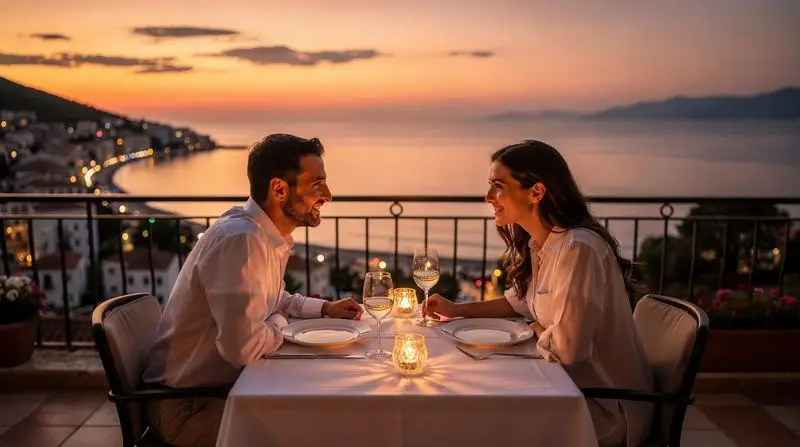
Albania is quietly becoming one of Europe’s most exciting destination wedding locations. While couples continue to pay extraordinary prices for weddings in Tuscany, Santorini, and the Algarve — venues that charge EUR 15,000-40,000+ before a single guest arrives — a growing number are discovering that Albania offers the same fundamental ingredients of a memorable Mediterranean wedding at a fraction of the cost.
This guide covers everything you need to know: legal requirements, the best wedding venues by region, realistic budget expectations, what types of weddings Albania suits best, and how to find local suppliers and planners. It also covers the guest experience side — because a destination wedding is partly about giving your guests a journey worth remembering alongside the ceremony.
| Cost (50-100 guests) | around EUR 10,750-25,375 |
| Best regions | Albanian Riviera, Berat, Saranda, Tirana |
| Legal route | Dual-ceremony model most common for foreign couples |
| Guest arrival | Tirana Airport or Corfu + ferry to Saranda |
| Planning lead time | 12-18 months recommended |
Why Albania for a Destination Wedding?
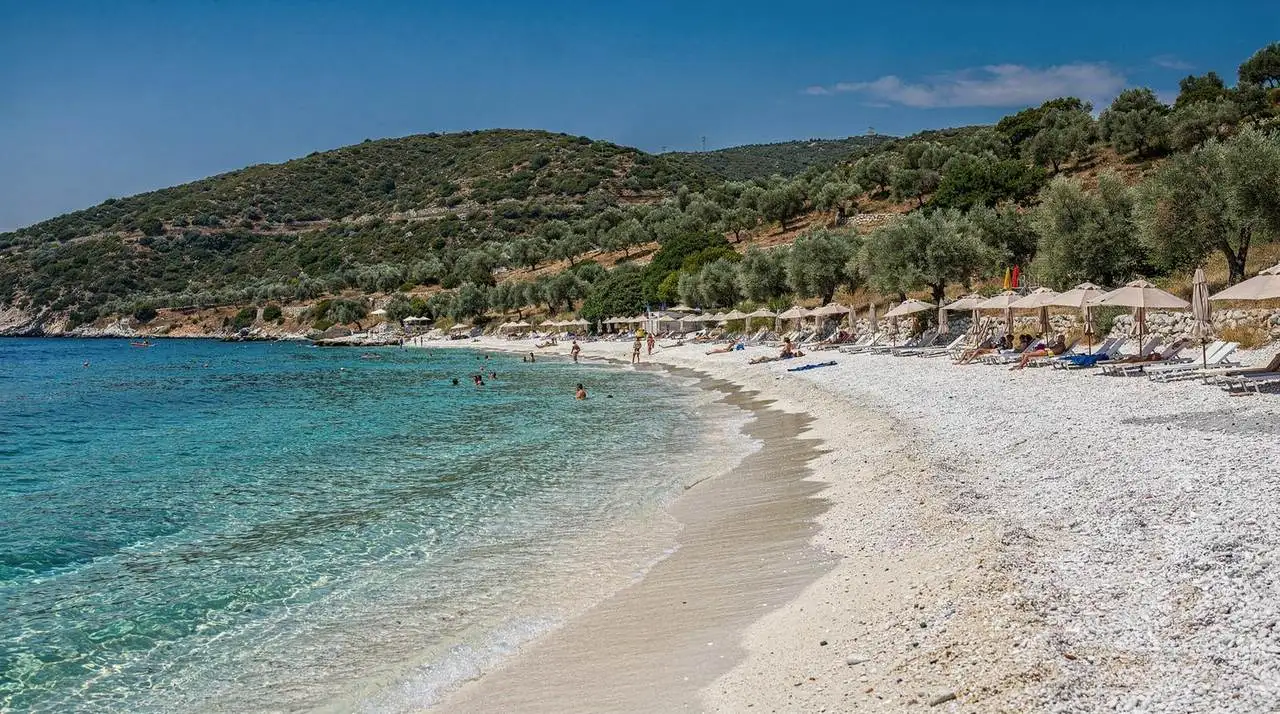
The scenery is extraordinary. The Albanian Riviera offers Ionian coastline, limestone cliffs, olive groves, and mountain backdrops that rival any Mediterranean venue. Ottoman old towns like Berat provide a UNESCO-heritage setting that is genuinely unique in Europe. The Albanian Alps offer dramatic mountain landscapes increasingly sought by adventurous couples who want something other than the standard Mediterranean formula.
The cost is transformative. Getting married in Albania costs 50-70% less than equivalent quality in Greece, Italy, or Croatia. This is not a compromise on quality — it is the same Mediterranean produce, the same warm Ionian water, the same ancient stone venues — at Albanian prices. A budget that might stretch to a small village hall wedding in Tuscany funds an exceptional multi-day celebration in Albania.
It is genuinely original. Guests who have attended multiple destination weddings in Tuscany or the Greek islands remember a wedding in Albania for being truly different. The destination itself becomes part of the story — the discovery of somewhere most guests had never visited, the extraordinary food and hospitality, the coastline they did not expect. Albania currently sits in the window where it is accessible enough to reach easily but unknown enough that choosing it is still an act of genuine curation.
Logistics are easier than expected. Tirana is served by multiple European airlines including Ryanair, Wizz Air, British Airways (seasonal), Lufthansa, and others. Most Western European capital cities have direct flights to Tirana, often for EUR 50-120 return. The country is small enough that guests arriving in Tirana can reach the Albanian Riviera in 3-4 hours by road, or take a taxi from Corfu via the Saranda ferry for guests already in Greece.
The hospitality culture is exceptional. Albanian wedding culture is one of the most elaborate in Europe — weddings are significant events attended by extended families and communities, with extraordinary food, music, and multi-day celebrations. Local caterers, venues, and planners work in a cultural context where the wedding feast is taken extremely seriously. This background produces suppliers who genuinely care about the quality of what they deliver.
Legal Requirements for Getting Married in Albania
Foreign nationals can legally marry in Albania, though the administrative requirements are more involved than in some other European countries. Understanding the process before choosing Albania simplifies planning considerably.
Civil Marriage in Albania
The civil marriage process in Albania involves the following steps:
-
Determine eligibility: Both parties must be legally free to marry. Divorce decrees, death certificates, or annulment documents must be provided if applicable.
-
Documents required:
- Valid passports (current and valid)
- Birth certificates with apostille stamp from your home country
- Certificate of celibacy or single status (issued by your home country’s relevant civil authority — this document confirms you are not currently married)
- Declaration of intent to marry (a sworn statement completed in Albania)
- All foreign documents must typically be translated into Albanian by a certified translator recognized by Albanian authorities
-
Register with the local civil registry office: In Albania, this office is called the Zyra e Gjendjes Civile, located in the municipality where the wedding will take place. The couple must appear in person to register.
-
Civil ceremony: Performed at the registry office or, with advance arrangement, at a licensed venue with a civil registrar in attendance.
-
Recognition at home: The Albanian marriage certificate is a legal document, but it must typically be apostilled and then registered with your home country’s civil authorities. The process for this varies by country — verify with your country’s embassy or consulate in Tirana before making final plans.
The administrative timeline is important: the document-gathering process can take several months depending on your home country’s bureaucratic speed. Starting 9-12 months before the intended date is advisable.
The Practical Approach: The Dual-Ceremony Model
Many destination wedding couples in Albania use what planners call a dual-ceremony approach:
- Legally marry at home (in a simple registry office ceremony) before or after the Albanian celebration
- Hold the symbolic ceremony and reception in Albania as the main celebration event
This approach eliminates any uncertainty about Albanian legal procedures, international document recognition, and administrative timelines while allowing complete creative freedom for the Albanian event. The Albanian ceremony becomes an elaborate celebration of a marriage that is legally valid in your home country, without the legal ceremony being the centerpiece of the Albanian event.
Many couples find this both simpler and equally meaningful — the ceremony in Albania is the emotional and celebratory event, while the legal registration is administrative. The symbolic ceremony script can be written entirely by the couple, reflecting exactly what they want to say.
Religious Ceremonies
Albania has Christian (Orthodox and Catholic) churches and mosques, reflecting its historically mixed religious heritage. Religious ceremonies require direct coordination with local religious authorities and may have specific requirements regarding religious membership, documentation, or preparatory meetings.
Couples with a specific religious tradition should contact the relevant Albanian religious authority directly — your wedding planner can facilitate these introductions. The Albanian Orthodox Church and Catholic Diocese are both active and have experience with international couples. The deeply Albanian tradition of religious tolerance (described in our customs guide) means that mixed-faith weddings are not uncommon in Albania, and local officiants have experience navigating these.
The Best Destination Wedding Venues by Region
Albania’s geography offers genuinely distinct wedding settings — coastal Mediterranean, UNESCO heritage city, mountain highlands, and urban contemporary. Each has different practical requirements, capacities, and character.
The Albanian Riviera: Dhermi, Himara, and Palasa
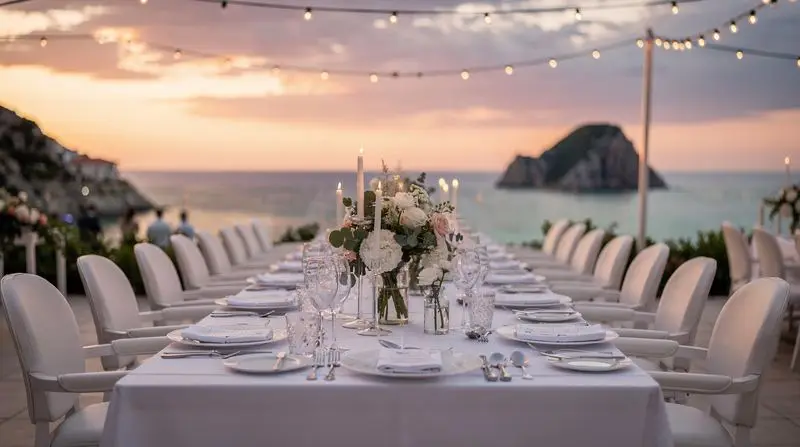
The Riviera is the first choice for most destination wedding couples, and the reasons are immediately obvious: extraordinary Ionian coastline, warm turquoise water, limestone mountain backdrops, ancient olive groves, and a Mediterranean atmosphere that needs no enhancement.
The Albanian Riviera currently offers a rare combination: Santorini-level scenery without Santorini-level prices or crowds. Venues that would be fully booked two years in advance in Greece are available with reasonable notice, and the per-head catering costs are dramatically lower.
Boutique hotel buyouts are the most straightforward approach for groups of 20-60 guests. Several Riviera boutique hotels have experience hosting destination weddings and offer full or partial buyout options — exclusive use of the property for your wedding party, accommodation for the main group, and ceremony and reception space in the hotel grounds. Buyout costs for smaller Riviera properties range from EUR 3,000-8,000 per night for the property, separate from food and catering.
Villa rentals provide the most intimate setting for smaller weddings of 15-40 guests. Private villas in Dhermi and the surrounding hills can accommodate both the ceremony and reception, with the setting genuinely private. Villa rental costs range from EUR 2,000-6,000 per week depending on size; most properties add a one-time event fee of EUR 500-2,000 for wedding use.
Olive grove weddings use the ancient terraced olive groves above the coast as ceremony and reception spaces. The visual effect — old stone walls, gnarled centuries-old olive trees, white fabric and string lights against the Ionian backdrop — is one of those aesthetics that photographs so well it risks looking staged. It is not; this is simply what Albanian olive groves look like. These outdoor venues require marquee or canopy hire for weather protection.
Beach and boat ceremonies combine the Albanian water with the celebration. Some couples arrange ceremonial elements on a chartered boat — or hold the ceremony itself on a private beach section — before the main reception inland. Private Albanian Riviera boat charters can be arranged for wedding parties to experience the coast from the water — perfect for pre-wedding activities or as part of the celebration day.
Gjipe Beach and the hidden coves: Some couples use Albania’s more inaccessible beaches — reachable only by boat — for intimate ceremony settings. Gjipe beach, accessible by a gorge walk or boat from Himara, is one of the Riviera’s most dramatic locations.
The Riviera is 3.5-4 hours by road from Tirana Airport, or 30-40 minutes by ferry from Corfu (then road). This logistics consideration matters for guest planning.
Berat: The UNESCO City Wedding
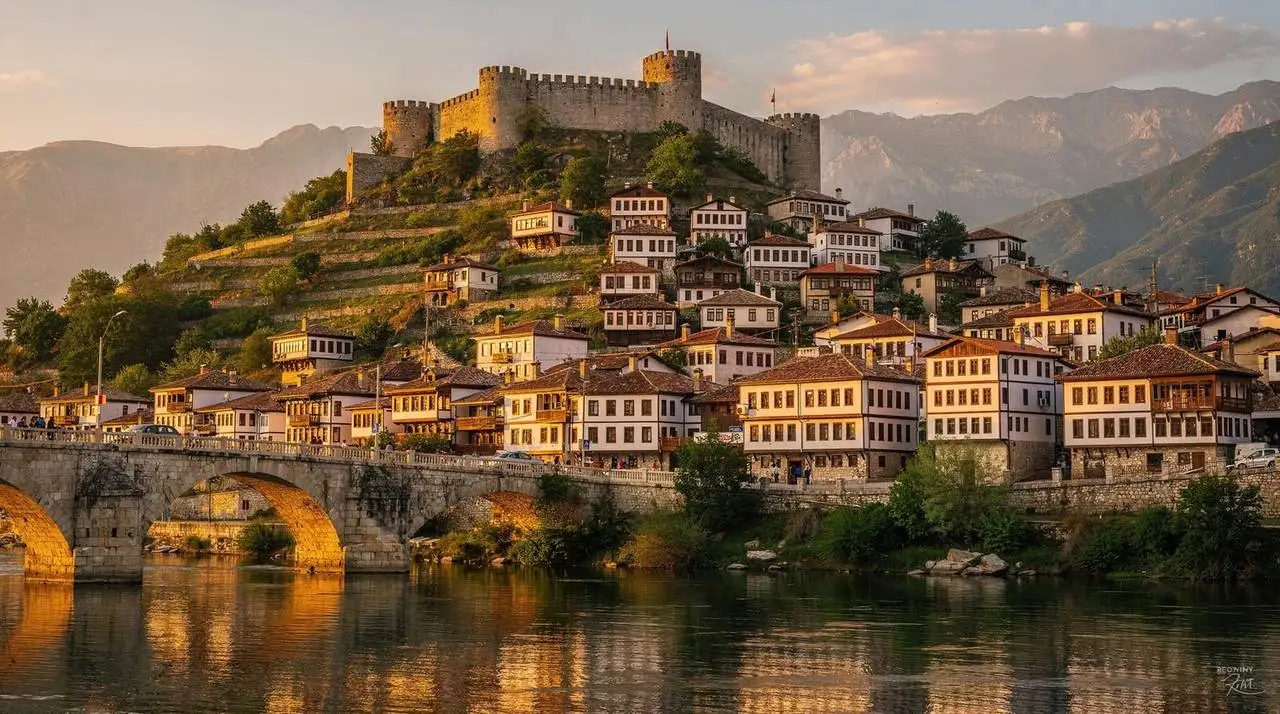
Berat is the most culturally distinctive wedding setting in Albania. Getting married in an Ottoman-era courtyard, in the castle quarter of a UNESCO World Heritage city, or in a restored 18th-century stone tower house — this is genuinely unlike anything available at comparable prices elsewhere in Europe.
The “City of a Thousand Windows” earned its UNESCO designation for its extraordinary collection of Ottoman and Byzantine architecture preserved on a hillside above the Osum gorge. The visual backdrop for wedding photography — white Ottoman houses climbing the hill, the ancient castle above, the river gorge below — requires minimal enhancement. The photographs speak for themselves.
Hotel Mangalemi is the most acclaimed wedding venue in Berat: a beautifully restored Ottoman-era property in the Mangalem quarter, with stone courtyards, traditional architecture, flowering gardens, and a terrace with panoramic views over the city. It hosts weddings with capacity for 30-80 guests and has a well-established reputation for food quality. Booking well in advance is essential — Mangalemi is in demand.
The Berat Castle area (Kalaja) is an inhabited Ottoman fortress with Byzantine churches and Ottoman houses still in use within the castle walls. Open areas within the walls have been used for events, though ceremony within the UNESCO fortress walls requires coordination with municipal and heritage authorities. The photographs from a ceremony within a living Byzantine fortification are extraordinary.
Guesthouse and restaurant venue combinations in the Mangalem quarter can accommodate reception dinners of 40-100 guests, combining local food and wine quality with old-city setting at accessible prices.
The Osum Canyon — 25km from Berat — provides one of Europe’s more dramatic pre-wedding photography landscapes. The gorge, accessible by boat or 4WD from the town of Coucova, offers towering limestone walls, turquoise river water, and complete remoteness. A pre-wedding shoot in the Osum combines with the Berat old city for a visual story that covers both the cultural and natural extremes of Albanian beauty.
Saranda and the Deep South
Saranda’s developed tourist infrastructure makes it the most practical choice for larger weddings where guest logistics are paramount. The town has multiple hotels, regular ferry connections from Corfu, and a growing number of venues equipped for international events.
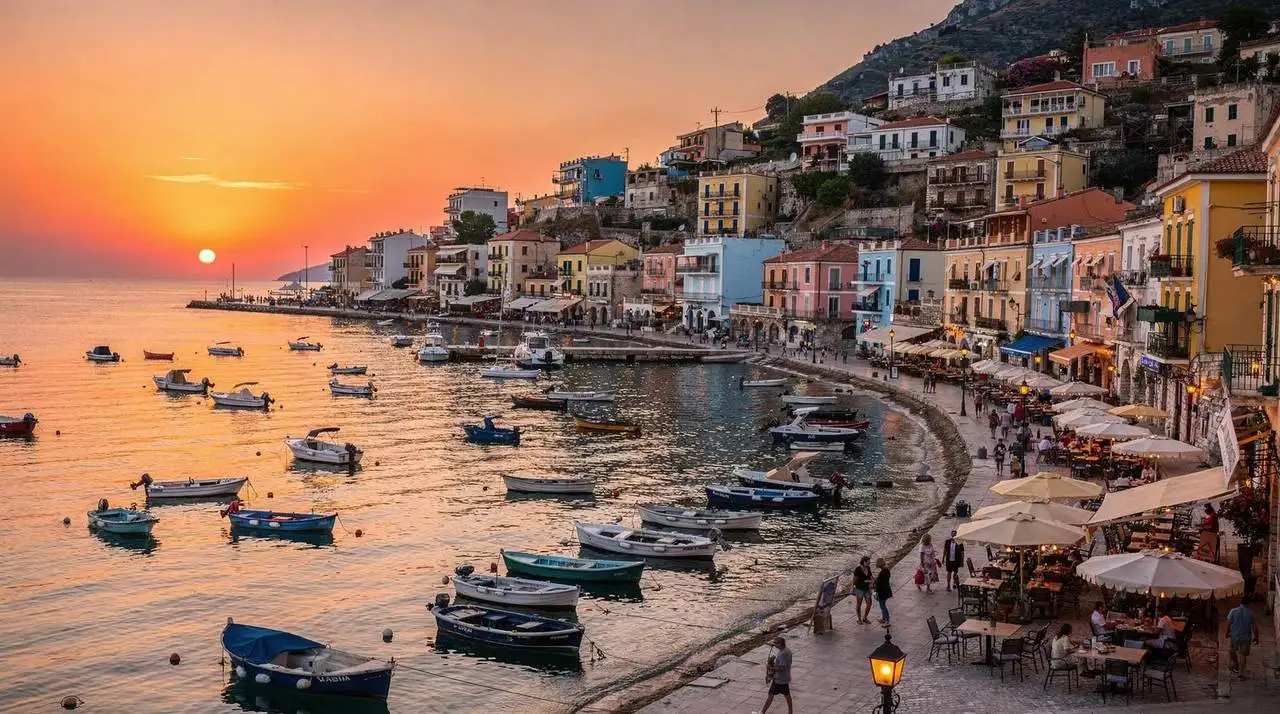
Hotel rooftop and terrace venues in Saranda offer the Ionian panorama — and Corfu on the horizon — as a ceremony and reception backdrop. The coastal view at sunset, with Corfu darkening to silhouette as the light falls across the water, is one of the more beautiful settings available in the southern Mediterranean.
Butrint as a photography location: The ancient ruins of Butrint — Greek theater, Roman baths with intact floor mosaics, Byzantine basilica, Venetian castle — create pre-wedding photography settings that simply do not exist in Western European photography packages. A shoot in a Greek theater that has been in use since the 5th century BC, surrounded by UNESCO-protected wetlands where egrets fish, requires advance coordination with national park management but produces images entirely unlike anything possible at conventional wedding venues.
Ksamil provides water-surrounded ceremony possibilities. The offshore islands and the turquoise shallows between them offer boat-accessible settings of extraordinary color and clarity.
See the Saranda destination guide for accommodation capacity and venue contacts specific to the southern Riviera area.
Tirana: The Urban Contemporary Wedding
Tirana is less obvious as a wedding destination than the coastal or heritage city options, but Albania’s capital has developed a genuinely sophisticated event infrastructure. For couples who want an urban, contemporary setting with excellent logistics, Tirana offers options that combine Albanian character with capital city convenience.
Blloku area venues — the fashionable former communist leadership compound now full of restaurants, rooftop bars, and event spaces — host wedding receptions of 50-200 guests in settings that carry genuine historical interest. Dining and dancing in a rooftop venue in a neighborhood that ordinary Albanians could not enter until 1991 carries a layer of meaning for guests who know the history.
Hotel ballrooms and gardens: Tirana’s international hotels (Marriott, Hilton Garden Inn) have conventional ballroom and garden facilities. For couples who want professional hotel infrastructure and accessible logistics without hunting for boutique venues, these are the most straightforward options.
Traditional Albanian restaurant venues in the New Bazaar and historic neighborhoods provide a more authentically Albanian urban setting — courtyards, stone walls, Albanian food culture in full expression.
The Tirana food and culture tours work well as guest welcome activities the day before a Tirana wedding, introducing guests to Albanian food culture and neighborhoods that feature in the wedding celebration.
The Albanian Alps: The Adventure Wedding
For a niche but growing segment of destination wedding couples, the Albanian Alps — specifically the Theth valley or Valbona — represent the ultimate adventurous alternative. A wedding in a mountain guesthouse in Theth, surrounded by the peaks of the Accursed Mountains, with a ceremonial hike as part of the celebration, is radically different from any Mediterranean option.
The practicalities are genuinely challenging: access is limited, accommodation capacity is small, and infrastructure is basic. But for couples who met hiking or who are drawn to the remoteness, authenticity, and dramatic landscape, a Theth wedding is an experience guests will discuss for decades. The guesthouses in the Albanian Alps guide covers the best mountain accommodation — several guesthouses have hosted small international events.
Budget Guide: What Does an Albania Destination Wedding Actually Cost?
These budgets are realistic 2026 estimates based on current Albanian pricing for international destination wedding clients.
Small Intimate Wedding (20-30 guests)
| Category | Cost |
|---|---|
| Venue (villa or boutique hotel buyout) | EUR 2,000-4,000 |
| Catering (EUR 50-80 per person) | EUR 1,000-2,400 |
| Wedding planner (local) | EUR 800-1,500 |
| Photography and video | EUR 1,500-3,000 |
| Flowers and decoration | EUR 500-1,500 |
| Music and DJ | EUR 500-1,000 |
| Marriage legalization (if applicable) | EUR 200-500 |
| Total | EUR 6,500-14,000 |
Medium Wedding (50-75 guests)
| Category | Cost |
|---|---|
| Venue (mid-size hotel or villa complex) | EUR 3,000-7,000 |
| Catering (EUR 55-85 per person) | EUR 2,750-6,375 |
| Wedding planner | EUR 1,200-2,500 |
| Photography and video | EUR 2,000-4,000 |
| Flowers and decoration | EUR 1,000-3,000 |
| Music and DJ or live band | EUR 800-2,000 |
| Guest accommodation coordination | EUR 0-500 |
| Total | EUR 10,750-25,375 |
Large Wedding (75-120 guests)
| Category | Cost |
|---|---|
| Venue buyout (large property or resort) | EUR 6,000-12,000 |
| Catering (EUR 55-90 per person) | EUR 4,125-10,800 |
| Wedding planner | EUR 2,000-4,000 |
| Photography and video (two photographers) | EUR 3,000-6,000 |
| Flowers and decoration | EUR 2,000-5,000 |
| Live band and DJ | EUR 2,000-4,000 |
| Total | EUR 19,125-41,800 |
Even at the high end of a large Albanian wedding, the cost remains dramatically below equivalent weddings in Greece (EUR 50,000-120,000 for 100 guests), Italy (EUR 40,000-100,000+), or Croatia (EUR 30,000-70,000). The Albania budget gap widens further when food and drink quality per head is considered — Albanian produce, seafood, and lamb are genuinely excellent, and local wine and raki are dramatically cheaper than importing beverage packages as Italian or Croatian venues typically require.
For guidance on overall travel costs in the country, the Albania travel budget guide gives guests a realistic sense of what they will spend before and after the wedding.
Finding Local Wedding Suppliers
The Albanian wedding industry is developing rapidly but is less formalized than in established destination wedding markets. Key supplier categories and how to find them:
Wedding Planners
A handful of Albanian wedding planners now specialize in international destination weddings, managing the full supplier coordination, translation, legal document requirements, and on-the-day logistics. Finding them requires research: Albanian wedding planning Facebook groups, Instagram searches for #albaniawedding and #albaniadestinationwedding, and asking through boutique hotels who regularly coordinate events. The Albanian Riviera hotels in particular are well-connected to reliable local planners.
International destination wedding agencies based in Italy or Greece increasingly include Albania on their venue lists, and some operate supplier networks in the country. These agencies can provide the reassurance of working within a familiar business framework even if the destination is new.
Catering
Albanian catering companies can produce exceptional food at wedding scale. Albanian wedding food culture is serious — weddings in Albania are significant multi-day events where the feast is a matter of family pride, and local caterers have deep experience cooking for large groups with quality produce. Expect: whole roast lamb, fresh-caught Ionian fish and seafood, byrek pastries, grilled vegetables from local farms, abundant salads, and desserts including traditional bakllava and other sweets. Wine from Albanian producers and raki from local distilleries complete the picture.
Price per head for quality catering including wine and raki: EUR 50-90 depending on menu complexity and guest count. This compares with EUR 120-200 per head at comparable quality Italian weddings and EUR 90-150 at Croatian equivalents.
Photography
Albanian wedding photographers are skilled and priced below their Western European equivalents. The best have extensive experience with the country’s visual landscape — they know which locations and times of day produce extraordinary results, and they have established relationships with venue authorities that facilitate access to restricted locations like Butrint or the Berat castle interior.
International photographers traveling to Albania for destination weddings bring an established relationship with the couple to an unfamiliar setting. This trade-off is worth considering: a photographer who knows you but is unfamiliar with Albania versus an Albanian photographer who knows the country but needs to establish the personal relationship. The best solution for many couples is a collaborative approach — local photographer as primary, with a trusted international photographer as second shooter.
Flowers
Albania’s mild Mediterranean climate produces outstanding flowers. Local florists and the flower markets in Tirana and Vlora provide fresh seasonal arrangements — wildflowers, olive branches, peonies in early summer, roses and dahlias in high season — at substantially lower cost than the imported flower arrangements typical of Italian or Greek weddings. Albanian floral arrangements also tend to reflect the landscape aesthetics of the country, which enhances the sense of place.
Music
Albania has a rich live music tradition that wedding celebrations draw on. Traditional Albanian ensembles performing iso-polyphony (UNESCO-recognized polyphonic singing) or traditional instrumental music create ceremony soundscapes unlike anything available from a standard wedding band. The contrast between an ancient Albanian musical tradition at the ceremony and a contemporary DJ set at the reception is one of the most distinctive entertainment combinations destination weddings in Albania can offer.
DJ services for receptions are professionally available in all tourist areas. Live bands covering contemporary repertoire are available in Tirana and can travel to Riviera venues.
Guest Experience and Travel Logistics
A destination wedding succeeds partly because it gives guests an experience worth the effort of traveling. Albania delivers this exceptionally well once guests arrive — but arrival logistics require more planning than a wedding in France or Italy.
Flights
Tirana International Airport (Mother Teresa Airport) is served from: London (Heathrow and Gatwick), Vienna, Frankfurt, Milan, Rome, Zurich, Munich, Paris, Amsterdam, Istanbul, Athens, and many other cities. Budget carriers including Ryanair and Wizz Air operate routes from various European airports. Flights are typically EUR 50-150 return, making Albania one of the more affordable European destinations to fly to.
Inform guests of flight options early — Albanian airfare availability should not be assumed and varies significantly by season. Create a guest information sheet (or page on a wedding website) with the clearest current flight options from relevant departure cities.
Guest Arrival Logistics
A thoughtful arrival logistics plan makes the difference between guests who arrive frustrated and guests who arrive excited. Consider:
Ground transport from Tirana Airport: Private minibus transfers from Tirana Airport to the Riviera can be pre-arranged for wedding guest groups. A dedicated vehicle waiting at arrivals for guests arriving on the same flights creates immediate community and manages the 3-4 hour road journey efficiently. The airport transfers guide covers the options in detail.
The Corfu alternative: For guests traveling from the UK, Corfu is often an easier gateway than Tirana in summer — flights are frequent and cheap, and the Corfu-Saranda ferry takes 35 minutes. For a Riviera wedding, this can be genuinely simpler for many guests than routing through Tirana. The Saranda-Corfu ferry guide covers this route.
Accommodation blocks: Book a block of rooms at a single hotel or spread across a small cluster of nearby properties for the wedding party. Riviera boutique hotels will typically hold rooms for wedding groups with reasonable advance notice.
Pre-Wedding Guest Experiences
The best destination wedding weekends give guests memorable experiences beyond the ceremony and reception. Albania’s natural and cultural richness provides abundant options:
The day before: Organize a group boat tour along the Riviera. Riviera boat tours from Himara access sea caves, hidden coves, and beaches unreachable by road — a perfect way to show guests the coast from the sea and create shared memories before the wedding day. The group bond formed on a boat in Ionian waters the day before the wedding sets a tone for the celebration.
The evening before: A welcome dinner at a guesthouse or traditional restaurant. Introduce guests to Albanian food culture — mezze, byrek, lamb dishes, local wine, and the welcome raki — in a setting where the hospitality ethic is immediately apparent. Albanian hosts take the welcome dinner seriously, and guests who arrive knowing nothing about Albania often leave this dinner deeply impressed.
Post-wedding activities for guests staying longer: Day trips to Butrint, the Blue Eye spring, Gjirokastra, or Berat provide cultural depth beyond the beach for guests extending their stay. The Albania for couples guide covers the romantic experiences available in each region — useful reading for honeymoon-planning guests.
For couples wanting to explore organized tours that guests can join independently before or after the wedding, guided day tours to Berat and the UNESCO cities are easily joinable from Tirana — perfect for guests arriving early and wanting to see the country before the wedding weekend.
Albanian Hospitality: An Asset
Albanian hospitality culture — the besa ethic of treating guests as an expression of honor and welcome — is not merely an abstraction. In practice, it means your venue staff, your catering team, and your local planner take the quality of your guests’ experience personally. This is not a transactional hospitality model; it is a cultural one. Delegating elements of the guest experience to your Albanian venue or planner — asking them to organize welcome drinks, source a traditional dish, arrange a local guide — typically produces results that exceed expectations.
Guests who arrive skeptical of Albania leave as advocates. This transformation — from “really, Albania?” to “I cannot believe how extraordinary this country is” — is one of the consistent outcomes of Albanian destination weddings, and it is part of what makes the choice memorable for everyone involved.
Types of Couples Who Choose Albania
Albania works better for some couples than others. Honest assessment:
Best suited to: Couples who value originality and are excited by the idea of introducing their guests to somewhere genuinely new. Adventure-minded couples who appreciate rugged landscapes and authentic culture. Budget-conscious couples who want Mediterranean quality without Mediterranean prices. Couples interested in the cultural layer — Ottoman history, Albanian traditions, genuine hospitality — as part of the wedding experience.
Less suited to: Couples who want a fully standardized, extensively documented destination wedding market with established agencies and clear legal precedents. Couples whose guest list skews elderly or mobility-impaired (see the accessible travel guide for realities of Albanian terrain). Couples who want the social currency of a famous wedding destination — the “we got married in Tuscany” statement — rather than the discovery quality of Albania.
Practical Planning Timeline
18-24 months before: Research regions and venue types. Visit Albania on a reconnaissance trip — this is essential. Confirm that the country, the region, and the venue type match your vision.
12-18 months before: Book venue. Engage local wedding planner. Begin legal documentation process if doing a legal Albanian ceremony.
9-12 months before: Book accommodation blocks for guests. Communicate flight information. Secure primary suppliers — photographer, catering company, music.
6-9 months before: Finalize menu, flowers, decor. Plan guest logistics: transport, pre-wedding activities, accommodation allocation.
3-6 months before: Final guest numbers confirmed. Finalize legal documentation. Coordinate guest arrival transfers.
1 month before: Confirm all suppliers. Create day-of timeline. Brief all vendors. Prepare guest information with final logistics.
Post-wedding: Apostille Albanian marriage certificate (if legal ceremony in Albania). Register with home country authorities. Plan honeymoon — many couples extend their stay to incorporate the Riviera or Berat as a honeymoon. The Albania honeymoon guide covers romantic itineraries in detail.
After the Wedding: Albania for Your Honeymoon
Many couples who marry in Albania extend their stay for a honeymoon in the same country. The Riviera beaches, the mountain scenery of the north, the Ottoman heritage cities, and the extraordinary food culture provide everything needed for a week of post-wedding relaxation and exploration.
The most popular honeymoon itinerary for Riviera wedding couples: three to four nights at a boutique property in Dhermi or Himara, followed by two nights in Berat, then one to two nights in Tirana before the return flight. This circuit covers the natural coast, the cultural heritage city, and the cosmopolitan capital — a thorough introduction to a country that typically leaves couples planning their return.
The Albania for couples guide covers specific romantic experiences — boat tours, boutique accommodation, candlelit restaurants, private beach access — in each region.
Combining a Wedding With a Honeymoon in the Same Trip
Because so many guests are already making the journey to Albania, an increasing number of couples build a short honeymoon extension directly into the same trip rather than flying separately afterward — staying on for a few extra days at the wedding venue, then relocating to a different region for a quieter final stretch once guests have departed. This approach reduces total travel and lets the couple experience Albania beyond the wedding logistics bubble, seeing the country as travelers rather than hosts, with the practical bonus of not needing to coordinate a second set of flights.
Rehearsal Dinners and Pre-Wedding Gatherings
A rehearsal dinner or welcome gathering the evening before the main event has become a near-standard fixture of Albanian destination weddings, partly because it gives guests who have just arrived a low-key first taste of Albanian hospitality before the formality of the wedding day. A traditional restaurant venue in the New Bazaar area of Tirana, or a guesthouse courtyard on the Riviera, works well for this — long tables, family-style serving, live traditional music, and the welcome raki that Albanian hosts consider practically mandatory for guests.
For Riviera weddings specifically, a beach bonfire or boat-based welcome gathering the night before offers a more relaxed alternative to a formal seated dinner, letting the wedding party and early-arriving guests settle in and get to know each other before the main event. Coordinate timing carefully against guest arrival flights — staggering the welcome event to a slightly later evening accommodates those arriving on afternoon flights from London or other European hubs.
Post-Wedding Brunch and Departure Logistics
Many couples underestimate the value of a low-key post-wedding gathering the following morning — a relaxed brunch at the venue or a nearby cafe gives guests who are not immediately departing a chance to unwind, exchange photos, and say proper goodbyes without the intensity of the wedding day itself. This is particularly worth planning for Albania weddings given how many guests are visiting the country for the first time and want a calmer final impression before their departure.
Departure logistics deserve the same planning attention as arrival. If most guests are flying out of Tirana, coordinate shared airport transfers from the wedding venue, particularly for a Riviera wedding where the drive back to the airport is 3-4 hours. For guests connecting via the Corfu ferry route, confirm ferry schedules align with their onward flight times from Corfu Airport — the last ferry of the day varies seasonally and missing it means an unplanned extra night.
Photography Style and Local Expertise
Albania’s landscape rewards photographers who understand its specific light and terrain — the golden hour on Berat’s thousand-windowed hillside, the particular turquoise of Ksamil’s shallows at midday versus its deeper blue at dusk, the dramatic but harsh midday light on the Riviera’s limestone cliffs. Local Albanian wedding photographers have typically built relationships with the venue authorities that international photographers lack, which matters enormously for access to restricted locations like the Berat castle interior or specific angles within Butrint’s archaeological zone.
Couples who want to bring their own trusted photographer from home should discuss a collaborative arrangement directly with local suppliers well in advance — many established Albanian wedding photographers are comfortable working as a local second shooter or location scout alongside a visiting primary photographer, combining the personal relationship with local logistical knowledge.
Weather and Timing Considerations
Choosing a wedding date in Albania means balancing weather reliability against cost and crowd levels. Late May through June offers the best combination: warm but not scorching temperatures, sea warm enough for guests who want to swim, gardens and olive groves in full bloom, and venue pricing below the July-August peak. September is the other strong option, with the sea at its warmest (the Ionian holds heat well into autumn) and the harsh midday summer sun softened.
July and August guarantee warm weather and long daylight for evening receptions, but venues charge peak rates, popular properties book out furthest in advance, and daytime ceremony timing needs to account for genuinely intense heat — outdoor ceremonies before 18:00 in peak summer require shade planning for guest comfort. Couples set on a summer date should book venues 12-18 months out and schedule ceremonies for late afternoon or early evening.
Spring (April) and October both offer lower costs and fewer other weddings competing for the same venues and suppliers, at the cost of slightly less certain weather — worth considering for couples prioritizing budget and exclusivity of supplier attention over guaranteed sun.
Insurance and Contingency Planning
Wedding insurance is worth serious consideration for an Albania destination wedding specifically because the supplier market, while excellent, is less standardized than in established destination wedding markets — a specific policy covering vendor cancellation, weather contingency for outdoor venues, and guest travel disruption gives real peace of mind. Separately, guests should be encouraged to arrange their own travel insurance for the trip itself; the Albania travel insurance guide is a useful resource to share in your wedding information pack, particularly for guests planning to extend their stay with hiking or water activities.
For outdoor venues — olive groves, beach ceremonies, the Berat castle courtyard — a weather contingency plan (marquee, indoor backup space) should be confirmed with your venue at booking, not assumed. Albanian venues experienced with international weddings will typically have this covered as standard, but it is worth confirming explicitly rather than assuming.
Frequently Asked Questions About Albania Destination Weddings
How much does a destination wedding in Albania cost compared to Greece or Italy?
A medium-sized Albania wedding (50-75 guests) typically costs EUR 10,750-25,375, compared to EUR 50,000-120,000 for a similar-sized wedding in Greece and EUR 40,000-100,000+ in Italy. The gap holds even at Albania’s higher end, and per-head catering costs remain dramatically lower even when local produce and seafood quality is comparable.
What is the best time of year for an Albania destination wedding?
Late May through June and September are the strongest windows, combining warm weather, blooming gardens or a still-warm sea, and pricing below the July-August peak. Peak summer guarantees the most reliable weather but comes with premium venue pricing and the need to plan around genuine midday heat for outdoor ceremonies.
Is it easy for foreign couples to legally marry in Albania?
It is possible but more administratively involved than in some countries, requiring apostilled documents, certified translations, and registration with the local civil registry office. Many international couples use a dual-ceremony approach instead — marrying legally at home in a simple registry ceremony, then holding the full celebration in Albania — which avoids the Albanian legal timeline entirely while preserving complete creative freedom for the Albanian event.
Why Now?
Albania’s window as an undiscovered destination wedding location will not remain open indefinitely. The Riviera’s reputation has been building rapidly since 2019, and venue availability and pricing will reflect this growing demand. Couples who choose Albania now — in the period when it is accessible and beautiful but not yet overrun — are making a choice that will look increasingly prescient in retrospect.
The combination of extraordinary natural beauty, affordable costs, genuine hospitality culture, and a destination that surprises guests who expected nothing makes Albania one of the most rewarding destination wedding choices currently available in Europe. It requires more research and more hands-on planning than choosing a well-established Italian villa circuit — but the result, for the right couple, is a wedding that neither they nor their guests will forget.
See the Albania travel tips guide for the practical country knowledge that makes any Albania trip work well, and the Albania customs and etiquette guide for understanding the hospitality culture that will surround your celebration.