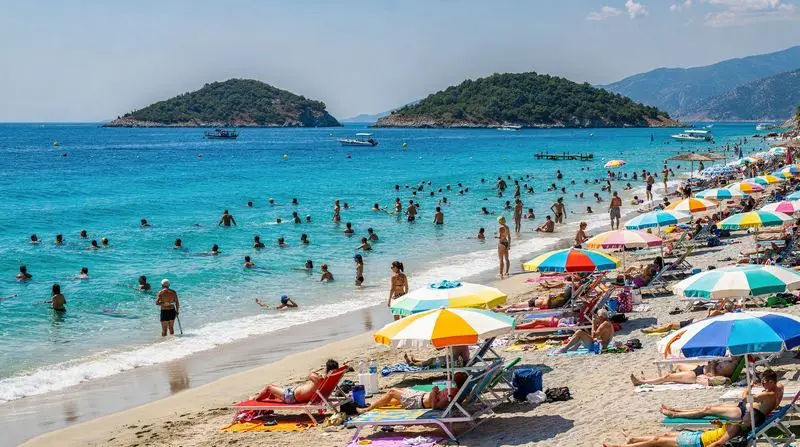
Albania in July: Peak Season at Full Strength
July is when Albanian tourism reaches its first peak. The Riviera is at its most vivid and most crowded simultaneously. Beach bars are operating at maximum capacity, the coastal road from Vlora to Saranda carries dense summer traffic, and the resort towns — Ksamil, Dhermi, Himara, Jale — are functioning as proper beach destinations for the thousands of Albanian holidaymakers and international visitors who have converged for the season.
For visitors oriented toward beach culture, swimming in perfect conditions, and the social atmosphere of the Albanian summer, July is exactly the right month. For visitors hoping for quiet and solitude, it requires more careful planning and, if possible, an escape into the mountains.
| Where | Riviera (Ksamil, Dhermi, Himara) plus a mountain break in Theth/Valbona |
| Cost | Peak-season rates; book two to three months ahead |
| Time needed | 7-12 days to combine coast and mountains |
| Getting there | Furgon Tirana-Saranda (book ahead) or rental car via the coastal road |
| Best time of day | Before 9am or after 5pm for beaches, castles, and archaeological sites |
July Weather in Albania
July is consistently one of Albania’s two hottest months (alongside August). Temperatures in Tirana and the inland areas regularly reach 33-35°C, with occasional heat waves pushing higher. The coast benefits from sea breezes — afternoon winds off the Ionian moderate the heat and make beach conditions comfortable even on the hottest days — but the interior cities can be genuinely uncomfortable in July heat.
Sea temperatures in July reach 24-26°C — warm by any standard, making extended swimming without discomfort the norm rather than the exception. The Ionian coast’s sea conditions in July are typically excellent: calm in the mornings, with a moderate breeze developing in the afternoon that produces gentle waves without any real sea state.
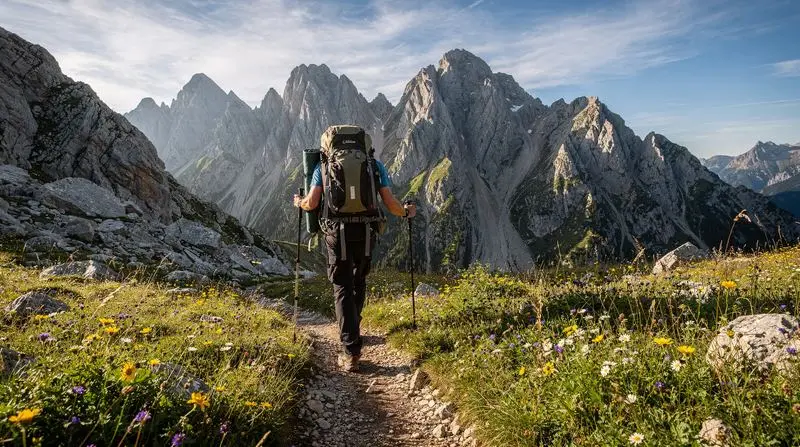
The Albanian Alps in July offer a beautiful contrast to the coastal heat. Valley temperatures in Theth and Valbona stay well below the coastal maximum — 22-25°C on most days — and the combination of cool mountain air, green highland meadows in summer flower, and the dramatic landscape of the Accursed Mountains makes July one of the finest months for the northern mountains.
The Albanian Riviera in July
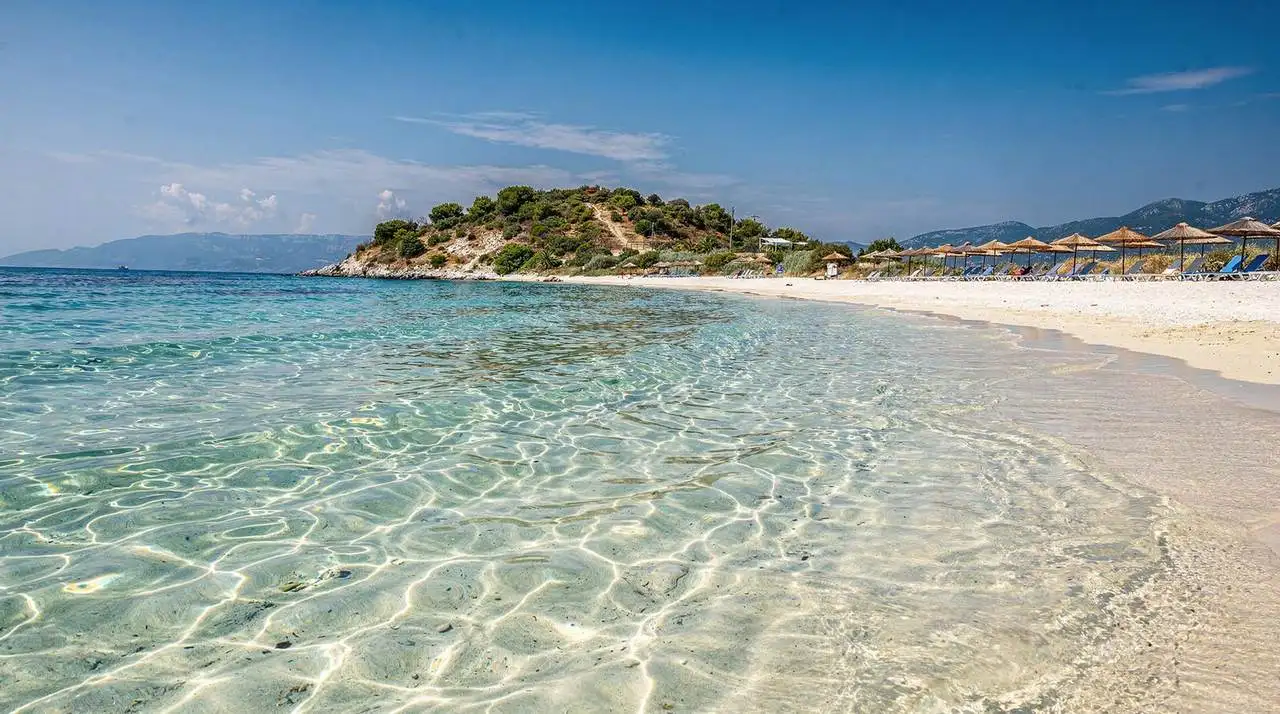
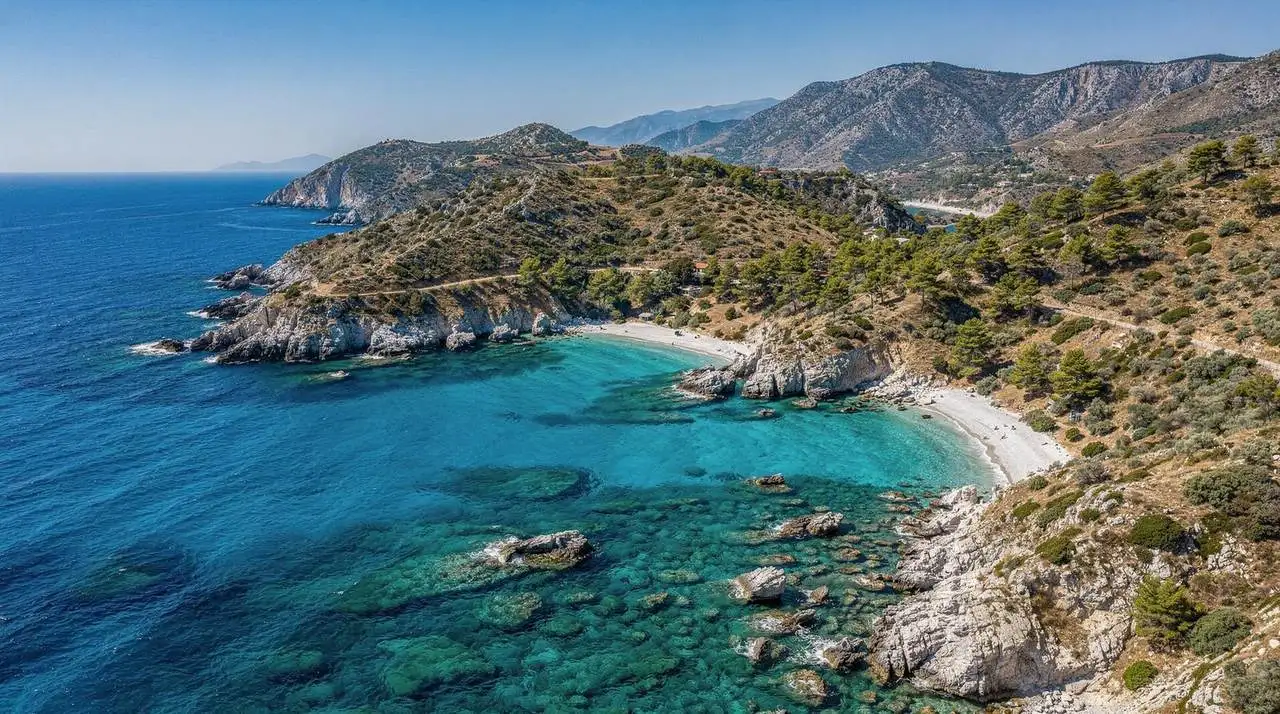
The Riviera in July is genuinely impressive. The beaches are fully operational with every possible facility: sunbeds, umbrellas, beach bars serving cocktails and fresh fish, boat rental, paddleboard and kayak hire, and organized boat trips running from multiple ports. The scene is Mediterranean in the fullest sense, and the backdrop of steep mountains falling directly into turquoise water gives it a visual drama that the more developed rivieras of Croatia and Montenegro often lack.
Ksamil in July is busy but manages the crowds reasonably well. The lagoon’s multiple beaches — spread across several small headlands — distribute the visitors, and the island beaches accessible by water taxi remain somewhat quieter than the main shore. Arriving before 10am or after 5pm avoids the worst of the midday beach compression. The restaurants around Ksamil are in full summer operation, and the seafood quality — particularly the mussels from the Butrinti lagoon — is at its annual best.
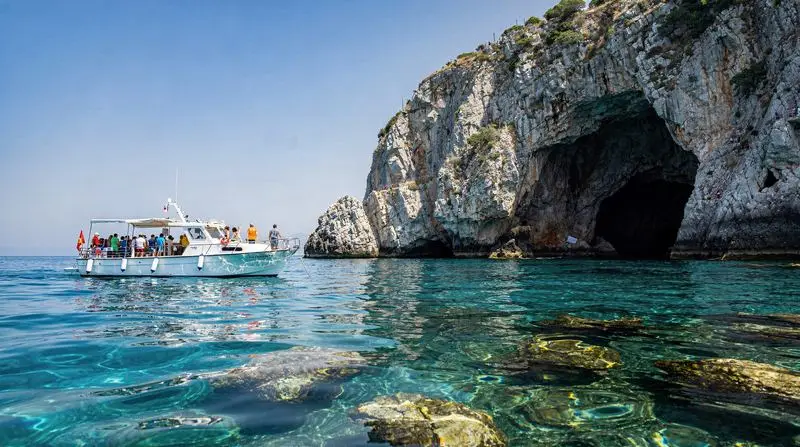
Albanian Riviera boat tours from Himara are among July’s finest activities. The tours visit sea caves, remote beaches, and snorkeling spots along the coast that are inaccessible by land. In July, these tours operate with full schedule and the sea conditions are typically excellent. Booking in advance is necessary in July as popular departures fill early.
Dhermi is particularly popular in July with the young Albanian-American diaspora returning for the summer. The beach scene here has a cosmopolitan character unusual for an Albanian coastal village — music, cocktails, and a social energy that other Riviera spots don’t quite match. The beach itself is a long crescent of mixed sand and pebble with exceptional water clarity.
July vs August on the Riviera
| July | August | |
|---|---|---|
| Crowds | High | Very high (diaspora peak) |
| Prices | Peak | Peak, often slightly higher |
| Sea temperature | 24-26°C | 25-27°C (annual peak) |
| Booking lead time | 2-3 months | 3-4 months |
| Atmosphere | Lively, international mix | Most intense, diaspora-driven |
July and August are close in most respects, but July has a marginally easier booking window and a slightly less frantic atmosphere than the diaspora-heavy peak of August. Travellers choosing between the two months for a first Riviera trip often find July the gentler introduction, while returning visitors who want Albania at its most socially intense — see the Albania in August guide — lean toward the later month.
Mountain Escapes from the July Heat
The obvious solution to July’s coastal heat is the Albanian Alps, and the mountains deliver magnificently. The trails are at their driest and most reliable, the guesthouses are running smoothly, and July is statistically the driest month across most of the mountain regions — making multi-day hiking plans more reliably achievable than in spring.
The 3-day Valbona to Theth trek through the Albanian Alps is at peak season in July. The guesthouses are full, the trails are busy by Albanian standards (though still quiet by Swiss or Austrian alpine standards), and the support infrastructure — porter services, guesthouse meals, transport connections — is running efficiently. Book this tour or any mountain accommodation well in advance for July.
Beyond the main Valbona-Theth circuit, the Albanian Alps offer day walks and longer routes that remain genuinely uncrowded even in July. The trails to the Peaks of the Balkans viewpoints above Theth, the walks along the Shala River gorge, and the routes into the Albanian-Montenegrin border area are all exceptional and see a fraction of the traffic that the headline attractions manage.
Kruja and Day Trips from Tirana in July
The hill town of Kruja — forty minutes north of Tirana on a good road — is one of the most historically significant destinations in Albania and one that is at its most rewarding when visited in the morning before the day’s heat peaks. The castle-town where Gjergj Kastrioti Skanderbeg led the Albanian resistance against the Ottoman army in the fifteenth century contains the Skanderbeg Museum (a dramatic building housing artifacts from the national hero’s campaigns), the restored Ottoman bazaar, and the castle walls with views across the Albanian lowlands to the Adriatic.
A July visit to Kruja requires an early departure from Tirana — leaving by 8am to arrive before the coaches and the full heat of the day. The bazaar, which sells traditional Albanian crafts including antique copper, carved wood, hand-woven textiles, and silverwork alongside tourist reproductions, is best browsed in the relative cool of the morning. Lunch at one of the restaurants in the castle area is followed by a return to Tirana before the afternoon heat makes the city uncomfortable.
The Dajti mountain cable car from Tirana to the Dajti plateau (1,600 metres altitude) is one of July’s best urban escapes. The temperature at the top is typically 10-12°C cooler than the city below, and the forest environment provides shade unavailable anywhere in the city center. The cable car ride itself offers striking views over Tirana and the coastal plain. Several restaurants and cafe facilities at the top cater to the day-tripper trade; a long lunch in the mountain air before descending is a sensible approach to managing a July afternoon in Tirana.
Cities in July: Managing the Heat
Tirana in July can be hot to the point of making midday outdoor activity uncomfortable. The city’s limited green space (though growing) means that the urban heat island effect is significant. The advice for city visitors in July is the standard Mediterranean approach: mornings for sightseeing and outdoor activity, a long midday rest in an air-conditioned cafe or restaurant, and then a return to outdoor activity as the heat softens in the late afternoon.
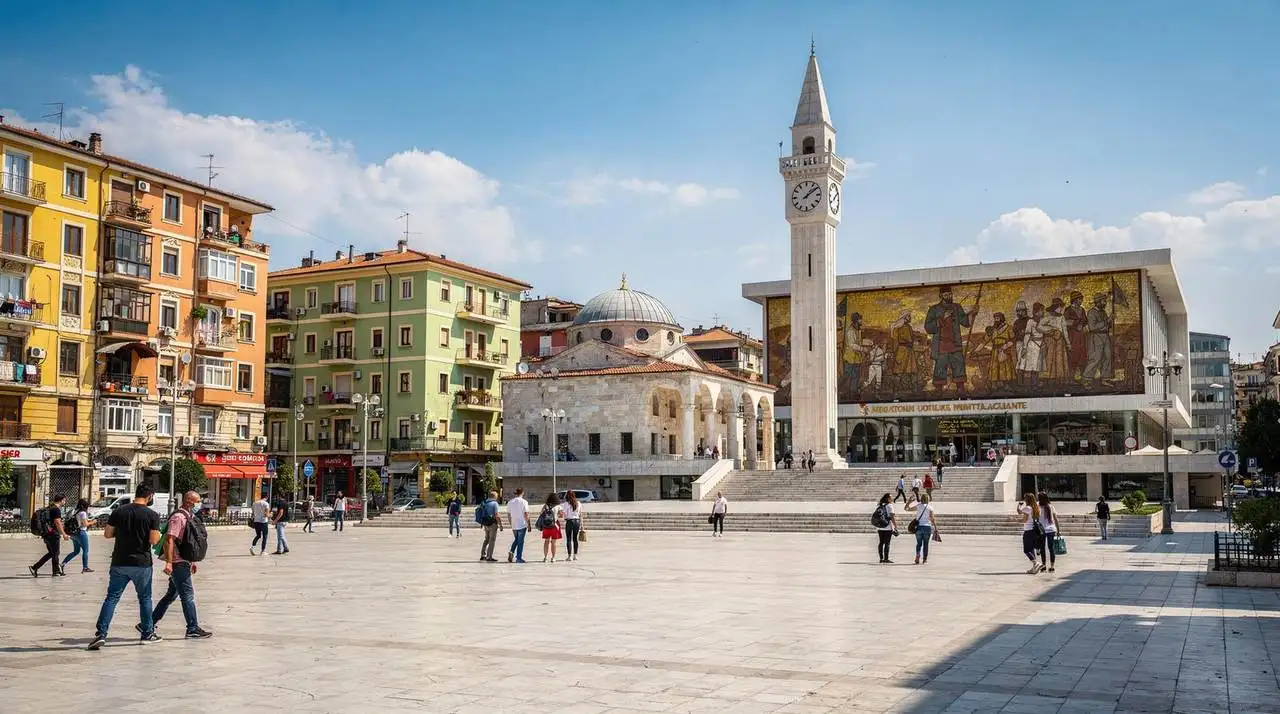
The New Bazaar area is at its most active in July, both in the early morning market and in the evening restaurant scene. The xhiro evening promenade culture is particularly vivid in July, with families and groups of friends crowding the pathways around Rinia Park and the artificial lake from 7pm onward.
Smaller cities like Berat and Gjirokastra in July are busier with tourists than any other month. The castle of Gjirokastra and the Berat castle complex have their maximum visitor numbers in July and August. Visiting in the early morning (before 9am) or late afternoon (after 5pm) provides significantly better conditions than the hot midday peak.
Prices and Bookings in July
July is peak season pricing in Albania. Coastal accommodation, particularly anything with sea views or direct beach access, commands its highest rates of the year. Budget accommodation in the main tourist destinations is generally fully booked without advance reservation.
Book any July Albania travel — flights, coastal accommodation, Albanian Alps guesthouses, organized tours — at least two to three months in advance. The most popular hotels along the Riviera and the best-regarded guesthouses in the Albanian Alps fill early. Walking in without a reservation in July is a recipe for significantly compromised options.
Day Trips and Activities in July
July’s combination of long days and full operational infrastructure makes it the best month for organized day trips from the main centers. From Tirana, day trips to Berat, Kruja, and the coast are operating at full schedule. From Saranda, Butrint National Park, the Blue Eye spring (Syri i Kalter), and Gjirokastra are all within comfortable day-trip range.
The Blue Eye — the extraordinary natural spring near Saranda where crystal-cold water wells up from unknown depth in a pool of vivid blue surrounded by dense subtropical forest — is one of the Albanian summer’s essential experiences. The volume of water produced by the spring is highest in spring and early summer, and in July the flow is strong and the pool is at its most photogenic. The swimming area near the spring is cold but welcomes brave visitors, and the surrounding forest provides shade that is very welcome in July heat.
Butrint National Park in July is best visited in the early morning, when the site opens, before the coaches arrive and the heat builds. The ancient city complex — one of the most important archaeological sites in the Balkans, with occupation layers from Illyrian, Greek, Roman, Venetian, and Ottoman periods — is remarkable in the early morning light, the ruins emerging from forest vegetation in a way that the full sun of midday flattens. The boat crossing across the channel that connects the park’s two sections is particularly atmospheric.
Kruja, north of Tirana, is the spiritual capital of Albanian national identity — the castle-town where Gjergj Kastrioti Skanderbeg held off the Ottoman army repeatedly in the fifteenth century, and the site of the Skanderbeg Museum and the restored Ottoman bazaar. July visitors should plan a morning departure from Tirana and return before the afternoon heat peaks. The bazaar, selling traditional Albanian crafts, textiles, and antiques, is one of the more rewarding shopping experiences in the country.
Swimming and Water Sports in July
The sea in July is at its most welcoming for the full range of water sports. Paddleboard hire, kayak tours, snorkeling excursions, and sailing day charters are all available at the main Riviera beaches and from the Saranda and Himara ports. The calm morning sea conditions typical of July make kayaking and paddleboarding particularly accessible to beginners.
Snorkeling in the Ionian is rewarding in July. The seagrass beds around the Ksamil islands shelter diverse marine life: sea bream, wrasse, octopus, starfish, and the occasional sea turtle that uses the lagoon as a feeding ground. Clear July visibility means that snorkeling from shore or from a boat accesses sights that the winter cloudiness obscures entirely.
Diving around the Albanian coast is still a relatively undeveloped activity compared to neighboring countries but growing. Several dive operators have established themselves in Saranda and offer reef dives, wall dives, and wreck dives in Ionian water that has excellent visibility and interesting marine life. See the boat tours and water activities guide for current operators.
Food and Eating in July
July’s food culture in Albania reflects the peak of summer produce: the finest tomatoes of the year, peppers at their sweetest, eggplant at their most abundant, fresh figs beginning by late July, and the seafood at its most varied and available. Eating in July in Albania — whether at a coastal seafood restaurant, a Tirana market stall, or a mountain guesthouse — is almost always excellent because the raw ingredients are superb.
The Albanian Riviera restaurants in July have access to the best daily fish catch. Sea bream, sea bass, red mullet, and octopus fresh from Ionian waters arrive at coastal restaurants in the morning and are typically gone by the evening rush. A grilled whole sea bream eaten on a Riviera terrace looking at the sea in July is one of the most satisfying food experiences the country offers.
Mountain guesthouses in July typically serve food made from their own gardens and locally raised animals: fresh vegetables from the plot, eggs from the chickens, lamb and goat from the flock. The quality of this hyper-local mountain cooking — seen in the guesthouses of Theth and Valbona — has nothing to do with sophistication and everything to do with freshness. For context on the Albanian food tradition behind these meals, see the Albanian food guide.
Getting Around Albania in July
July is the month when Albania’s transport infrastructure operates at maximum but also under maximum pressure. The coastal road between Vlora and Saranda — a spectacular two-lane mountain road with dramatic sea views — can be reduced to a crawl on summer weekends when both local families and international visitors converge on the Riviera. Weekday driving on the coastal road is significantly easier; weekend driving requires patience and an early start.
The furgon minibus network continues to operate but can be overcrowded in July on popular routes. Booking seats in advance on the Saranda-Tirana route, which many visitors use, is advisable. Renting a car provides the most flexibility for July travel and is recommended for the coastal road if you want to stop at beaches along the way rather than being committed to a fixed route.
What to Pack for July
July requires full tropical packing. Lightweight breathable clothing, high-SPF sunscreen (SPF 50 minimum for fair-skinned visitors, as the Ionian summer sun is intense), a wide-brimmed hat, and quality sunglasses are non-negotiable. For the mountains, add a lightweight warmer layer for evenings and a rain jacket for afternoon thunderstorms. Insect repellent is useful everywhere. A reusable water bottle is essential — staying hydrated in July heat is important and tap water in most Albanian cities is safe to drink.
The July Verdict
July delivers the Albanian summer at full volume — beaches alive, mountains open, days long, atmosphere electric. Its challenges (heat, crowds, prices, advance booking requirements) are real but manageable for visitors who plan appropriately. For those who want the summer experience without compromise, July provides it fully. For those who want summer conditions with fewer of these trade-offs, September offers the same sea temperature with a fraction of the pressure.
See the best time to visit Albania guide for a complete overview of how July compares to other months for specific travel styles. For a car-free trip, the buses and furgons guide covers moving between the coast and the mountains without renting a vehicle, though July seats on popular routes are best reserved a day or two ahead rather than left to the morning of travel.
July Day by Day: Structuring Your Visit
July’s intensity requires smart itinerary planning:
The optimal July rhythm for the Riviera: Arrive at the beach by 8:30-9am to secure a sunbed and get two hours of swimming before the midday heat peaks. Retreat from the beach at noon, eat lunch in a shaded restaurant during the 12:00-15:00 heat window. Return to the beach at 16:00 as the sun angle drops and the water is at peak warmth. Stay for the sunset, have dinner at a waterfront restaurant at 8:30pm when the evening has cooled to a pleasant 26-28°C. This rhythm makes July comfortable rather than punishing.
Combining coast and mountains in July: The most elegant July itinerary spends five to seven days on the Riviera and four to five days in the Albanian Alps, where July temperatures are 10°C cooler and the hiking conditions are at their best. This combination gives the full spectrum of Albanian summer experience. See the car rental guide for the logistics of driving between the coast and the north.
City visits in July: Tirana in July midday is hot (32-35°C) and best avoided during the early afternoon. For Tirana visits in July, mornings (museum and cultural site visits from 9am to noon) and evenings (the Blloku neighborhood comes alive after 8pm) are the productive hours. The midday hours are for lunch and rest.
Early morning advantage: July rewards early rising more than any other month. The famous Ksamil lagoon, Gjipe beach, and the coastal drive from Llogara to Saranda are all dramatically more pleasant before 9am than at any other time of day. Travelers who orient their days to sunrise rather than standard tourist hours experience the best of July Albania.
July Packing Essentials
July requires specific preparation:
Sun protection is not optional. High-SPF sunscreen (SPF 50 minimum) applied repeatedly through beach days, a wide-brimmed hat, and UV-protective swimwear for extended water time. The Ionian summer sun is genuinely powerful — underestimating it produces painful burns within hours on pale skin.
Light natural fabrics. Linen and cotton in light colours for the heat. Synthetics trap heat. Layers for air-conditioned restaurant interiors and mountain evenings if planned.
Cash. Peak season demand means ATMs in tourist areas can temporarily run out of cash on busy weekends. Withdrawing from a Tirana or Saranda ATM before traveling to smaller coastal destinations prevents cash-shortage situations.
Water bottle. A refillable water bottle (filled with bottled water — tap water is not reliably safe) is essential. Two litres per day minimum in July conditions.
July’s Unique Offerings
Despite the challenges, July has experiences that other months cannot provide:
The full beach scene. Albania’s beach infrastructure — the bars, the boat trips, the water sports operators, the seafood restaurants at peak quality with the freshest daily catches — is only fully deployed in July and August. If the social energy of a busy Mediterranean beach is part of what you are seeking, July delivers it.
Mountain wildflower peak. The Albanian Alps in July have their fullest wildflower display — the high meadows above Theth and Valbona are carpeted with alpine species that exist nowhere else in Europe. A July trek over the Valbona-Theth pass combines the challenge of a serious mountain day with botanical scenery of unusual beauty.
Albanian social summer. The return of the diaspora, the energy of Albanian families on summer holiday, the evening promenades that last until midnight — July Albania is a socially rich environment that is fundamentally different from the quieter shoulder seasons. For travelers interested in Albanian culture as it actually lives rather than as a historical artifact, July shows the country at its most exuberantly present.
Where to Stay for a July Trip
Choosing a base matters more in July than in quieter months, since prices and crowd levels vary meaningfully between towns. Vlora works well as a lower-key gateway to the Riviera with easier parking and slightly lower prices than the resort towns further south. Dhermi and Himara suit travellers who want to be close to the beach clubs and nightlife, while Saranda offers the most restaurant and ferry-connection variety for those combining Albania with Corfu. See where to stay in Saranda and where to stay in Dhermi for specific neighbourhood recommendations within each town.
Frequently Asked Questions About Albania in July
Is July too crowded to enjoy the Albanian Riviera?
It is busy, especially at Ksamil and Dhermi, but manageable with timing: arriving at beaches before 9am or after 5pm avoids the midday crowd peak, and smaller coves reached by boat offer more space than the main shore. Travellers who prioritise quiet over the social buzz of a full Riviera summer may prefer June or September instead.
How far in advance should I book a July trip to Albania?
Two to three months ahead for flights, coastal accommodation, and Albanian Alps guesthouses is the safe minimum, with popular Riviera boat tours and the Valbona-Theth trek best booked as soon as dates are fixed. Walking in without reservations in July typically means settling for whatever remains at peak prices rather than a preferred choice.