Electricity in Albania: Plugs, Voltage, and What to Pack
Electricity is one of those travel details that seems minor until you arrive at your guesthouse at midnight, plug in your laptop, and nothing happens. Albania’s electrical system is broadly compatible with the rest of continental Europe, but there are enough quirks — from the plug standards to the reliability of supply in rural areas — to warrant a proper briefing before you pack.
This guide covers everything: plug types, voltage standards, what adapters to bring based on your home country, USB charging, power bank strategies, and how to handle the power cuts that remain a reality in parts of rural Albania.
| Plug types | Type C and Type F (same as continental Europe) |
| Voltage | 230V / 50Hz |
| Adapter needed | No for EU; yes for UK/US/Canada/Australia/Japan |
| Where to buy locally | Tirana electronics shops, around EUR 2-5 |
| Most reliable power | Tirana and major cities; rural/mountain areas less so |
Albania’s Plug Types: Type C and Type F
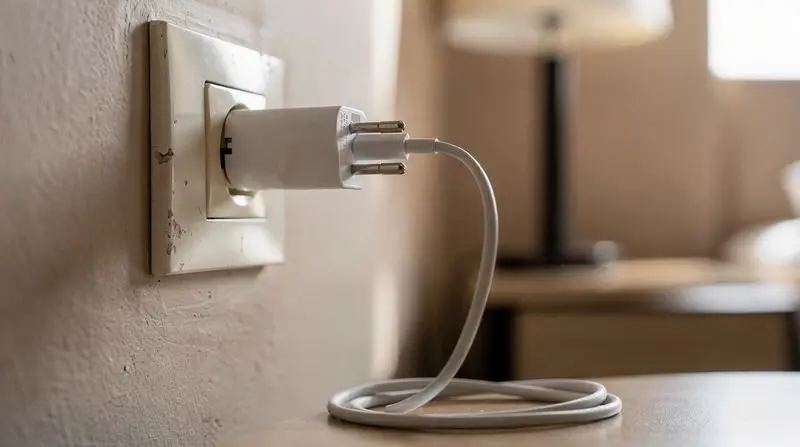
Albania uses Type C and Type F plugs and sockets as its standard. Both are two-round-pin formats, which means any device plug designed for European outlets will work in Albania.
Type C (Europlug): The smaller of the two, with two round pins spaced 19mm apart. This ungrounded plug is used throughout continental Europe for low-power devices — phone chargers, laptop adapters, small appliances. It fits into both Type C and Type F sockets.
Type F (Schuko): The larger German-style plug with two round pins plus two grounding clips on the sides. This is the standard for higher-power appliances. Type F sockets are the dominant wall outlet format you will encounter in Albanian hotels, apartments, and guesthouses.
The critical compatibility point: a Type C plug fits into a Type F socket. So any standard European device — regardless of whether it uses C or F — will physically work in Albania.
Voltage and Frequency
Albania’s electrical grid operates at 230V / 50Hz, the continental European standard. This is identical to:
- All EU countries
- UK (also 230V but different plug type)
- Most of Asia, Africa, and Oceania
This means any device rated for 220-240V (or the universal 100-240V) will work in Albania without a voltage converter.
Devices that need checking:
- Older electric shavers designed only for 110V
- Some vintage appliances brought from North America
- Certain hair dryers and curling irons that are not dual-voltage
Modern electronics — laptops, phone chargers, camera chargers, tablets — are virtually always rated 100-240V and 50-60Hz, meaning they work worldwide. Check the small print on the power brick or device label: if it says “100-240V” you need only a physical adapter, not a voltage converter.
Do You Need an Adapter?
EU/Eurozone travelers (Germany, France, Italy, Spain, Netherlands, etc.): No adapter needed. Your plugs are identical to Albanian sockets.
UK travelers: Yes, an adapter is needed. The UK uses Type G (three rectangular pins). A simple UK-to-EU adapter (very cheap, available everywhere) is all that is required. No voltage converter needed — the voltage is the same 230V.
US and Canadian travelers: Yes, an adapter is needed. North America uses Type A/B (flat pin) at 110V/60Hz. You need a physical adapter (Type A/B to Type C/F). For dual-voltage devices (modern laptops, phones, etc.) this is sufficient. For single-voltage 110V devices (some hair dryers, older shavers), you also need a voltage converter.
Australian and New Zealand travelers: Yes, an adapter is needed. Australia/NZ uses Type I (angled flat pins). An adapter to Type C/F is required. No voltage converter needed (Australia runs 230V).
Japanese travelers: Adapter needed (Type A to C/F). Voltage converter needed for devices not rated for 230V.
South African travelers: Adapter recommended. South Africa’s Type M plugs are different from Type C/F, though some South African sockets also accept Type C.
The Best Adapters to Bring
Budget option: A single Type C/F travel adapter specific to your home plug type costs EUR 2-5 and can be found at any electronics shop in Tirana if you forget. Airports in EU countries sell them cheaply.
Universal travel adapter: A universal adapter with USB-A and USB-C ports built in is the most practical option for travelers visiting multiple countries. Brands like BESTEK, Anker, and Hyper make reliable options. One device handles all socket types and adds USB charging convenience.
Multi-socket extension with EU plug: If you are a digital nomad working from accommodation with limited sockets, bringing a small EU-standard power strip is enormously practical. Albanian guesthouses — particularly smaller ones — often have one or two sockets in a bedroom, not enough for laptop, phone, camera, and power bank simultaneously.
USB Charging in Albania
USB charging is widely available in Albania:
Hotels and guesthouses: Most mid-range and above properties now include USB-A ports in bedside panels or multi-socket strips. USB-C ports are less common but appearing in newer establishments.
Cafes and coworking spaces: Tirana’s cafe culture is nomad-friendly. Most sit-down cafes with laptop clientele have accessible power sockets. Asking “A ka prizë?” (Is there a socket?) gets you to the right seat.
Airports and transport: Tirana International Airport (Mother Teresa Airport) has USB charging at departure gates. Bus stations and furgon stops rarely have charging facilities — plan accordingly.
Power banks: A quality power bank (10,000-20,000 mAh) is highly recommended for Albania travel, especially if you are heading into mountain areas, on long furgon journeys, or to remote coastal locations. Getting a quality top-up before remote travel is important. See the Albania transport guide for notes on journey times.
Power Reliability in Albania
Albania has made significant infrastructure improvements over the past decade, but power supply remains uneven across the country. Travelers to Tirana will find city power reliable; those heading to Theth or other mountain areas need preparation.
Tirana and major cities: Power is reliable. Outages in central Tirana are rare and usually brief (under an hour). The city’s infrastructure has been substantially upgraded. Coworking spaces and business hotels have UPS backup systems.
Coastal tourist areas (Saranda, Riviera, Durres): Generally reliable during the off-season. During summer peak season (July-August), demand spikes and occasional short outages occur, particularly in resort areas where the grid is stretched. Most mid-range and above hotels have generator backup for these periods.
Rural and mountain areas: Power outages are a genuine consideration. In villages in the Albanian Alps, Permet region, or remote areas of the interior, cuts of several hours are not unusual. Some smaller guesthouses in these areas have no generator backup.
Practical strategies for rural travel:
- Fully charge all devices before leaving a reliable power location
- Carry a power bank large enough for a full day’s phone use plus camera charging
- Download offline maps (Maps.me or Google Maps offline) before reaching remote areas
- For multi-day mountain treks, assume limited charging opportunities
Voltage fluctuations: Older parts of the Albanian grid occasionally experience brief voltage fluctuations. Modern devices with switching power supplies handle this gracefully. Older single-voltage appliances are more vulnerable. Surge protectors provide some insurance if you’re working with valuable electronics.
Charging Cameras and Specialist Equipment
DSLR and mirrorless cameras: Standard Li-ion battery chargers (Canon, Nikon, Sony, Fujifilm) all work in Albania with a Type C/F adapter. Dual battery chargers are worth packing for serious photography trips — Albania offers extraordinary photographic opportunities in Theth, Gjirokaster, and along the Riviera.
Drone batteries: Charging drone batteries (DJI, Autel, etc.) works without issue on the Albanian 230V grid. Bring sufficient batteries for remote shoots — charging facilities may be hours away from the best locations. See the drone rules guide for regulations on where you can fly.
Medical devices (CPAP, etc.): Most modern CPAP machines are universal voltage (100-240V). Bring your EU adapter and confirm your device’s voltage range before travel. Distilled water for humidifiers can be purchased at Albanian pharmacies (farmaci).
Electric kettles and travel appliances: A universal travel kettle rated 220-240V works perfectly. Single-voltage 110V travel appliances from North America do not — either buy a dual-voltage version or leave them at home.
Albania’s Energy Context
Albania’s electricity comes primarily from hydropower — the country has significant rivers and a mountainous terrain that generates most of its electricity domestically. In recent decades Albania has exported electricity to neighboring countries when hydrology is favorable.
The transition away from the chronic outages that characterized the 1990s and early 2000s has been dramatic. Younger Albanians and returning diaspora often express amazement at how much infrastructure has improved. The ongoing EU accession process is driving further investment. However, rural grid modernization still lags urban improvements.
During exceptionally dry summers — which have become more frequent with climate patterns shifting — reservoir levels drop and hydroelectric output falls, sometimes leading to rotating outages in late summer. 2023 and 2024 both saw localized summer shortages in mountain areas. Travelers planning remote trips in August should factor this in.
Packing Checklist for Albanian Electricity Needs
For EU travelers:
- No adapter needed
- Consider: power strip/extension with EU plug
- Consider: high-capacity power bank
For UK travelers (also useful: the Albania travel tips guide for general preparation):
- UK to EU Type C/F adapter (or universal adapter)
- Consider: power strip/extension
- Consider: power bank
For US/Canadian travelers:
- Type A/B to Type C/F adapter (or universal adapter)
- Note: most modern devices are dual-voltage — check yours
- Consider: power strip/extension
- Consider: power bank
For all travelers heading to rural/mountain areas:
- Power bank, 10,000 mAh minimum
- Offline maps downloaded before departure
- Camera batteries fully charged before remote sections
Where to Buy Adapters in Albania
If you arrive without the right adapter:
Tirana International Airport: Limited selection at high prices in the main terminal. Useful in an emergency.
Tirana city center: Electronics shops along Rruga e Kavajës and around the Pyramid area sell adapters and power strips cheaply. Chinese-run variety stores sell basic adapters for EUR 2-4.
Shkodra, Saranda, Vlora: Larger towns have electronics shops. Allow time to find them — they are not at tourist sites.
Rural areas: Do not count on finding adapters in small villages. Sort this out before leaving a city.
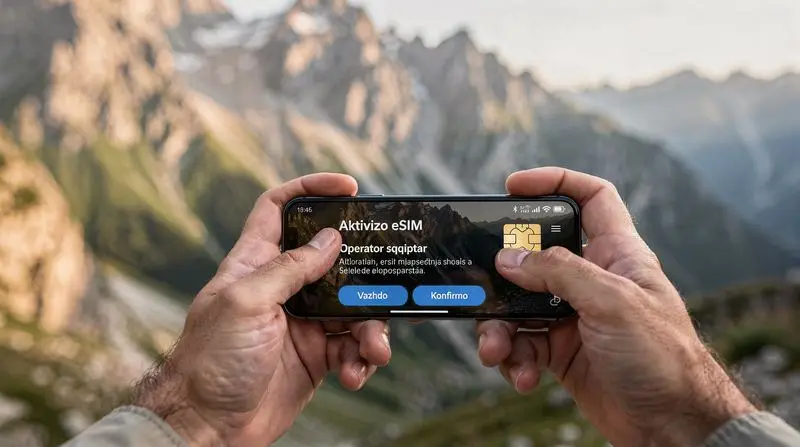
For advice on staying connected beyond charging — mobile data, eSIMs, and WiFi reliability — see the Albania eSIM and data guide.
Solar and Alternative Charging in Rural Albania
For travelers venturing into genuinely remote areas — multi-day treks in the Albanian Alps, camping in the Peaks of the Balkans area, river journeys — grid power may be unavailable for days at a time. Planning your charging strategy for these scenarios is important.
Solar chargers: Foldable solar panels (Goal Zero, Anker PowerSolar, BioLite) can maintain power bank charge during daylight hours. Efficiency depends on sun exposure — Albanian mountains in summer provide excellent solar conditions at altitude. A 10W panel can realistically add 5,000-8,000 mAh to a power bank per day in good conditions.
Hand crank chargers: Emergency backup option. Very slow but useful for a critical phone charge when nothing else is available. Worth carrying as a last resort on multi-week remote trips.
Vehicle chargers: If you are driving Albania (rental car or private vehicle), USB-A and USB-C car adapters using the 12V socket provide a charging option during driving. On long mountain drives, this can keep devices topped up effectively.
Guesthouse solar: Some rural Albanian guesthouses have solar panels installed for hot water and limited electricity. These typically provide enough for essential phone charging even in areas without grid connection.
WiFi and Charging at Albanian Accommodation
Understanding what charging facilities to expect at different accommodation types helps you plan:
International brand hotels (Tirana): Full modern infrastructure. Multiple sockets, USB charging, stable 230V supply, backup power for outages. No concerns.
Mid-range guesthouses (Tirana, Saranda, Berat): Usually 2-4 sockets in a bedroom. May or may not have USB ports. Extension strips are useful. Supply is reliable.
Small family guesthouses in tourist towns: Variable. Some have good modern wiring; others have limited sockets in older buildings. Ask at check-in: “A mund të karikoja pajisjet e mia?” (Can I charge my devices?). Hosts will show you the best socket.
Mountain guesthouses (Theth, Valbona, remote areas): Some have generators that run for limited hours (typically evening meal time and morning). Plan to charge devices during those windows. Ask the host when generator power is available and plan accordingly.
Camping and wild camping: No power. Solar charging and power banks are your only options. Plan for full self-sufficiency.
Surge Protection and Voltage Spikes
Albania’s older grid infrastructure, particularly in smaller towns and rural areas, can experience voltage fluctuations more commonly than in Western European countries. These are rarely dramatic but can occasionally affect sensitive electronics.
At risk from fluctuations:
- Older laptop chargers without surge protection circuitry
- Some cheap universal adapters with minimal circuit protection
- Any equipment plugged in during a reconnection event (the moment power returns after an outage can produce a brief spike)
Protection measures:
- Use a quality adapter from a reputable brand (Anker, Belkin, BESTEK) rather than the cheapest option
- A small surge-protecting travel power strip adds an additional layer of protection for valuable electronics
- Unplug expensive equipment during known unstable power situations in rural settings
Modern electronics’ resilience: It is worth saying that modern phones, laptops, and cameras are built with protection against normal voltage fluctuations. The risk is real but not dramatic — most travelers complete months in Albania without any power-related electronics damage. These are precautions worth taking, not causes for alarm.
Specific Country-by-Country Notes for Multi-Country Balkans Trips
If you are traveling the wider Balkans region and using Albania as one stop among several, here is how Albania’s electrical system compares to neighbors:
Montenegro: Same Type F plugs, 230V/50Hz. No adapter change needed when crossing from Montenegro into Albania.
Kosovo: Same Type F, 230V/50Hz. Seamless.
North Macedonia: Same Type F, 230V/50Hz. No change.
Greece: Same standard. Crossing from Saranda to Corfu by ferry requires no adapter change.
Croatia: Same standard. If traveling the full Adriatic route (Dubrovnik → Albania), no adapter changes needed throughout.
The entire Western Balkans and surrounding Mediterranean region uses the same plug system. For EU travelers, one adapter bought before departure covers the entire regional trip without modification.
Responsible Electronics Travel
A brief note on the environmental dimension of electronics travel: chargers, adapters, and small electronics contribute to e-waste when discarded. Bringing quality equipment that will last multiple trips, and buying only what you need rather than a collection of cheap adapters, is both financially and environmentally sensible.
Albania has limited e-waste recycling infrastructure. Discarding electronics or batteries in Albanian bins is not ideal. Return used batteries to a recycling point in your home country. Quality adapters bought once serve for years of travel.
For the full picture on connectivity and digital life in Albania — SIM cards, eSIMs, WiFi quality by region, and coworking spaces — see the Albania eSIM guide and the Albania digital nomads guide.
When planning activities that require charged devices (drone batteries, camera, phone for navigation), pre-booking ensures logistics are handled:
Tirana walking tour Full-day tour from Tirana to Berat Tirana airport transferExtension Leads and Multi-Socket Strips in Albanian Accommodation
One frequently underappreciated item for travelers staying in Albanian accommodation: a compact multi-socket extension lead with EU plugs.
Why it matters: Many Albanian guesthouses, apartments, and mid-range hotels were built or last renovated before the smartphone-plus-laptop-plus-camera standard required multiple simultaneous charging points. It is entirely common to find a room with one or two wall sockets, often positioned inconveniently (behind furniture, near the floor, away from the bed or desk).
A compact EU-standard power strip with 3-4 sockets and a 1.5-2m lead transforms this situation. You plug the strip into the single wall socket and instantly have power for all your devices, positioned where you need them.
What to buy: Any EU power strip (regle prize in Albanian shops) works. A 3-socket strip with surge protection costs EUR 5-15 at Albanian supermarkets (Spar, Conad) or electronics shops. If you don’t want to buy locally, bring a compact international power strip with EU plug from home.
USB-equipped strips: Multi-socket strips with built-in USB-A and USB-C ports are available in Albanian electronics shops (Neptun, Gjirafa tech shops) and are excellent investments for extended stays.
Voltage Standards at Albanian Ports and Marinas
For travelers arriving by private boat or yacht — Albania’s Riviera coastline has marinas at Saranda, Himara, Vlora, and Durres — shore power connections use the European 230V/50Hz standard with appropriate marine connectors. Shore power at Albanian marinas is generally reliable in the main facilities, with the caveats about seasonal demand spikes applying.
Liveaboard sailors familiar with European marina standards will find Albanian facilities broadly compatible. The Albanian Riviera guide covers marina facilities in more detail.
Shopping for Electronics and Adapters in Albania
If you need to buy electronics while in Albania:
Tirana options:
- Neptun: Albania’s main electronics chain. Multiple Tirana locations including QTU shopping center and standalone stores. Stocks adapters, cables, power strips, and all standard consumer electronics.
- Gjirafa stores: Albanian e-commerce with physical pickup points. Order online and collect.
- Chinese variety stores: Found throughout Tirana and in every city and town. Sell basic adapters, USB cables, and power strips at very low prices. Quality is variable but adequate for short-term use.
- Airport shops: Limited selection at premium prices. Emergency use only.
Outside Tirana: Every Albanian town of any size has at least one electronics shop. In Shkodra, Vlora, Saranda, Berat, and Gjirokastra, finding an adapter or cable is feasible. In small villages, do not count on it.
Online delivery: Albanian e-commerce is developing (Gjirafa is the main platform). Delivery within Tirana is fast (same or next day). To other cities, 2-4 days. This is useful for extended stays where you realize you need equipment you did not bring.
Frequently Asked Questions About Electricity in Albania
What plug adapter do I need for Albania from the UK?
You need a standard UK to EU adapter (converting Type G to Type C/F). These are inexpensive and available at UK airports, electronics shops, and online. No voltage converter is required as both countries use 230V.
Will my US electronics work in Albania?
You need a physical adapter (Type A/B to Type C/F) for the socket shape. For modern electronics like laptops, phones, and cameras, this is sufficient as they accept 100-240V. For older single-voltage 110V devices like some hair dryers, you also need a voltage converter.
Are power cuts common in Albania?
In Tirana and major cities, power cuts are rare. In rural and mountain areas, outages lasting a few hours are not uncommon, especially in summer. Always carry a charged power bank when traveling outside major urban centers.
Can I charge a drone in Albania?
Yes, drone chargers (DJI and others) work perfectly with a Type C/F adapter. The 230V grid is standard for all modern electronics. Check the drone guide for where you can legally fly.
Is there USB charging at Albanian cafes?
Tirana’s cafes widely offer charging sockets for laptop users. Ask for a seat near a socket — “A ka prizë?” — and it will usually be accommodated. In smaller towns and rural areas, charging access is more limited.
Should I bring a surge protector to Albania?
It is a sensible precaution rather than a necessity. Older grid sections in smaller towns and rural areas occasionally produce brief voltage spikes, particularly when power returns after an outage. A basic surge-protecting travel strip from a reputable brand (Anker, Belkin, BESTEK) is cheap insurance for laptops and camera gear, but most travelers complete an Albania trip without any electronics issues at all.
Do I need a different adapter for Saranda, Berat, or Theth than for Tirana?
No. The Type C/F, 230V/50Hz standard is identical across the whole country, from Tirana apartments to Saranda hotels to Theth guesthouses. What changes is power reliability, not plug shape — pack a power bank for mountain and rural stays, not a different adapter.