The Best Views in Albania
Albania is a country of dramatic geography — mountains that rise precipitously from the sea, river gorges carved into limestone plateaus, lake shores backed by alpine peaks. The result is a landscape that produces extraordinary panoramas almost by default, and a collection of specific viewpoints that rank among the finest in southern Europe.
This guide covers the best views in Albania, from high mountain passes to castle ramparts, organized by what type of view you are looking for and how accessible each one is.
| Best overall | Llogara Pass (1,025m) — Riviera panorama |
| Best sunset | Lekuresi Castle above Saranda |
| Best free view | Any castle rampart (Berat, Gjirokastra, Rozafa) — small entry fee only |
| Best boat view | Riviera coastline from Himara to Llogara, or the Koman Lake ferry |
| Access | Car for Llogara/Dajti; moderate uphill walk for all castles |
Llogara Pass: The Riviera’s Greatest Panorama
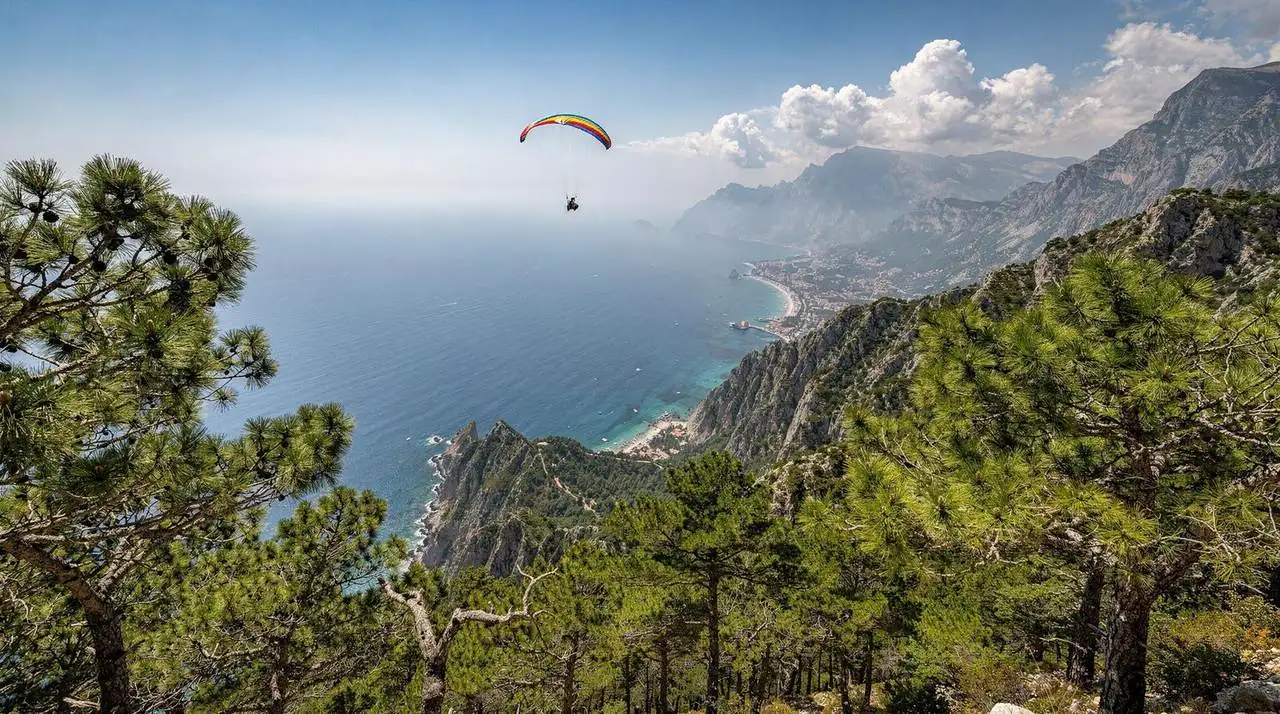
The Llogara Pass at 1,025 meters is the defining viewpoint of the Albanian Riviera. The road from central Albania crosses the Ceraunian mountains here and the transition is one of the great theatrical moments in European road travel: you climb through pine forest, round a final bend, and the entire Ionian Sea suddenly spreads below you, the coastal road threading between mountain flanks and water, the curve of the Riviera extending south toward Greece.
The panorama works best from the stone restaurant terrace at the pass itself, where the trees part to give a clear sight line south and west. In the morning, light falls on the mountains behind you; in the afternoon, the sun is positioned to illuminate the sea. The view at golden hour — when the Ionian turns shades of copper and rose — is genuinely difficult to photograph badly.
The Llogara National Park around the pass has walking trails through the black pine forest that give additional viewpoints away from the road. The short trail to the Çika peak (2,044 meters) above the pass provides the highest vantage point on the Riviera and rewards the two-hour climb with a 360-degree panorama encompassing the sea to the west, the mountains of Epirus to the south, and the Albanian highlands to the north.
Practical notes: The pass can be in cloud when the coast below is clear, particularly in spring and autumn. Check conditions before committing to the drive. The restaurant at the pass serves grilled meats and simple Albanian food at reasonable prices.
Berat Castle: The Thousand Windows Below You
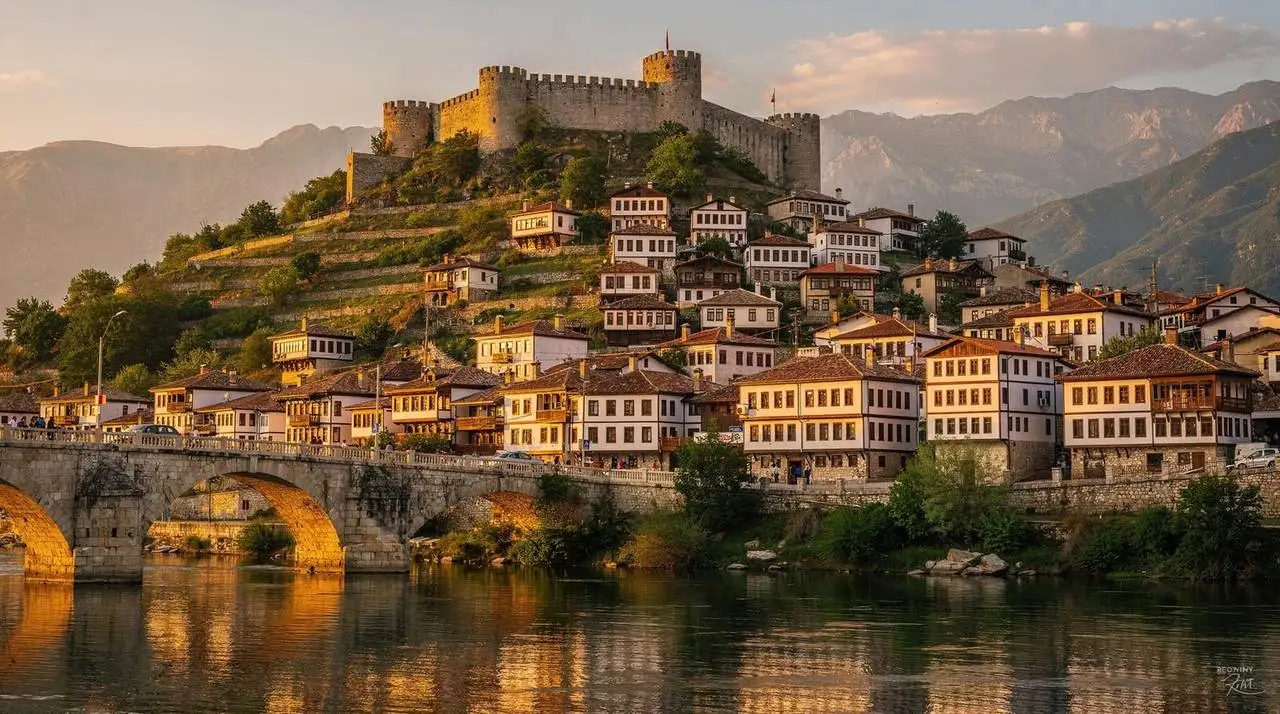
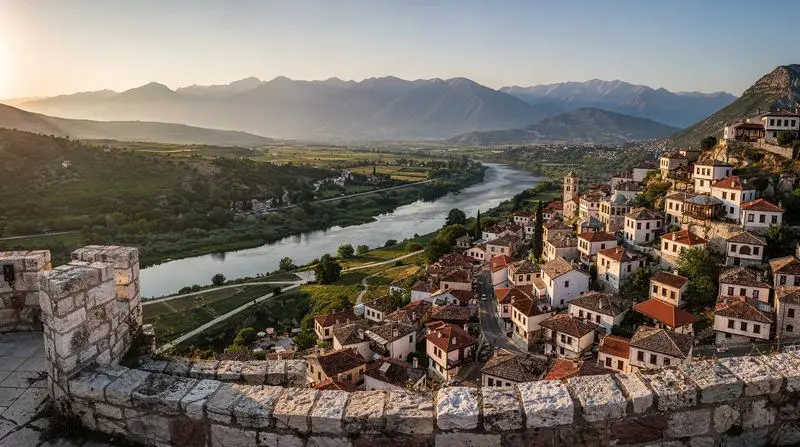
From the ramparts of Berat castle, the two Ottoman neighbourhoods of Mangalem and Gorica are spread below in one of Albania’s most iconic compositions: white cubic houses with distinctive many-windowed facades stacked above each other on either side of the Osum River gorge. The gorge itself is narrow and deep, the river visible far below between the terraced olive groves.
The view changes with the time of day. Morning light on the Gorica neighbourhood across the river is exceptional; afternoon light illuminates Mangalem below the castle walls. The best view of Berat’s famous “thousand windows” is not from within the city but from the castle above it — a perspective that reveals the full vertical drama of a settlement that has occupied this hillside for two millennia.
The castle itself is inhabited — a small community lives within the old walls — and the walk from the old town below takes about 20-25 minutes through a gate-guarded lane. The entrance fee to the castle enclosure is minimal. The inhabited fortress is a working neighborhood rather than a museum piece, which gives it a quality that purely touristic sites lack.
For a visit with context and commentary, guided day tours from Tirana to Berat include the castle visit with historical explanation that transforms the view from a pretty panorama into an interpreted landscape.
Gjirokastra Castle: The Grey City at Your Feet
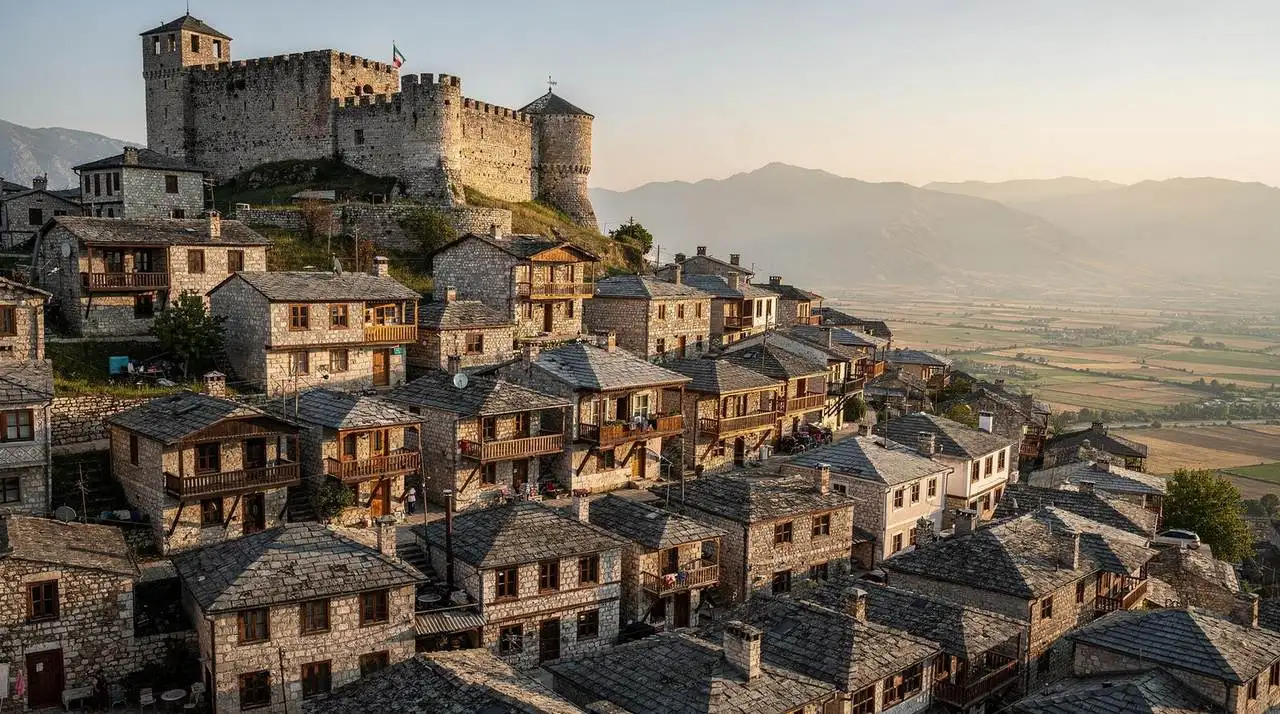
Gjirokastra viewed from its castle is a different visual experience from Berat — darker, more austere, more vertiginous. The grey-stone houses of the old town, with their distinctive external staircases and slate roofs, cascade down a ridge toward the Drinos Valley. The valley floor is 500 meters below and the mountains of Epirus, across the Greek border, form the backdrop.
The castle itself houses a museum, a captured American spy plane (a US Air Force reconnaissance aircraft that landed in Albania in 1957 and was subsequently kept as propaganda), and a collection of military equipment — an eccentric and interesting combination. But the real attraction is the wall walk around the ramparts, where views in every direction encompass the city below, the valley, and the mountains. On a clear day, the Greek mountain peaks are visible to the south.
The castle is best visited in the morning before tour groups arrive from Saranda and Tirana. The old bazaar below the castle — reached by a steep staircase from the castle road — has some of Albania’s finest examples of traditional stone architecture.
Lekuresi Castle: Above Saranda and the Ionian
Lekuresi Castle sits on a hill above Saranda, reached by a road that winds through olive groves to a restored Ottoman fortress with an excellent restaurant terrace. The view from Lekuresi is among the most complete in Albania: the town of Saranda in the bay below, the turquoise lagoons of Ksamil visible to the south, the green island of Corfu filling the horizon to the west, and on very clear days the mountains of the Greek mainland.
The castle restaurant has capitalised on this view correctly. Eating at the terrace at sunset, with the sea turning gold below and Corfu silhouetted against it, is one of the most enjoyable meals in southern Albania. Come for an early evening drink if you do not want a full dinner — the view alone justifies the trip up.
The sunset from Lekuresi is described in more detail in the best sunsets in Albania guide.
Dajti Mountain: Tirana from the Sky
Dajti Mountain (1,613 meters) rises directly behind Tirana and is accessible via the Dajti Express cable car — an eight-kilometer gondola ride that is one of the longest aerial cableways in the Balkans. The view from the cable car itself, looking back over Tirana as it spreads across the plain below, is one of the city’s best perspectives.
From the summit area, the panorama encompasses Tirana and its surroundings, the coastal lowlands extending west to the Adriatic (visible on clear days), and the mountain ranges of central Albania. The Dajti National Park around the summit has walking trails through beech forest; a two-hour loop through the upper forest and to a viewpoint above the cable car station rewards moderate effort.
The cable car operates year-round and is a practical option even on a short Tirana visit — it takes about 30 minutes from the city center to the cable car station, 15 minutes for the gondola ride, and the summit area has restaurants and picnic spots. The full excursion takes 3-4 hours comfortably. An excellent day trip from Tirana.
Rozafa Castle: Where Three Rivers Meet
Rozafa Castle in Shkodra rises from a limestone crag at the confluence of the Buna, Drin, and Kir rivers. The position — surrounded by rivers on three sides, with Lake Shkodra to the west and the Albanian Alps rising to the north — is one of the most strategically impressive castle sites in the Balkans.
The view from the upper ramparts encompasses all three rivers, the lake, and on clear days the snowcapped peaks of the Accursed Mountains to the northeast. The Albanian legend of Rozafa — in which a woman was walled alive into the castle foundations to ensure its strength — adds particular depth to a site that has been occupied continuously from Illyrian times through the Venetian and Ottoman periods.
The castle has been occupied continuously for at least 2,500 years. Looking out from the ramparts over the same rivers and mountains that Illyrian kings, Roman governors, Venetian merchants, and Ottoman pashas once surveyed is to occupy a viewpoint with uncommon historical depth.
Koman Lake Ferry: The Most Cinematic Journey
The Koman Lake ferry is not a viewpoint in the conventional sense but it is an experience of sustained visual grandeur that no static viewpoint can match. The ferry runs daily through the Drin River canyon, which was dammed in the 1970s to create the Koman reservoir — a fjord-like stretch of water enclosed by limestone cliffs dropping vertically from above.
The 2.5-hour journey through the canyon is one of the most spectacular boat rides in Europe. The cliffs rise hundreds of meters on both sides; the water is a deep turquoise-green; eagles circle overhead; and isolated villages with no road access appear at the water’s edge. The ferry is a working cargo boat rather than a tourist vessel, which adds to the experience.
The journey continues from Koman to Fierza, gateway to the Valbona Valley and the Albanian Alps. Combined with the drive up from Shkodra in the morning, it forms one of the great travel days in the Balkans.
The Riviera from a Boat
The final view on this list cannot be obtained from land. Looking back at the Albanian Riviera from a boat offshore — specifically the section between Himara and the Llogara Pass where the mountains descend almost vertically to the sea — reveals a perspective that no road viewpoint can replicate.
The mountains rise 1,500 meters from the waterline, their bases plunging directly into the Ionian. Sea caves open in the cliffs. Villages cling to terraces hundreds of meters above the water. The scale is disorienting in the best possible way.
Several boat tours run along this section of the coast from Himara and Saranda. Albanian Riviera boat trips from Saranda give you the offshore perspective on the coast and access to sea caves, offshore swimming, and the mountain-from-sea view that makes the Riviera’s geography fully comprehensible.
Shala River and the Kir Canyon
The Shala River, flowing south from the mountains to meet the Koman Lake reservoir, is accessed by motorboat from the ferry pier at Fierza or Koman. The canyon the river flows through is narrow, vertical, and improbably blue-green.
The views looking upstream from a boat on the Shala are among the most surreal in Albania — a narrow channel of turquoise water between white limestone walls, with mountains visible above and almost nothing human visible in any direction. The occasional stone farmhouse clinging to the cliff face above the canyon adds a human element that increases the sense of scale.
The Albanian Alps: Mountain Views in Every Direction
The hiking trails around Theth and Valbona provide sustained mountain panoramas that are fundamentally different from the coastal views. The Valbona-Theth crossing — the full-day hike over Valbona Pass — involves hours of walking through landscape where the mountains surround you completely.
The view from Valbona Pass at approximately 1,800 meters, looking back into the Valbona Valley and forward into the Theth Valley, is one of the finest mountain views in the Western Balkans. The scale, the absence of human infrastructure (a few shepherd trails and occasional old paths are all that marks the terrain), and the quality of the light at altitude combine for an experience that is qualitatively different from anything achievable from a road or castle.
The Albanian Alps hiking guide covers the routes and preparation for this mountain experience.
Practical Notes on Albania’s Best Views
Best time for photography: The golden hours — the hour after sunrise and the hour before sunset — transform every view on this list. Midday light is flat on the coast and harsh in the mountains.
Access: All the castle viewpoints (Berat, Gjirokastra, Lekuresi, Rozafa) require moderate uphill walking. None requires technical equipment or special fitness. The Llogara Pass and Dajti Mountain are accessible by car and cable car respectively.
Seasonal variation: Views are clearest in spring and autumn when atmospheric haze is minimal. Summer heat creates haze over the Ionian that reduces visibility from high viewpoints on very hot days; winter gives the clearest air but mountain passes may be snow-affected.
Photography gear: A wide-angle lens is useful at the mountain passes where the panorama extends in every direction. A telephoto lens is useful for coastal castle views where you want to compress the sea and mountains together. The Koman Lake canyon is genuinely challenging to photograph — the vertical geometry does not compress well. Time on the ferry, shooting openly in various directions, is more effective than trying to find a single perfect shot.
See the Albania road trip guide for a route that takes in multiple viewpoints in a single journey through the country, and the Albania travel tips guide for practical guidance on getting the most from your time in each location.
Kruja Castle: The Skanderbeg View
Kruja, 25km north of Tirana, adds a viewpoint with a different character from the Riviera and southern castles. The Sari Salltik hillside above the castle looks out over the valley toward the Adriatic on clear days, while the castle ramparts themselves frame the old bazaar below — one of Albania’s best-preserved Ottoman commercial streets. The Skanderbeg National Museum inside the castle grounds gives historical weight to the panorama: this was the stronghold from which Albania’s national hero held off the Ottoman Empire for over two decades.
Sunrise vs. Sunset: Which Viewpoint When
Timing matters more than most first-time visitors expect. This quick reference pairs each major viewpoint with its stronger light window.
| Viewpoint | Best at | Why |
|---|---|---|
| Llogara Pass | Sunset | Afternoon sun illuminates the sea and the Riviera curve to the south |
| Berat Castle | Morning | Light hits the Gorica quarter across the river first |
| Gjirokastra Castle | Morning | Cooler temperatures and fewer tour groups from Saranda/Tirana |
| Lekuresi Castle (Saranda) | Sunset | The signature view — Ionian Sea and Corfu turning gold |
| Dajti Mountain | Any time | Cable car runs year-round; clearest air in the morning |
| Koman Lake ferry | Morning departure | Best light through the canyon on the earlier crossing |
Practical: Combining Viewpoints on One Trip
Several of these viewpoints sit close enough together to combine in a single day or a short loop. Berat and Kruja both work as day trips from Tirana; Lekuresi Castle and the Riviera boat perspective both depart from Saranda; Rozafa Castle and the Koman Lake ferry both start from Shkodra. Building your itinerary around these three bases — Tirana, Saranda, Shkodra — covers the majority of Albania’s best views without excessive backtracking. The Albania bucket list guide ranks these alongside Albania’s other essential experiences.
Frequently Asked Questions
What is the single best view in Albania?
Llogara Pass is the most consistently cited answer — the moment where the road crests the Ceraunian mountains and the entire Ionian Sea and Riviera coastline appear below is one of the great travel reveals in the Balkans. For a sunset specifically, Lekuresi Castle above Saranda is the stronger choice.
Do I need a car to see Albania’s best viewpoints?
A car makes Llogara Pass and the castle circuit far easier, but it is not essential. Berat, Gjirokastra, and Shkodra are all reachable by bus or furgon, and Dajti Mountain is accessible from Tirana by cable car without a car at all. See the buses and furgons guide for public transport options to each base.