Visiting Mosques and Churches in Albania: A Practical Guide
Albania’s religious landscape is unlike almost anywhere else in Europe. The country has been Muslim, Christian, communist-atheist, and post-communist all within living memory. Today it is home to Muslim (predominantly Sunni), Orthodox Christian, Catholic Christian, and Bektashi communities living in what is repeatedly cited as a model of religious coexistence and tolerance.
For travelers, this diversity creates extraordinary opportunities: in a single day you might visit an Ottoman mosque, a Byzantine Orthodox church with 14th-century frescoes, a Catholic cathedral, and a Bektashi tekke — four completely different religious traditions within a small geographic area. Understanding the etiquette for each ensures your visits are respectful, welcome, and genuinely enriching.
| Dress | Shoulders and knees covered at all sites |
| Shoes | Off for mosques and Bektashi tekkes; on for churches |
| Head covering | Women cover hair in mosques; scarf considerate elsewhere |
| Photography | Generally allowed; no flash, ask before photographing worshippers |
| Donation | 100-500 ALL appreciated, not obligatory |
Understanding Albania’s Religious Diversity
Before discussing specific rules, the context matters:
Sunni Muslim: The majority of Albania’s population identifies as Muslim (approximately 56-60% in recent surveys). Ottoman rule from the late 15th century to 1912 established Islam as the dominant tradition, particularly in central and northern regions. The major mosques in Tirana, Shkodra, Berat, and Elbasan reflect this heritage.
Orthodox Christian: The Albanian Orthodox Church claims approximately 6-7 million adherents. Orthodox communities are concentrated in the south — Gjirokastra, Korça, Permet, and the villages of the highlands. Some of the most important church buildings and frescoes in the Balkans are in southern Albania.
Catholic Christian: Albania’s Catholic communities are concentrated in the north — Shkodra has been a Catholic center for centuries and has a magnificent 19th-century Cathedral of Saint Stephen. The northern highlands have Catholic villages with small churches. Approximately 10% of the population identifies as Catholic.
Bektashi: Albania is the worldwide headquarters of the Bektashi Order, a heterodox Sufi Islamic community that blends Islamic, Christian, and pre-Christian spiritual elements. The Bektashi World Headquarters (Kryegjyshata Botërore Bektashiane) is in Tirana. Bektashi tekkes (lodges) are found throughout Albania and have a distinct character from conventional mosques.
Religious tolerance: Albania’s interfaith coexistence is genuine and is a source of national pride. The expression “Feja e shqiptarit është shqiptaria” (The religion of Albanians is Albanianism) reflects the national identity as superseding religious divisions. Travelers should treat all communities with equal respect.
Visiting Mosques
Dress Code for Mosques
Men: Cover shoulders (no sleeveless tops). Long trousers (no shorts). Avoid tight or revealing clothing.
Women: Cover shoulders and arms fully. Cover knees (below-the-knee skirt or loose trousers). Cover hair with a headscarf before entering. Headscarves are sometimes available at mosque entrances for visitors who do not have one — it is considerate to bring your own small scarf.
Both genders: No shoes inside the mosque. Remove footwear at the entrance. Most mosques have a shoe rack or area near the door. Take your shoes with you rather than leaving them if the area seems busy.
When to Visit Mosques
Mosques are generally open for visitors outside prayer times. The five daily prayer times (fajr — dawn, dhuhr — midday, asr — mid-afternoon, maghrib — sunset, isha — evening/night) are when worshippers gather. During these times, tourists can usually still enter but must:
- Remain at the back or sides
- Not walk in front of people who are praying
- Be silent during prayer
- Not take photographs during active prayer
Friday prayers (Juma’a): The midday prayer on Friday is the main communal prayer of the week and mosques will be at their fullest. Visiting just before or after Friday midday prayers is worth experiencing for the atmosphere, but space for tourists is limited during the prayer itself.
Best visiting hours: Generally mid-morning (09:00-11:30) or mid-afternoon (14:00-16:30) on any day avoids the busiest prayer periods.
Photography in Mosques
Photography is generally permitted in Albanian mosques during non-prayer times. The rules:
- Turn off flash (mandatory — flash photography is disrespectful and disruptive)
- Do not photograph people in prayer or during worship without explicit permission
- Interior architectural photography is generally fine
- Drone photography around mosques is not appropriate without specific permission
Key Mosques to Visit
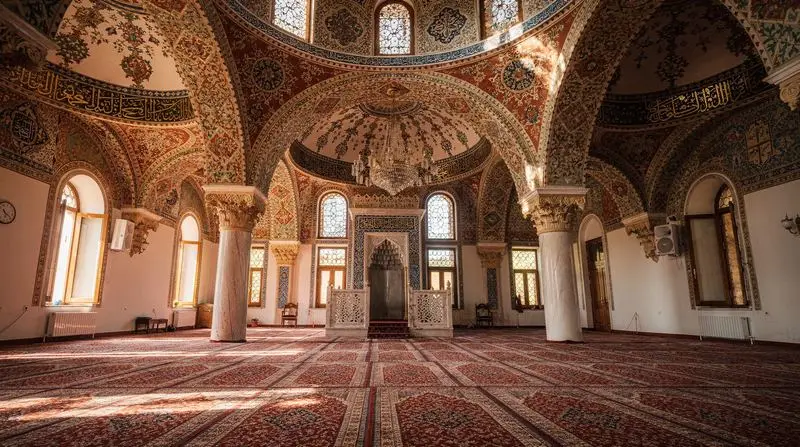
Et’hem Bey Mosque, Tirana: The most historically significant mosque in the capital, built 1789-1823 and famously kept open by civilians during communism. Beautifully painted interior. Central location in Skanderbeg Square. Open daily for visitors; small donation expected.
Muradiye Mosque, Vlora: 15th-century Ottoman mosque in excellent condition.
King Mosque (Xhamia e Mbretit), Berat: 13th-century mosque within the Berat Castle complex. The oldest mosque in Albania.
Lead Mosque (Xhamia e Plumbit), Shkodra: Named for its distinctive lead-covered domes. 18th century.
Great Mosque of Tirana (Xhamia e Madhe): The newly constructed central mosque, one of the largest in the Balkans, completed in the 2020s. Contemporary Islamic architecture.
Visiting Orthodox Churches
Dress Code for Orthodox Churches
Men: Cover shoulders. Knees covered (long trousers). Hats should be removed inside the church.
Women: Cover shoulders and arms. Cover knees. A headscarf is traditionally worn by women in Orthodox churches, though this is less strictly enforced for foreign visitors than in more conservative Orthodox traditions. Carrying a scarf is considerate.
Shoes in Orthodox Churches
Unlike mosques, shoes are kept ON in Orthodox churches. Do not remove footwear.
When to Visit
Orthodox churches are generally accessible to visitors daily. Sunday morning services are the main weekly service. During active liturgy, observe the same courtesy as in mosques — stand at the back or sides, be silent, do not photograph during the service.
Candles: It is customary to light a candle when entering an Orthodox church as a mark of respect. Candles are typically available for a small donation near the entrance. This is not obligatory for visitors but is appreciated.
Photography in Orthodox Churches
Photography is generally permitted for architectural and icon photography. The rules:
- No flash photography
- Do not photograph the priest or congregation during liturgy without permission
- Photography of icons is generally fine
- Some churches with particularly important or ancient frescoes may restrict photography to protect the artwork
Key Orthodox Churches to Visit
Onufri Museum and Church of the Dormition of Theotokos, Berat Castle: Houses the extraordinary collection of 16th-century icons by Onufri, considered the greatest Albanian artist in history. The icon screen (ikonostasis) is magnificent. Small entry fee.
St. Nicholas Church (Kisha e Shën Kollit), Moscopole/Voskopoja: 18th-century church with remarkable frescoes. The village of Voskopoja near Korça was once one of the most important cultural centers of the Ottoman Balkans. Several churches in various states of preservation.
Cathedral of the Resurrection of Christ, Tirana: The largest Albanian Orthodox church, built in the late communist/post-communist period and recently completed. Major landmark.
Orthodox churches of Gjirokastra: Several well-preserved churches in the old town. The Church of Hagia Triada has notable frescoes.
Church of St. Athanasius, Kastoria-style architecture: Several villages in the south have small Orthodox churches with medieval fresco programs worth seeking out.
Visiting Catholic Churches
Dress Code for Catholic Churches
Both genders: Shoulders and knees covered. A respectful level of dress is expected but the rules are generally less strict than for mosques or Orthodox churches. Many Catholic churches in Albania are open throughout the day and welcome visitors without specific requirements beyond basic modesty.
Shoes in Catholic Churches
Shoes are worn inside Catholic churches.
Photography in Catholic Churches
Photography is generally permitted for architectural purposes. Turn off flash. Do not photograph during Mass.
Key Catholic Sites
Cathedral of Saint Stephen (Katedralja e Shën Shtefanit), Shkodra: The magnificent 19th-century cathedral that became a sports hall under communism and was restored after 1991. One of the most important Catholic buildings in Albania. Open daily.
Franciscan Church (Kisha Françeskane), Shkodra: Active Franciscan community. Historic importance — Shkodra’s Franciscans maintained Catholic culture through the communist period.
Lezha Cathedral ruins: The ruined medieval cathedral where Gjergj Kastrioti (Skanderbeg) is buried. A national pilgrimage site as well as a historical monument. The medieval building is roofless but the burial site is preserved and marked.
Visiting Bektashi Tekkes
Bektashi tekkes are the worship spaces of the Bektashi Sufi order and are unlike any other religious space in Albania.
Bektashi Etiquette
Dress: Modest but less strictly regulated than mosques. Covering shoulders and knees is appropriate.
Shoes: Remove shoes before entering the main worship space (turbe or meydan).
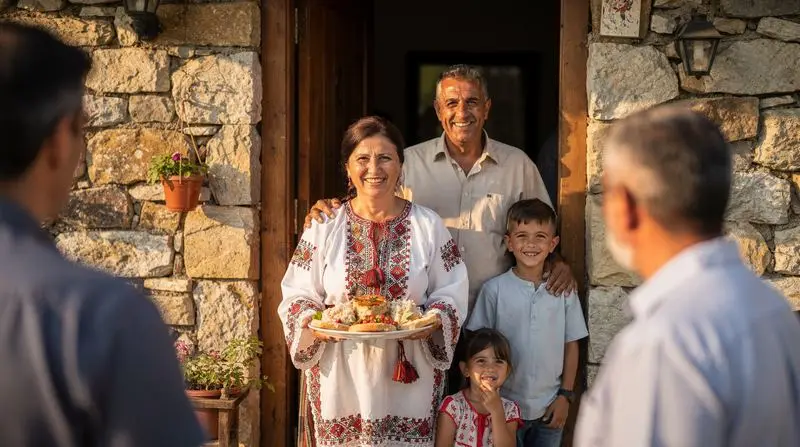
Welcome: Bektashi communities are exceptionally welcoming to visitors and genuinely pleased when travelers take an interest in their tradition. Introductions to the baba (elder/priest) are common and conversation is encouraged. This is not a tourist attraction — approach with genuine curiosity and respect.
Photography: Generally permitted, but ask the baba or a tekke resident first. Photographing the turbe (shrine area) with care and without flash is typically acceptable.
Key Bektashi Tekkes
Bektashi World Headquarters (Kryegjyshata), Tirana: The global center of the Bektashi order, located in the Blloku area of Tirana. The complex includes the mausoleum of several baba leaders. Visitors are welcomed.
Tekke of Abaz Ali, Tirana: One of several active tekkes in the capital. The Bektashi are an important part of Tirana’s spiritual geography.
Tekke of Adem Baba, near Elbasan: An important Bektashi site. The setting and atmosphere are very different from conventional mosques.
Tekkes in the south: The Permet area and southern Albania have numerous Bektashi tekkes reflecting the strong Bektashi presence in those communities.
General Religious Site Etiquette Across All Traditions
Entering during active worship: You are welcome to enter during services and prayers, but must do so without disrupting worship. Enter quietly, position yourself without blocking the path of worshippers, and leave quietly when finished.
Donations: Many religious sites have a donation box. A contribution (100-500 ALL) is appreciated and helps with site maintenance. It is not obligatory.
Silence and phones: Turn your phone to silent before entering any religious space. A ringing phone during prayer or liturgy is disrespectful in every tradition.
Children: Children are welcome at Albanian religious sites. Keep young children calm and occupied quietly. Albanians are generally very warm toward children in all contexts.
Groups: If visiting as a group, keep voices low and move through the space without blocking others. Designate one person to ask permission for photography on behalf of the group.
The head movement: Remember that Albanians nod for NO and shake for YES. If you ask a caretaker “Can I take photos?” and they shake their head, that means yes. This is a universal Albanian quirk. The Albania customs guide explains this and other cultural particularities.
Visiting Hours Reference
Opening hours vary by site and season. These are approximate guidelines:
- Mosques: Open all day; closed to tourists during the 20-30 minutes of each prayer (5 times daily)
- Orthodox churches: Typically 09:00-12:00 and 16:00-18:00; some open all day
- Catholic churches: Often open all day (09:00-17:00 or similar)
- Bektashi tekkes: Variable; the World HQ in Tirana typically receives visitors 09:00-17:00
Always check locally — hours change seasonally and for holy days.
Frequently Asked Questions About Visiting Religious Sites in Albania
Do women need to cover their heads to visit mosques in Albania?
Yes. Women should cover their heads when entering a mosque in Albania. A loose scarf placed over the hair is sufficient. You do not need to wear a full hijab — a simple headscarf or shawl is appropriate and respectful. Some mosques provide headscarves at the entrance for visitors. Bringing your own small scarf is considerate.
Is photography allowed inside Albanian religious sites?
Photography is generally allowed inside Albanian mosques and churches for architectural and artistic purposes, with these universal rules: no flash photography, no photographing people during active prayer or worship without permission, and no disruptive positioning to get shots. Always turn off your flash and ask if you are uncertain.
What is the Bektashi order and can I visit their sites?
The Bektashi order is a heterodox Sufi Muslim community that blends Islamic, Christian, and ancient Balkan spiritual traditions. Albania is the world headquarters of the Bektashi. Their tekkes (lodges) are open to visitors and the community is exceptionally welcoming to curious travelers. Remove shoes before the main worship space and approach the baba (community elder) respectfully — they are typically very willing to explain their tradition and welcome genuine interest.
Are there any religious sites in Albania that do not allow non-believer visitors?
No Albanian religious sites specifically exclude non-believers. This is consistent with the country’s tradition of religious tolerance and openness. Active religious communities in all four traditions — Sunni Muslim, Orthodox Christian, Catholic, and Bektashi — welcome respectful visitors. The only real requirement is appropriate dress and respectful behavior.
Combining Religious Sites with a City Itinerary
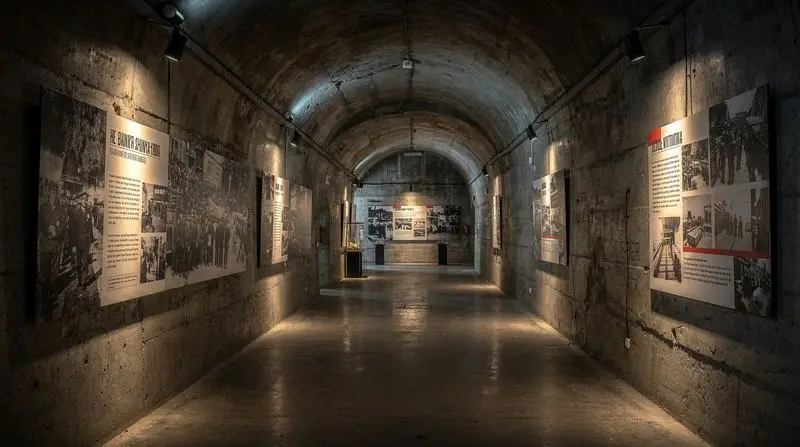
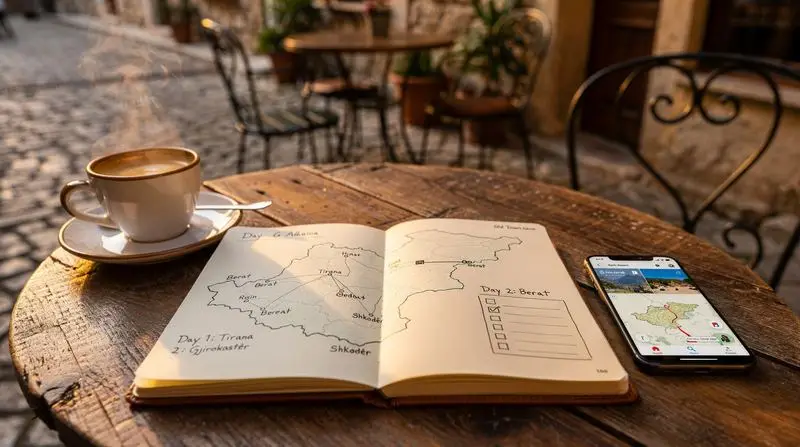
Religious site visits pair naturally with Albania’s museum circuit and general city walking, since much of the physical evidence of the country’s religious and communist history sits close together. In Tirana, the Et’hem Bey Mosque, the Cathedral of the Resurrection, and the Bektashi World Headquarters can all be covered in a single day alongside the museums guide’s Bunk’Art and House of Leaves — the contrast between active religious spaces and the museums documenting their communist-era suppression is one of the more resonant experiences a Tirana visit offers. The historical sites guide provides the wider context of Ottoman, Byzantine, and communist-era Albania that makes these visits more legible.
Outside Tirana, Shkodra’s Cathedral of Saint Stephen and Lead Mosque, Berat’s King Mosque within the castle complex, and Gjirokastra’s Orthodox churches each anchor a city visit that also includes secular heritage sites — Berat and Gjirokastra’s castles chief among them. Planning a route that mixes religious sites with the castles guide and walking tours guide gives a fuller picture of each city than either category alone.
Understanding the Cultural Weight of These Visits
For Albanians, the post-communist freedom to practise religion openly is a relatively recent and hard-won thing — Enver Hoxha’s declaration of Albania as the world’s first atheist state in 1967 closed or destroyed nearly every religious building in the country, and the current active use of mosques, churches, and tekkes represents a genuine restoration rather than an unbroken tradition. Understanding this history, covered in more depth in the communist history guide, adds meaning to what might otherwise look like a fairly standard religious-sites checklist. A caretaker’s willingness to talk about a building’s communist-era history — used as a warehouse, a gymnasium, or simply sealed — is common and worth listening to if offered.