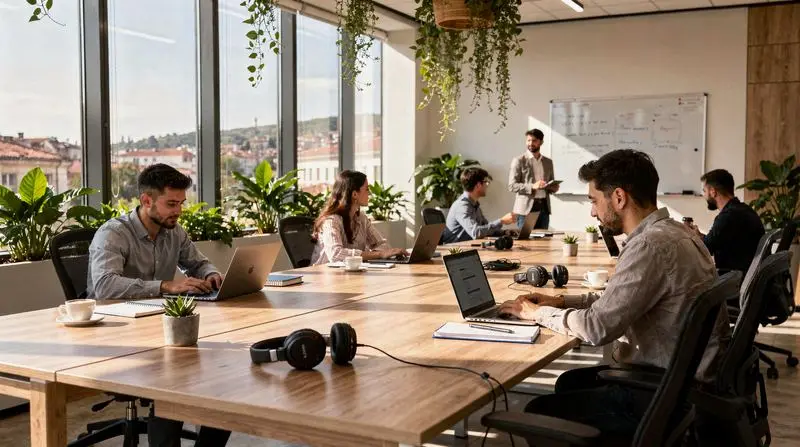
Coworking Spaces in Albania: The Complete Remote Work Guide
Albania has crossed an important threshold for remote workers in the past few years. While the coworking infrastructure still trails the established nomad hubs of Lisbon or Tbilisi, it has progressed from almost nothing to a functional set of options — dedicated coworking spaces, excellent cafe working culture, reliable fast internet, and a growing community of international remote workers who have discovered what those already here have been quietly enjoying.
This guide covers the specific coworking spaces operating in Tirana, Saranda, and Vlora; cafe alternatives worth knowing; WiFi speed realities; pricing; and the practical logistics of building a productive remote work setup in Albania.
| Best base | Tirana, for dedicated coworking and community |
| Day pass cost | Around EUR 10-15 |
| Monthly membership | Around EUR 80-180 |
| WiFi speed (Tirana) | 100-300 Mbps at coworking spaces |
| Cafe alternative | Widely accepted, especially in Blloku |
Why Albania Works for Remote Work
Before getting into specifics, it helps to understand what actually makes Albania viable rather than merely affordable. The combination of factors that matters for sustained productive remote work:
Internet infrastructure: Albania’s telecommunications network has been substantially upgraded over the past decade. Fiber optic broadband reaches most of Tirana and major towns, with speeds from 100 Mbps to 1 Gbps available in residential and commercial buildings. 4G mobile data coverage is reliable across Tirana, all major towns, coastal areas, and most main roads. Mountain areas (Theth, Valbona) are the notable exception — connectivity is limited or absent in the deep north.
Power reliability: Tirana and major towns have reliable power infrastructure. Rolling cuts are very rare in urban areas now, though they do occur occasionally during extreme weather. A laptop with good battery life plus a local mobile data SIM provides adequate resilience against occasional interruptions.
Cost: A coworking day pass in Tirana costs EUR 10-15. A monthly hot-desk membership runs EUR 80-150. These figures are among the lowest in Europe for comparable facilities. The Albania digital nomads guide has the full cost of living context.
Cafe working culture: Tirana’s cafe culture is extraordinary for remote workers. Multiple independent cafes — particularly in the Blloku district and surrounding areas — offer reliable WiFi (20-80 Mbps in the best spots), power outlets at tables, and a completely normalized attitude toward customers working for 3-4 hours on a single coffee purchase. This is not true everywhere in Europe and should not be taken for granted.
Coworking Spaces in Tirana
Dutch Hub
Dutch Hub is one of Tirana’s most established and well-regarded coworking spaces. Founded with connections to the Netherlands business community, it has evolved into a general-use coworking space with a mixed membership of local entrepreneurs, remote workers, and international visitors.
Location: Central Tirana, accessible from the Blloku district on foot.
Facilities: Open plan hot-desk area, dedicated desks available, private offices for monthly rental, meeting rooms (bookable separately), printing and scanning, kitchen facilities, high-speed fiber internet.
WiFi speeds: Typically 100-200 Mbps symmetrical on the fiber connection. Multiple access points prevent congestion during peak hours.
Pricing (approximate 2025-2026):
- Day pass: EUR 12-15
- Weekly pass: EUR 50-60
- Monthly hot desk: EUR 120-150
- Monthly dedicated desk: EUR 150-180
- Private office: EUR 300-600 per month depending on size
Atmosphere: Professional without being corporate. A mix of Albanian startups, tech workers, and visiting remote workers creates a productive but social environment. English is spoken throughout. Events and networking sessions are held periodically.
Practical note: Dutch Hub is one of the spaces most likely to have availability without prior booking, though for monthly memberships, a brief tour and conversation with the team is standard before committing.
Innospace
Innospace is positioned as an innovation and startup ecosystem space — somewhere between a coworking space and a startup accelerator environment. It attracts a younger, tech-oriented membership including local Albanian startups, developers, designers, and international visitors interested in the Albanian tech scene.
Location: Central Tirana.
Facilities: Open plan working area, startup-oriented programming (workshops, pitch events, meetups), fast fiber internet, collaboration areas designed for team working as well as individual focus.
WiFi speeds: 100+ Mbps standard; dedicated business-grade connection.
Pricing (approximate):
- Day pass: EUR 10-12
- Monthly membership: EUR 80-120
- Community membership (part-time access): EUR 50-70
Atmosphere: More energetic and startup-focused than Dutch Hub. If you want professional isolation and quiet focus, this may be less suited to your needs. If you want to connect with the Albanian startup scene, meet developers and designers, and find potential collaborators, Innospace is the better choice.
Events: Innospace runs regular tech meetups, startup workshops, and networking events. These are announced via their social media channels and often open to non-members.
When you need a break from the screen, Tirana has plenty to offer outside the coworking walls — you can explore activities in Tirana for weekend day trips and cultural experiences that make the work-life balance here particularly rewarding.
Coolab
Coolab is one of Tirana’s more recent coworking additions and has developed a reputation for a particularly good working atmosphere — quiet, design-forward, with high attention to the details that matter for sustained productivity: ergonomic seating, good lighting, minimal noise distraction, well-maintained facilities.
Location: Tirana, Blloku-adjacent area.
Facilities: Hot desks, dedicated desks, phone booths for calls, meeting rooms, kitchen, ergonomic chairs and height-adjustable desks (at premium desk tiers), fast internet.
WiFi speeds: 100-300 Mbps.
Pricing (approximate):
- Day pass: EUR 12
- Monthly hot desk: EUR 100-130
- Monthly dedicated desk: EUR 150-170
Atmosphere: Quieter and more focused than Innospace. Suits freelancers doing deep work — writers, designers, developers, consultants — who need reliable concentration. The design sensibility is more polished than older spaces.
Notable feature: Coolab has phone booths — rare in Albanian coworking spaces — which is important for remote workers who do substantial video calling.
Other Tirana Options
Ofiqi Co-working: An older Tirana coworking space with a loyal membership of established local professionals. Less orientation toward visitors or nomads than Dutch Hub or Coolab, but reliable and functional.
Startup Albania spaces: Several startup ecosystem organizations operate co-working adjacent environments — Innovation Hub Albania, ICTSmart — where paying for day or monthly desk access is possible alongside the programming.
University areas: The Polytechnic University of Tirana area has several cafes that function as de facto coworking spaces for students and young professionals — good option for budget-conscious remote workers.
Cafe Working in Tirana
For many remote workers, especially those staying less than a month, the cafe working option is the most practical and enjoyable in Tirana. The city has a density of good-quality, WiFi-equipped cafes in the Blloku and central areas that is remarkable for a city of its size.
Best Cafe Working Spots in Tirana
Blloku district generally: Multiple independent cafes along and around Rruga Ismail Qemali and the surrounding streets. Most have WiFi posted on the menu or at the counter; a quick speed test on arrival is worth doing. The culture of working for extended periods is completely normalized here.
New Bazaar area cafes: The renovated New Bazaar (Pazari i Ri) has several cafes with good WiFi and working-friendly setups. The covered market atmosphere is pleasant for morning work sessions.
Larger chain cafes (Mulliri Vjeter, international brands): These offer more consistent WiFi than small independent cafes and tend to have more power outlets per customer. The tradeoff is a less distinctive atmosphere.
Library cafes: Several bookshop-cafes in central Tirana have quiet, working-oriented atmospheres by design.
What to expect: Most cafes in Tirana have WiFi of 20-60 Mbps sufficient for video calls on a single connection. Very busy cafes during peak hours (12:00-14:00) may have congested WiFi if many users are connected. Morning sessions (09:00-12:00) are most reliable for WiFi quality and quiet atmosphere.
Daily cost: Spending EUR 5-8 per day in cafes (2-3 coffees, perhaps a pastry or lunch item) is sufficient to maintain your welcome for a 4-6 hour working session in most Tirana cafes. This is comparable to or lower than a day pass at a formal coworking space.
Coworking and Remote Work in Saranda
Saranda is increasingly popular with remote workers during the shoulder seasons (May-June, September-October), when the Riviera is beautiful but not overwhelmingly crowded. The infrastructure is thinner than Tirana but functional.
Formal Coworking in Saranda
Saranda does not yet have an established dedicated coworking space in the Tirana sense. The market is developing, and some shared working spaces have operated seasonally. The practical alternative is a combination of:
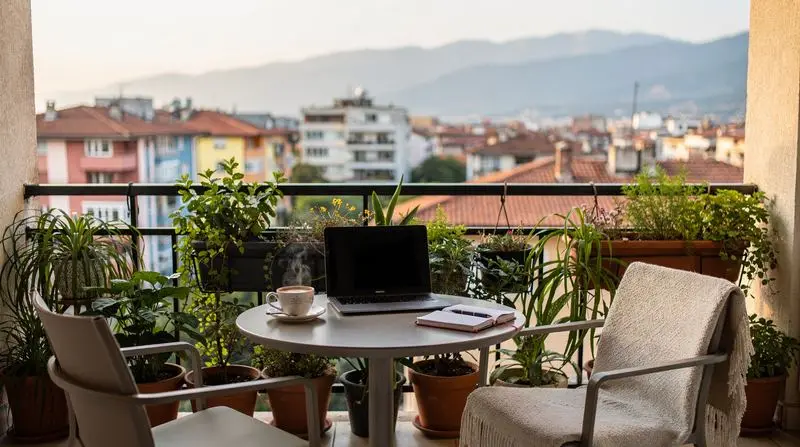
Cafe working: Saranda has several good-quality cafes with WiFi near the waterfront and in the town center. These are less optimized for sustained working than Tirana cafes — WiFi is adequate (20-50 Mbps) but outlets are less available. Morning hours are best.
Hotel lobbies and restaurants: Several Saranda hotels offer lobby areas with WiFi that can serve as informal working spaces for guests or, occasionally, non-guests at the price of a drink order.
Apartment WiFi: For stays of a week or more in Saranda, an apartment with fiber broadband is the most reliable remote work setup. Many Saranda apartment listings now specifically mention fast WiFi as a feature — verify speeds (ideally get an Airbnb listing that shows speed test results or ask the host directly) before booking.
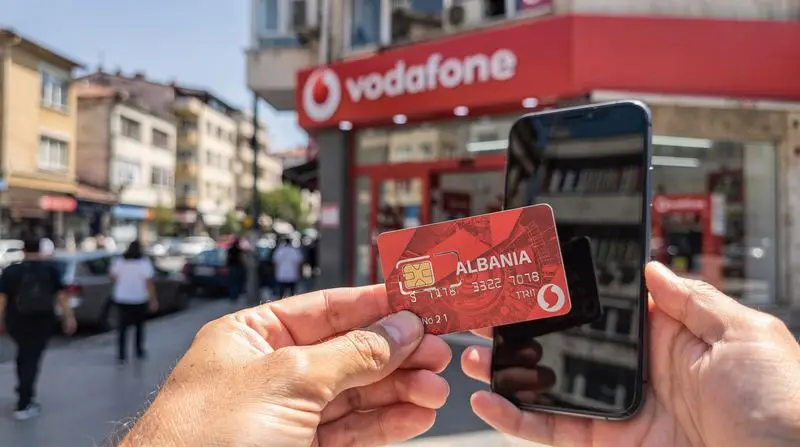
4G backup: Having an Albanian SIM with a data package is essential in Saranda for backup when apartment or cafe WiFi disappoints. Vodafone and ONE both have good 4G coverage in Saranda proper.
Saranda Practical Remote Work Reality
A typical Saranda remote work day in shoulder season: morning coffee and work at a seafront cafe (2-3 hours), lunch break, afternoon work from your apartment (fiber broadband), late afternoon swim or walk, evening social time. The lifestyle quality is high; the formal coworking infrastructure is low. If your work requires only reliable internet rather than a professional office environment or community, Saranda works well. If you need regular video calls, printer access, or structured co-working community, Tirana is the better base.
Coworking and Remote Work in Vlora
Vlora occupies the middle ground between Tirana’s infrastructure and Saranda’s lifestyle appeal. It is a larger city than Saranda with better year-round services, but the coworking ecosystem is still nascent.
Vlora coworking developments: Several businesses in Vlora have developed spaces that serve as informal coworking destinations — cafe-workspace hybrids rather than dedicated membership operations. The Vlora Tech Hub has facilitated some shared working infrastructure, though its operations vary.
Cafe working in Vlora: Vlora’s cafe scene around the main boulevard and port area includes several venues with reliable WiFi. The port area cafes have views and reasonable working conditions during morning hours.
Connectivity in Vlora: Fiber broadband reaches central Vlora through local providers. Mobile data coverage is solid throughout the city and coastal areas. An apartment with fiber broadband plus a local SIM gives reliable infrastructure for a multi-week stay.
Internet Speeds: What to Expect
A realistic breakdown of internet speed expectations across Albanian working environments:
| Location | Connection Type | Expected Speed |
|---|---|---|
| Tirana coworking spaces | Fiber business | 100-300 Mbps |
| Tirana good cafes | Fiber/cable shared | 30-80 Mbps |
| Tirana apartments (fiber) | Fiber residential | 100-500 Mbps |
| Saranda cafes | Cable/ADSL shared | 20-50 Mbps |
| Saranda apartments | Variable | 20-100 Mbps |
| Riviera villages | Mobile data only | 10-30 Mbps |
| Northern mountain areas | Mobile data variable | 5-20 Mbps or none |
| Theth/Valbona | Limited/none | 1-5 Mbps or none |
For video calls requiring consistent speeds, Tirana coworking spaces and fiber-connected Tirana apartments are the reliable options. For lighter work (document editing, email, occasional calls), cafe working in Tirana and Saranda is generally sufficient.
For pre-trip connectivity, the Albania eSIM guide covers setting up data before arriving.
Monthly Coworking Cost Comparison
For remote workers comparing Albania to other European nomad destinations, here is an approximate monthly coworking membership comparison:
- Tirana, Albania: EUR 80-150 (hot desk)
- Tbilisi, Georgia: EUR 80-160
- Skopje, North Macedonia: EUR 70-120
- Bucharest, Romania: EUR 100-150
- Lisbon, Portugal: EUR 150-250
- Barcelona, Spain: EUR 200-350
- Amsterdam, Netherlands: EUR 250-450
Albania sits at the affordable end of the range with facilities that are improving year by year. The full cost of living context — including accommodation, food, and transport — makes the total monthly cost even more competitive. See the Albania travel budget guide for complete monthly living cost estimates.
The Visa and Work Legality Question
Technically working for foreign employers while on a tourist visa in Albania is the same ambiguous situation as in most countries — it is widely done, rarely if ever enforced against digital nomads from Western countries, and sits in a legal grey zone. Albania does not currently have a specific digital nomad visa though the topic has been discussed in the context of EU accession preparation.
For stays up to 90 days (the standard visa-free allowance for EU, US, UK, and most Western passport holders), the practical risk of working remotely is minimal. For longer stays requiring a residence permit, the legal framework for remote work employment is less clearly defined. The Albania expat guide covers longer-term residency considerations.
Building a Productive Albania Remote Work Setup
A practical setup checklist for remote workers arriving in Albania:
Before arrival:
- Purchase an eSIM or plan to buy a local SIM at the airport (see Albania eSIM guide)
- Book short-term accommodation with confirmed fast WiFi for the first week
- Join Albania Digital Nomads and Albania Expats Facebook groups for current recommendations
First week:
- Get a local Albanian SIM with a data package (Vodafone or ONE) as your backup connection
- Test the WiFi at your accommodation with a speed test app
- Try 3-4 different coworking spaces and cafes to identify your preferred working environment
- Assess whether a monthly coworking membership makes financial sense versus daily cafe spending
Monthly remote work costs:
- Coworking membership: EUR 80-150
- Mobile data SIM: EUR 15-25
- Daily coffee at cafes: EUR 40-80
- Total workspace costs: EUR 135-255 per month
This compares very favorably with equivalent costs in Western European nomad destinations.
Choosing a Neighbourhood in Tirana for Remote Work
Where you base yourself in Tirana affects your daily working reality as much as which coworking space you join. A few practical notes for remote workers choosing accommodation:
Blloku and the city centre: The highest density of coworking spaces, good cafes, and restaurants, all within walking distance. Slightly higher accommodation prices than other neighbourhoods, but the convenience of a short commute to Dutch Hub, Innospace, or Coolab makes it the default choice for shorter stays. See where to stay in Tirana for specific accommodation recommendations.
Around the Grand Park and Artificial Lake: Quieter, greener, popular with longer-term residents who want a break from city noise while remaining a short taxi or bike ride from Blloku’s coworking spaces. Better suited to those staying a month or more.
Near the Polytechnic University: Budget-friendly, with a strong cafe culture aimed at students, but fewer dedicated coworking options. Works well for remote workers on a tight budget who are comfortable with cafe working most days.
A Sample Week of Remote Work in Tirana
To make the abstract practical, here is what a typical working week looks like for a remote worker based in Tirana:
Monday-Wednesday: Coworking space (Dutch Hub or Coolab) for focused work and any scheduled video calls, taking advantage of the reliable fiber connection and quiet environment. Lunch nearby in Blloku.
Thursday: Cafe working day — a change of scenery in one of the Blloku cafes or the renovated New Bazaar, useful for lighter tasks and catching up on email.
Friday: Shorter working day, often combined with a networking event at Innospace or a coworking community gathering, followed by an early finish to explore day trips from Tirana over the weekend — Kruja and Dajti Mountain are both feasible half-day escapes even with a Friday afternoon start.
This rhythm — structured coworking days balanced with cafe flexibility and weekend exploration — is the pattern that most long-stay remote workers in Tirana settle into after the first couple of weeks.
Frequently Asked Questions About Coworking in Albania
What are the best coworking spaces in Tirana?
Dutch Hub, Innospace, and Coolab are the three most consistently recommended coworking spaces in Tirana as of 2025-2026. Dutch Hub suits a mix of professional users and visiting nomads. Innospace is best for tech and startup-oriented workers who want community and events. Coolab is best for focused deep-work sessions in a design-forward environment. All three offer day passes (EUR 10-15) and monthly memberships (EUR 80-180).
Can you work from cafes in Tirana?
Yes, and very effectively. Tirana’s cafe culture is one of the best in Europe for remote workers — strong WiFi (30-80 Mbps in the best venues), power outlets at tables, and a completely normalized attitude toward customers working for extended periods on a single coffee purchase. The Blloku district has the highest density of good cafe working options. Daily spending of EUR 5-8 is sufficient for a comfortable 4-6 hour cafe working session.
Is the internet in Albania good enough for remote work?
Yes, in urban areas. Tirana has fiber broadband widely available at 100-500 Mbps for residential connections and business-grade fiber in coworking spaces. Saranda and Vlora have adequate connectivity for most remote work needs. Mountain areas (Theth, Valbona) have very limited or no internet — not suitable for sustained remote work. For reliable video calling and consistent connectivity, Tirana coworking spaces are the best option.
How much does coworking cost in Albania?
Day passes at Tirana coworking spaces cost approximately EUR 10-15. Monthly hot-desk memberships run EUR 80-150. Monthly dedicated desk memberships run EUR 120-180. These are among the lowest coworking prices in Europe. The combination of low coworking costs and Albania’s overall affordable cost of living makes it one of the cheapest viable remote work destinations on the continent.
Are there coworking spaces in Saranda or on the Albanian Riviera?
Dedicated coworking spaces are not yet established in Saranda or the Riviera. Remote workers in these areas typically use apartment fiber broadband as their primary connection, supplemented by cafe working sessions. The lifestyle quality of Riviera remote working is high — the standard pattern is morning work sessions from an apartment or cafe, afternoon beach time, evening social time — but it requires more self-sufficient infrastructure planning than Tirana-based work.
Is Tirana or Saranda better for remote work?
Tirana is the better base for anyone who needs dedicated coworking infrastructure, regular video calls, or a community of other remote workers — its three main coworking spaces and dense cafe culture offer the most reliable setup in the country. Saranda suits remote workers whose jobs need only steady WiFi, offering a stronger lifestyle trade-off (beach, Riviera day trips) in exchange for a less structured working environment. Many long-stay nomads split their time between the two.
How do I meet other remote workers in Albania?
The Albania Digital Nomads and Albania Expats Facebook groups are the most active online communities for connecting with other remote workers before and during your stay. In person, Innospace’s tech meetups and networking events in Tirana are the most reliable way to meet other nomads and local entrepreneurs face to face. The Albania digital nomads guide has more detail on the broader community and lifestyle.