Best Restaurants in Gjirokastra: Dining in Albania’s Stone City
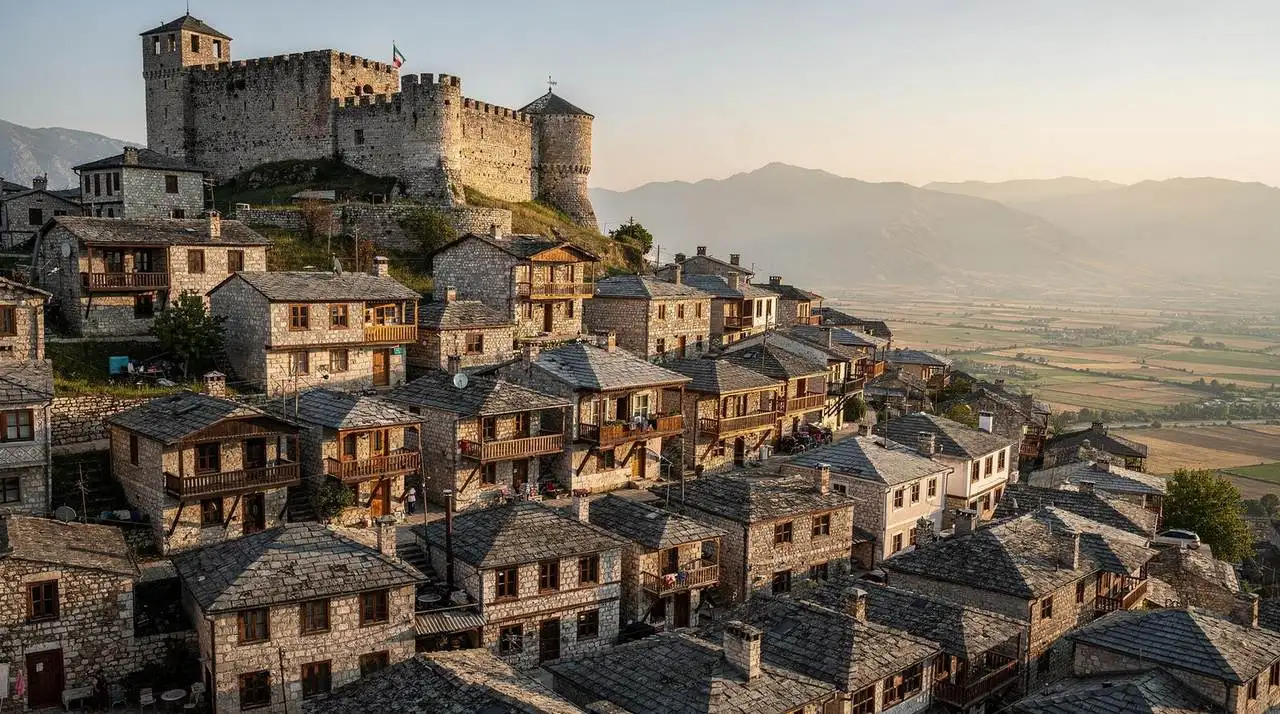
Gjirokastra is among the most atmospheric cities in the Balkans — a UNESCO World Heritage site of Ottoman-era stone houses climbing a steep hillside, crowned by a massive castle that has overlooked the Drino valley for centuries. It is also, by the standards of an Albanian city of its size, surprisingly well supplied with good places to eat.
The combination of a growing international tourism profile, a strong tradition of southern Albanian cooking, and a population that takes food seriously has produced a restaurant scene that rewards exploration. The food in Gjirokastra is rooted in southern Albanian traditions — lamb from the surrounding mountains, fresh river fish from the Drino and Bistrica rivers, wild greens and herbs collected from the limestone hillsides, and dairy products from a region that has maintained pastoral traditions through centuries of different rulers.
The cuisine here also has strong connections to neighboring Greek food culture. The minority Greek-speaking communities of the broader region have influenced local cooking, resulting in more generous use of olive oil than in northern Albanian cooking, a stronger presence of feta-style cheese alongside Albanian white cheese, and herb combinations that reflect the Mediterranean culinary tradition as much as the Balkan one. This culinary overlap is one of Gjirokastra’s most distinctive characteristics.
| Where to eat | Old Bazaar (Kujtimi, Odaja) or Fantazia for valley views |
| Typical cost | Around EUR 8-15/person for a full traditional meal |
| Don’t miss | Akullore gjirokastriote (local ice cream), byrek, lamb dishes |
| Best time | Lunch for local pace; early evening for Fantazia’s terrace |
| Payment | Cash expected in most restaurants |
Restaurant Kujtimi: The Old Bazaar Institution
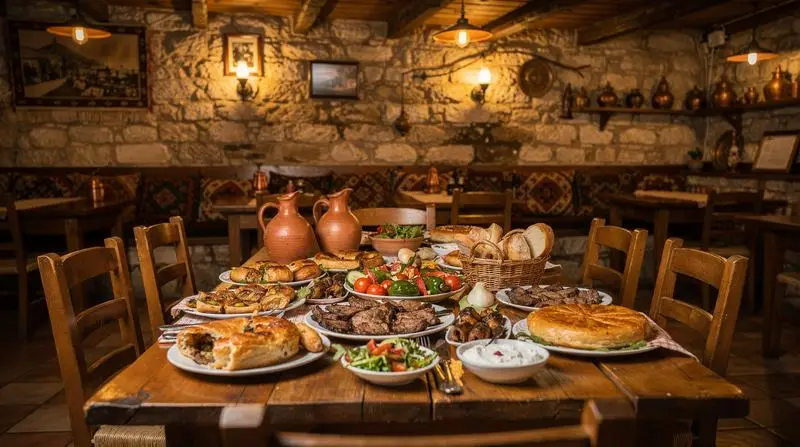
Kujtimi occupies a stone building in the Old Bazaar of Gjirokastra in a setting of considerable historic character: vaulted ceilings, stone walls, and traditional wooden furniture create an atmosphere that is genuinely old rather than reconstructed. The restaurant has been feeding visitors and locals for decades and has developed a reputation for consistency that newer establishments work hard to match.
The menu at Kujtimi is a thorough survey of southern Albanian classics. Tavë kosi (lamb and rice baked in a yoghurt-egg custard), qofte (spiced grilled meatballs), grilled lamb chops, stuffed peppers, and the various clay pot vegetable preparations that this part of the country does particularly well. The kitchen is not interested in innovation — it is interested in doing familiar things correctly, and in this aim it largely succeeds.
The lamb dishes: The slow-roasted lamb shoulder and the oven-baked preparations benefit from the quality of mountain lamb available locally. Gjirokastra-area lamb graze on the aromatic plants of the limestone hills — wild thyme, oregano, herbs — and this grazing character carries through into the flavor of the meat. The kitchen has sufficient experience with these cuts to manage the long cooking times they require without overshooting.
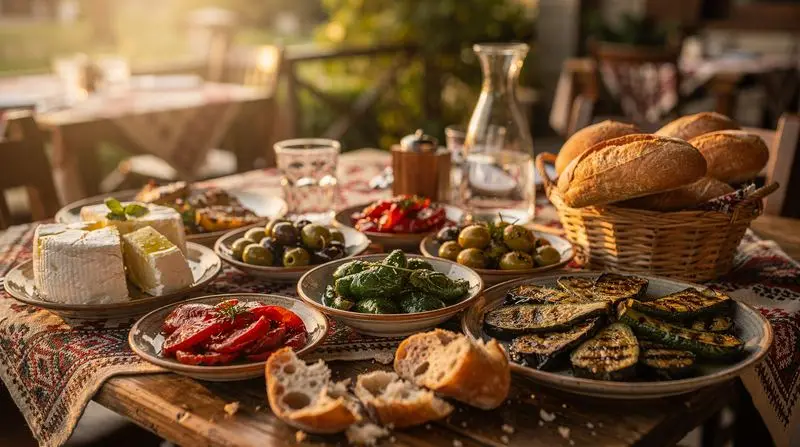
The correct order at Kujtimi: A glass of raki to start (house grape raki or the region’s fig variety if available). Shared mezze starters — white cheese, olives, stuffed peppers. A main of roasted lamb or tavë kosi with bread. Local wine or carafe of house raki with the meal. This is not a formulaic recommendation — it is how Albanians eat at this type of restaurant, and following the rhythm produces the intended experience.
Prices at Kujtimi are fair without being bargain-level. The combination of an Old Bazaar location and the restaurant’s established reputation justifies a slight premium over equivalent cooking elsewhere in the city, and most visitors find it well earned.
Practical note: Kujtimi can fill at peak lunch and dinner times in high season. Arriving at 12:00 for lunch or 7:00pm for dinner ensures a table without a wait.
Odaja: The Upstairs Taverna
Odaja — the word means “room” or “chamber” in Albanian, from the Ottoman Turkish — is a smaller and more intimate establishment than Kujtimi, occupying an upper floor of an old bazaar building. The low ceiling, wooden furniture, and narrow windows looking out over the bazaar lane create a cozy atmosphere that suits the cooking: traditional, unpretentious, and deeply satisfying.
The menu at Odaja is shorter than Kujtimi’s, focused on what the kitchen does best rather than covering every Albanian dish. Byrek baked to order, fergese (roasted peppers cooked with eggs and white cheese — one of the great Albanian preparations), grilled meats, and a series of mezze-style starters that work well as a shared meal rather than individual courses.
The byrek: Odaja’s byrek is among the best in Gjirokastra, made with hand-pulled filo in the traditional manner rather than commercially produced sheets. The difference is significant — hand-pulled filo has a texture and crispiness that the commercial version cannot replicate. The cheese filling uses local white cheese with a slightly sharper profile than the djath available in central Albania.
Odaja is the better choice for visitors who want a more informal, personal eating experience than Kujtimi provides. The pace is slower, the atmosphere more conversational, and the staff — typically family members — create the kind of interaction that makes traditional Albanian dining feel personal rather than transactional. This is a restaurant that cares about your meal in the way a host cares about feeding a guest, which is the fundamental Albanian hospitality model.
Best for: Smaller groups wanting a quieter dinner; travelers who want to engage with the family who runs the restaurant; anyone who wants to ask about the byrek preparation and get a genuine explanation.
Fantazia: Views of the Drino Valley
Restaurant Fantazia occupies a position that takes advantage of what Gjirokastra has in abundance: dramatic landscape. The Drino valley stretches south from the city with the mountains of the Lunxheri range on the opposite side, and Fantazia’s terrace looks directly over this panorama.
The food at Fantazia covers broadly similar territory to Kujtimi and Odaja — Albanian and regional cooking, lamb dishes, grilled meats, fresh salads — with somewhat more variety in the mixed grill sections and a slightly broader menu range designed to serve different preferences. The restaurant draws a genuine mix of local diners and tourists, with the proportion of Albanian regulars suggesting real quality rather than pure tourist dependence.
When to visit Fantazia: The terrace works best at specific times. Early evening in summer, when the light on the valley is golden and the temperature has dropped from the day’s heat — this is when the Gjirokastra landscape reaches its most spectacular. Clear autumn days, when the summer haze lifts and the mountains across the valley are sharp against the sky. Watching the Drino valley darken while the city lights come on behind you is a memorable Gjirokastra experience.
What to order: Albanian food from the Albanian section of the menu rather than the pizza section, which is aimed at international visitors wanting something familiar. The grilled lamb and the clay pot preparations are the kitchen’s strongest territory.
Cooking Classes: Learning the Southern Albanian Tradition
Gjirokastra has become a center for cooking class experiences focused on traditional southern Albanian food. Traditional Albanian vegetarian cooking classes in Gjirokastra cover the plant-based and dairy-based dishes that form the core of southern Albanian home cooking, taught in a local home in the historic city.
The class typically includes a market visit to source ingredients — which in itself provides access to the Old Bazaar’s food vendors in a way that independent browsing does not — and covers byrek, fergese, and seasonal vegetable preparations. Making byrek from scratch, learning the hand-pulling technique that distinguishes traditional from commercial filo, produces both a skill and a deeper understanding of what you have been eating in the restaurants.
Why this works particularly well in Gjirokastra: The cooking class takes place in a traditional stone house in the old city. Learning to make Albanian food in the physical environment where these recipes developed — the kitchen that the house has had for generations, the stone walls that predate the modern Albanian state — creates a layer of historical authenticity that purpose-built cooking schools elsewhere cannot replicate.
This is also an excellent option for travelers who want a meaningful local interaction beyond restaurant dining. The families that host cooking classes in Gjirokastra are sharing their domestic food culture, not a tourist product, and this distinction shows in the experience.
Choosing Between Kujtimi, Odaja, and Fantazia
| Restaurant | Best for | Atmosphere | Price level |
|---|---|---|---|
| Kujtimi | A reliable full Albanian meal | Historic stone Old Bazaar building | Moderate |
| Odaja | Intimate, family-run dining | Cosy upper-floor room | Moderate |
| Fantazia | Sunset views over the Drino valley | Terrace outside the bazaar | Moderate |
All three are within easy walking distance of each other, so a common strategy is coffee near the main square, lunch at Kujtimi or Odaja, and Fantazia for dinner when the valley light is at its best. For where to sleep near this cluster, see where to stay in Gjirokastra.
Vegetarian and Dietary Considerations in Gjirokastra
Southern Albanian cooking leans heavily on lamb and dairy, but Gjirokastra’s kitchens handle vegetarian diners reasonably well thanks to the Greek-influenced tradition of horta (wild greens) and vegetable-forward mezze. Fergese without meat, byrek me spinaq, roasted peppers, and the bazaar’s fresh cheese and olive stalls all make for a satisfying vegetarian meal without special requests. Strict vegans will find the pervasive local dairy the main obstacle; self-catering from the bazaar’s produce stalls is the most reliable workaround.
Street Food and the Famous Gjirokastra Ice Cream
Gjirokastra has a street food culture centered on the main square and the approaches to the bazaar, and it includes one genuinely distinctive local specialty that attracts Albanians from across the country: the ice cream.
The Gjirokastra ice cream (akullore gjirokastriote) has developed a reputation that extends well beyond the city, based on a style of soft, rich cream ice cream served from metal containers at pavement kiosks. The base is less aggressively sweet than commercial Albanian alternatives and has a creaminess that reflects the use of full-fat dairy — a quality that reflects the pastoral tradition of the surrounding hills. The ice cream has a texture closer to traditional home-made gelato than to industrial soft-serve.
Several vendors compete around the main square and along the bazaar approaches. The quality between vendors is consistent enough that choosing between them is a matter of which queue looks shorter. Trying at least one ice cream is essentially obligatory for any Gjirokastra visit.
Byrek: Available from bakeries and stalls in the bazaar area. The southern Albanian style has a slightly thinner, crispier filo layer than northern versions. The cheese filling uses the sharper local white cheese. Fresh byrek comes out of the oven through the morning — arrive at a bazaar bakery by 9am for the best version.
Grilled qofte: Street vendors set up in the afternoon and serve grilled meatballs primarily to local residents passing through the bazaar. The qofte here uses lamb rather than beef or mixed meat — a southern Albanian characteristic that makes them more flavorful and slightly richer than the equivalent from northern regions.
Coffee and Gjirokastra’s Pace
Gjirokastra’s cafe culture is more reflective of traditional Albanian social rhythms than the fast-moving espresso culture of Tirana. The cafes around the main square and along the bazaar serve strong coffee at very low prices in a setting that encourages staying rather than passing through.
The city’s pace is slow by urban standards — a consequence of its size, its hillside geography, and the kind of visitor profile it attracts. People walk more slowly in Gjirokastra, sit at cafe tables for longer, and seem collectively to have decided that whatever comes next can wait. For travelers who have come from more frenetic tourist destinations, this quality is one of the most appealing things about the city.
Morning coffee in Gjirokastra: Arriving at a square-side cafe before the day visitors appear — the castle visible above, the valley quiet below, the bazaar just beginning to open — is one of those uncomplicated pleasures that requires nothing more than presence and a willingness to sit still for thirty minutes. This is Albanian cafe culture at its best: unhurried, social, and anchored in the specific place rather than in a category of “coffee shop.”
For the full context on Albanian coffee culture and what the morning espresso ritual means in this country, see the Albanian coffee culture guide.
The Old Bazaar as a Food Experience
The Old Bazaar of Gjirokastra is one of the better-preserved Ottoman-era market areas in the Balkans. From a food perspective, it rewards a slow walk with attention to what is actually being sold rather than a quick walk through.
Mountain honey: Several small shops sell honey from surrounding hills produced by bees feeding on wild thyme, oregano, and other aromatic plants of the limestone terrain. The mountain honey of the Gjirokastra area has a flavor intensity that commercially produced honey cannot approach. Buying a jar directly from a bazaar honey producer — asking about the source, the season, the plant species — is one of the best small food purchases available in Gjirokastra.
Local cheese: White brined cheese specific to the area’s dairy tradition is available from a few vendors in and around the bazaar. The cheese from the Gjirokastra area has character influenced by local sheep breeds and the plants they graze on in the surrounding hills.
Dried herbs and spices: The bazaar stalls selling dried mountain herbs — oregano, thyme, chamomile, rosemary — provide a direct connection to the ingredient landscape that shapes Gjirokastra’s cooking. These herbs are used fresh in season and dried for the rest of the year; the dried versions sold in the bazaar are from local production.
A food walk through the bazaar: Begin with coffee at the main square. Walk through the bazaar shops, tasting and buying honey, cheese, and herbs. End with a meal at Kujtimi or Odaja. Continue to the castle in the afternoon. This sequence provides both the best food experience and the best general Gjirokastra experience in a single day.
Wine and Drinks
The wine served in Gjirokastra’s restaurants reflects the southern Albanian wine tradition. Local producers in the Lunxheria hills and the Drino valley produce reds primarily from Puls and Shesh i Zi varieties — relatively light, food-friendly wines that pair well with lamb and slow-cooked meat dishes. Ask specifically for “vere lokale” (local wine) rather than accepting a generic house wine that may be from a different region.
The Labova Winery area, accessible by car from Gjirokastra, is one of the smaller southern Albanian wine production zones worth seeking out for visitors with a rental car and half a day to spare.
Raki is, as everywhere in Albania, the standard aperitif. Gjirokastra’s raki tradition leans toward grape-based varieties, reflecting the wine-producing character of the region. A glass of local raki before a meal at Kujtimi, sitting in the stone-arched setting of the Old Bazaar, connects to centuries of Albanian hospitality practice. See the raki guide for the full cultural context.
Day Trips and Eating Beyond Gjirokastra
The villages of Lunxheri: The hill villages above Gjirokastra, accessible by mountain roads, have traditional guesthouses (bujtina) serving home cooking of a type the city restaurants cannot fully replicate. Eggs from household chickens, cheese from family goats, lamb from the local flock, bread from the wood-fired oven — this is Albanian highland food in its most genuine form. A meal in a Lunxheria village guesthouse is worth the effort.
Saranda and mussels: Saranda is 1.5 hours south. The seafront restaurants there serve fresh Ionian fish in a completely different register from Gjirokastra’s mountain cooking — the contrast between the two cities’ food cultures makes for a rewarding combination. The best restaurants Saranda guide covers the seafront dining scene.
The Blue Eye: Syri i Kaltër is 20 minutes by car on the road toward Saranda. Bringing a picnic assembled from Gjirokastra’s bazaar — honey, cheese, bread, and whatever the morning market has — to eat at this extraordinary natural spring is one of those simple combinations that works perfectly.
Seasonal Notes for Gjirokastra Dining
Gjirokastra’s restaurant rhythm changes with the seasons more than in the coastal towns. Spring (April-May) brings wild greens and the first lamb of the season to traditional menus, and the Old Bazaar is at its most pleasant before the summer heat and crowds. Summer (June-September) is peak season — the ice cream vendors run at full capacity, restaurant terraces fill every evening, and the castle-terrace dinners at Fantazia are booked out most weekends. Autumn (October-November) brings the walnut harvest that feeds the bazaar’s bakllava production, along with quieter restaurants and excellent light for the castle-at-dusk view. Winter (December-March) sees several bazaar restaurants reduce hours, but Kujtimi and the more established places stay open, and a warm bowl of tavë kosi in a stone-walled dining room takes on a different, cosier character than in summer.
Practical Dining Information
Gjirokastra’s restaurants concentrate in the Old Bazaar area, around the main square, and near the castle entrance. The uphill walk to the castle-area restaurants is worth it for the views.
Hours: Lunch runs from roughly 12:30pm to 3pm. Dinner starts from 7pm, with the busiest service from 8pm to 10pm. Most restaurants in the old city close by midnight.
Volume: Gjirokastra is significantly quieter than Tirana or Saranda in the evenings. Restaurants rarely feel rushed even at peak dinner hour — the pace reflects the city’s character.
Payment: Cash is expected in most restaurants. Cards are accepted at some larger or more tourist-facing establishments. Bringing lek cash is advisable.
Language: English is spoken at the main tourist restaurants. At backstreet establishments and street food vendors, Albanian is dominant — the camera translation function of Google Translate handles menus effectively.
For the food traditions behind what you will encounter on Gjirokastra’s menus, the Albanian food guide provides background on the dishes and ingredients that define southern Albanian cooking. The guide covers tavë kosi, fergese, byrek varieties, and the broader category of slow-cooked Albanian preparations that Gjirokastra does particularly well.
Combining Gjirokastra with Other Southern Albania Food Stops
Gjirokastra sits naturally on a food-focused southern Albania route. Two hours south, Saranda offers the region’s most complete seafood scene — see the best restaurants Saranda guide. Two hours north, Berat has its own UNESCO old-quarter restaurant tradition, covered in the best restaurants Berat guide. For overall cost planning across the region, the Albania travel budget guide breaks down what a day of eating well typically costs in each of these towns.
Frequently Asked Questions
What is the single dish to try in Gjirokastra?
Fergese, ideally at Odaja or Kujtimi, best captures southern Albanian home cooking — roasted peppers, eggs, and white cheese cooked together in a clay pot. Pair it with a glass of local grape raki to start.
Is Gjirokastra good for a food-focused day trip from Saranda?
Yes. Gjirokastra is about 1.5 hours from Saranda by furgon or car, and a day combining the Old Bazaar food walk, a cooking class, and lunch at Kujtimi or Odaja works well as a half-day excursion, with time left to see the castle before heading back.
How does Gjirokastra’s cuisine differ from Berat’s?
Gjirokastra’s kitchen shows stronger Greek influence — more olive oil, wild greens, and feta-style cheese — reflecting the region’s mixed Greek-Albanian heritage, while Berat’s cooking leans more toward central Albanian lamb and wine traditions. Both are worth experiencing on the same southern Albania trip for the contrast.