Snowshoeing in Albania: The Complete Winter Activity Guide
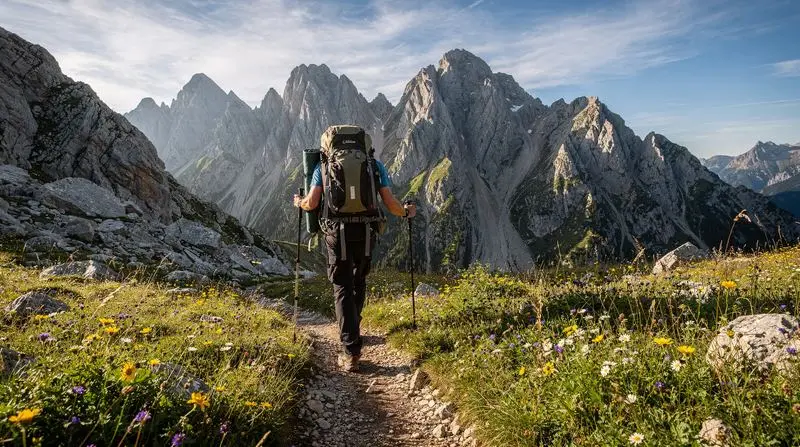
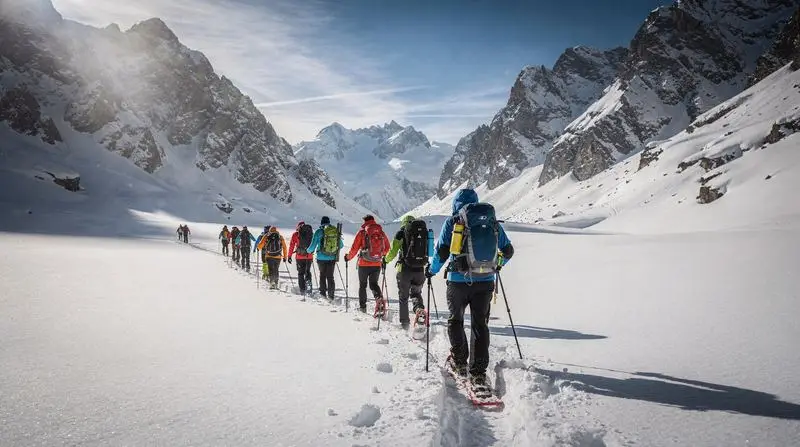
Albania’s mountain regions in winter are a revelation. The Albanian Alps — the Bjeshkët e Namuna, the Accursed Mountains — receive reliable snowfall from December through March, transforming the terrain that summer hikers know into a white wilderness of extraordinary beauty. Among winter mountain activities, snowshoeing offers perhaps the purest access: quiet forests, untracked snow, panoramic views, and the meditative rhythm of movement through a landscape almost completely devoid of other people.
Albania’s snowshoeing scene is still emerging compared to established Alpine destinations. There are no lift-served snowshoe trails, no groomed routes with markers every hundred meters, and no dedicated snowshoe tour infrastructure at Western European scale. What there is instead: genuine mountain wilderness, experienced local guides who know the terrain deeply, reasonable prices, and the particular satisfaction of being genuinely off the tourist map in winter.
This guide covers the best snowshoeing areas, specific routes, equipment rental, guided tours, the best season, and safety considerations.
| Best area | Valbona Valley |
| Season | Mid-December through February (best), into March |
| Guide cost | Around EUR 30-60/day (per group) |
| Access | Koman Lake ferry (year-round) + 4WD from Fierza |
| Difficulty range | Beginner (valley floor) to intermediate (forest ascents) |
Why Snowshoe in Albania?
The terrain is ideal. The Albanian Alps above 800m receive consistent winter snowpack from December through late February or March. The combination of deciduous forest (beech, oak, hornbeam), open ridgelines, and alpine meadows creates varied terrain that challenges and rewards snowshoers of all abilities.
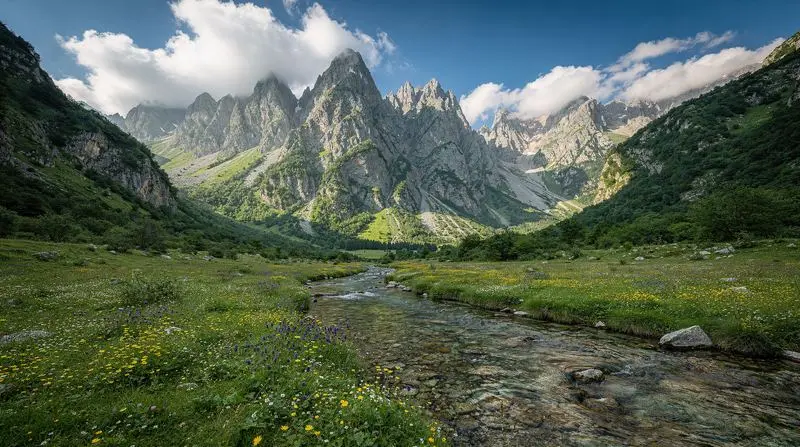
The scenery is world-class. The Valbona Valley surrounded by peaks topping 2,500m, the Theth Gorge under snow, the ridges above Valbona looking toward Kosovo and Montenegro — these are landscapes that would appear on the cover of any mountain magazine. In winter, with snow on every surface and cold clear air, they are strikingly beautiful.
You are one of very few people there. Albania’s summer hiking trails (the Valbona-Theth route, the Peaks of the Balkans circuit) see thousands of hikers from May to October. In winter, you may have the entire mountain landscape to yourself. The guesthouses that remain open in winter serve a small number of adventure-oriented visitors, and the personal attention and immersive experience is completely different from summer.
The cost is reasonable. Guide fees, accommodation, and food in Albanian mountain guesthouses are affordable. A fully guided two-day snowshoe experience including guide, guesthouse half-board, and transport from Shkodra costs far less than equivalent experiences in Austria or Switzerland.
Best Snowshoeing Areas
Valbona Valley
The Valbona Valley is the premier snowshoeing base in Albania. The valley floor sits at approximately 750m and the surrounding peaks rise to over 2,500m. The combination of a relatively accessible base (the valley can be reached via the Koman Lake ferry — which runs year-round — or by 4WD from Bajram Curri) and extraordinarily diverse terrain makes it the best single location.
Valley floor routes: In early winter or during thaw periods, snowshoe routes along the Valbona River through the beech forest are accessible to beginners. The trail to Rragami village follows the valley floor for approximately 8 km — a relatively flat route ideal for first-time snowshoers.
Forest ascents: The slopes rising from the valley floor into old-growth beech forest offer intermediate snowshoe routes. Following the summer hiking trails in snowshoe mode is possible with a guide who knows how the paths change in winter (blowdowns, stream crossings, hidden hazards under snow).
The Valbona Pass approach: The summer trail to the Valbona Pass (1,800m) and the crossing to Theth is not appropriate for snowshoeing without full mountain experience and appropriate safety equipment — the pass can avalanche in winter and conditions change rapidly. However, the lower sections of the approach to approximately 1,200-1,400m offer challenging but safe snowshoe terrain with extraordinary views.
Guesthouses in Valbona in winter: Several Valbona guesthouses remain open in winter, specifically catering to snowshoers, skiers (the adjacent Valbone cross-country area), and hardy independent travelers. These provide warm bases, home-cooked meals, raki by the stove, and local guide connections.
Theth Valley
The Theth Valley is arguably even more spectacular than Valbona in winter, but access is significantly more challenging. The road from Shkodra to Theth is typically closed to normal vehicles from November to late March. 4WD vehicles with chains can sometimes make the route, but winter access to Theth requires coordination with local drivers who know the current conditions.
When accessible: Theth in winter is extraordinary. The stone village under deep snow, the Grunas Waterfall frozen to columns of ice, the forested ridges surrounding the valley — the visual experience is exceptional.
Routes from Theth: Forest routes above the village, the trail toward Ndërlysaj, and the approach toward the Blue Eye spring (a completely different experience in winter) all offer excellent snowshoeing.
The Lock-In Tower in winter: The stone kulla (tower house) stands in the snow surrounded by bare beech trees — one of the most evocative winter scenes in Albania.
Dajti National Park (Near Tirana)
Mount Dajti, immediately east of Tirana, is accessed by the Dajti Ekspres cable car and sits at approximately 1,612m at its highest point. In winter snowfall years, Dajti offers accessible snowshoeing from the cable car terminus.
Accessibility: The cable car runs year-round (approximately 09:00-17:00, check seasonal hours). From the summit station, snowshoe routes into the national park forest are possible immediately after significant snowfall.
Limitations: Dajti’s elevation means it does not always receive sufficient snow, particularly in mild winters. When it does, the combination of easy access (30 minutes from central Tirana) and snow terrain is excellent. The views over Tirana and to the coastal plain are magnificent.
Equipment: No formal snowshoe rental at Dajti. Bring your own or rent in Tirana (see below).
Voskopoja / Korça Highlands
The highland plateau above Korça, at 800-1,200m, receives reliable winter snowpack. Voskopoja village and the surrounding historic landscape (ancient Orthodox churches, monastery buildings, stone walls from the once-great city) under snow is historically atmospheric.
The terrain here is gentler than the Northern Alps — open meadows, sparse woodland, gradual hills. Ideal for beginner and intermediate snowshoers, or those who want winter mountain atmosphere without technical challenge.
Combination with Korça city: Korça itself is worth visiting in winter for its cultural life, the National Museum of Medieval Art, and the city’s strong Central European architectural character. Using Korça as a base for daytime snowshoeing in the Voskopoja highlands is an excellent winter itinerary.
Equipment: Rentals and What to Bring
Renting Snowshoes in Albania
Snowshoe rental infrastructure is limited. Options:
Valbona and Theth guesthouses: Some guesthouses in the Albanian Alps have snowshoes available for guests, either included in the half-board rate or for a small daily rental fee. Ask specifically when booking — it is not universal.
Outdoor equipment shops in Tirana: A small number of outdoor sports shops in Tirana stock snowshoes for rent or purchase. The market is limited and stock varies — contact shops in advance if you plan to rely on rented equipment.
Guided tours: Guided snowshoe tours typically provide snowshoes as part of the package. This is the most reliable equipment source.
Bringing Your Own Equipment
If you are flying to Albania specifically for snowshoeing, bringing your own kit provides reliability and fitting. Modern snowshoes (Atlas, MSR, Tubbs are the main brands) pack relatively compactly in luggage. Combined with your own poles (trekking poles with large snow baskets work well), this provides optimal independence.
Essential Gear for Albanian Winter Mountains
Footwear: Waterproof insulated winter boots or warm waterproof hiking boots. Snowshoes mount on almost any stiff-soled footwear but insulation is critical in sub-zero mountain temperatures.
Layers: Moisture-wicking base layer, insulating mid layer (fleece or down), waterproof outer shell. The Albanian Alps in midwinter reach -10°C to -15°C at altitude with wind chill.
Gloves: Two pairs — a lighter liner glove plus a waterproof overmitt.
Head coverage: Warm hat covering ears, buff or balaclava for colder conditions.
Eye protection: Sunglasses with UV protection (snow reflects UV intensely; snow blindness is a real risk).
Navigation: Downloaded offline maps (Maps.me, Gaia GPS). GPS phone navigation. In winter, trail markers may be buried in snow.
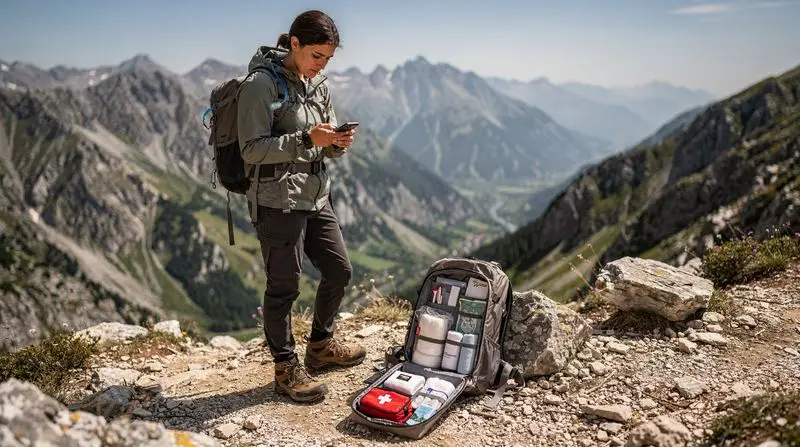
Safety: Emergency bivvy bag, first aid kit including chemical heat packs, fully charged phone, guide’s local contact number.
See the Albania packing list guide for general travel gear.
Guided Snowshoe Tours
For first-time visitors to Albanian mountains in winter, guided snowshoe tours are strongly recommended. Local guides understand:
- Current snow conditions and avalanche risk
- Which routes are appropriate for the day’s conditions
- Emergency procedures and local rescue contacts
- The terrain below the snow (hidden streams, rocky sections)
Finding guides: The best approach is through Valbona or Theth guesthouses that specifically cater to winter visitors. They maintain relationships with experienced local mountain guides. Book in advance by WhatsApp or email.
Shkodra-based tour operators: Some Shkodra-based adventure tourism operators offer guided winter packages including Koman Lake ferry + Valbona snowshoe combinations. These handle all logistics.
Pricing: A local mountain guide for snowshoeing in the Albanian Alps typically charges EUR 30-60 per day (not per person for a group). Combined with guesthouse half-board (EUR 25-35 per person), the total cost for a guided day with accommodation is EUR 55-95 per person — excellent value.
For organized tours combining the Koman Lake experience with winter mountain activities, a Koman Lake boat tour from Shkodra can be the gateway to Valbona in winter, with the guide handling forward coordination for mountain guesthouse arrangements.
When to Go: The Snowshoeing Season
Peak season: December 15 through February 28. This period reliably has snowpack above 800m in most years. The days are short (6-8 hours of daylight) but the snow quality and quantity are at their best.
Early season (November - mid-December): Variable. Some years see early snowfall; others remain snowless until December. Check current conditions before planning.
Late season (March): Snow in the north Albanian Alps persists through March in most years but depth decreases and consolidates. Late-season touring is possible and has the benefit of longer days (10-12 hours at the equinox) and slightly higher temperatures.
Shoulder conditions: The transition periods (late October-November, April) see variable mountain conditions. Snowshoeing may be possible but is less reliable.
Combining Snowshoeing with Skiing
Albania has two main skiing areas: Dajti (near Tirana, limited but accessible) and Voskopoja/Korça (a small ski resort with a few runs). Neither is a major ski destination, but the combination of skiing at Voskopoja and snowshoeing in the surrounding landscape makes a complete winter sports package in the Korça highlands.
The Albania in winter guide covers the full winter activity picture including skiing, cultural cities, and general travel in the cold season.
Safety in Winter Mountains
The Albanian Alps in winter carry genuine mountain hazards:
Avalanche risk: Steep faces above 30 degrees can release in certain snow conditions. Routes in gully terrain and directly below steep faces should be avoided in unstable conditions. A local guide’s assessment of daily conditions is important.
Hypothermia: Cold, wet conditions combined with physical exertion and inadequate clothing can lead to hypothermia quickly. The insulation advice above is not exaggerated — dress for the worst expected conditions, not the best.
Navigation: Trails can be completely invisible under snow. Do not venture beyond marked or guided routes without navigation confidence and appropriate technology.
Wildlife: Brown bears are in their territory in this landscape (though typically dormant in deep winter). Wolves are present year-round. Neither poses a realistic threat to snowshoers traveling in groups during daylight.
Travel insurance: Ensure your travel insurance specifically covers mountain activities and mountain rescue. Standard travel insurance often excludes “extreme sports.” Snowshoeing in the Albanian Alps is not extreme by alpine standards but involves mountain terrain. See the Albania travel insurance guide for policy specifics.
A Sample Two-Day Snowshoe Itinerary
Day 1: Depart Shkodra by arranged 4WD transport to Koman. Board the Koman Lake ferry (approximately 09:00 departure, 2.5 hours) to Fierza. Transfer to Valbona guesthouse (1 hour). Afternoon introductory snowshoe on valley floor with local guide (2-3 hours). Guesthouse dinner and early night.
Day 2: Full-day guided snowshoe route ascending forest trails above the valley (500-600m gain), reaching views over the Valbona peaks and toward the Kosovo border mountains. Return to guesthouse by mid-afternoon. Return to Shkodra by 4WD in the late afternoon.
Total cost per person (approximate): EUR 130-180 including all transport, ferry, guesthouse half-board (2 meals), guide, and snowshoe rental if using guesthouse equipment.
Snowshoeing Season Month by Month
| Month | Conditions | Notes |
|---|---|---|
| November | Variable, early snow possible | Unreliable, check conditions first |
| December | Building snowpack from mid-month | Peak season begins Dec 15 |
| January | Best snow depth and quality | Short daylight (6-8 hours) |
| February | Peak conditions continue | Still very reliable |
| March | Snow persists but consolidates | Longer days, slightly warmer |
Photography in the Winter Alps
Snowshoeing trips double naturally as photography opportunities — the Theth Lock-In Tower under snow, mist-filled Valbona at dawn, and frozen sections of the Grunas Waterfall are among Albania’s most striking winter images, and the near-total absence of other visitors means uncluttered compositions that are impossible in summer. The Albania photography workshops guide covers gear and light considerations that apply directly to a winter mountain trip, including cold-weather battery management, which drains faster in sub-zero conditions than most photographers expect.
Comparing Snowshoeing Bases: Valbona vs Theth vs Voskopoja
Valbona is the most reliable and accessible base thanks to year-round ferry access and the widest range of route difficulty. Theth is more spectacular but access is genuinely uncertain in deep winter — only attempt it with a driver who knows current conditions. Voskopoja, near Korça, is the gentlest option, ideal for travelers who want winter mountain atmosphere without committing to the logistics of the northern Alps, and pairs naturally with a stay in Korça city itself.
Frequently Asked Questions About Snowshoeing in Albania
Is snowshoeing in Albania suitable for beginners?
Yes, with appropriate conditions and a guide. The valley floor routes in Valbona and the Voskopoja highlands are accessible to beginners. The more challenging forest ascents and ridge routes are appropriate for those with walking fitness and comfort in mountain terrain. A guide is strongly recommended for all but the most experienced snowshoers attempting routes above treeline.
When is the best time for snowshoeing in the Albanian Alps?
Mid-December through February provides the most reliable snow conditions in the Albanian Alps. January and early February typically offer the best snowpack. March is possible but snow depth decreases. The Voskopoja highlands above Korça tend to have reliable snow from late November through late February.
Do I need to be an experienced mountaineer to snowshoe in Albania?
No. Valley floor and forest snowshoe routes require only reasonable walking fitness and the ability to use snowshoes (a skill learnable in about 20 minutes). More challenging routes involving significant elevation gain and ridge terrain are appropriate for fit walkers with mountain experience. Technical mountaineering skills are only needed for routes above the main summer hiking areas.
How do I get to the Albanian Alps in winter?
The most reliable winter access to Valbona is via the Koman Lake ferry (runs year-round, 3-4 days per week in winter) plus 4WD transport from Fierza to Valbona. The alternative road via Bajram Curri and Kukës can be used with 4WD and appropriate winter tires. The Theth road from Shkodra is typically not accessible to standard vehicles from November to March. See the seasonal road closures guide for current winter road status.