Sailing Albania: A Guide to the Albanian Riviera by Boat
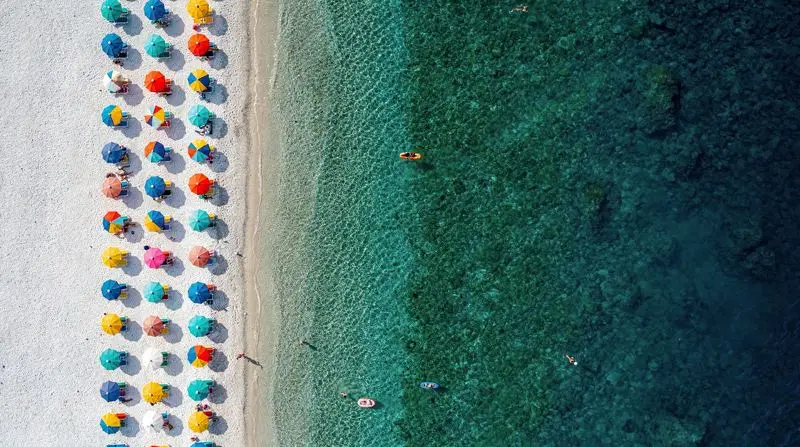
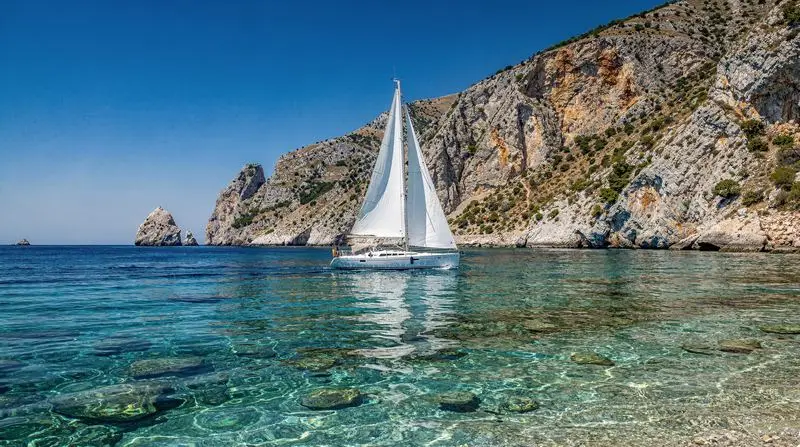
The Albanian Riviera is one of the Mediterranean’s undiscovered sailing destinations. Dramatic limestone cliffs drop directly into turquoise water. Hidden coves without road access remain pristine because the only way to reach them is by boat. The Karaburun Peninsula — a protected marine park — offers waters of exceptional clarity with underwater caves, sea arches, and rich marine life. And the prices for boat charters are a fraction of what you would pay in Greece, Croatia, or Montenegro.
Sailing Albania is a genuinely different experience from the well-trodden Adriatic or Aegean circuit. Infrastructure is less developed, which means fewer superyachts, fewer beach clubs, and more of the wild coastal character that makes this stretch of the Ionian Sea remarkable. This guide covers everything from day charter options in Saranda and Vlora to multi-day yacht itineraries, marina facilities, and the practical logistics of sailing Albanian waters.
| Where | Saranda, Vlora, Himara (day charters); Vlora-Saranda route (multi-day) |
| Cost | Day charter from around EUR 30-60/person; multi-day yacht rates vary |
| Best time | May, June, September (best conditions + fewer boats) |
| Documentation | Passport, vessel registration, insurance, crew list |
| Ports of entry | Saranda, Vlora, Durrës |
Why Sail Albania?
The case for sailing Albania comes down to three things: scenery, price, and authenticity.
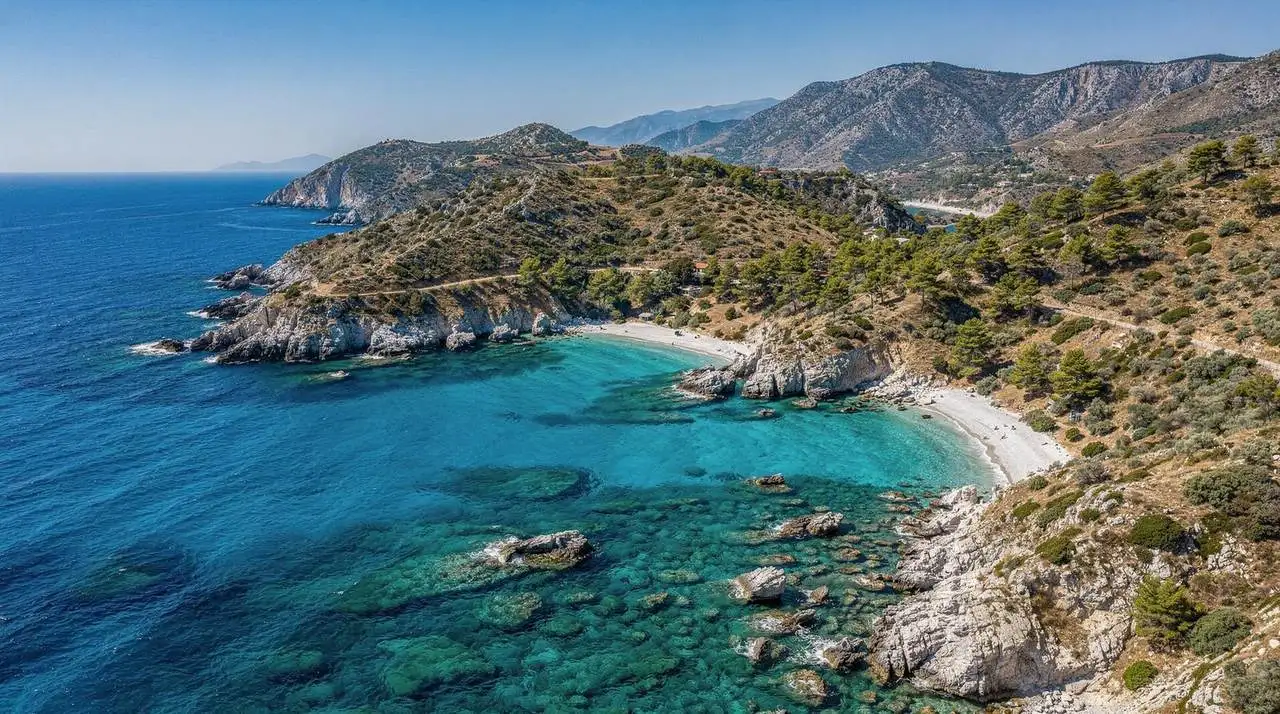
The scenery is exceptional. The southern Albanian coast is dominated by the Ceraunian Mountains, which run almost to the sea edge, creating a dramatic backdrop unlike anywhere else in the Mediterranean. Beaches like Gjipe (accessible only by boat or a long hike), Kakome Bay, and the coves of the Karaburun Peninsula are among the most beautiful in Europe — and largely free of the crowds that overwhelm comparable spots in Greece or Croatia.
The prices are genuinely affordable. Day charters from Saranda or Vlora cost a fraction of equivalent trips in Dubrovnik or Santorini. Multi-day charter rates are similarly competitive. Running costs — fuel, marina fees, provisioning — are cheaper across the board.
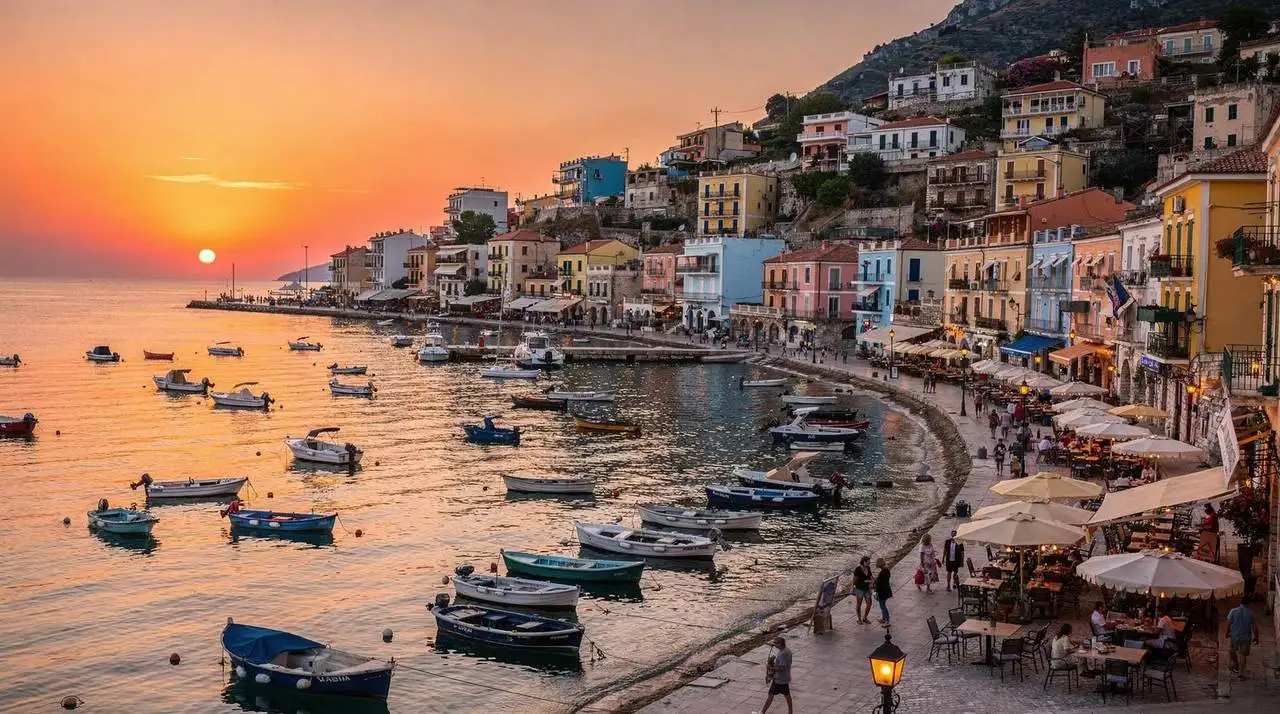
The authenticity is real. Albanian coastal towns have not yet been reshaped around tourist demand in the way that so many Mediterranean destinations have been. Fishing boats share the harbours with charter yachts, the restaurants serve local catches at local prices, and the interaction between visiting sailors and Albanian coastal communities is genuinely organic.
Day Charters from Vlora
Vlora is the gateway to the most dramatic sailing territory on the Albanian coast — the Karaburun Peninsula and Sazan Island, which together form a protected national marine park.
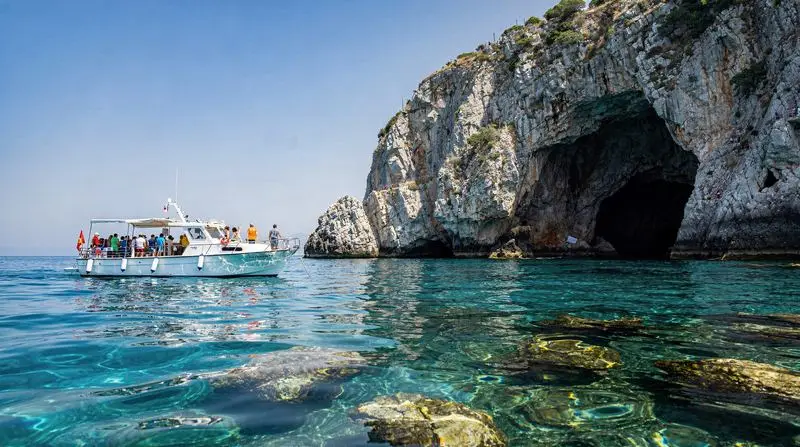
The Sazan and Karaburun boat trip from Vlora is the classic introduction — a full-day excursion that visits the uninhabited military island of Sazan (which was completely off-limits until recently) and explores the sea caves and cliffs of the Karaburun Peninsula. The water clarity in this area is exceptional, making it ideal for snorkelling.
Sazan Island
Sazan is one of the most unusual destinations on the Albanian coast. For decades it was a heavily fortified Albanian military base — completely closed to civilians. The island now accepts visitors on guided excursions from Vlora, revealing an extraordinary landscape of bunkers, abandoned submarine bases, crumbling Cold War infrastructure, and wild Mediterranean scrubland. The combination of military history and raw natural beauty makes Sazan unlike anywhere else in Europe.
Karaburun Peninsula
The Karaburun Peninsula, immediately south of Vlora Bay, is a protected marine park with no permanent settlement and no road access. Sailing around the peninsula reveals hidden coves, dramatic sea caves (the Haxhi Ali cave is the most famous, accessible only by boat and notable for its natural skylight), and underwater rock formations. The snorkelling and diving here is among the best in the Adriatic-Ionian region.
Boat trips from Vlora to the Karaburun area run daily from May through October. Larger group excursions are the most affordable option; private charter day trips are available from local operators for groups wanting more flexibility.
Day Charters from Saranda
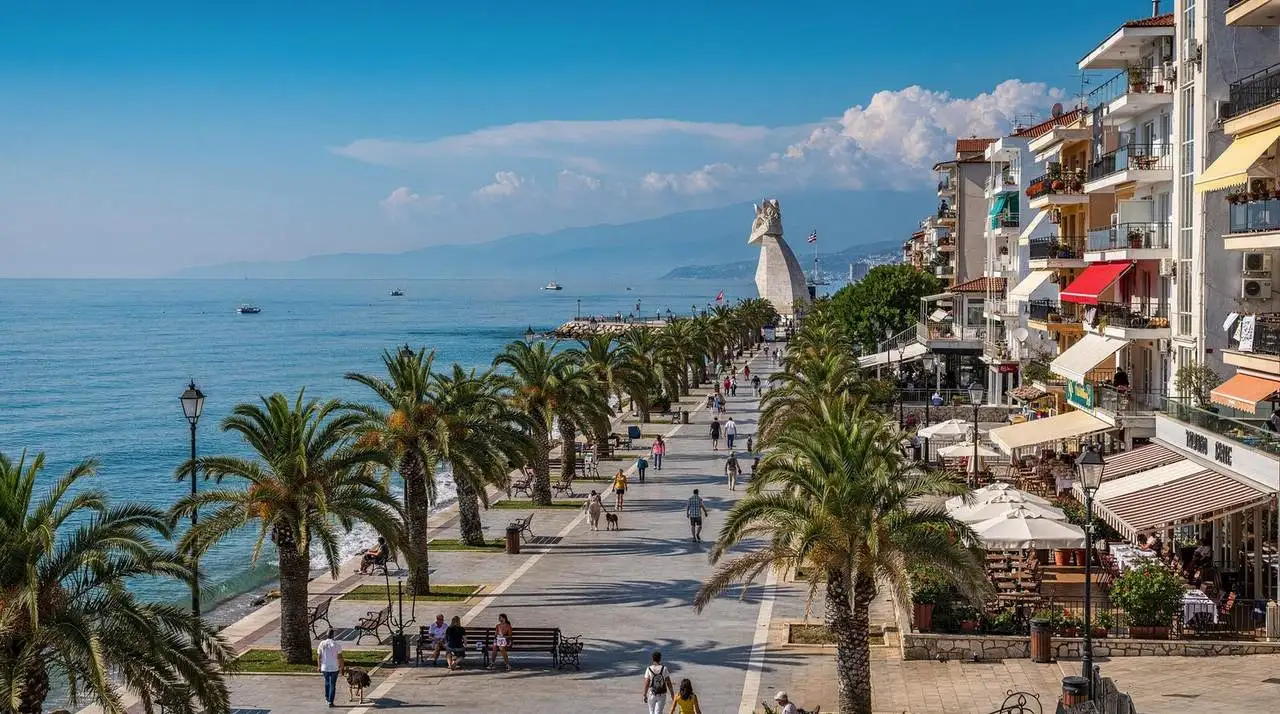
Saranda is the most tourist-oriented town on the Albanian Riviera and has the most developed day-charter scene. Boats depart daily in summer for a range of destinations:
Ksamil Islands: The four small islands just off the coast near Ksamil are only accessible by boat. Swimming in the channels between islands, in water that rivals the Caribbean for clarity and colour, is the quintessential Albanian Riviera experience. Most day charters from Saranda include Ksamil as a stop.
Butrint National Park by sea: The ancient site of Butrint, a UNESCO World Heritage Site, sits on a lagoon connected to the sea. Approaching by boat adds a theatrical dimension to the visit.
Blue Eye Spring from Saranda: Some Saranda boat operators offer combined land-and-sea excursions incorporating the Blue Eye spring — one of Albania’s most visited natural attractions, a karst spring of impossibly blue water inland from the coast.
Gjipe Beach: This famous beach at the mouth of a canyon between Himara and Vlora is accessible by a challenging hike or by boat. Day charters from Himara (and occasionally Saranda) include Gjipe as a highlight stop.
For a comprehensive Saranda boat tour, the Saranda boat tour visiting 7 destinations including snorkelling covers the best spots in the area in one day.
Multi-Day Sailing: The Albanian Riviera Yacht Route
For sailors on their own vessels or those chartering a bareboat or skippered yacht for multiple days, the Albanian Riviera offers a superb coastal itinerary. The standard route runs from north to south (or south to north) between Vlora and Saranda, a distance of approximately 100 nautical miles.
Suggested Multi-Day Itinerary
Day 1: Vlora to Orikum or Radhima Depart Vlora and sail south around Karaburun, stopping for lunch at the Haxhi Ali cave. Anchor for the night at Orikum or Radhima — small bays south of Vlora with basic facilities.
Day 2: Radhima to Palasa or Dhermi Pass through the Otranto Channel — the narrowest point between Italy and Albania — and sail along the dramatic cliff coast. Anchor off Palasa beach or Dhermi, two of the most beautiful beaches on the Riviera. Dhermi has a good restaurant scene and is a lively summer destination.
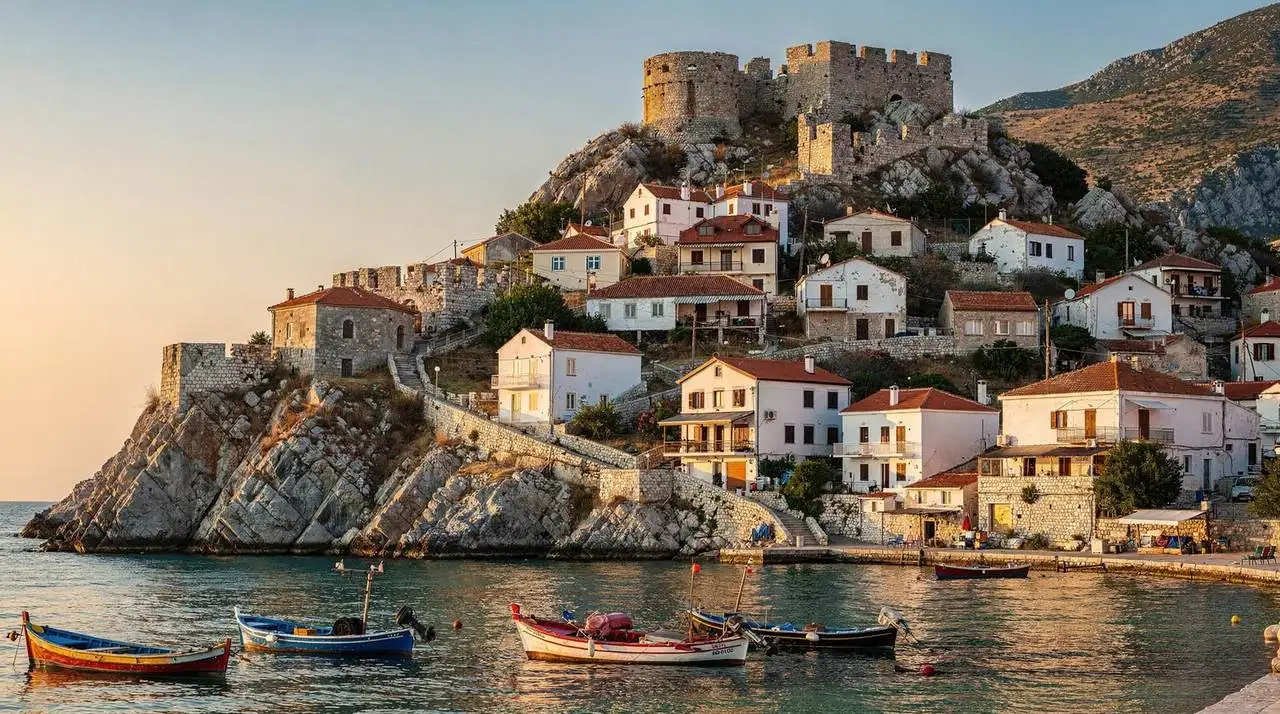
Day 3: Dhermi to Himara A short sail to Himara, one of the most characterful coastal towns in Albania, with a Greek-speaking minority and a well-preserved castle district above the town. Himara has a quay where sailing boats can moor, and the old town is excellent for an evening walk.
Day 4: Himara to Porto Palermo Porto Palermo is one of the most dramatic anchorages on the Albanian coast — a semi-enclosed bay guarded by the Ottoman Ali Pasha castle, sitting on a small causeway at the bay entrance. The Karaburun National Park and surrounding waters offer excellent diving and snorkelling. Anchor in the bay.
Day 5: Porto Palermo to Borsh and Gjipe Sail north to Gjipe beach at the mouth of its canyon (swimming stop), then south to Borsh beach — the longest beach in Albania at around 7km. Borsh has some facilities and is a quieter alternative to the more tourist-heavy spots.
Day 6: Borsh to Ksamil and Saranda Final day sailing south, stopping at the Ksamil islands before arriving in Saranda. Saranda has the most developed marina facilities on the Albanian coast and a wide range of restaurants and accommodation options for the final night.
Marina Facilities in Albania
Albania’s marina infrastructure is improving but remains limited compared to neighbouring Croatia or Greece. The honest picture for sailors:
Saranda Marina: The most developed facility on the south coast. Berths are available, fuel is accessible, basic maintenance services are on-site. Saranda is the best base for planning and departing a southern Albania sailing trip.
Vlora Marina: Vlora has a harbour with mooring options, primarily used by local fishing and commercial vessels. Infrastructure for visiting yachts is more basic than Saranda but functional.
Porto Romano (Durres area): The main commercial port north of Tirana has some facilities for yachts but is primarily a commercial harbour.
Anchorages: The most rewarding sailing in Albania often involves anchoring off beaches rather than using marina facilities. The coastline offers numerous excellent anchorages with holding ground that varies from sand to rock. A good anchor and rode is essential.
Provisioning: Saranda and Vlora are the best towns for reprovisioning. Fresh produce markets, supermarkets (including a Spar and local equivalents), and bakeries are all accessible from the waterfront. Fuel by jerry can is the most reliable method outside the main marinas.
Border and Documentation Requirements
Albania is not in the Schengen zone and not an EU member. Sailors arriving from EU countries (Greece, Italy) need to go through entry formalities.
Required documentation:
- Valid passport for all crew
- Vessel registration document
- Proof of insurance
- Crew list
Port of entry: You must clear customs and immigration at an official port of entry — Saranda, Vlora, or Durres. Arriving directly at a beach or anchorage without clearing in is illegal.
EU vessels: EU-registered vessels sailing in Albanian waters need to obtain a cruising permit (vignette) from Albanian customs. This is processed at the port of entry and typically costs around EUR 20-50 depending on vessel size.
Blue Card: If you have an MMSI number and the vessel is registered on the AIS, ensure your details are current before entering Albanian waters.
Sailing Conditions on the Albanian Coast
The Ionian and Adriatic coastlines of Albania have distinctive weather patterns that sailors should understand:
Summer (June-August): Predominantly northerly winds (the maestral) in the afternoon, calming at night. Morning starts allow comfortable sailing before afternoon wind builds. Seas are generally calm in the morning, choppier in the afternoon. Water temperatures are warm (24-28°C) and conditions are suitable for snorkelling throughout.
May and September: The best sailing months. Winds are more variable and often lighter than summer. Fewer boats, lower prices, excellent weather. September water temperatures remain warm from summer.
The Bora: A strong northeasterly wind (bora) can arrive suddenly in autumn and winter, generating rough conditions quickly. In summer the bora is less frequent but not unknown. Check forecasts carefully.
Visibility: The Albanian coast has excellent visibility compared to more developed coastlines — minimal light pollution outside the towns and very clean air from the mountains.
Useful Resources for Sailors
Charts: Use current Imray or official charts for the Albanian coast. OpenCPN with NOAA charts is used by many cruising sailors. The Adriatic Pilot (Imray) covers Albanian waters.
Weather: Windy.com and PredictWind are the most used forecasting tools. The Italian forecast service LAMMA also provides good coverage for the Ionian.
VHF: Monitor Channel 16 as standard. Albanian coastguard maintains a VHF watch.
Fuel: Available at Saranda and Vlora marinas. Elsewhere, jerry cans are the method.
Snorkelling and Diving from Charter Boats
The Albanian coast has outstanding underwater visibility — often 20-30 metres — and relatively unvisited dive sites. Day charter boats routinely include snorkelling stops as standard. Dedicated dive charters and PADI dive centres operate from Saranda and Himara.
Highlights for snorkellers from charter boats:
- Ksamil island channels: shallow, crystal clear, varied marine life
- Karaburun sea caves: dramatic underwater arches and caverns
- Gjipe beach canyon mouth: interesting rock formations
- Porto Palermo bay: sheltered, clear, varied depth profiles
The sea caves of Porto Palermo are particularly accessible via kayak and boat excursions from Himara — the Porto Palermo kayak and SUP tour with sea cave access combines paddling with snorkelling in one of the coast’s most scenic locations.
Combining Sailing with the Albanian Riviera by Land
Not everyone on a sailing trip wants to be on the water every day. The Albanian Riviera has excellent land-based content that complements time at sea:
- Himara Castle — Old Town above the coast
- Butrint UNESCO archaeological site near Saranda
- Blue Eye spring — 25km inland from Saranda
- Llogara Pass — dramatic mountain road above the Riviera with spectacular views
- Local restaurants serving grilled fish, octopus salad, and fresh Albanian olive oil
See the Albanian Riviera guide for comprehensive coverage of coastal destinations accessible from land as well as sea.
Provisioning and Water Etiquette
Albanian coastal towns are used to the mix of fishing boats and charter yachts sharing harbours, and the etiquette is generally relaxed compared to more polished Mediterranean marinas. That said, a few practical courtesies go a long way: give fishing boats and their nets a wide berth, especially early morning and at dusk when local fleets are most active; anchor with enough swing room to avoid crowding other boats in popular coves like those around the Karaburun Peninsula; and buy provisions, fuel, and meals in the small harbour towns you pass through rather than only in Saranda or Vlora — the same principle of spreading tourist spending that applies on land applies on the water too.
Day Charter vs Multi-Day: Which Suits Your Trip
| Day charter | Multi-day charter | |
|---|---|---|
| Best for | First-timers, short stays | Sailors with a week+ |
| Typical cost | EUR 30-60 per person | Varies by boat/skipper |
| Base | Saranda, Vlora, or Himara | Vlora to Saranda route |
| Highlights | Ksamil, Karaburun, Sazan | Full Riviera coastline, remote anchorages |
| Experience needed | None | Sailing experience or skippered boat |
Diving and Wider Water Activities on the Riviera
Sailing is only one way to experience the Albanian coast by water. For visitors who want a more structured underwater experience than a charter boat’s snorkelling stop, dedicated diving and snorkelling operators run trips from Saranda and Himara with proper equipment and instruction. Those who prefer to stay closer to shore can explore the same coves and sea caves by kayak and SUP — a good complement to a sailing trip on days when you want a slower pace, or an alternative for travelers without sailing experience who still want to explore the coastline from the water. For a broader look at organised water excursions along the coast, the boat tours in Albania guide covers options beyond dedicated sailing charters.
Frequently Asked Questions About Sailing Albania
Is It Safe to Sail in Albanian Waters?
Yes. Albanian coastal waters are safe for sailing. The main hazards are standard navigational ones: rocks and shoals (use current charts), changing weather (monitor forecasts carefully), and the need to clear customs at an official port of entry. Piracy is not a concern. Albanian coastguard monitors Channel 16.
Do I Need Any Special Permits to Sail in Albania?
Foreign-registered vessels need to obtain a cruising permit (vignette) at the first port of entry. EU vessels are not automatically cleared to sail Albanian waters under EU regulations as Albania is not an EU member. The permit process is straightforward and inexpensive.
What Is the Best Time of Year to Sail the Albanian Riviera?
May, June, and September offer the best combination of sailing conditions, warm water, and fewer crowds. July and August are peak season — busier anchorages and higher prices, but reliable summer weather. Avoid November through April for coastal sailing.
Can I Charter a Bareboat Yacht in Albania?
Bareboat charter fleets based in Albania are limited. Most visiting sailors either bring their own vessels from Italy or Greece, or charter skippered boats locally. Bareboat options are increasing but are not yet as developed as Croatia or Greece. Check with Saranda-based charter operators for current availability.
Are There Sailing Clubs or Marinas with Full Services?
Saranda has the most functional marina for visiting yachts. Full European-standard marina services (technical support, chandlery, fuel dock, shower facilities) are not uniformly available — Albania is still developing its sailing infrastructure. Budget sailors and adventurous sailors will find the situation workable; those requiring high-specification marina services may be frustrated.