Best Restaurants in Vlora: Dining in Albania’s Independence City
Vlora occupies a particular position in Albanian consciousness: this is the city where independence was declared in 1912, where the Adriatic meets the Ionian, and where the Albanian Riviera technically begins. It is also a city of genuine size and sophistication — the third-largest in the country — with a dining scene that reflects its dual identity as a working port city and an increasingly popular tourist destination.
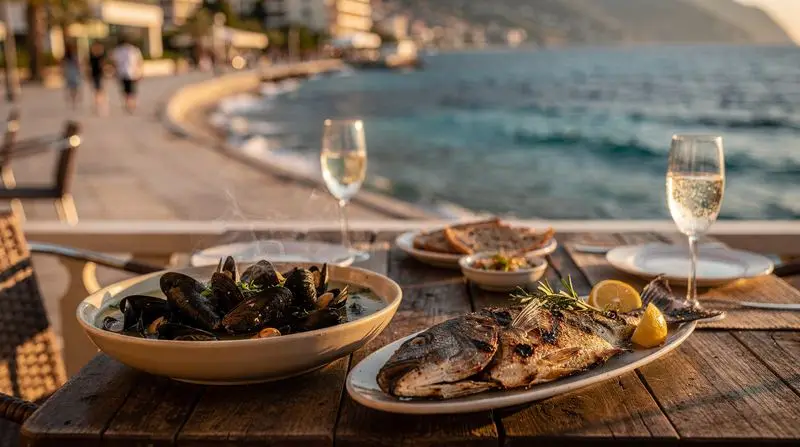
The food in Vlora is dominated by seafood. The city’s position at the mouth of the Bay of Vlora, flanked by the Karaburun Peninsula to the west and the beginning of the Riviera coast to the south, means that fresh fish and seafood are the defining ingredients of the local kitchen. Mussels, caught in the bay and cultivated in the lagoon area near the Narta Lagoon further north, are a particular Vlora speciality. Octopus, grilled whole or slow-cooked with olive oil and herbs, is another. The catch of the day in any seafront restaurant reflects what the fishing boats brought in that morning.
Beyond seafood, Vlora’s position between the northern Albanian interior and the Riviera coast gives it access to good lamb and mountain dairy from the hinterland, and the olive oil traditions of the surrounding hills — the Vlora area has extensive ancient olive cultivation — infuse the local cooking with a quality of good fat that makes simple preparations memorable.
| Where to eat | Bulevardi i Flamurit for the view, neighbourhoods for value |
| Typical cost | Around EUR 8-15/person inland; add 30-50% on the seafront |
| Don’t miss | Vlora mussels, local olive oil, morning fish market |
| Best time | Golden hour on the boulevard before dinner |
| Nearby | Himara (Riviera start), Sazan Island boat trip |
The Seafront Boulevard: Lunch and Dinner with a View
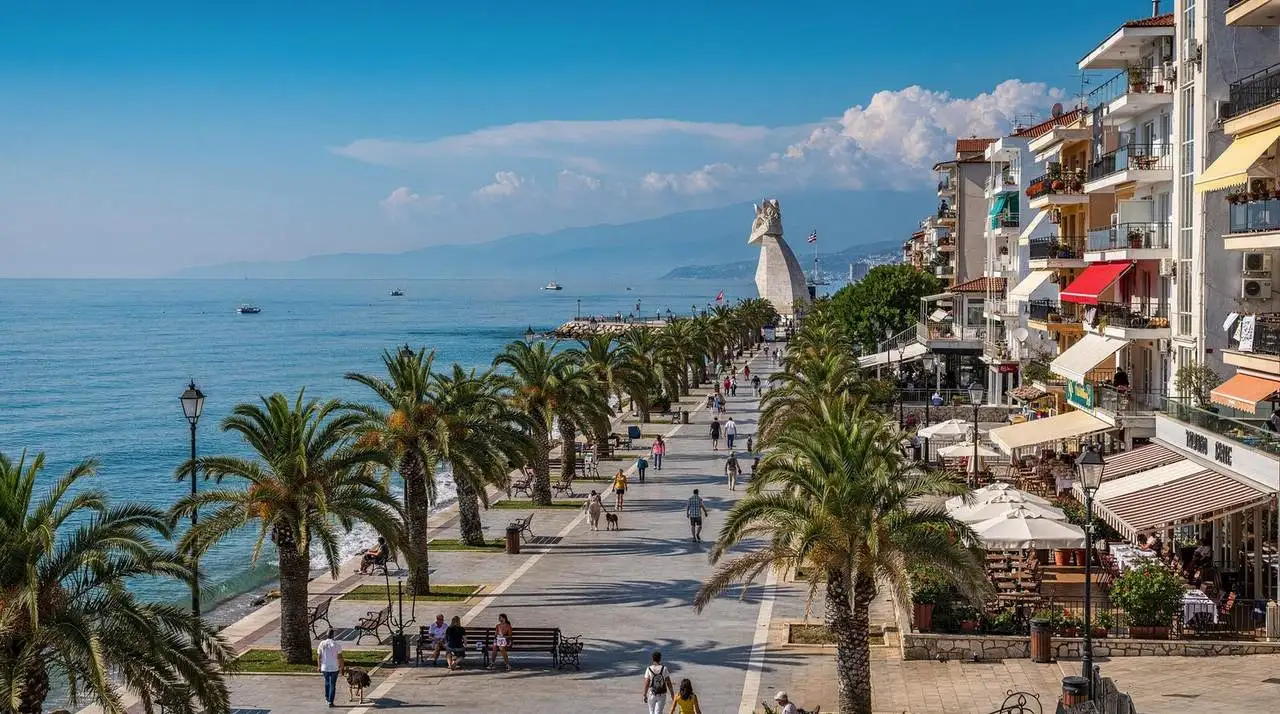
The main boulevard running along the waterfront of Vlora — the Bulevardi i Flamurit — is lined with restaurants and cafes that benefit from the views across the bay toward the Karaburun Peninsula and Sazan Island. This is the tourist-facing strip, and like all such strips it contains a mix of excellent, average, and mediocre establishments that the view makes more forgiving.
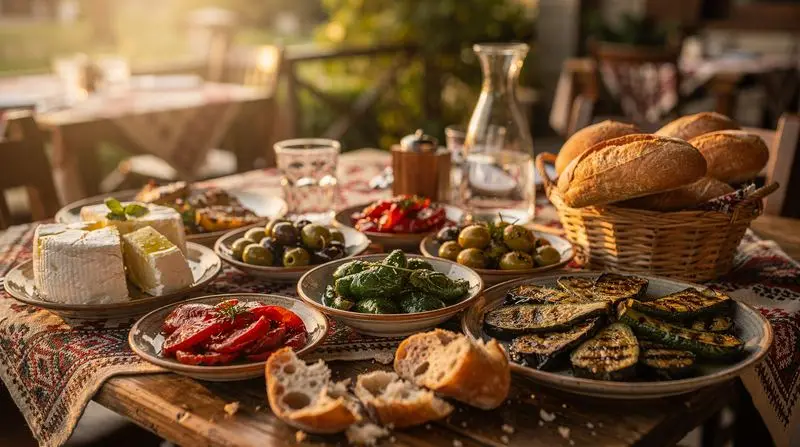
The best of the seafront restaurants serve genuinely fresh fish cooked simply and competently. The standard Vlora seafront meal — a selection of meze (salad, cheese, olives, and bread) followed by whole grilled fish or a plate of mixed seafood — is an excellent framework for lunch when the bay is bright and the Karaburun Peninsula visible across the water.
Prices on the seafront are higher than the local neighbourhood equivalents for the same quality, reflecting the view premium and the tourist footfall. For a special occasion meal with the full Vlora setting, the premium is worth paying. For daily eating during a Vlora stay, the local restaurants away from the boulevard offer better value.
Useful experience for first-time Vlora visitors: this Vlora old city walking tour covers the city’s landmark sites including the independence monument and the Flag Square, and provides context for the historic city that surrounds the restaurant strip — helpful for understanding what you are eating in and where.
The Mussel Houses
Vlora’s mussels deserve special mention. The bay and the nearby Narta Lagoon provide ideal conditions for mussel cultivation, and Vlora has a tradition of mussel restaurants and informal eating spots that specialise in the local bivalve.
Vlora mussels are served in multiple preparations: raw with lemon, steamed with white wine and garlic, baked with tomato and herbs, fried in breadcrumbs, or incorporated into pasta and rice dishes that reflect the Italian culinary influence that reached the Albanian coast via Adriatic connections. The best preparation is usually the simplest — steamed and served with the liquor from the shells, bread for dipping, and a carafe of whatever local white wine the restaurant pours.
Ask at any seafront restaurant or local eatery about mussel availability; when the bay is supplying well, most restaurants serve them as a daily special rather than a fixed menu item.
Local Neighbourhood Restaurants
The best traditional Albanian cooking in Vlora is found not on the seafront but in the city’s residential neighbourhoods — particularly the area around the main market (pazari) and the streets running inland from the boulevard. These establishments serve the food that Vlora people actually eat: byrek at breakfast, tave kosi or grilled meats at lunch, mezes and cold beer in the evening.
Neighbourhood fish restaurants in the area around the old fish market serve seafood purchased directly from the fishing boats. The freshness is often better than on the boulevard because the turnover is higher and the supply chain shorter. The setting is functional rather than scenic, and the menus may be in Albanian only — a translation app solves this quickly.
Traditional trattoria-style spots (Vlora’s Italian connection is stronger than most Albanian cities due to the proximity and the history of Albanian emigration to Italy) serve a hybrid menu of Albanian and Italian dishes that reflects genuine cultural mixing rather than simple imitation. Pasta with local seafood, pizza with Albanian toppings, and hybrid preparations using Italian technique with Albanian ingredients are all possible here.
Byrek bakeries throughout the city serve breakfast and lunch from early morning. Vlora’s byrek tradition, using the thin Albanian filo pastry rather than the thicker Greek version, is excellent — particularly the versions filled with white cheese and spinach or with just oil and salt in the simplest preparations.
Seafood Markets and Self-Catering
For visitors staying in apartment accommodation (increasingly common in Vlora for longer stays), the fish market near the port is one of the most rewarding food shopping experiences in the city. The morning market — operational from around 6am through to midday — sells the overnight catch at very low prices, with a range of species reflecting the diversity of the bay.
Buying fresh fish at the market and cooking it at an apartment allows Albanian Riviera-quality seafood at a fraction of even local restaurant prices. For those without cooking facilities, the market is still worth visiting for the atmosphere and the understanding of what the local waters produce.
The covered market (pazari) in the city centre sells local produce including vegetables, cheese, honey, and the local olive oil that is one of Vlora’s best agricultural products. The olive oil from the Vlora area — produced from ancient groves that predate the Ottoman period — is genuinely excellent and worth buying to take home or use during a stay.
Pizza and Italian-Albanian Cuisine
Vlora has a stronger pizza culture than most Albanian cities, reflecting the Italian demographic connections. Several pizzerias in the city produce good wood-fired pizza using local ingredients — particularly the excellent local cheese and the fresh seafood that finds its way onto pizza toppings in coastal Albanian cities.
The combination of Italian technique and Albanian ingredients creates some interesting results: pizza with local speck (a dry-cured meat from the northern highlands), pizza with local cheese instead of mozzarella, and seafood pizzas using the catch of the day are all possible in the better Vlora pizzerias.
For evening eating, the combination of a pizza-focussed dinner with Albanian wine from the Berat or Permet regions — available at most Vlora restaurants — represents excellent value. A pizza and a carafe of local wine for two people typically costs EUR 12-20 depending on location.
Coffee and Cafe Culture
Vlora’s cafe culture follows the Albanian national pattern with a particular waterfront character. The boulevard cafes serve strong espresso to a social crowd from early morning through late evening, and the combination of coffee, the bay view, and the Albanian social ritual of the kafe makes boulevard cafe-sitting one of Vlora’s most pleasant passive activities.
The cafe strip along the seafront is at its best in the late afternoon, when the light on the Karaburun Peninsula is at its most golden and the evening promenade (xhiro) is beginning. Sitting with a coffee and watching the Vlora evening unfold — the families, the couples, the groups of young people — is a genuine pleasure that requires no particular destination or goal.
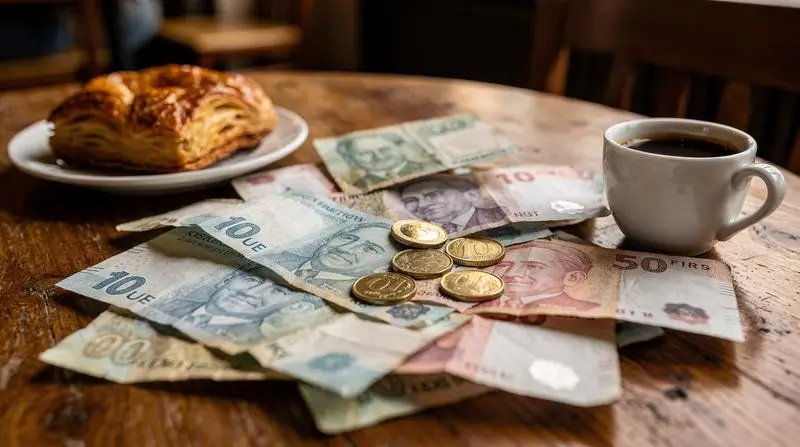
Albanian coffee is virtually always espresso-based. A standard espresso (kafe) costs around 100-130 lek (EUR 0.85-1.10). Macchiato, cappuccino, and the frapë (cold blended espresso with ice and milk) are all standard items at any cafe.
Budget Eating in Vlora
Vlora is very affordable by any European standard, and budget eating is comfortable here. Key options:
Byrek shops: 100-150 lek per piece for fresh byrek. Breakfast for EUR 1-2 including coffee.
Market lunch stalls: Simple prepared food at the market serves full lunches for 500-700 lek (EUR 4-6).
Local fish restaurants: A full seafood meal — starters, main course, bread, and beer — in a neighbourhood fish restaurant typically costs EUR 8-15 per person.
Seafront boulevard: Add 30-50% to the above prices for the view. Still very inexpensive by European standards.
For context on Albanian travel costs including dining, the Albania travel budget guide covers regional price variations and explains how Vlora compares with Tirana and the Riviera.
The Independence Quarter and Historic Restaurant Context
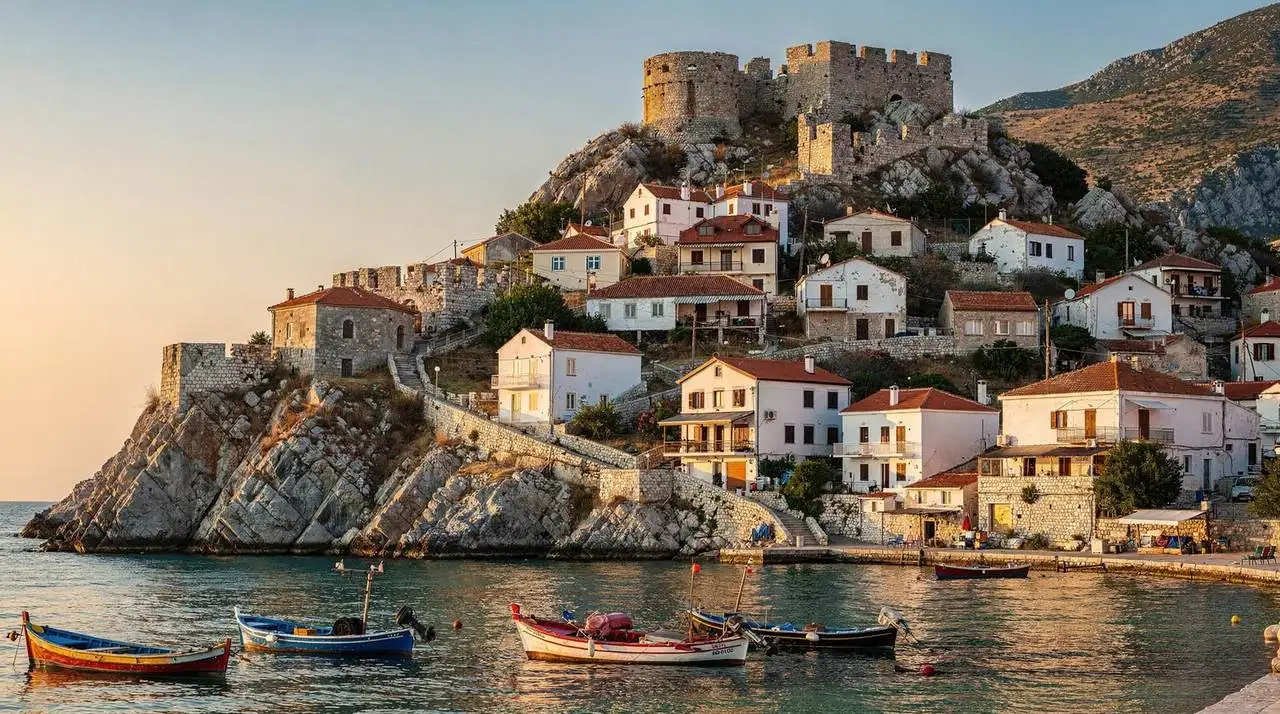
Vlora’s status as the birthplace of Albanian independence gives it a particular cultural gravity that colours the dining experience for historically aware visitors. The Independence Monument, the Flag Square, and the Ismail Qemali Museum — where independence was declared — are all within walking distance of the main restaurant strips.
Eating a meal in the city where Albania declared its independence, with the bay visible through the restaurant window and the Karaburun Peninsula framing the horizon, is one of those travel experiences that requires no commentary. The food, the setting, and the history combine into something that transcends the meal itself.
For a walking introduction to the historic context around the restaurant district: the Vlora old city walking tour provides the historical framework that makes subsequent meals in the city more resonant.
Wine and Drink Culture
Vlora’s position near the southern Albanian wine regions means that local wines are well represented on restaurant menus. The Elbasan and Berat wine corridors supply much of the bottled wine; local carafe wine often comes from unnamed producers in the surrounding hills. Ask what the house wine is and where it comes from — the answer sometimes reveals connections to specific small producers.
The local beer culture runs on Tirana beer (birra Tirana) and the occasional Korca import. At seafront establishments, cold beer with fresh seafood is the most natural combination and the most popular order.
Raki — the Albanian home-distilled grape or plum spirit — is available at traditional restaurants as a digestif or as an aperitif before the meal. In Vlora, grape raki from the local vineyards is the most authentic local version.
Vlora as a Gateway to the Riviera
Vlora marks the practical starting point of the Albanian Riviera road, and many visitors treat it as a brief stop rather than a multi-day base — a mistake, given the quality of the fish market and neighbourhood restaurants described above. A sensible approach for travellers heading south is one or two nights in Vlora to properly explore the food scene, followed by a move to Himara or further south for the beach-focused portion of the trip. The boat tour to Sazan Island is worth combining with a Vlora stay, since a morning on the water pairs naturally with an afternoon fish market visit and an evening meal on the boulevard.
Getting the Most from Vlora Restaurants
The optimal Vlora dining strategy:
- Breakfast at a byrek shop or cafe, taken at a street table with a view of the morning market activity
- Lunch at a seafront restaurant for the view and the fresh fish
- Afternoon coffee at a boulevard cafe during the golden hour before evening
- Dinner at a neighbourhood restaurant away from the seafront for better value and more local atmosphere
This rhythm, repeated over two or three days in Vlora, provides a complete picture of the city’s food culture from the tourist-facing to the genuinely local.
Vlora’s Italian Connection and Its Effect on the Food Scene
The proximity of Vlora to Italy — the Strait of Otranto separates them by only 72 kilometres — has shaped the city’s food culture more than any other non-Albanian influence. Albanian emigration to Italy in the 1990s (significant numbers from the Vlora area specifically) and the commercial and cultural connections that have developed since create a bilateral food influence that flows in both directions.
Italian-style pasta, pizza, and the general Mediterranean framework of olive oil, herbs, tomatoes, and seafood are present at most Vlora restaurants in a way that feels genuinely integrated rather than imitative. The fresh pasta at some establishments — a production brought back from Italian experience — is better than the dried pasta that most Albanian restaurants use.
The reverse flow — Albanian cooking influencing Italian Albanians who then bring hybrid preparations back to Vlora — is less visible but equally real. Some of the most interesting food in Vlora exists in this hybrid zone: Albanian ingredients and slow-cooking techniques combined with Italian pasta traditions, or Italian seafood preparations adapted to the specific species available in Albanian waters.
This Italian connection extends to the coffee culture as well. Vlora’s espresso tradition — more precisely calibrated than in most Albanian cities — reflects exposure to the Italian coffee rituals that Albanian emigrants to Italy absorbed and imported back home. The bar culture of Vlora, particularly the seafront establishments, has a quality of espresso that the Italian-trained baristas have transplanted from experience in Italian cities.
Seafront vs Neighbourhood: A Quick Comparison
| Seafront boulevard | Neighbourhood restaurants | |
|---|---|---|
| Price | EUR 12-20/person | EUR 8-15/person |
| Setting | Bay views, tourist-facing | Local, functional |
| Best for | A first evening, special view | Everyday eating, authenticity |
| Language | English widely spoken | Albanian more common |
For a fuller comparison of Riviera towns before deciding where to base a coastal stay, see the best restaurants Himara guide just south along the coast.
Vegetarian Options in Vlora
Vlora’s seafood-heavy menus still accommodate vegetarians reasonably well through the Italian-Albanian pizza tradition, byrek with cheese or spinach, and the mezze-style starters common across the coast. The local olive oil, used generously, elevates even simple grilled vegetable dishes. Strict vegans will find self-catering from the fish market’s adjacent produce stalls the most reliable path, given the dairy in most traditional preparations. See the Albanian food guide for more on plant-based Albanian cooking generally.
The Vlora Fish Market
The morning fish market near the port is one of the most rewarding early-morning food experiences in southern Albania. Operating from roughly 6am to noon, the market reflects what the night’s fishing produced — a genuine daily accounting of what the bay and the Ionian coast provide.
The fish variety in Vlora’s market is wider than most Albanian coastal markets because the city’s position at the meeting of the Adriatic and Ionian means the fishing grounds to the north and south produce different species. Adriatic species — anchovies, sardines, mullet, sea bream — mix with Ionian species that drift north from the Albanian Riviera waters — dentex, various grouper, octopus, and squid.
The prices at the fish market are very low by any European standard — genuinely fresh fish at prices that make the supermarket fish in Western Europe look absurd. Buying at the market requires cash (lek only), reasonable early-morning tolerance, and willingness to negotiate gently on price. The sellers, who have been up all night with the fishing boats, appreciate cash buyers who know what they want.
For visitors with accommodation that includes a kitchen, the combination of market fish, local olive oil from the nearby groves, and the lemons and herbs sold at adjacent stalls creates the conditions for meals that exceed what most restaurants provide at many times the cost.
Seasonal Eating in Vlora
Spring (April-May): The mussel season is strong following winter, and the seafront restaurants are quieter than summer, making it an excellent time for a relaxed boulevard meal without the peak-season crowds.
Summer (June-September): Full tourist season, with the boulevard restaurants at capacity and the fish market supplying the highest volume of the year. Reservations matter most for seafront tables in July-August.
Autumn (October-November): The olive harvest across the surrounding hills brings fresh-pressed oil to the local kitchens, and the city’s pace slows to something closer to its working-port character than its summer resort mode.
Winter (December-March): Vlora’s restaurant scene remains genuinely local through winter, since the city functions as a real port and regional centre rather than a purely seasonal destination. The fish market and neighbourhood restaurants stay busy year-round.
Waterfront Evening Life: Beyond Restaurants
Vlora’s waterfront comes alive in the late afternoon with an atmosphere that goes beyond the restaurant experience. The combination of the bay view, the cooling sea breeze that arrives most evenings, and the Albanian social habit of public gathering creates a promenade scene that is one of the most pleasant in the country.
The cafes and bars along the seafront boulevard serve cold drinks, grilled snacks, and the full range of Albanian drinking culture — from strong espresso to cold beer to the increasingly popular craft cocktail offers at the more modern establishments. This is not dinner; it is the pre-dinner ritual that Albanian evening life centres on, and it extends from around 6pm until well after 8pm when the serious eaters settle into their restaurant choices.
The combination of this social ritual and the actual restaurant dining that follows makes Vlora evenings substantially longer than the equivalent in Northern European cities. Arriving hungry at a Vlora seafront restaurant at 7pm finds an establishment still relatively quiet; arriving at 8:30pm finds the same establishment in full swing. The rhythm requires either adjustment or advance planning.
Frequently Asked Questions About Restaurants in Vlora
What food is Vlora most famous for?
Vlora is primarily known for seafood, particularly mussels from the Narta Lagoon and Bay of Vlora, fresh fish from the Adriatic and Ionian, and grilled octopus. The local olive oil — from ancient groves in the surrounding hills — is also a Vlora specialty and is used extensively in local cooking. The city’s position at the meeting of the Adriatic and Ionian seas gives its fish restaurants access to a wider variety of species than either sea alone provides.
How many days should I spend eating in Vlora before heading south?
One to two days covers the essentials — a seafront meal, a neighbourhood dinner, the fish market, and an olive oil purchase. Longer stays are better used further south along the Riviera unless the Sazan Island boat trip or a slower pace specifically appeals.
Are Vlora restaurants expensive?
No — Vlora restaurants are very affordable by European standards. A full seafood meal at a seafront restaurant costs EUR 10-18 per person including drinks. Neighbourhood restaurants away from the boulevard are 30-50% cheaper for equivalent food. Budget eaters can manage extremely well at byrek shops and market stalls for EUR 3-5 per meal. The seafront view premium is real but still represents excellent value compared to Western European equivalents.
Do Vlora restaurants have English menus?
Most tourist-facing restaurants on the seafront boulevard have English menus or staff who speak sufficient English to explain the menu. Neighbourhood restaurants and more local establishments may have Albanian-only menus. A translation app handles this effectively. In traditional restaurants, pointing at items or asking “c’ka keni sot?” (what do you have today?) works fine and often produces better recommendations than the formal menu.
When is the best time to eat at seafront Vlora restaurants?
Lunch (12:30-3pm) is excellent for the bay light and the fresh fish from the morning catch. Dinner (8-10pm) is the most social time, with the evening xhiro bringing maximum boulevard activity. The late afternoon (6-8pm) for coffee and beer is the most relaxed cafe time. Breakfast on the boulevard (8-10am) catches the fishing boats returning and the morning market atmosphere.
Is Vlora good for vegetarians?
Reasonably well. Albanian menus are meat and seafood heavy, but salads, byrek with cheese or spinach, grilled vegetables, and various meze preparations are available at all restaurants. The byrek culture is particularly good for vegetarians — the standard cheese and spinach versions are satisfying and widely available. Most restaurants will prepare a vegetable-based meal on request even if it is not on the formal menu. The Albanian food guide covers vegetarian options across the national cuisine.
Should I base myself in Vlora or Himara for Riviera dining?
Vlora suits travellers who want a working-city atmosphere alongside good seafood and easy access north to Tirana; Himara and the Riviera proper suit those prioritising beach access and the more scenic southern coast. Many itineraries pass through Vlora briefly and base longer stays further south.
Is the fish market worth visiting if I’m not self-catering?
Yes. Beyond the practical shopping value, watching the overnight catch come in and understanding what species the bay and the Ionian coast produce gives useful context to every seafood meal you subsequently eat in Vlora and further along the Riviera.
Is Vlora a good stop for a food-focused road trip down the Albanian coast?
Yes. Sitting at the point where the Riviera officially begins, Vlora makes a natural first or last stop for a coastal food itinerary, bridging Tirana in the north and Himara, Ksamil, and Saranda further south.
What is the most distinctive thing to try only in Vlora?
The combination of Narta Lagoon mussels and centuries-old grove olive oil, used together in the same simple preparations, is specific to Vlora in a way that even nearby Riviera towns do not quite replicate — the mussels are more heavily featured here than anywhere else on the coast.