Best Restaurants in Himara: Riviera Dining Between the Mountains and the Sea
Himara is one of the Albanian Riviera’s most complete destinations — not just a beach, but a town with an inhabited medieval upper village, a working fishing port, Greek-Albanian cultural character, and a restaurant scene that benefits from the combination of fresh Ionian seafood, mountain products from the surrounding highlands, and the Greek culinary influence that the mixed ethnic heritage of this town brings to its tables.
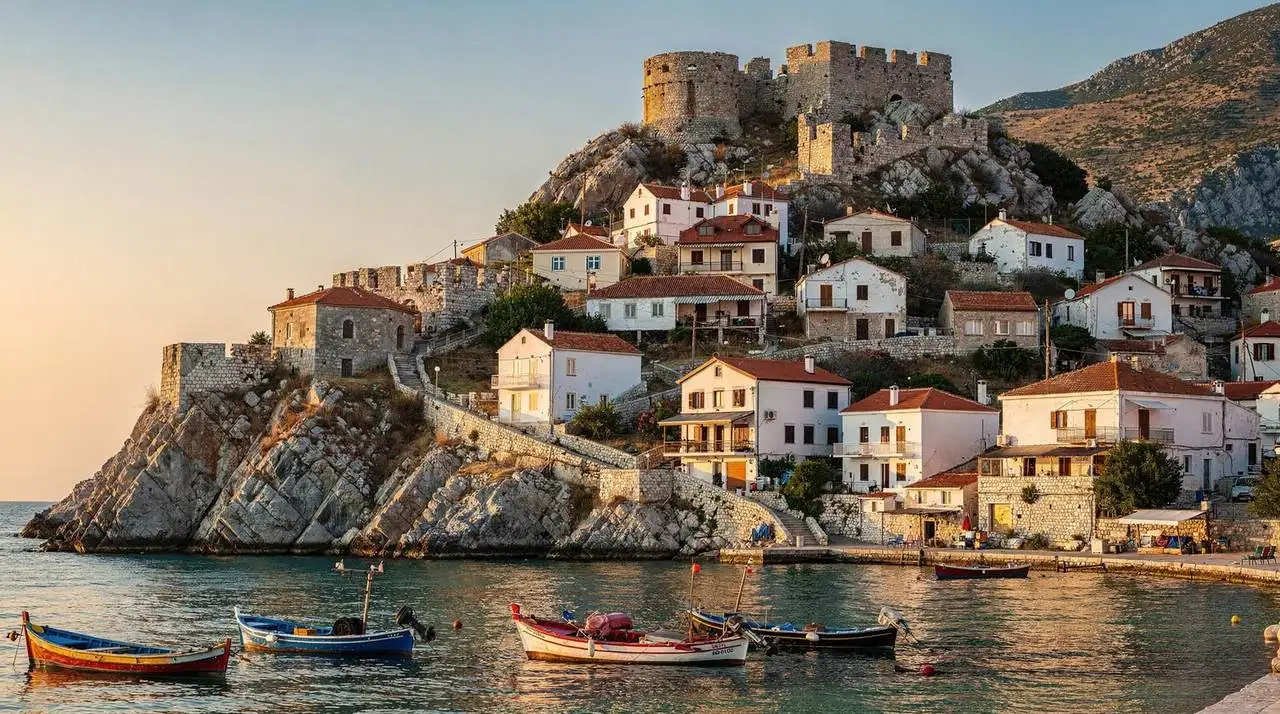
The Himara municipality stretches along one of the most spectacular stretches of the Albanian Riviera, from the beaches of Livadhi and Spile near the town to the famous beaches of Dhermi and Palasa to the north. The town itself sits at the point where the Ceraunian mountains meet the sea, with the medieval upper village (Kalaja) perched above and the modern beach resort below. This geography creates a two-level dining experience: the old town’s atmospheric traditional restaurants on one hand, and the beachfront strip’s seafood tavernas on the other.
Himara’s Greek minority heritage — the town has historically had a significant Greek-Albanian population — flavours the cooking in ways that distinguish it from purely Albanian coastal cuisine. Olive oil from the surrounding ancient groves (some trees are centuries old), the use of Greek oregano and lemon in fish preparations, and the influence of Greek taverna traditions on the local restaurant style create a distinct regional character.
| Where to eat | Old town (Kalaja) for atmosphere, beachfront for sea access |
| Typical cost | Around EUR 8-14/person inland; EUR 12-20 beachfront |
| Don’t miss | Grilled octopus, wild greens (horta), local olive oil |
| Best time | Old town dinner after sunset; beach lunch midday |
| Nearby | Dhermi (20km north) for premium dining |
The Old Town Restaurants: Kalaja and the Upper Village
The old Himara (Kalaja), the medieval village perched above the modern beach town, contains some of the most atmospheric restaurants in the Albanian Riviera. Reached by a winding road or a steep footpath from the lower town, the upper village sits within partially ruined Byzantine-era walls, with stone houses that date back centuries and views across the Ionian that extend to the horizon.
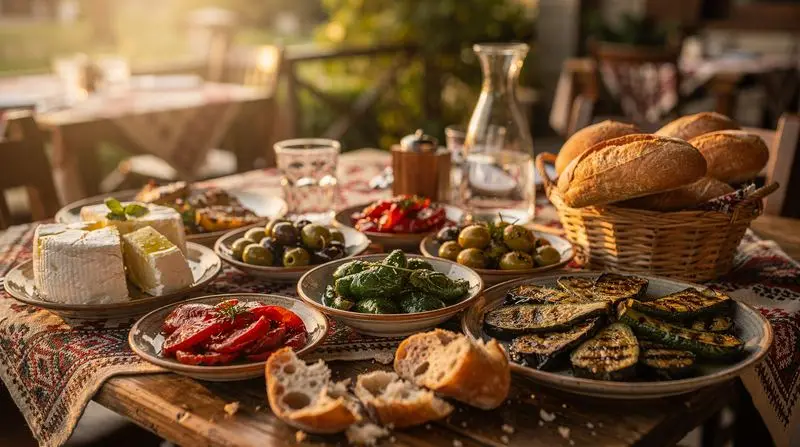
Restaurants in the upper village tend to be small, family-run, and oriented toward traditional Albanian and Greek-Albanian cooking rather than beach resort seafood. The menus feature slow-cooked lamb from the surrounding mountains, stuffed vegetables prepared in the local tradition, fresh white cheese with local olive oil, and the byrek variants of this region. The setting — stone walls, ancient olive trees, and the sea visible far below — is extraordinary at dinner when the lights of the beach below are visible and the Ionian is dark beyond.
The best old town restaurants are not always easy to find on first visit — the upper village is a genuine maze of stone lanes. Walking up in the afternoon and exploring before the dinner service begins is the best strategy; the restaurant owners tend to be visible from late afternoon onward and the experience of wandering the village before choosing where to eat is itself pleasurable.
For a boat experience that provides a different perspective on the Himara coast before or after your meal: this Albanian Riviera boat tour from Himara covers the coastline by sea — the best way to understand the dramatic mountain-meets-sea geography that makes the Himara restaurant setting so extraordinary.
Beachfront Restaurants: Fresh Fish and the Ionian Setting
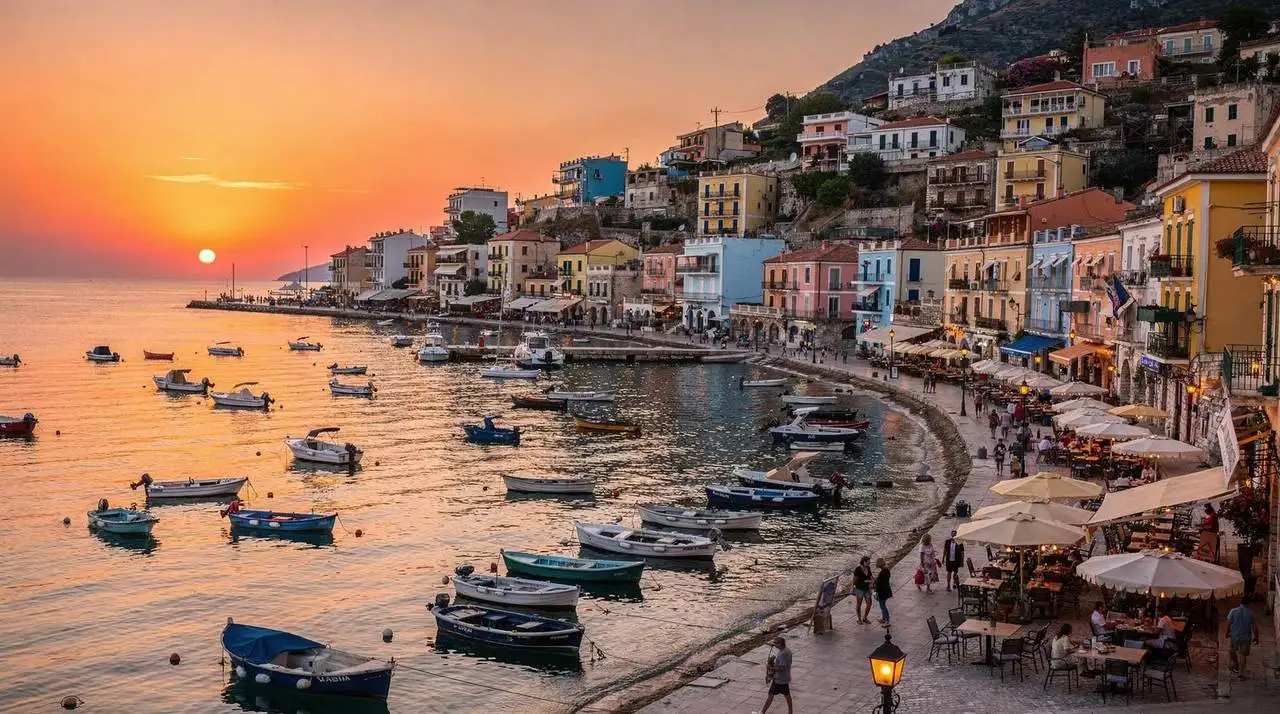
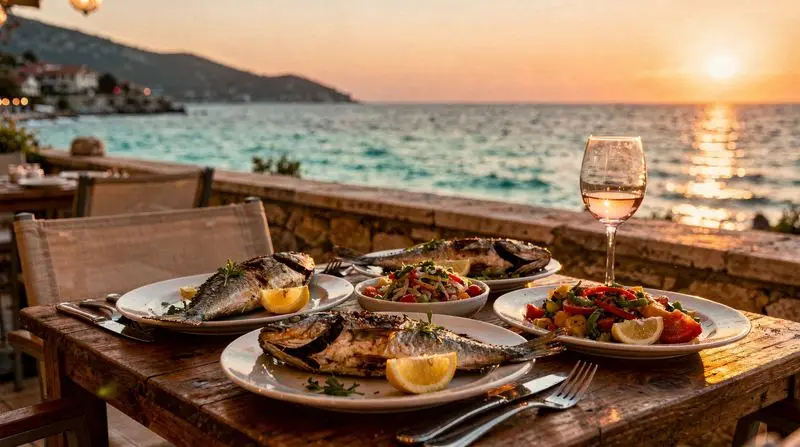
The beach strip below old Himara and along the Livadhi beach has a line of seafront restaurants serving the standard Riviera seafood menu in the standard Riviera setting: tables on sand or raised terraces, the sea immediately below, fish cooked simply with olive oil and lemon.
The quality of the seafood in Himara is excellent. The Ionian off this coastline produces varied species — red mullet (triglie), sea bream (orata), sea bass (branzino), and various flatfish — and the local fishing boats supply the restaurants daily. Grilled whole fish remains the best preparation at most beachfront establishments: fresh Ionian fish, simply cooked, with olive oil from trees you can see on the hillside above you, and the sea in front.
Octopus, grilled or slow-braised with wine and herbs, is another Himara speciality. The combination of Ionian octopus with Albanian mountain herbs and olive oil creates a preparation that has the flavour of this specific coastline. Asking what the kitchen does with the octopus that day — grilled whole, slow-cooked in wine, or cold in a salad — often reveals the most interesting preparation available.
Practical note on beachfront pricing: The standard Riviera premium applies. Walk 100 metres back from the beach for 30-40% lower prices on equivalent food. The beachfront view is worth the premium for a special meal; for daily eating during a Himara stay, the streets behind are better value.
Greek-Albanian Influence: What Makes Himara Cooking Different
The Greek minority population of Himara has historically maintained culinary traditions that differ from purely Albanian coastal cooking, and the hybrid that results is one of the most interesting regional cuisines in the country.
Key Greek-Albanian culinary characteristics visible in Himara restaurants:
Olive oil: The ancient olive groves of the Himara area — some trees are several hundred years old — produce oil with particular flavour characteristics. This oil is used abundantly in local cooking, more generously than in northern Albania where olive cultivation is less extensive.
Lemon and herb seasoning: Greek influences from across the Ionian have shaped the use of lemon, fresh oregano, and rosemary in fish preparations. The typical Himara grilled fish is dressed more generously with these aromatics than in purely Albanian tradition.
Horta (wild greens): The collection and preparation of wild greens from the surrounding mountains — nettles, sorrel, chicory, and various other foraged plants — is a Greek culinary tradition well maintained in Himara. These greens, boiled and dressed with olive oil and lemon, appear as side dishes or starters at traditional restaurants.
Tyropita and spanakopita variants: The Greek filo pie tradition manifests in Himara as a local variant with Albanian characteristics — thinner filo, more pronounced cheese, and local herbs — that sits between the two traditions and is specific to this coastline.
Spile and Livadhi Beach Dining
The beaches of Spile and Livadhi, immediately north and south of Himara town respectively, have their own beach restaurant clusters that serve the swimmers and sunbathers with the standard beach restaurant menu: cold drinks, grilled fish, pizza, salads.
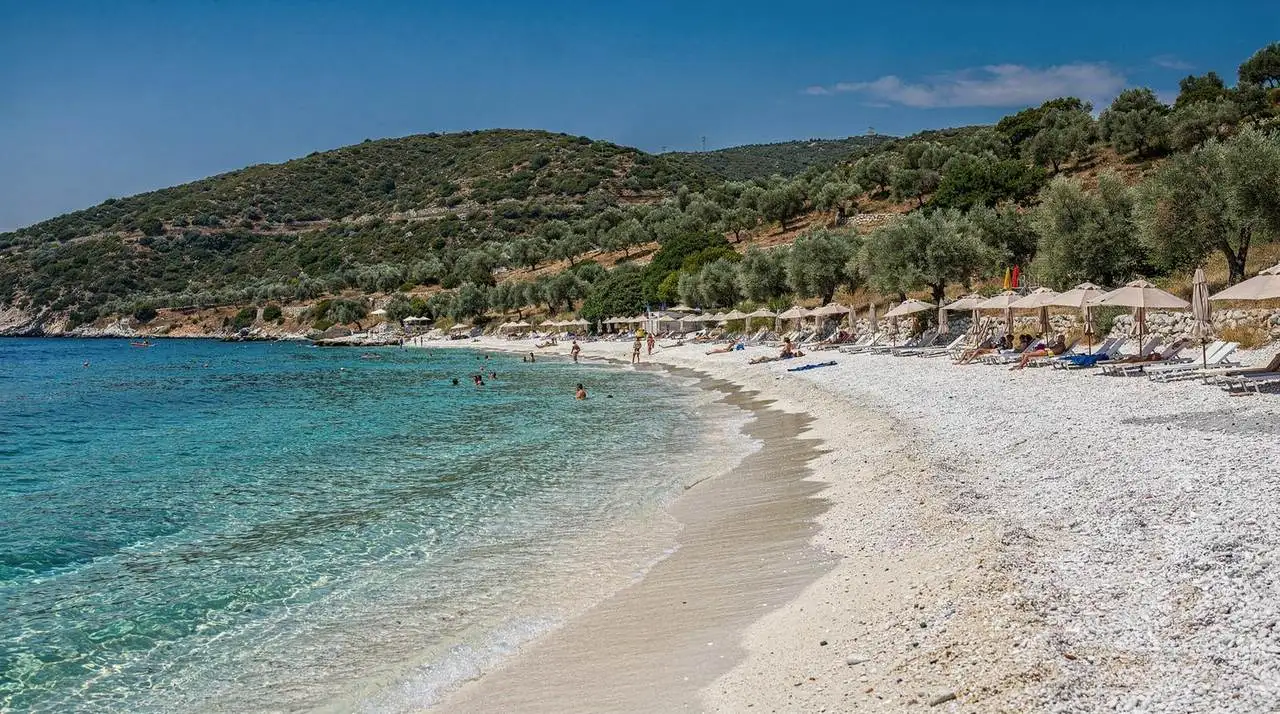
For a Riviera beach lunch, these are excellent options. The setting — white pebble beaches, turquoise water, the mountains behind — provides the context that makes ordinary food special. The fish here is also fresh and simply cooked; the beach restaurants have less character than the old town restaurants but more immediate sea access.
Dhermi: The Himara Area’s Premium Dining
Dhermi, 20 kilometres north of Himara, has developed a more sophisticated restaurant scene as it became the Albanian Riviera’s most prestigious beach destination. The restaurants in Dhermi include several that have invested in both food quality and presentation beyond the standard Riviera seafood taverna level.
For the best dining in the broader Himara area, Dhermi is worth the short drive for an evening meal. The combination of a beach afternoon at Himara and a dinner at one of the Dhermi restaurants represents the optimal use of the two destinations.
Olive Oil Culture in Himara
The ancient olive groves of the Himara area — extending up the mountain slopes from the coastline — deserve mention as a food culture element rather than just a landscape feature. The olive oil from these trees (the Kallam variety native to southern Albania, different from the Italian or Greek cultivars) has a specific flavour profile: grassy, slightly bitter, with a long finish that makes it excellent for dipping and for dressing cooked fish and vegetables.
Buying local Himara olive oil at a local shop or directly from a producing family is one of the best food souvenirs available in the Riviera. It is genuinely different from what is available commercially in Western European markets. Ask at the local market or your accommodation host — they typically know which families have oil available.
Breakfast at Himara
Himara’s breakfast culture follows the Albanian pattern with local modifications. The town’s cafes and byrek shops open early, and the combination of fresh byrek (with the local cheese and olive oil flavour that distinguishes this region), strong espresso, and the view from old Himara down to the sea is one of the better Albanian morning experiences.
The upper village cafes — small terrace operations with a few tables — offer the most dramatically positioned breakfast on the Riviera. Sitting at altitude with the Ionian below and a coffee in hand while the morning light hits the sea is difficult to improve on as a travel experience.
Budget Eating in Himara
Himara is more affordable than the northern Riviera destinations but slightly higher-priced than the interior. Budget options:
Byrek shops: Standard Albanian byrek and coffee for EUR 1.50-2.50.
Market and village stalls: Fresh produce, local olive oil, and simple prepared food for EUR 3-5 per meal.
Inland from beachfront: Restaurant meals for EUR 8-14 per person, compared to EUR 12-20 beachfront.
Self-catering: The local market and small supermarkets supply good ingredients including fresh fish, local olive oil, local cheese, and seasonal produce.
Evening Culture
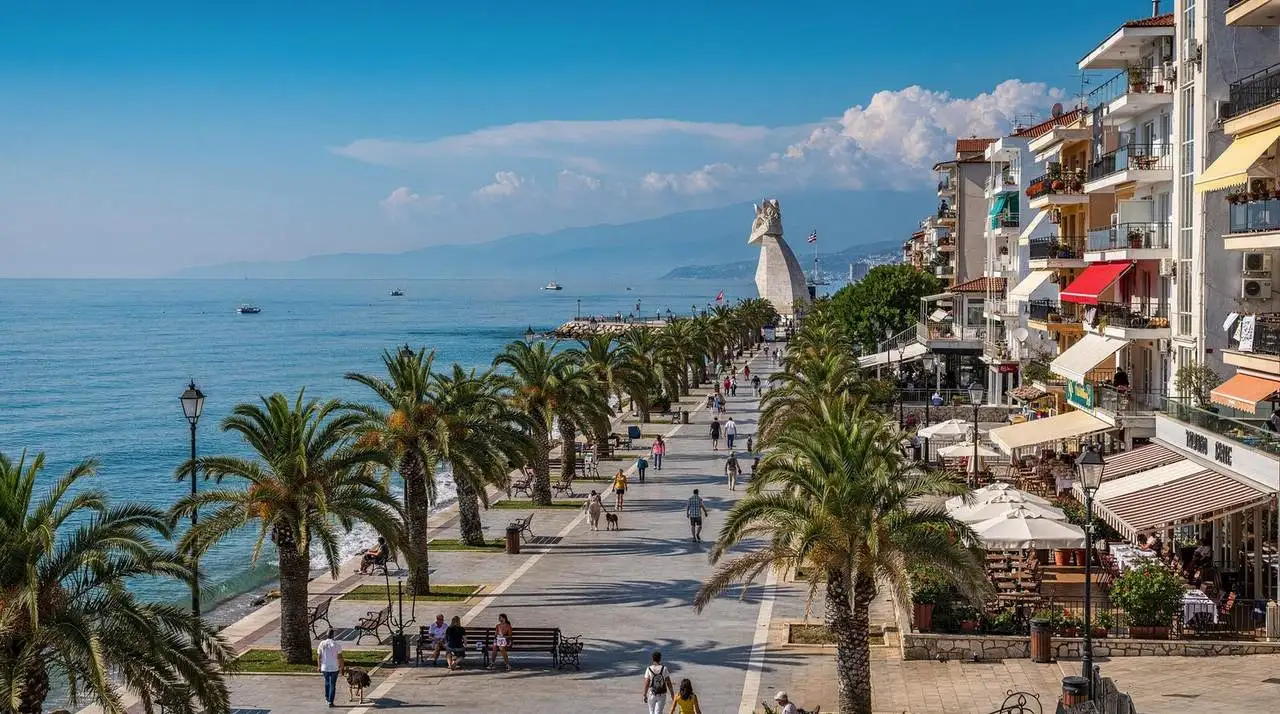
Himara’s evening is animated by the combination of beach tourists and the town’s own social life. The lower town’s main street and the area around the main square fill from around 7pm with the evening promenade. Cafes and bars maintain a lively social atmosphere through the summer night.
The old town up above is quieter in the evenings but also more beautiful — the lights of the modern town below, the dark sea beyond, and the stars visible at this elevation create an atmosphere that the beachfront, with its music and noise, cannot replicate. Dinner in the old town, taken late as the Albanian culture dictates, with the Ionian visible in the darkness below, is one of the Riviera’s finest dining experiences.
Getting to Himara for a Food-Focused Visit
Himara sits on the main Riviera coastal road, roughly 50 kilometres from both Vlora and Saranda, and is served by the Riviera bus route and furgons running the length of the coast. For visitors basing themselves elsewhere on the Riviera and coming specifically for a meal, a day trip built around a Riviera boat tour followed by dinner in the old town is a practical and rewarding combination — the boat covers the coastal scenery in daylight, and the evening is reserved for the food.
Practical Tips for Himara Dining
Reservations in high season: The old town restaurants have limited capacity. If a specific establishment is recommended, contact them the same day to confirm availability.
Language: Himara has both Albanian and Greek speakers, and restaurant staff typically have competence in both plus some English. English menus are less universal than in major tourist centres; pointing and the standard Albanian ordering gestures work fine.
Payment: Cash in Albanian lek is standard. Some beachfront restaurants accept cards; in the old town and at smaller establishments, cash only is common.
What to order: Fresh fish of the day, local olive oil appetizers, and the wild greens if available. The lakror variant from this region for lunch. Cold Korca beer or local white wine with the fish.
The Ancient Olive Groves and Their Culinary Significance
The olive groves of the Himara area are not merely scenery. Some trees in the groves above and behind the town are estimated to be 800-1,000 years old — massive gnarled trunks supporting productive crowns that have been harvested every autumn for dozens of human generations. These trees produce a quantity of oil each year, and the oil from very old trees has characteristics that younger plantations cannot replicate.
The Kallam variety — the native southern Albanian olive cultivar — produces an oil different from the Spanish Picual or the Greek Koroneiki that dominate commercial Mediterranean oil production. The flavour is grassier, with a particular bitterness on the finish and a peppery bite that reflects the high polyphenol content of well-tended old-growth trees. This is cooking fat with genuine character, and its use throughout Himara’s kitchen — for dressing raw salads, cooking fish, preserving cheese, finishing grilled vegetables — creates a flavour thread that runs through the local food.
The autumn olive harvest (October-November) is a community event in Himara, when extended families gather to pick from trees that belong to specific households and have belonged to them for generations. The oil press operates in the village during the harvest period, and the fresh-pressed oil — cloudy with suspended olive particles, brilliantly green, intensely flavoured — is available directly from producers for a few weeks.
For visitors in late October or November, buying fresh-pressed Himara olive oil directly from a producing family is one of the best food experiences available in the Riviera region and one of the most rewarding culinary souvenirs of a Albania visit.
Old Town vs Beachfront: Which Suits Your Evening
| Old town (Kalaja) | Beachfront | |
|---|---|---|
| Best for | Atmosphere, sunset, tradition | Fresh fish, sea access, convenience |
| Typical cost | EUR 8-14/person | EUR 12-20/person |
| Reservations | Recommended in peak season | Usually fine as walk-in |
| Getting there | 15-20 min uphill walk or drive | Steps from the beach |
Vegetarian and Dietary Options in Himara
Himara’s Greek-Albanian kitchen is more accommodating to vegetarians than most Albanian coastal towns, largely thanks to the horta (wild greens) tradition and the abundance of local olive oil in vegetable preparations. Roasted peppers, aubergine dishes, tyropita variants, and the village salad with local cheese all make satisfying vegetarian meals. For strict vegans, the reliance on feta-style cheese and olive oil (rather than butter) makes self-catering from the local market the most dependable option. The Albanian food guide has broader detail on which dishes are naturally plant-based.
Himara as a Base for Riviera Food Exploration
Himara’s position roughly in the middle of the Albanian Riviera — roughly 50 kilometres from Vlora to the north and 50 kilometres from Saranda to the south — makes it an excellent base for exploring the full range of Riviera food experiences rather than concentrating in a single location.
Day trips north to Dhermi provide access to the Riviera’s most fashionable dining — the restaurant scene at Dhermi has invested in quality and presentation in a way that most Himara establishments have not. Day trips south toward Saranda and Ksamil provide the fresh mussel and Ionian seafood experience of the southernmost Riviera.
For visitors who want the complete Riviera food picture, Himara as a four or five-night base with day trips to Dhermi and Saranda covers the range without requiring daily accommodation changes. The combination of old town atmosphere in Himara, Dhermi beach energy and sophisticated dining, and Saranda’s urban restaurant variety gives a comprehensive picture of the Riviera food scene.
Seasonal Eating in Himara
Spring (April-May): Wild greens (horta) are at their best, gathered from the hills before the summer heat. The olive oil from the previous autumn’s fresh pressing is still at its most vivid. Restaurants are quiet and tables are easy to find.
Summer (June-September): Full tourist season. Beachfront and old town restaurants both run at capacity, particularly July and August. Fresh fish supply is strong but some beach establishments supplement with distributed product during the busiest weeks.
Autumn (October-November): The olive harvest transforms the food culture — fresh-pressed oil becomes available directly from producing families, and the crowds thin considerably. Many consider this the best month for a Himara food trip: warm sea, quiet restaurants, and the year’s best olive oil.
Winter (December-March): Most beachfront restaurants close. The old town retains a handful of year-round establishments serving the resident Himara and Greek-Albanian community, offering an entirely different, much quieter dining experience for the rare winter visitor.
Drinking Culture Along the Riviera
The Himara drinking culture deserves its own mention. The combination of Greek cultural influence (wine and ouzo) and Albanian drinking traditions (raki, coffee) creates a drinks culture that is slightly different from either national tradition in pure form.
Local wine: Himara doesn’t have a significant wine-producing hinterland — the terrain is rocky and the climate hot for viticulture — but Albanian wines from Berat and Permet are well-represented on restaurant lists. Ask for a local recommendation; staff at the better restaurants typically know which bottles represent the best of what they stock.
Tsipouro and raki: The Greek anise spirit tsipouro appears in some Himara establishments, reflecting the Greek cultural connection. The standard Albanian raki is also available everywhere. The combination of tsipouro and fresh seafood — meze-style eating before the main course — follows the Greek taverna tradition and works beautifully with Himara’s fish.
Fresh fruit drinks: The abundance of fresh citrus (lemons grown in the surrounding groves), figs, and stone fruit in season allows for fresh juice preparations that are less common in the colder Albanian cities. A fresh lemon juice with mineral water and ice at a Himara cafe in August is one of the simplest and best refreshments on the Riviera.
Frequently Asked Questions About Restaurants in Himara
What is Himara’s most distinctive cuisine?
Himara food is characterized by the Greek-Albanian hybrid culinary tradition: abundant use of local olive oil from ancient groves, fresh Ionian fish with Greek herb-and-lemon seasoning, wild greens from the surrounding mountains, and the local variant of filo pastry preparations. The combination of Albanian and Greek culinary heritage in a single regional kitchen produces a cooking style specific to this coastline and not available elsewhere in Albania.
Where are the best restaurants in old Himara?
The best restaurants in old Himara (Kalaja, the upper village) are small, family-run establishments in the stone lanes of the medieval village. They change over seasons and years; the best current options are reliably identified by asking your accommodation host in Himara town rather than relying on fixed reviews. The key characteristics to look for: stone terrace setting, menu heavy on local lamb and dairy, and the smell of wood-fire cooking.
Is Himara more expensive than Saranda for restaurants?
Generally slightly less expensive. Himara’s restaurant scene is less developed for international tourism than Saranda, which keeps prices more competitive. The beachfront premium applies at both, but the inland and old town options in Himara represent better value than equivalent Saranda restaurants. For comparison, a full seafood dinner in Himara typically costs EUR 10-18 per person versus EUR 12-22 in Saranda’s main tourist restaurants.
Can you eat at the beaches near Himara?
Yes — the beaches of Livadhi and Spile adjacent to Himara town have beach restaurant clusters serving drinks, lunch, and light snacks directly on the beach. The further beaches along the Himara Riviera coast (Drymades, Palasa toward Dhermi) also have beach restaurant options. The quality is standard Riviera beach food — fresh fish, salads, cold drinks — rather than refined cooking, but the setting makes it excellent for lunch.
Is the seafood fresh at Himara restaurants?
The quality of Himara seafood is generally high because the town has an active fishing fleet and the distance from the catch to the table is short. The smaller beachfront tavernas with direct fishing connections typically have the freshest supply. The standard freshness check applies: clear eyes, red gills, ocean smell on fresh fish. In high season (July-August) some establishments supplement with distributed product — asking to see the fish before ordering is standard practice and not considered rude.
How does Himara dining compare to Dhermi or Saranda?
Himara sits between the two in both price and polish. It is generally cheaper than Dhermi’s more fashionable restaurant scene and offers a more local, working-town atmosphere than the tourist-heavy Saranda promenade. For a comparison of options further south, see the best restaurants Saranda guide; for Vlora to the north, the best restaurants Vlora guide covers the northern Riviera equivalent.
Is Himara a good base for exploring Riviera food beyond the town itself?
Yes — Himara’s central position on the Riviera, roughly equidistant from Vlora and Saranda, makes it a practical base for day trips to Dhermi’s premium restaurants and south toward Ksamil’s beach seafood scene without changing accommodation.
What should vegetarians order in Himara?
The wild greens (horta), roasted pepper and cheese dishes, and the village salad are the most reliable vegetarian options. Ask specifically for the Greek-influenced tyropita variant if you want something more substantial than a salad — most old town restaurants will make it even if it is not printed on the menu.
Is Himara worth a multi-night stay for food alone?
For dedicated food travellers, yes — the combination of Greek-Albanian cooking, the ancient olive groves, and access to both Dhermi and Saranda for day-trip variety supports a three- to five-night stay comfortably, longer than most visitors initially plan for.