Albania vs North Macedonia: A Genuine Balkan Comparison
Albania and North Macedonia share more than geography. They share Lake Ohrid — the ancient, impossibly clear lake that straddles their shared border — and a broader Balkan cultural heritage that includes Ottoman architecture, mountain hospitality, shared cuisine roots, and the particular character of small nations that spent decades isolated from mainstream European tourism.
| Shared highlight | Lake Ohrid (Pogradec, AL / Ohrid town, MK) |
| Cost gap | Marginal — Albania slightly cheaper on average |
| Best hiking | Albania (Albanian Alps edge out Mavrovo/Šar Planina) |
| Best combined loop | 10-14 days via Qafë Thanë crossing |
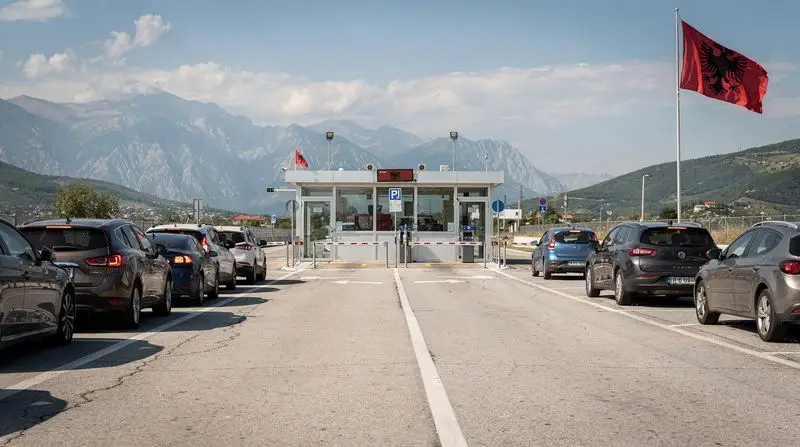
| Border crossing | Qafë Thanë, 30-90 min in peak summer |
They also make extraordinarily natural travel companions. Most itineraries that include one country should seriously consider the other. The crossing at Qafë Thanë — the main Albania-North Macedonia border point — takes minutes, Lake Ohrid appears immediately on the Macedonian side, and travelers who have just spent a week in Berat or along the Albanian Riviera find that the transition to Ohrid feels seamless.
This comparison helps travelers understand the differences, make the right choice for their priorities, or — the best outcome — plan an itinerary that includes both.
The Shared Jewel: Lake Ohrid
Lake Ohrid is the logical starting point because it is genuinely shared. The lake itself straddles the border, with the Macedonian town of Ohrid (a UNESCO World Heritage Site) on the northeastern shore and the Albanian lakeside settlement of Pogradec on the southwestern shore.
The Macedonian side (Ohrid town): Ohrid is one of Europe’s oldest and most beautifully preserved lake towns. The old town perched on the hill above the lake contains over 300 churches and monasteries — earning it the nickname “Jerusalem of the Balkans.” The Church of St. John at Kaneo, overlooking the lake, is one of the most photographed Orthodox church images in the world. The bazaar (old bazaar area), the Samuel’s Fortress, and the Plaošnik archaeological site add layers of history. Ohrid has a well-developed tourism infrastructure: waterfront restaurants, boat tours, beaches, established hostels and hotels.
The Albanian side (Pogradec): A quieter lakeside town with fewer organized tourist facilities but genuinely beautiful lakeside scenery. The area around Lin village on the Albanian shore has Byzantine-era mosaics and a peaceful, local atmosphere that Ohrid’s busier waterfront lacks. The drive along the Albanian shore of Lake Ohrid — especially at sunrise with the mountains of North Macedonia visible across the water — is spectacular.
Verdict on Lake Ohrid: Ohrid town on the Macedonian side is more developed, more visited, and more immediately impressive for first-time visitors. The Albanian shore offers a less crowded alternative with its own beauty. Ideally: arrive from Albania via Qafë Thanë, spend a day at Pogradec, continue to Ohrid on the Macedonian side for 2-3 nights.
Day tour from Tirana to North Macedonia and OhridBudget and Costs
Both countries are among Europe’s most affordable. The difference between them is marginal.
North Macedonia daily costs:
- Budget hostel: EUR 12-18 per night
- Mid-range hotel: EUR 35-70 per night
- Local restaurant meal: EUR 4-7
- Coffee in a cafe: EUR 1-2
- Intercity bus: EUR 3-8
Albania daily costs:
- Budget hostel: EUR 10-18 per night
- Mid-range hotel: EUR 35-65 per night
- Local restaurant meal: EUR 3-6
- Coffee: EUR 0.50-1.50
- Intercity furgon: EUR 3-8
The verdict on budget: Albania is marginally cheaper, with the cost advantage clearest in coffee, street food, and budget accommodation. North Macedonia is similarly priced. For most travelers, the cost difference between the two countries is not a meaningful factor in choosing between them.
See the Albania travel budget guide for full Albanian cost breakdowns.
Hiking and Outdoor Adventure
Albania: The Albanian Alps (the Accursed Mountains / Bjeshkët e Namuna) are among the most dramatic mountain landscapes in Europe. The Peaks of the Balkans trail crosses Albania, Kosovo, and Montenegro through some of Europe’s wildest terrain. The trail from Theth to Valbona is one of the Balkans’ defining hikes — a full day crossing over the Valbona Pass with views of limestone peaks and traditional stone villages. The Riviera also offers coastal hiking between beaches and over dramatic headlands.
North Macedonia: Mavrovo National Park contains the Bistra massif and some of the best mountain hiking in the country. Šar Planina (the Šar Mountains) bordering Kosovo offer excellent trekking. Galicica National Park between Lakes Ohrid and Prespa is excellent for day hiking with lake views. The Via Egnatia long-distance hiking route passes through North Macedonia.
The verdict on hiking: Albania’s mountains are more dramatic and the hiking infrastructure (mountain guesthouses, established trails) has improved substantially. The Theth-Valbona route is genuinely world-class. North Macedonia has excellent hiking but nothing that quite matches the Albanian Alps’ raw drama.
Cities and Urban Experience
Tirana vs Skopje: Albania’s capital Tirana is a vibrant, chaotic, colorful city undergoing rapid transformation. The Blloku neighborhood — once the exclusive preserve of communist party elite — is now Tirana’s hippest area with cafes, galleries, and nightlife. The National History Museum, the coloured apartment blocks (famously painted by artist-mayor Edi Rama), and Skanderbeg Square give the city a distinctive character.
Skopje, North Macedonia’s capital, has a complicated recent identity. The controversial “Skopje 2014” project resulted in dozens of faux-classical statues and neoclassical facades being applied to government buildings — an attempt to create a national identity through architecture that many find kitsch and others find fascinating. Behind the statues, Skopje’s Ottoman old bazaar (Čaršija) is genuinely ancient and worthwhile: a working bazaar with craftsmen, mosques, and the Old Bazaar’s caravanserai.
The verdict on cities: Tirana wins on energy, creativity, and authentic urban character. Skopje offers the unusual Čaršija and the polarizing Skopje 2014 spectacle — worth seeing as a cultural phenomenon even if one disagrees with it aesthetically.
Ohrid vs Gjirokastër/Berat: Ohrid is by most measures North Macedonia’s most beautiful destination. The competition from Albania would be Gjirokastër and Berat — two UNESCO-listed hill towns with Ottoman architecture, castle complexes, and stunning positions in the landscape. All three are outstanding.
Full-day tour from Tirana to BeratFood and Drink
Albanian food highlights: Byrek, tavë kosi, fergesa, fresh Adriatic and Ionian fish, grilled meats, rakiCE (fruit brandy). Strong coffee culture. Extraordinary local wine from Permet, Elbasan, and Berat. Prices extremely low.
North Macedonian food highlights: Shared Ottoman/Balkan base with Albanian cuisine. Tavče gravče (baked beans) is the national dish. Excellent local wines — North Macedonia is an underrated wine region with Vranec (a local red varietal) being particularly good. The Mavrovo lamb roast is legendary. Shopska salad (tomatoes, cucumber, green peppers, onion, and white cheese) is the regional salad standard.
The verdict on food: The cuisines are similar enough that neither is clearly superior. North Macedonia’s wine culture is arguably more developed. Albania has a slight edge on seafood given its Albanian Riviera coast. Both are excellent value.
Nature Beyond the Mountains
Albania’s unique natural sites:
- Blue Eye (Syri i Kaltër): A stunning cold spring near Saranda where crystalline water wells up from an underground source. The colour is extraordinary.
- Vjosa River: Europe’s last wild river, a UNESCO nomination-in-progress.
- Llogara Pass: A mountain pass above the Riviera with forest and sweeping coastal views.
- Lake Komani: A reservoir in the northern mountains that looks like a glacial fjord — the ferry journey is unforgettable.
North Macedonia’s unique natural sites:
- Matka Canyon: A narrow gorge near Skopje with cave systems, a medieval monastery, kayaking, and walking paths. One of the most underrated nature spots in the Balkans.
- Lake Prespa: Shared with Albania and Greece, this high-altitude lake is a bird sanctuary and designated biosphere reserve.
- Šar Planina: The mountain range bordering Kosovo, largely a national park, with glacial lakes and rare flora.
The verdict on nature: Albania has more variety and more dramatic scenery. North Macedonia has Matka Canyon (genuinely spectacular and accessible from Skopje) as its standout. Both countries punch above their weight for natural beauty.
The Case for Combining Both Countries
The most honest recommendation in this comparison is not to choose one over the other but to include both in an integrated Balkans itinerary.
A practical 12-day combined itinerary: Days 1-3: Tirana — see the city, day trip to Berat Days 4-5: Albanian Riviera (Saranda, Ksamil) Days 6-7: Gjirokastër and the south Day 8: Drive north to Pogradec, Albanian shore of Lake Ohrid Days 9-10: Ohrid, North Macedonia — old town, boat tour, Sveti Naum monastery Days 11-12: Skopje — Čaršija, Matka Canyon day trip, then fly out
This route covers both countries’ highlights, uses the Qafë Thanë border crossing at its most natural point, and allows each destination to be seen in context. See the Albania border crossings guide for details on the North Macedonia crossing.
Language and Communication
In Albania: Albanian is the language. English is widely spoken in tourist areas in Tirana, Saranda, and the Riviera. Older generations speak Italian as a second language (from decades of Italian TV reception before 1990). In rural areas, expect minimal English.
In North Macedonia: Macedonian (a South Slavic language) and Albanian are both official languages. The Albanian population of North Macedonia is significant (approximately 25% of the country), concentrated in the western regions. In Ohrid, English is widely spoken in tourist infrastructure. In Skopje, English is common in central areas.
The language overlap is meaningful: if you are traveling with a phrase book for Albanian, it has some practical utility in the Albanian-speaking areas of western North Macedonia.
Transport Between the Two Countries
The Qafë Thanë (Kafasan) crossing: This is the primary crossing point between Albania and North Macedonia, and it is notably pleasant. The border sits above Lake Ohrid — views on the Macedonian side as you descend toward the lake are spectacular. Wait times are reasonable year-round (30-90 minutes in peak summer).
Getting from Tirana to Ohrid without a car: Furgon from Tirana to Pogradec (3-3.5 hours), then shared taxi or arranged minibus to the border crossing, then taxi or bus to Ohrid. Total journey: approximately 5-6 hours. Alternatively:
Organized day tour from Tirana to North MacedoniaFlights: Tirana to Skopje has air connections via Turkish Airlines and others (usually with a connection). For a pure two-country trip, overland makes more sense both geographically and experientially.
Festivals and Events
Albania’s major festivals:
- Karneval i Shkodrës (February/March): A colorful Shkodra tradition predating communism
- National Day celebrations (November 28): Albania’s independence day, celebrated enthusiastically
- Gjirokastër National Folklore Festival: Every four years, a major gathering of Albanian folk music and costume traditions
- Summer concerts at Skanderbeg Square: Free outdoor events in Tirana
North Macedonia’s major festivals:
- Ohrid Summer Festival (July-August): International classical music performances in Roman amphitheater and lakeside settings — a genuinely world-class cultural event
- Ohrid Fest (music competition)
- Skopje Jazz Festival (October): One of the region’s best jazz events
- Galicnik Wedding Festival: A traditional village wedding ceremony preserved as cultural heritage
The verdict on festivals: North Macedonia’s Ohrid Summer Festival is a genuine draw for cultural tourism — performing in a Roman amphitheater on the lake is extraordinary. Albania’s folk festival at Gjirokastër (held infrequently) is equally special but less regularly scheduled.
Accommodation Quality Comparison
Albania: Accommodation has improved dramatically. Tirana has excellent hotels at all price points. The Riviera has a mix of good guesthouses and some excellent boutique options. Mountain areas (Theth, Valbona) have functional guesthouses where the experience is about the setting, not the facilities. Berat and Gjirokastra have charming options in renovated Ottoman buildings.
North Macedonia: Ohrid’s accommodation is generally good to excellent, with lakeside hotels providing comfortable bases. Skopje has a full range from budget hostels to international hotels. The rest of North Macedonia (Mavrovo, Bitola) has adequate if less distinctive options.
The verdict: Albania has slightly more variety at the top end (unique converted historic buildings) and the lowest end (basic mountain guesthouses). North Macedonia’s mid-range is more consistent. For both, booking in advance is important in summer.
Best of Saranda day tourPractical Itinerary: The Combined Balkans Loop
10 days combining Albania and North Macedonia:
- Days 1-2: Tirana — city walk, Bunk’Art museum, Blloku nightlife
- Day 3: Day trip to Berat (UNESCO town, 2 hours south of Tirana)
- Days 4-5: Saranda and Ksamil (Albanian Riviera, beaches, Butrint)
- Day 6: Gjirokastër (UNESCO Ottoman town)
- Day 7: Drive north to Pogradec, Albanian shore of Lake Ohrid
- Days 8-9: Ohrid, North Macedonia (old town, Sveti Naum, boat tour)
- Day 10: Skopje (Čaršija bazaar, Matka Canyon), fly out
This loop uses the natural land connection at Qafë Thanë, stays within budget for both countries, and hits the UNESCO highlights of both destinations.
Tirana to Berat organized tour for the day tripNightlife Comparison
Tirana nightlife: Concentrated in the Blloku district. A young-skewing, increasingly international scene with cocktail bars, wine bars, and a growing number of clubs. Summer evenings on Blloku’s outdoor terraces are genuinely good.
Ohrid nightlife: Lakeside bar scene that peaks in summer. Music venues, waterfront cafes, and a student population from across the region. Not a major nightlife destination but pleasant.
Skopje nightlife: The Old Bazaar’s cafes transition into bars in the evening. The Debar Maalo neighborhood has a bohemian bar scene. More developed than Tirana in terms of variety but not dramatically different in character.
Neither country is primarily a nightlife destination — this is a Balkans culture and nature comparison, not a club comparison.
Which Is Better for First-Time Balkans Visitors?
For a traveler visiting the Western Balkans for the first time and trying to choose a starting point, both countries are viable. The honest guidance:
Start with North Macedonia if: You want a gentler introduction — Skopje has good tourist infrastructure, English is widely spoken in tourist areas, and the Ohrid-Skopje combination is easily self-guided.
Start with Albania if: You are comfortable with a more adventurous travel style, want more dramatic scenery, and are happy navigating the furgon system with local knowledge. Albania rewards slightly more experienced independent travelers more generously.
For those who have already done standard “easy” European destinations (Spain, Italy, France, Greece) and want the next level of discovery, Albania backpacking is the obvious next step. North Macedonia works as either a companion to Albania or as a gentler Balkans introduction.
Photography Highlights by Country
Albania’s best photography subjects:
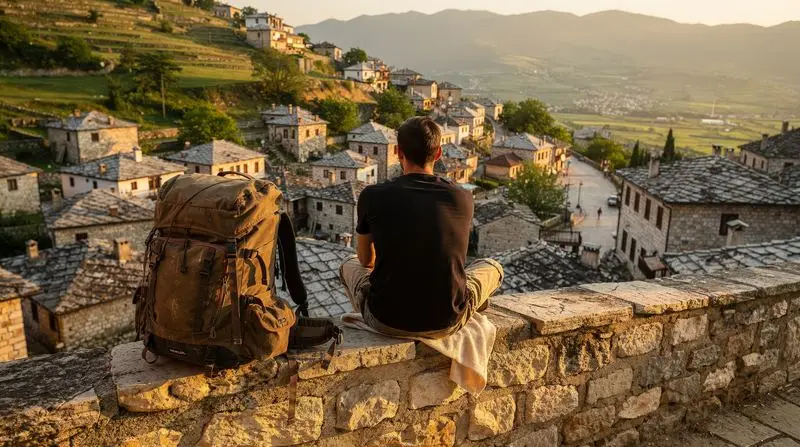
- Berat’s white Ottoman houses layered on the hillside
- Gjirokastra’s fortress and stone-roofed old town
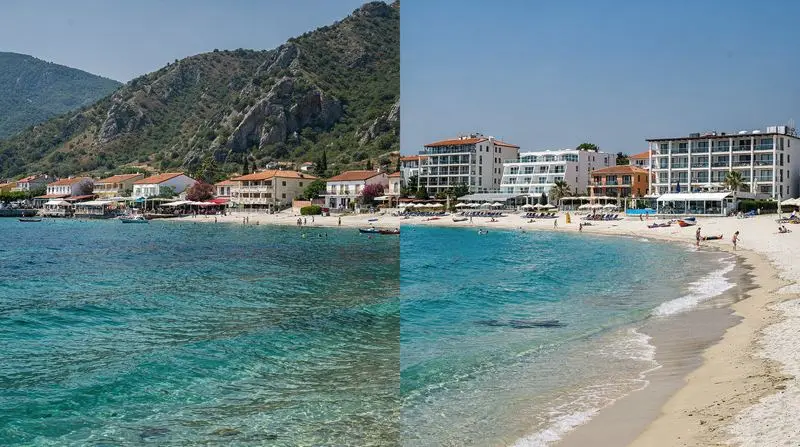
- Ksamil bay’s turquoise water with the Greek islands in the distance
- Theth’s kulla (stone tower houses) against limestone mountain peaks
- Lake Komani’s fjord-like canyon walls
- The Llogara Pass cloud forest above the Riviera
North Macedonia’s best photography subjects:
- Ohrid Old Town and Church of St. John at Kaneo above the lake
- Sveti Naum monastery reflected in the lake
- Matka Canyon’s narrow gorge and medieval monastery
- The dramatic western mountains of Šar Planina
- Skopje’s Old Bazaar at dusk
Which Country Is More Changing?
Both Albania and North Macedonia are in relatively rapid states of development and change, which affects the travel experience:
Albania’s change trajectory: Tourism has grown from near-zero international visitors in 2000 to one of the fastest-growing destinations in Europe. Infrastructure is improving annually. Prices have risen from post-communist floor levels but remain very low. The Tirana food scene, the Riviera’s accommodation quality, and the mountain trail infrastructure are all noticeably better than they were five years ago. The change is positive and rapid.
North Macedonia’s change trajectory: Somewhat more stable. The country had its EU membership application boosted by the 2019 Prespa Agreement (changing the country name from FYROM). Political stability has improved. Tourism to Ohrid has been consistent for longer. The change curve is less steep than Albania’s but the foundation is more established.
For travelers interested in being part of a destination’s “discovery moment” — visiting while it is still relatively unknown and the change is most visible — Albania is at that moment right now. North Macedonia already passed through it. The Albania travel tips guide helps you navigate the country at this stage of development.
Recommended Starting Point for an Albania-North Macedonia Trip
The majority of travelers to this combination arrive via Tirana. The Tirana walking tour and the Berat day trip are natural starting points:
Start the combined trip with a Tirana walking tourFrom Tirana, the logical routing runs south (Riviera, Gjirokastër) before heading northeast to the Lake Ohrid crossing and into North Macedonia. Returning via Skopje, travelers can fly out of Skopje International Airport which has good European connections.
Photography and Timing Notes for Lake Ohrid
Lake Ohrid rewards planning around light. The Church of St. John at Kaneo on the Macedonian side is most photographed at sunrise, when the water is calm and the light comes in low across the lake with far fewer other photographers present than the midday crowds. On the Albanian shore near Pogradec and Lin, sunset produces the more dramatic light, with the mountains of North Macedonia silhouetted across the water. Travelers with flexible timing should consider basing on the Albanian side for a sunset evening and crossing to the Macedonian side the following morning for the Kaneo sunrise shot — a small logistics investment that noticeably improves the photography on both sides of the lake.
Wine Regions Compared
Both countries have wine traditions worth a detour for interested travelers. Albania’s wine regions cluster around Berat, Elbasan, and Permet, working with indigenous varieties like Shesh i Zi and Shesh i Bardhë alongside international grapes — small-scale, family-run production that is only beginning to attract international attention. North Macedonia’s wine industry is more developed and internationally recognized, centered on the Tikveš wine region south of Skopje, with Vranec (a bold indigenous red) as the flagship variety and a longer history of export-oriented production.
For a dedicated wine-focused detour, North Macedonia’s Tikveš region offers more polished tasting room infrastructure and English-language tours. For a more intimate, discovery-oriented wine experience, Albania’s smaller producers around Berat reward direct visits arranged through guesthouses. The wine tasting guide for Albania covers the Albanian side; pairing it with a Tikveš stop makes a natural addition to the combined itinerary described above.
Currency and Payment Practicalities
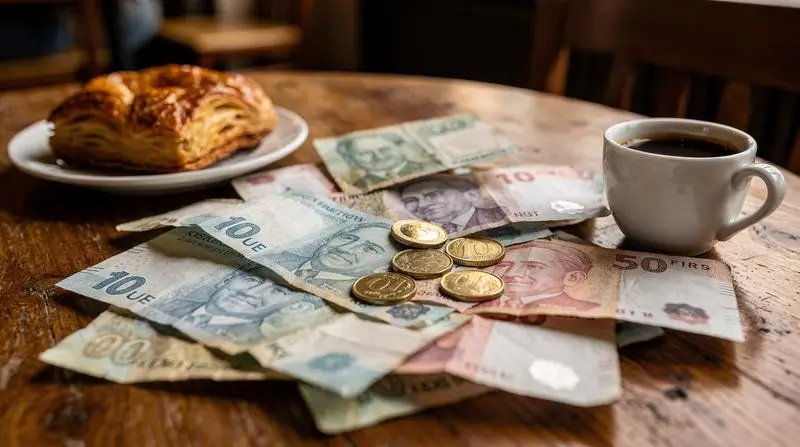
Albania uses the Lek (ALL); North Macedonia uses the Denar (MKD). Neither currency is usable in the other country, so budget for a currency exchange or ATM withdrawal on each side of the border — Euros are also widely accepted at tourist-facing businesses in both countries as a practical middle ground. Card payment acceptance is broadly similar between the two: reliable in Tirana, Skopje, and Ohrid’s tourist core, patchier in rural areas and smaller towns on both sides. Carrying a mix of Euro cash and each local currency in small denominations avoids awkward exchange-rate losses at the border itself, where informal money changers offer notably worse rates than city ATMs.
Combining With Kosovo for a Three-Country Loop
Travelers with two and a half to three weeks sometimes extend the Albania-North Macedonia comparison into a three-country loop by adding Kosovo. Pristina is a natural addition from either Tirana (via Kosovo’s shared Albanian-speaking culture) or from Skopje, and Kosovo’s Rugova Gorge and Prizren’s Ottoman old town add a third distinct flavor to the trip without requiring a flight. The border crossings Albania guide covers the Morina-Vërmicë crossing into Kosovo specifically, which connects naturally from Albania’s northern cities.
Border Crossing Logistics in Detail
The Qafë Thanë crossing deserves a closer look since it is the hinge of almost every combined itinerary. Positioned above Lake Ohrid, it offers genuinely spectacular views as you descend toward the lake on the Macedonian side. Wait times run 30-90 minutes in peak summer and considerably less in shoulder season or early morning. Furgons run from Tirana to Pogradec on the Albanian side, and onward transport (shared taxi or arranged minibus) covers the final stretch to the border and into Ohrid.
For drivers, rental car cross-border restrictions are worth checking with your Albanian rental agency before booking — not all companies permit taking their vehicles into North Macedonia, and those that do may charge an additional cross-border fee. The car rental Albania guide covers which agencies typically allow this.
Frequently Asked Questions About Albania vs North Macedonia
Is Albania or North Macedonia more beautiful?
Both are exceptionally beautiful. Albania has more dramatic coastline (the Riviera is extraordinary) and more dramatic high mountains. North Macedonia has Ohrid — perhaps the Balkans’ most beautiful lake town. It is genuinely a matter of taste and what type of scenery moves you most.
Which is easier to travel independently?
Both are manageable independently. Albania’s furgon network and improving English proficiency in tourist areas make independent travel straightforward. North Macedonia has a slightly more developed tourism infrastructure, particularly in Ohrid and Skopje, with more English spoken. For absolute beginners to Balkans travel, North Macedonia may be marginally easier.
Can I visit both Albania and North Macedonia in one trip?
Easily, and this is the recommended approach. The two countries are natural travel partners connected by Lake Ohrid and the Qafë Thanë border crossing. A 10-14 day trip comfortably covers both countries’ highlights.
Is there a visa difference between Albania and North Macedonia?
Both are outside the EU/Schengen area. Most Western nationalities can visit both countries without a visa. Check the specific entry requirements for your nationality before travel, as North Macedonia and Albania have slightly different bilateral visa agreements with various countries.
How much does a combined Albania-North Macedonia trip cost?
For a mid-range traveler, a 10-14 day combined trip typically runs EUR 900-1,500 per person excluding flights, covering accommodation, food, transport, and activities on both sides of the border. Because the two countries’ daily costs are so similar, the combined budget scales roughly linearly with the number of days spent rather than requiring separate country-by-country calculations. See the Albania travel budget guide for detailed Albanian figures to build the estimate from.
Which country has better hiking?
Albania’s Theth-Valbona route and the Albanian Alps are among Europe’s most spectacular hiking destinations. North Macedonia’s Mavrovo and Šar Planina offer excellent trekking. For dramatic high-mountain adventure, Albania is the winner. For more accessible day hiking near major towns, North Macedonia’s proximity of Mavrovo to Skopje is convenient.