Photography in Albania: Workshops, Tours, and the Complete Shooter’s Guide
Albania is one of the most photogenic countries in Europe that almost nobody is photographing seriously. The combination of factors that makes it exceptional — UNESCO-listed Ottoman cities with near-zero tourist crowds, dramatic mountain landscapes that shift character with every season, a cobalt Riviera coastline that retains its pre-mass-tourism character, communist-era architecture weathering into haunting aesthetic territory, and a population whose natural warmth makes street portraiture accessible — adds up to a landscape photographer’s and documentarian’s dream.
This guide covers everything from dedicated photo tour operators and workshop programs to the technical considerations of drone flying in Albanian airspace, the best golden hour locations across the country, gear recommendations for different shooting conditions, and the practical logistics of building a photography-focused Albania itinerary.
| Best light | Golden hour, 90 min before sunset (Berat), early morning (Gjirokastra, Theth) |
| Best seasons | Spring (Apr-May) and early autumn (Sep-Oct) |
| Drone rules | ACAA registration required, 120m max altitude |
| Photo tour cost | Around EUR 40-120/day depending on group size |
| Key zones | Tirana, Berat, Gjirokastra, Riviera, Theth/Valbona |
Why Albania Rewards Serious Photographers
The photographic appeal of Albania is multi-layered. For landscape photographers, the scale and variety of terrain in a small country is remarkable: within a two-hour drive of Tirana you can access rugged mountain scenery (Dajti, the Mat valley), coastal light at the Karaburun Peninsula, the extraordinary Ottoman streetscapes of Berat and Gjirokastra, and the lowland agricultural plains with their scattered bunkers and Ottoman-era mosques.
For documentary and street photographers, Albania offers something increasingly rare in European travel photography: genuine scenes of everyday life, traditional crafts in active use, architecturally distinctive environments, and human subjects who are curious about cameras rather than exhausted by them. The bazaars of Kruja and Gjirokastra, the fishing ports of Himara and Sazan, the mountain villages of Theth and Valbona — these are scenes that retain their character because the tourist volumes that would erode them have not arrived at scale.
For architecture and urban photography, the layering of historical periods creates extraordinary visual complexity: Ottoman-era buildings alongside Italian Fascist-era facades (from the 1920s-30s occupation), communist brutalist blocks, and contemporary glass construction — all compressed into city centers with minimal planning coherence, producing a visual chaos that rewards slow, patient exploration with a camera.
Photo Tour Operators in Albania
Several operators have developed specific photography tour programs in Albania, though the market is growing rather than established:
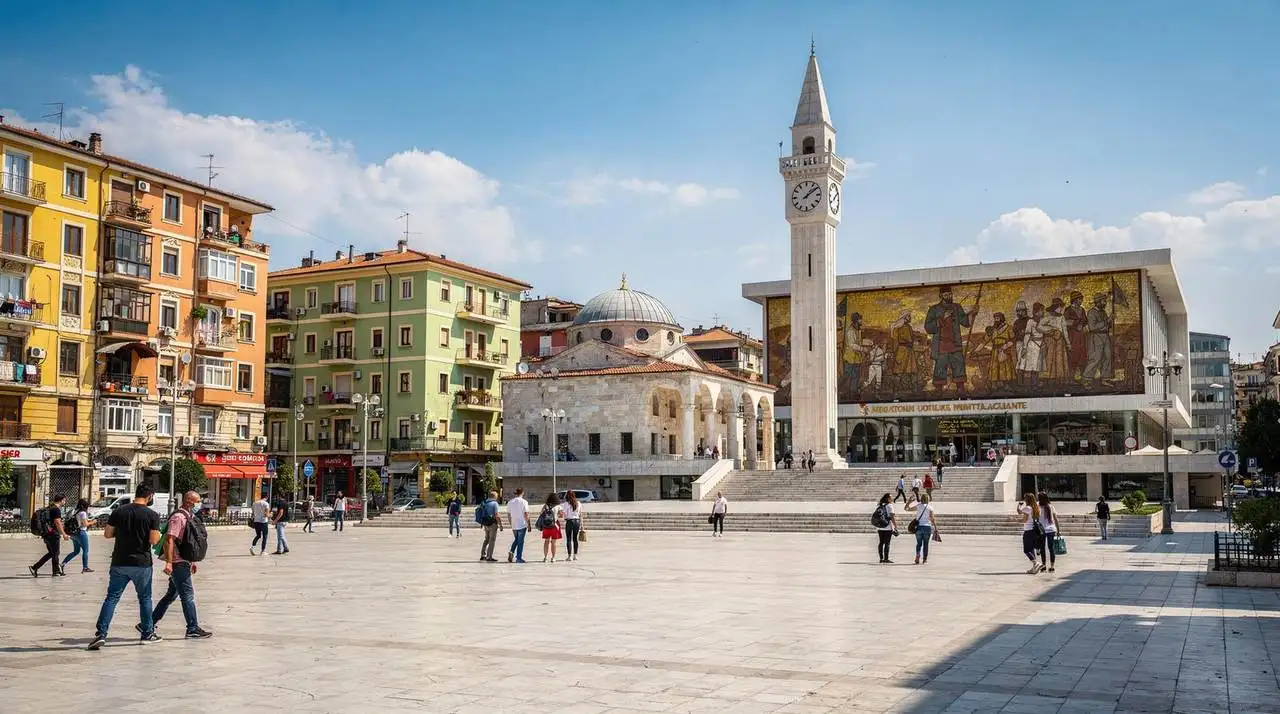
Guided Photography Day Tours from Tirana: The most accessible entry point for visiting photographers. Tirana walking tours with a knowledgeable local guide provide orientation to the city’s most photographically interesting areas — Blloku, the bazaar, the Pyramid, Skanderbeg Square at golden hour — while covering the contextual history that makes images meaningful rather than merely decorative.
Specialized Photography Tours: A small number of local operators offer dedicated photography tours with guides who understand light, composition, and the logistical access that makes certain shots possible. These typically cover Tirana plus one or more day trips to Berat, Gjirokastra, or the Riviera, with timing deliberately calibrated to golden hour.
Multi-Day Photography Workshops: International photography workshop providers occasionally schedule Albania workshops, typically running 5-7 days and covering the country’s major photographic zones. These involve small groups (8-12 photographers), professional photography instruction from visiting workshop leaders, local logistical support from Albanian guides, and accommodation in carefully chosen guesthouses rather than standardized hotels. Check current listings from established travel photography workshop operators.
Independent Photo Guides: Several Albanian photography enthusiasts and semi-professional photographers operate as independent guides for visiting photographers. They know specific locations, access conditions, lighting windows, and local subjects in detail. Finding them typically requires Facebook group research (Albania Photography and Albania Expats groups) or recommendations through photo community channels.
Best Golden Hour Locations by Region
Tirana
Dajti Mountain Cable Car Platform (Bunk’Art 1 area): The viewing platform above the cable car station offers sweeping views west over Tirana toward the Adriatic. Golden hour in late afternoon turns the city into a warm-toned panorama with excellent silhouette opportunities. The cable car runs until approximately 17:30-18:30 depending on season — check current times, as missing the last car means a long walk down.
Skanderbeg Square: Tirana’s central square, with its equestrian statue, the Et’hem Bey Mosque, and surrounding communist-era public buildings, catches excellent evening light from the west in summer and spring. The light falls at a low angle across the Et’hem Bey Mosque facade particularly well in late autumn and winter.
Blloku District Streets: The tree-lined residential streets of Blloku have a quality of dappled evening light in spring and early summer — when plane trees are in leaf — that rewards slow walking with a camera in the hour before sunset.
The Grand Boulevard: The Stalinist-scale boulevard from Skanderbeg Square toward the university has strong geometric perspective lines that work well with low-angle morning light coming in from the east.
Berat
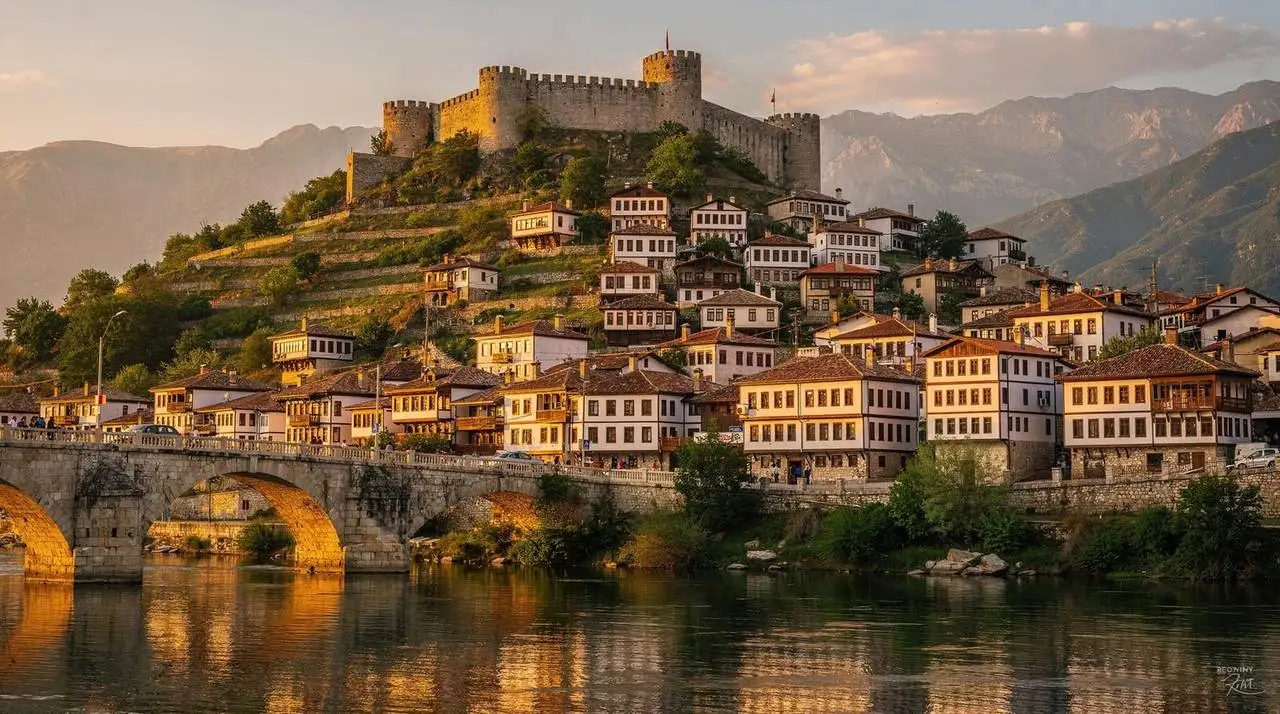
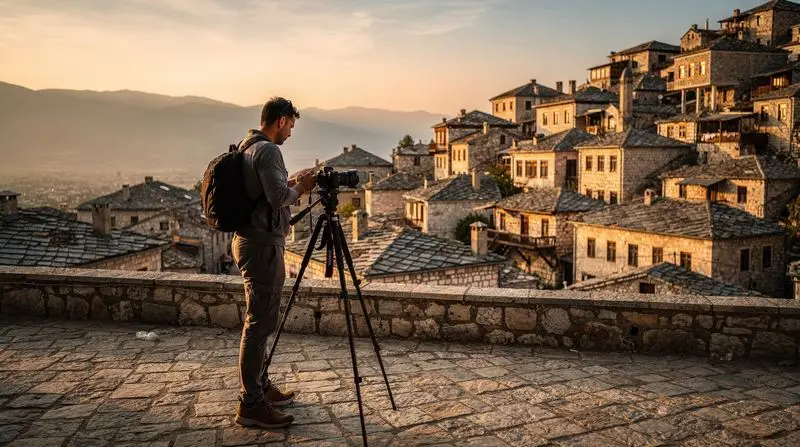
Berat earns its UNESCO status photographically with a precision timing reward: the most photographed view is the eastern face of the upper town (Mangalem), where rows of Ottoman houses with their characteristic large white-framed windows catch the late afternoon sun. The light is most dramatic in the 90-120 minutes before sunset, when the white facades glow and the shadows between buildings deepen.
Access the view from the opposite bank of the Osum River — from the area near the Gorica bridge or from the hillside above it — for the classic Berat shot. The higher you climb above the river, the more of the town you frame.
Early morning from the castle: Inside the Berat castle walls, early morning light comes over the eastern ridge and illuminates the castle church ruins and remaining inhabited houses from a low angle. The castle area empties of day visitors in the evening, making sunset from inside the walls relatively quiet.
The Berat destination guide covers logistics for getting into position at the right times.
Gjirokastra
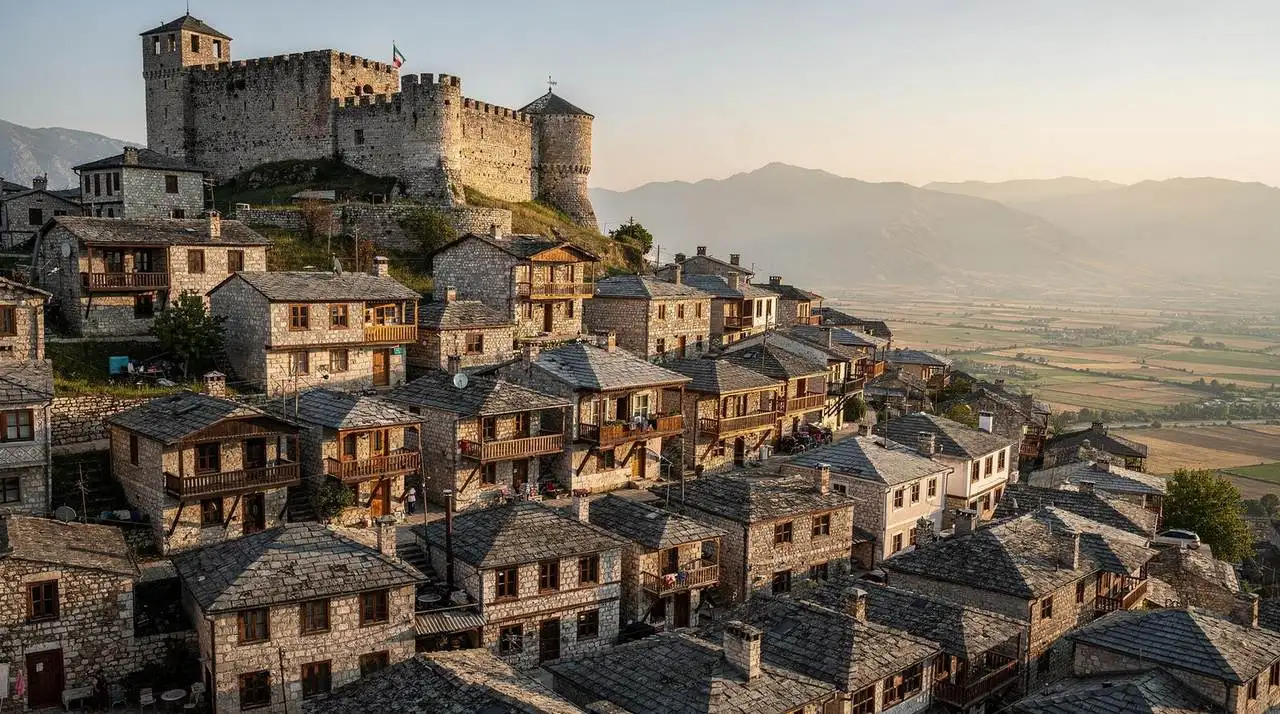
Gjirokastra rewards photography differently from Berat. The stone construction of the old town creates a palette of greys and blues rather than Berat’s warm whites, and the steep topography means constantly changing perspectives as you move through the streets.
The castle at dawn: Gjirokastra’s castle at dawn, before other visitors arrive, offers extraordinary light and complete solitude. The castle is occasionally opened early for individual visitors willing to ask at the ticket office.
Looking down the main bazaar street: The street descending from the bazaar area provides strong perspective lines and archway framing opportunities in morning light.
The Ottoman houses: Several of the larger Ottoman tower houses — Zekate House in particular — have rooftop access that provides elevated perspectives over the town and surrounding mountains in both morning and evening light. The Gjirokastra destination guide has visiting details.
The Albanian Riviera
Sazan Island views from Karaburun: The Karaburun Peninsula, accessible by boat from Vlora, has extraordinary coastal light throughout the day and particular magic at sunset looking toward Sazan Island. The combination of deep blue water, limestone cliffs, and the warm light of the western horizon is among the most dramatically beautiful coastal photography opportunities in the Mediterranean.
Himara harbor: The small fishing harbor below Himara village is most photogenic in early morning when fishing boats are coming in and the light is cool and directional. A few working fishermen remain, and portrait opportunities exist for photographers who approach respectfully.
Borsh and the olive groves: The ancient olive groves above Borsh, where some trees are estimated to be 1,500-2,000 years old, provide extraordinary compositions combining gnarled silvery trunks, terraced hillside, and the sea beyond. Morning light works best.
Dhermi from above: The view of Dhermi village and beach from the road above is one of the iconic Riviera shots. Best in late afternoon, looking west-northwest. Parking on the hairpin above the village provides a stable platform for wide-angle compositions.
Theth and the Albanian Alps
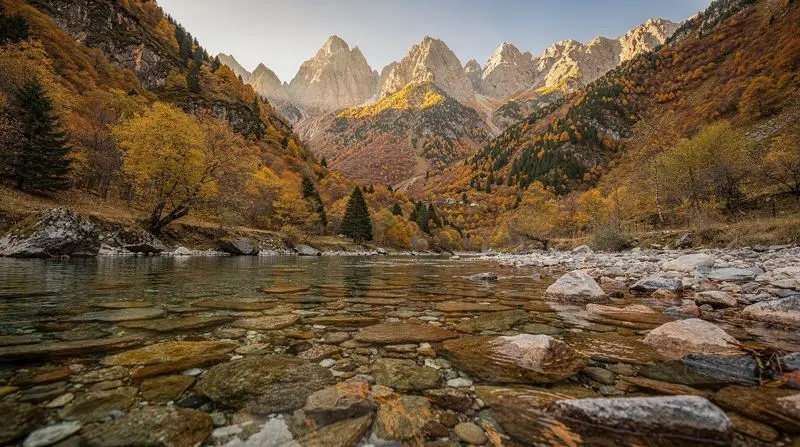
Theth Valley: The Theth valley in northern Albania is extraordinary for landscape photography — particularly in early morning when mist fills the valley floor and the peaks above are lit. The combination of traditional stone-roofed farmhouses, the blue-white water of the Shala River, and the dramatic mountain backdrop provides images that look unlike anywhere else in Europe.
The Blood Tower (Kulla): The fortified lock-in tower at Theth, where men who had blood feuds took refuge, is a fascinating documentary subject photographically — the rough stone architecture and its function as both dwelling and fortress creates powerful single-frame compositions.
Valbona Valley: Valbona in autumn, when the beech forests above the valley floor turn gold and amber, produces landscape images of extraordinary quality. The Koman Lake ferry approach to Valbona is itself a photographic subject — the narrow fjord-like lake and the forested mountains reflecting in the water.
Drone Photography in Albania
Drone photography is one of the fastest-growing aspects of travel photography in Albania, and the country’s relatively undeveloped tourism means many drone perspectives remain fresh. However, regulations apply and are taken increasingly seriously.
Albanian Drone Regulations
Albania’s drone regulations are administered by the Albanian Civil Aviation Authority (ACAA). The key rules for foreign visitors as of 2025-2026:
Registration: Drones must be registered with the ACAA before flying. The registration process can be initiated online and involves providing drone specifications and passport details. Allow several days for registration confirmation before your trip.
Drone categories by weight:
- Under 250g (nano/micro drones): reduced regulatory requirements; check current ACAA guidelines
- 250g-25kg: requires registration, third-party liability insurance, and compliance with operational rules
- Above 25kg: requires specific operational authorization
General rules:
- Maximum altitude: 120 metres above ground level
- Do not fly within 5 km of airports or airfields (Tirana International, Kukes, Gjirokastra, Saranda)
- Do not fly over crowds or populated areas without specific authorization
- Do not fly over government buildings, military installations, or national infrastructure
- Maintain visual line of sight at all times
- Do not fly at night without specific authorization
- Respect national park regulations — flying within protected areas may require specific permits
Practical enforcement: Enforcement of drone regulations varies across Albania. In remote mountain areas and rural coastal zones, practical enforcement is minimal. Near urban areas, airports, and officially significant sites (Bunk’Art, major monuments), compliance is increasingly expected. The safest approach is formal registration before arrival.
No-fly zones of practical relevance: The area around Tirana International Airport has a significant restriction zone. The castle areas of Gjirokastra and Berat are in designated heritage zones where flying requires authorization. Military installations exist in several areas — particularly along the coast — and flying near these should be avoided.
Best Drone Subjects
For permitted areas, Albania offers some of the most dramatic drone photography in Europe:
- Koman Lake and the Valbona approach by boat — the fjord-like aerial perspective
- The Llogara Pass — mountain and sea in a single frame from altitude
- Berat old town from above — the unique density of Ottoman houses with windows visible only from altitude
- The Riviera coastline between Himara and Borsh — turquoise-on-limestone composition
- Theth Valley at dawn — mist, farmhouses, mountain ridgeline
Camera Gear Recommendations for Albania
For Landscape Photography
Albania’s primary landscape conditions — bright coastal light, high-contrast mountain scenery, golden hour city panoramas — reward a standard landscape kit:
Primary lens: Wide to standard zoom (16-35mm or 24-70mm on full-frame equivalents). The scale of Albanian mountain scenery often benefits from wider perspectives, but the compressed layers of the Riviera coastline work with slightly longer focal lengths.
Telephoto: A medium telephoto (70-200mm) is useful for compressing coastal layers, isolating architectural details in bazaar towns, and working at respectful portrait distances.
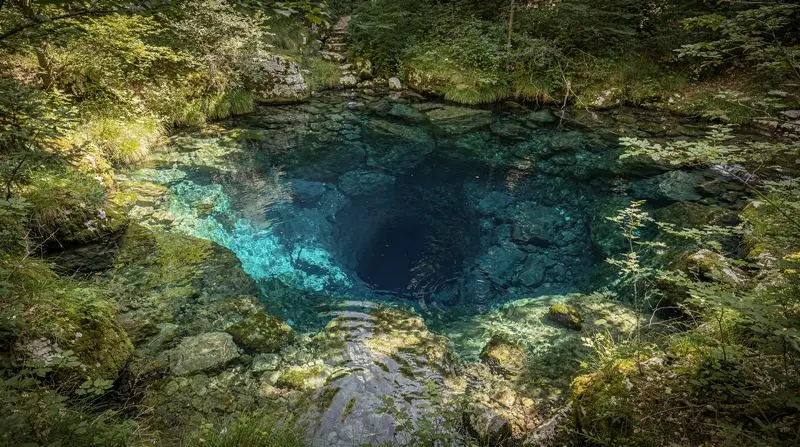
Filters: Polarizing filter is essential on the Riviera — the extraordinary blue-green water requires a polarizer to penetrate the surface and render fully. ND filters for long exposures on waterfalls (Blue Eye, Shala River) and coastal water.
Tripod: Essential for golden hour and dawn work. Albanian mountain trails are rough — a carbon fiber tripod balances weight and stability well for multi-day trekking photography.
For Street and Documentary Photography
Compact system or rangefinder-style body: Less intrusive than a large DSLR for bazaar and street photography. Mirrorless systems with compact primes work exceptionally well.
35mm and 50mm primes: The natural focal lengths for human-scale street scenes. Fast apertures (f/1.8-2.0) help in the darker corners of bazaar streets and interior spaces.
Flash: A small, low-profile flash (or none at all) is better for the natural rapport-building that makes street portraiture in Albania possible. Albanians are generally warm and open to being photographed but respond better to photographers who approach as curious people rather than equipment operators.
For Architecture Photography
Tilt-shift lens: If you shoot architecture seriously, Albania’s Ottoman and communist-era buildings reward tilt-shift correction — converging verticals are endemic in the steep streets of Gjirokastra and Berat.
Wide prime: A 24mm or 28mm prime is more compact than a zoom and optically superior for the flat-field rendering that architectural photography requires.
Seasonal Considerations for Photography
Spring (April-May): Perhaps the best overall photography season — wildflowers in mountain meadows, blossom in valley orchards, clear air after winter rains, low golden hour sun angles, and relatively empty sites. The northern Alps have lingering snow above 1,500m providing dramatic mountain backdrops.
Early Autumn (September-October): The second peak season for photography. The summer haze clears, coastal light becomes warm and directional again, and the Riviera retains its beauty without summer crowds. Forest foliage begins turning in October.
Winter (November-February): Low tourist numbers, dramatic cloud formations, snow on mountains (occasionally at lower elevations in Gjirokastra), and the cold blue light of the Mediterranean winter. Gjirokastra in particular has a moody winter quality that summer visitors rarely see. Fewer light hours reduce golden hour window, but the quality of that light in winter is exceptional.
Summer (June-August): Highest contrast and most difficult light for landscape photography — the midday Albanian summer sun is brutal for photography and for photographers. Early morning and late evening work is rewarding but the window is compressed. Coastal photography benefits from the activity of summer — boats, swimmers, market vendors.
The Albania in Autumn guide covers the seasonal conditions in detail for planning purposes.
Portrait Photography and Local Subjects
Albania’s people are among the most photographically open in the Balkans. Older men in traditional qeleshe caps in bazaar towns, fishermen at Riviera harbors, shepherds in mountain areas, women in traditional dress at festivals — these are subjects who, approached with genuine curiosity and respect, often welcome a photograph and a conversation.
Approach: Ask before you photograph in close-up situations. Basic Albanian courtesy phrases — “mund të të fotografoj?” (may I photograph you?) — will be appreciated even if your pronunciation is imperfect. Many subjects will want to see the photograph on your screen, which creates a connection point.
Festival photography: Albania’s festivals provide extraordinary documentary photography opportunities — the Summer Day festival in Elbasan in March, various village patron saint festivals in summer, and the Autumn Harvest festivals — with traditional dress, dancing, music, and food. The Albania festivals guide covers the calendar.
Planning a Photography-Focused Itinerary
A 10-day photography-focused Albania itinerary:
Days 1-2: Tirana — city orientation, golden hour from Dajti cable car, Skanderbeg Square, Blloku district streets, bazaar area at the New Bazaar
Days 3-4: Berat — approach from Tirana via the Osum canyon for scenery en route; afternoon/golden hour photography of the Mangalem facades from the river; dawn in the castle
Day 5: Gjirokastra — the Ottoman old town from multiple angles, Zekate House rooftop
Days 6-7: Albanian Riviera — Llogara Pass, Dhermi, Himara harbor at dawn, Borsh olive groves, Himara castle
Days 8-9: Northern Albania — Koman Lake ferry to Valbona; Theth valley at dawn; return via Shkodra
Day 10: Shkodra — Rozafa Castle at golden hour; Shkodra Lake
This itinerary moves quickly but captures all the primary photographic zones. A slower, more intensive version would add two to three days to each major zone.
Post-Processing and Working with Albanian Light
Albanian light varies more than most photographers expect for a small country. Coastal Riviera images taken through a polarizer often need only modest saturation adjustment — the water color is already extreme. Mountain images from Theth and Valbona, especially in flat overcast winter light, benefit from more deliberate contrast work to recover the sense of scale that flat light otherwise flattens. Ottoman old town shots in Berat and Gjirokastra, shot at golden hour, usually need very little correction beyond white balance — the warm stone architecture and the warm light are already well matched, and heavy processing tends to look artificial against subject matter this photogenic on its own.
Photography-Friendly Accommodation
A few practical accommodation notes for photographers: guesthouses in Berat’s Mangalem quarter and Gjirokastra’s old town with terrace or rooftop access are worth seeking out specifically, since many of the best shots of both towns are taken from elevated private terraces rather than public viewpoints. Ask when booking whether a terrace or roof view is available — hosts are usually happy to confirm by photo. In Theth and Valbona, guesthouses near the valley center rather than the forest edges give easier pre-dawn access for mist photography without a long walk in the dark. See the guesthouses Albanian Alps guide for options in both valleys.
Combining Photography with Organized Tours
For photographers with limited time, pairing independent shooting with one or two organized excursions covers ground efficiently. A guided Tirana to Berat day tour frees you to shoot rather than navigate on a day when logistics would otherwise eat into golden hour. Riviera boat tours from Himara or Vlora reach coastal and cave subjects — the Blue Cave, Karaburun cliffs — that are effectively unphotographable from land. The boat tours Albania guide covers operators and what each route offers photographically.
Frequently Asked Questions About Photography in Albania
Do you need permission to fly a drone in Albania?
Drones must be registered with the Albanian Civil Aviation Authority (ACAA) before flying. Registration is done online before travel. Standard operational rules apply: maximum 120 metres altitude, no flying within 5 km of airports, no flying over crowds or military installations. Specific areas including major heritage sites and areas near airports have additional restrictions. Remote mountain and coastal areas have less practical enforcement, but formal registration is always recommended.
What is the best time of day for photography in Albania?
Golden hour — the hour after sunrise and the hour before sunset — provides the best light for almost all subjects in Albania. Berat’s Ottoman facades are most dramatic in the 90 minutes before sunset. Mountain scenery (Theth, Valbona) benefits from early morning mist and low-angle dawn light. The Riviera coastline photographs best in late afternoon when the sun is low and polarizing filters can fully penetrate the water. Midday light in summer is harsh and generally unflattering for both landscape and portrait subjects.
Are there dedicated photography tours in Albania?
Yes, guided photography tours operate from Tirana and cover the major photographic zones. These range from single-day walking tours (Tirana city) to multi-day itineraries covering Berat, Gjirokastra, the Riviera, and northern Albania. International photography workshop operators occasionally schedule week-long Albania workshops with small groups. Independent local photography guides can be found through Albania photography Facebook communities.
What camera gear should I bring to Albania?
For landscape photography, bring a wide zoom (16-35mm), a medium telephoto (70-200mm), a polarizing filter (essential for Riviera water), and a sturdy tripod. For street and documentary work, a compact mirrorless system with 35mm and 50mm primes is less intrusive and performs well. For drone work, a compact drone with stabilized gimbal handles Albania’s variable wind conditions better than larger units. Bring adequate memory cards — the shooting volume in Albania can be unexpectedly high.
Is Albania safe for photographers carrying expensive gear?
Albania is genuinely safe for photographers in practical terms. Petty theft targeting tourists is rare compared to more heavily touristed European destinations, and photographers walking with camera equipment in both urban and rural settings report no significant security concerns. Standard precautions apply: be aware of surroundings in crowded urban areas, secure gear in vehicles when leaving them, and avoid displaying very expensive equipment unnecessarily in markets. Albanians are generally curious about photography rather than predatory toward photographers.