Traveling to Albania with Pets: The Complete 2026 Guide
Albania is one of the more pet-friendly European travel destinations, particularly for dog owners. The combination of lenient beach policies, a culture that is generally relaxed about dogs in outdoor spaces, affordable pet-friendly accommodation, and straightforward entry requirements makes Albania a viable — even excellent — destination for travelers who refuse to leave their companion animals behind.
This guide covers the entry requirements for pets arriving from different countries, the best pet-friendly destinations and accommodation options, beach and nature access, veterinary care, and practical logistics for a smooth trip with your dog, cat, or other companion animal.
| Entry document | EU Pet Passport or AHC (non-EU), microchip + rabies vaccination |
| Best bases for pets | Albanian Alps (Theth, Valbona), northern beaches |
| Vet access | Good in Tirana, limited elsewhere |
| Beach rules | Largely unregulated, more relaxed than Greece or Italy |
| Booking | Confirm pet policy directly with guesthouses via WhatsApp |
Entry Requirements for Pets
Albania accepts pets from EU and many non-EU countries, with the following standard requirements that mirror broadly what other Western Balkan countries require.
EU Pet Passport
For travelers arriving from EU member states, the EU Pet Passport is the standard document and is accepted at all Albanian border crossings. The blue EU Pet Passport booklet contains:
- Microchip number (ISO 11784/11785 standard, 15-digit)
- Rabies vaccination record with date and expiry
- Antiparasitic treatment records if applicable
- Owner details and contact information
Albania’s veterinary authorities at border crossings accept EU Pet Passports without additional documentation requirements. Keep the passport accessible in your car or carry-on — crossings at Muriqan (Montenegro border), Morina (Kosovo border), Kapshtica (Greece border), or the ferry terminal at Saranda (Corfu crossing) may involve brief document checks, and having the passport immediately to hand speeds things up considerably.
Non-EU Travelers (UK, USA, Australia, and Others)
For travelers from non-EU countries, the requirements differ and the administrative lead time is longer.
Microchip: An ISO-compliant 15-digit microchip must have been implanted before or at the same time as the first rabies vaccination. Microchip readers at Albanian border points are standard.
Rabies vaccination: Must be current within the vaccine’s valid period (typically one to three years depending on the vaccine brand and the pet’s age). Critically, a pet receiving its first-ever rabies vaccination must wait 21 days before traveling internationally — this waiting period is a hard rule that affects planning timelines.
Health certificate: A veterinary health certificate issued by an accredited veterinarian within 10 days of travel. For UK travelers, this is the AHC (Animal Health Certificate), which replaced the EU Pet Passport after Brexit. The AHC must be issued by an Official Veterinarian (OV) — not all vets are OVs, so confirming your vet’s status before booking the appointment is important.
Tapeworm treatment: Required for dogs entering some European countries. Requirements for Albania specifically should be confirmed with the Albanian embassy before travel, as regulations can be updated.
Practical Pre-Travel Checklist
- Visit your vet 3-4 weeks before departure to verify all documentation is current, update vaccinations if needed, and obtain required certificates
- Confirm your vet is an Official Veterinarian if you need an AHC
- Carry all documents in a waterproof folder accessible in your hand luggage, not checked baggage
- Photograph all documents and store in cloud storage — lost paperwork at a border crossing is stressful, and digital backups can help demonstrate compliance even if originals are temporarily misplaced
- Check current requirements with the Albanian Embassy in your country before travel — regulations do change and this guide reflects conditions as of 2026
Flying with Pets to Albania
Tirana International Airport accepts pets arriving in-cabin (for small animals) and as checked baggage or cargo for larger animals, depending on airline policies.
In-cabin: Most European airlines allow small dogs and cats (typically under 8-10kg including carrier) in the cabin. The pet travels in an approved soft-sided carrier that fits under the seat in front of you. Ryanair, Wizz Air, and easyJet — the main budget carriers to Tirana — each have their own pet policies. Ryanair does not currently permit pets in the cabin; Wizz Air and easyJet have different policies that may also change. Check directly with your airline before booking.
Hold: Larger dogs travel in the aircraft hold in an approved hard carrier. Temperature controls and pressurization in the hold are designed to be safe for animals, and airlines have established procedures for pet welfare in transit. This is standard practice for larger breeds. Your airline’s pet policy page specifies the approved carrier dimensions and weight limits.
Cargo: For very large breeds or very long trips, cargo travel via specialized pet freight companies is an option, though this involves more separation from the owner and is generally appropriate only for longer-term relocations rather than tourism visits.
Practical flying tips:
- Book your pet’s travel at the same time as your own ticket — airline pet spots are limited and fill up
- Obtain an airline-approved carrier before departure and introduce your pet to it ahead of time to reduce travel stress
- Do not sedate your pet for air travel — veterinary consensus advises against this on safety grounds
- Attach your contact information, current health records, and destination address to the carrier
- Line the carrier with familiar-smelling bedding and include a water-soaked treat for hydration during the flight
Driving to Albania with Pets
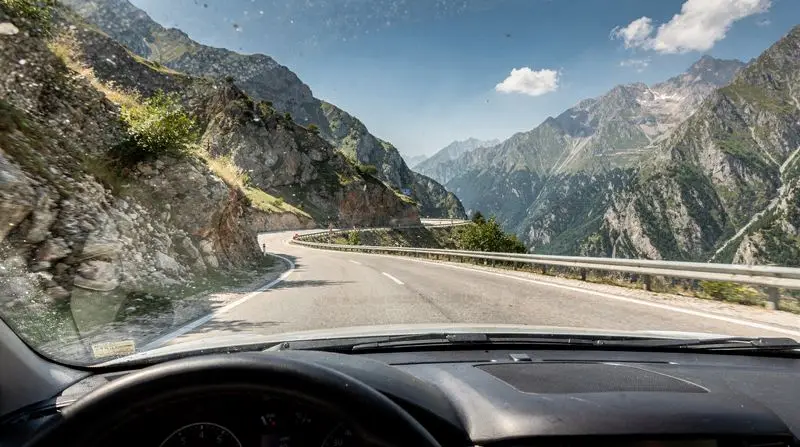
Driving through the Balkans is the most comfortable option for pets, avoiding the stress of air travel entirely. The gradual approach — familiar car, familiar smells, regular stops — keeps most dogs calm and comfortable.
Via Montenegro: Enter Albania at the Muriqan border crossing north of Shkodra. This is the most common overland route for travelers driving from Western Europe via Slovenia, Croatia, Bosnia, and Montenegro. The border crossing is routine and pet document checks take a few minutes.
Via Greece: Enter at the Kapshtica crossing near Korce in southeastern Albania, or the Kakavia crossing near Gjirokastra. Both are heavily used crossings with standard processing times. This route works well for travelers combining Greece and Albania in the same road trip.
Via North Macedonia: Multiple crossings available. Less commonly used for tourist travel but perfectly feasible.
For guidance on road conditions and driving logistics throughout Albania, the driving in Albania guide covers everything from road quality to fuel station locations that are equally relevant for pet-traveling road trippers.
In-car pet safety: Use a properly fitted car restraint system or crate in the vehicle. Regular stops (every 2-3 hours) for water, a short walk, and toilet breaks are important on long Balkan driving days. The summer heat in Albania is significant — never leave a pet in a parked car in summer temperatures.
Pet-Friendly Accommodation in Albania
Albania has more pet-friendly accommodation than most travelers expect. The informal guesthouse culture that characterizes much of Albanian hospitality is naturally more pet-tolerant than the standardized policies of international hotel chains.
Guesthouses and Family-Run Accommodation
Rural guesthouses — particularly in the Albanian Alps (Theth, Valbona), mountain villages, and the Riviera — are generally willing to accommodate pets. The outdoor nature of these properties (large gardens, mountain terrain, minimal carpeting throughout) makes it practically manageable.
The approach: Contact guesthouses directly via WhatsApp (the standard communication method in Albania) and ask specifically whether pets are welcome before booking. WhatsApp is genuinely the best channel — it allows quick back-and-forth communication and you can share a photo of your pet if the guesthouse wants to confirm the size and type.
Mountain guesthouses (Theth and Valbona): These properties are particularly suitable for dogs, as guests spend the majority of their time outdoors hiking. Dogs are a natural fit in this environment, and the guesthouses in the Albanian Alps are generally comfortable with them. Confirm ahead — but refusals are uncommon for well-behaved dogs. The guesthouses Albanian Alps guide covers the best options in both valleys.
Riviera guesthouses: The boutique properties in Dhermi and Himara vary in their pet policies. Smaller guesthouses with outdoor terraces and gardens are more likely to be pet-friendly than hotel-style properties with pool areas.
Airbnb
Airbnb has a pet-friendly filter that works well in Albania. A meaningful number of Albanian Airbnb listings — apartments in Tirana, villas on the Riviera, houses in Berat — explicitly accept pets. Filter for “pets allowed” before browsing and the selection is reasonable, particularly in Tirana, Saranda, and Berat where the Airbnb market is most developed.
Properties that have outdoor space (a garden, terrace, or courtyard) are the most comfortable for dogs. Many Albanian Airbnb properties in the old towns and on the Riviera have these features.
Hotels
Standard international hotels in Albania (the Marriott Tirana, for example) have pet policies comparable to their international brand standards — small pets sometimes permitted with a supplement, larger dogs restricted. Mid-range hotels vary widely — always contact directly rather than relying on the booking platform to accurately represent pet policies.
Beach resort hotels on the Riviera: Some accept small dogs in certain room categories during shoulder season (May-June, September-October). In peak summer (July-August), many become strictly no-pet due to pool areas and beach club operations. Confirm current policy directly.
Finding Pet-Friendly Accommodation
The most reliable method in Albania: use Booking.com’s pet-friendly filter to identify properties that declare pet acceptance, then contact the property directly via WhatsApp to confirm the specifics (size limits, any additional fee, specific room types). This two-step approach catches discrepancies between what the booking platform states and current property policy.
Pet-Friendly Beaches in Albania
Albania’s beach culture is significantly more relaxed about dogs than most Mediterranean countries. The absence of the strict “no dogs on beaches” enforcement common in France, Spain, and Italy makes Albania genuinely different for pet-traveling beach visitors.
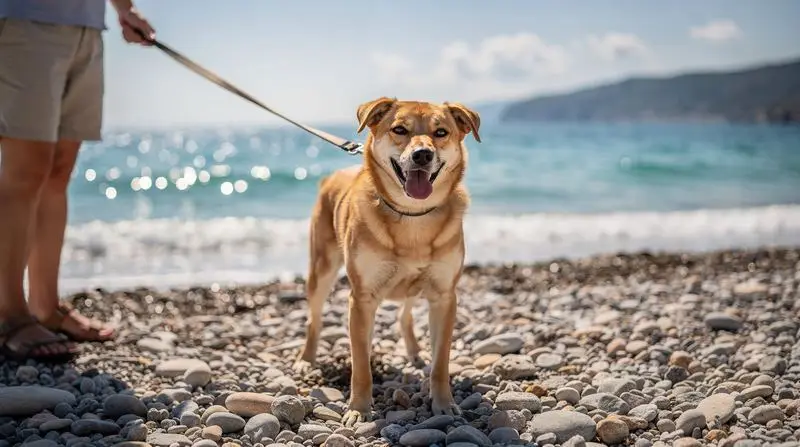
The general situation: Albanian beaches are public and largely unregulated in terms of dog access. Dogs are commonly seen on Albanian beaches throughout the year — particularly in shoulder seasons — and the concept of “no dogs allowed” signage that characterizes many Mediterranean beaches is largely absent.
Peak summer reality (July-August): The most popular beaches in peak season — Ksamil, the main Saranda beach, the central areas of Durres — become extremely crowded with beach chairs, umbrellas, and visitors. Bringing a dog into this density is not prohibited but is impractical and uncomfortable for the animal. The better approach in peak season is to target less crowded beaches or visit popular beaches very early in the morning before the crowds arrive.
Better options for dogs on the beach:
- Borsh Beach (7km long): The quieter southern stretches have plenty of space even in peak season. The beach is long enough that a corner away from the crowds is always findable.
- Jale Beach: Dog-friendly in the calmer areas away from the main beach bars. The olive grove camping area above the beach is particularly suitable.
- Remote coves between Palasa and Lukova: Accessible by boat or on foot, these isolated stretches are perfect for dogs year-round and see minimal other beach users.
- Velipoja and Shengjin (northern beaches): Long, flat, sandy beaches that are considerably less crowded than the Riviera and genuinely dog-friendly. Sandy surfaces are also easier on paws than the pebble beaches of the southern Riviera.
Mountain swimming: The glacial rivers, waterfalls, and lakes of the Albanian Alps are natural dog swimming environments of the highest quality — cold, clear water, no crowds, no restrictions. The Valbona River, the Shala River, and the mountain pools around Theth are extraordinary places to let a dog swim freely.
Veterinary Care in Albania
Tirana: Has multiple veterinary clinics, including several with English-speaking veterinarians. The quality of veterinary care in Tirana is reasonable for standard needs — vaccination updates, minor illness, wound care, emergency triage. For serious conditions requiring specialist care, Tirana is the only place in Albania with appropriate facilities.
Outside Tirana: Veterinary care in smaller cities and rural areas is limited. Veterinary practices exist in Shkodra, Berat, and Saranda, but facilities are basic and specialist care is not available. For any serious veterinary emergency outside Tirana, transport to the capital is the realistic option. Plan accordingly when choosing remote rural or mountain itineraries with pets.
Before your trip:
- Carry enough regular medications for your pet for the entire trip plus a buffer (at least 5 extra days’ supply)
- Bring your vet’s contact details for telephone advice during the trip
- Know the Tirana emergency vet contacts before you need them — research these in advance
- Travel insurance for pets (available as add-ons to some travel policies) is worth considering for the veterinary cost coverage in the event of unexpected illness or injury
Food for Pets in Albania
Dog food: Available in larger Albanian supermarkets (Conad, Spar, Carrefour Express all operate in major Albanian cities) and pet shops in Tirana. Standard European brands (Pedigree, Royal Canin dry food) are typically available. Specialist, premium, or prescription diets may not be available outside Tirana and should not be relied upon.
Recommendation: Bring enough of your pet’s regular food for the entire trip. Switching food while traveling adds digestive stress to travel stress — an unhappy combination, particularly in hot weather. This is especially important for dogs with known food sensitivities or those on prescription diets.
Fresh water: Fresh water for your pet is easy to obtain throughout Albania. Mountain spring water is clean and safe. In summer heat, carry a collapsible water bowl and offer water regularly when traveling.
The Stray Dog Situation
Albania has a significant stray dog population in cities, peri-urban areas, and along rural roadsides. This is relevant context for traveling with pets.
For dogs on leash: Strays may approach with territorial or curious behavior. Keep your dog on a short leash in areas where strays are present — the outskirts of towns, rural areas between villages, and anywhere livestock grazing occurs. The vast majority of stray interactions are not dangerous but can be alarming.
For cats: Best kept indoors or in secure outdoor spaces when not directly supervised. The stray cat population in Albanian cities is large and cats that are allowed to roam independently can encounter disease, parasites, or aggression.
Disease risk: Stray dogs in Albania may carry Leishmania (transmitted by sandfly bites, endemic in parts of Albania), tick-borne diseases, and other conditions. Ensure your pet’s parasite prevention is current before traveling. Leishmania vaccination is worth discussing with your vet — not universally available but protective where sandfly exposure is likely, which includes coastal and southern Albania.
Hiking and Outdoor Activities with Dogs
The Albanian Alps and the national park system offer extraordinary hiking for dog owners. Albania is one of the better European countries for hiking with dogs, given the generally relaxed approach to dogs on trails and in nature areas.
Theth National Park: Dogs are welcome on all main trails in Theth. The Theth-Valbona crossing is a 7-9 hour hike at altitude, demanding for people and dogs alike — suitable for fit, experienced hiking dogs but not for older animals or those with health conditions. Water sources on the trail are available but variable in summer; bring enough water for both of you for the full day.
Valbona Valley National Park: Trails through the beech forest and up toward the passes are open to dogs. The river valley provides natural swimming pools throughout.
The Riviera coastal trails: The walking paths between Dhermi, Palasa, and Gjipe Beach are excellent for dogs — largely traffic-free, shaded in sections, with sea views. The Gjipe gorge walk to the beach requires managing your dog on the narrow limestone path.
Llogara National Park: The pine forest trails are excellent dog hiking territory with no restrictions.
Heat management in summer: Albanian summer temperatures are intense — mid-July temperatures in the lowlands regularly exceed 35°C. For mountain hiking in July and August, start before 7am and aim to be finished before 11am when temperature and UV intensity peak. Carry more water than you think you need for your dog. Watch for signs of overheating: excessive panting, drooling, wobbliness, or reluctance to continue. Access to shade and cool water is essential at regular intervals.
Getting Around with Pets
Rental Cars
Standard Albanian car rental policies do not officially permit dogs or other animals in rental vehicles. In practice, this rule is rarely enforced for contained, well-behaved dogs if you protect the upholstery and clean up after the animal. Use a seat cover or boot liner, bring a portable vacuum, and leave the car in the same condition you received it.
Renting a larger vehicle — an SUV or estate car — makes traveling with dogs substantially more comfortable than a small city car. A well-secured crate in the boot provides safety for the dog and protects the vehicle.
Buses and Public Transport
Pets are not permitted on Albania’s public buses, furgons, or shared taxis. Private transport — rental car, hired private driver, or private taxi — is the only realistic transport option when traveling with pets. See the Albania travel tips guide for guidance on private transport options.
Ferries
The Corfu-Saranda ferry (operated by Finikas Lines and others) accepts pets. This 35-minute crossing connects the Greek island of Corfu with Saranda on the Albanian Riviera and is an excellent entry point for Riviera-based pet-friendly trips. Pets must remain in vehicles on the car deck or on the open car deck with a leash — not in the passenger cabin. The crossing is short enough that this is perfectly manageable.
The Italian-Albanian ferry routes (Bari or Brindisi to Durres, operated by Grimaldi, Adria Ferries, and others) accept pets. Longer crossings (7-9 hours overnight) typically have pet-specific accommodation areas or kennels. Check with your specific ferry operator at the time of booking.
Best Destinations for Pet-Friendly Albania Travel
Not all of Albania is equally suitable for traveling with pets. Some regions offer the most practical and enjoyable combination:
Albanian Alps (Theth and Valbona): The best overall destination for dog owners. Outdoor guesthouses, unlimited hiking, river swimming, no beach crowds, and a genuinely remote mountain environment that dogs find exhilarating. The main practical challenges are the road access (rough in places) and the limited veterinary care if something goes wrong.
The Riviera in shoulder season (May-June, September): The coast before and after peak summer is excellent for dogs — the beaches are quieter, the temperatures are manageable, and the guesthouse accommodation is available and pet-friendly. Peak summer on the Riviera is the most difficult period for pets due to heat and crowds.
Berat: The UNESCO city with its guesthouses in the Mangalem quarter is well-suited for pet-friendly stays. The riverside walk below the city, the paths up to the castle, and the surrounding countryside are all accessible with dogs.
Northern beaches (Velipoja, Shengjin): Undervisited, dog-friendly sandy beaches with space and quiet that the southern Riviera cannot offer in summer. The quieter northern coast is genuinely excellent for dog owners who want beach access without the crowds.
Pet Insurance and Extra Costs to Budget For
Standard travel insurance rarely covers your pet. A dedicated pet travel insurance add-on (often available from specialist providers rather than mainstream travel insurers) covers veterinary treatment abroad, emergency boarding if you are hospitalized, and sometimes repatriation costs if your pet cannot fly home on the original ticket. Budget separately for this — it typically adds EUR 20-50 to the cost of a two-week trip depending on coverage level. See the Albania travel insurance guide for how pet cover fits alongside your own policy.
Beyond insurance, build in a contingency for unplanned veterinary visits (a tick bite that needs checking, a minor stomach upset from unfamiliar food) — even at Albania’s low prices, an unbudgeted EUR 30-60 clinic visit can catch travelers by surprise mid-trip.
Combining a Pet-Friendly Trip with the Rest of Albania
Most of Albania’s headline experiences work fine with a dog in tow, with a few exceptions. Museum visits, old town walking (Berat, Gjirokastra), and most outdoor activities are pet-compatible if you plan around opening hours and heat. Boat trips are the main exception — many operators on the Riviera do not accept animals on board, so check before booking rather than assuming.
If your itinerary includes both coast and mountains, sequencing matters: doing the Riviera first in the cooler shoulder-season weeks, then moving north to the Albanian Alps as summer heat builds, keeps your pet more comfortable than the reverse. The road trip guide for Albania covers route planning that works well whether or not you are traveling with an animal, and a private vehicle is genuinely the only practical way to move a pet between regions given that furgons and buses do not allow animals.
Frequently Asked Questions About Traveling to Albania with Pets
Do I need a special visa or permit for my pet in Albania?
No separate visa is required for pets — only the standard entry documentation (EU Pet Passport or AHC plus microchip and current rabies vaccination). Confirm current requirements with the Albanian Embassy in your country before travel, as document rules can be updated.
Can I take my dog on the Corfu-Saranda ferry or Riviera boat tours?
The Corfu-Saranda ferry accepts pets, generally on the car deck or open deck on a leash rather than in the passenger cabin. Riviera boat tours vary by operator — many small tourist boats do not accept animals, so confirm with the specific operator before booking rather than assuming your pet can join.
The Bigger Picture: Albania as a Pet-Friendly Destination
The most practical summary: Albania is one of the better European travel destinations for bringing a dog. The combination of outdoor nature focus, guesthouse culture, beach tolerance, and mountain access is difficult to match in more developed tourist markets where restrictions have accumulated alongside visitor numbers.
The caveats are real — limited veterinary care outside Tirana, significant stray dog populations, summer heat — but they are manageable with preparation. The upside — a dog swimming in the Shala River’s turquoise water, running across an Albanian alpine meadow, or watching the Ionian sunset from a Riviera terrace — is the kind of thing that makes the extra preparation genuinely worthwhile.
For broader trip planning, the Albania travel tips guide covers the practical country knowledge that makes any Albania visit work smoothly. The Albania packing list includes the standard items for any visitor, alongside which you should add your pet’s documentation folder, regular food supply, and the portable water bowl that is a summer essential.
For pet owners visiting the Albanian Riviera, a boat trip that allows dogs on deck is one of the best ways to experience the coastline while keeping your pet comfortable in the sea breeze:
These Himara Riviera boat tours offer some of the most scenic coastal exploration available from the central Riviera, covering the coves, caves, and beaches between Himara and Gjipe that are inaccessible by road. Cost approximately EUR 25-40 per person.