Vegetarian Food in Albania: A Complete Guide
The good news for vegetarian and vegan travelers extends beyond restaurant menus to markets themselves: Albania’s farmers’ markets, particularly Tirana’s New Bazaar and the weekly markets in Berat and Gjirokastra, are excellent sources of fresh produce, local cheese, olives, and bread for anyone assembling their own vegetarian meals during a longer stay or self-catered accommodation. This do-it-yourself option is worth remembering on days when restaurant hunting feels tiresome — a market picnic of good bread, tomatoes, cheese, and olives is one of the simplest and most satisfying vegetarian meals available anywhere in the country.
Eating vegetarian in Albania is more rewarding than most visitors expect. The country’s food culture is often characterized — not entirely accurately — as meat-heavy, and while grilled meats and slow-cooked lamb dishes certainly feature prominently, Albanian cuisine also has a rich tradition of vegetable, dairy, and pastry dishes that have nothing to do with meat. Some of Albania’s most celebrated dishes are naturally vegetarian, and the abundance of fresh seasonal produce available in Albanian markets means that cooking without meat here starts from excellent raw materials.
The practical experience of eating vegetarian in Albania has improved significantly over the past decade as tourism has increased and restaurants have become more accustomed to dietary requests. In Tirana and the main tourist centers, communicating vegetarian needs presents no real difficulty. In smaller towns and villages, it requires slightly more care but is entirely manageable with a few words of Albanian and a willingness to guide the kitchen gently.
| Easiest cities | Tirana, Saranda, Berat, Gjirokastra |
| Go-to dish | Byrek me djath (cheese pie) |
| Vegan difficulty | Moderate — dairy is everywhere |
| Best season | May-September for peak vegetables |
| Key phrase | ”Pa mish, ju lutem” — without meat, please |
The Vegetarian Foundation: Albania’s Best Plant-Based Dishes
Several dishes in the Albanian culinary canon are vegetarian by default and by tradition — not adapted versions of meat dishes but original preparations with no meat component.
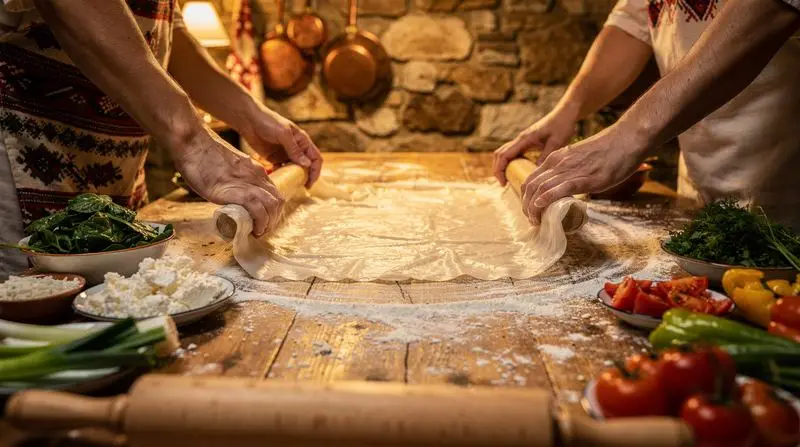
Byrek me djath is the starting point. This filo pastry pie filled with white cheese is one of the most widely eaten foods in Albania and is available from bakeries, street vendors, and restaurants across the country from early morning onward. The cheese used is a mild, salty white cheese similar to feta, and in the best byrek it melts into the hot pastry layers to create something irresistible. Byrek me spinaq (spinach and egg) is equally good and equally available. Together, these two variants represent the most reliable vegetarian option in the country.
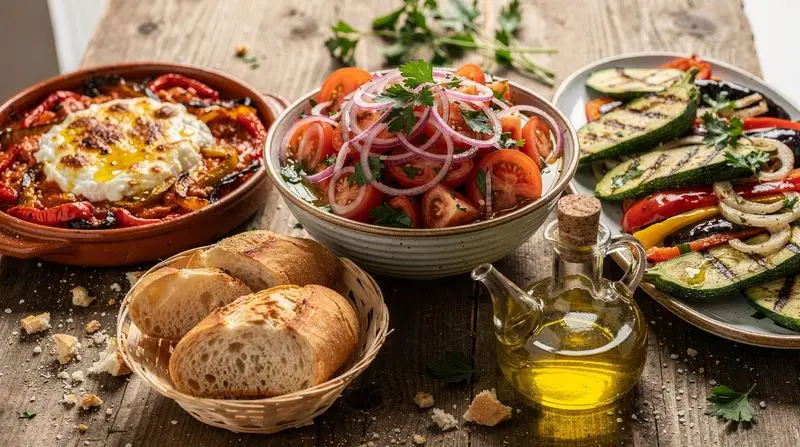
Fergese is another naturally vegetarian classic in its standard form. The dish of roasted red peppers, tomatoes, white cheese, and eggs cooked together in a clay pot is one of the most satisfying preparations in Albanian cooking: rich, intensely flavored, and entirely plant-and-dairy based. The Tirana version sometimes includes calves’ liver (making it non-vegetarian), so it is worth confirming which version is being prepared. Outside Tirana, fergese is almost always made without meat.
Tavë me perime (vegetable bake) is a seasonal preparation of layered vegetables — typically zucchini, peppers, eggplant, and tomatoes — slow-cooked in olive oil in a clay pot with herbs and sometimes eggs. The quality depends heavily on the season: in July and August, when these vegetables are at their peak, the dish can be genuinely excellent.
Sallate me djath e domate (tomato and cheese salad) is a ubiquitous Albanian table preparation: sliced vine tomatoes, white cheese, olive oil, and salt. The quality of the tomatoes in Albania during summer months — grown in warm Mediterranean conditions without industrial farming methods — makes this the kind of simple salad that tastes far better than its simplicity suggests it should.
Dairy Products: An Albanian Strength
Albania’s dairy tradition is strong, and dairy-based dishes and accompaniments make the vegetarian experience considerably more satisfying. The white cheese (djath i bardhe) that features in byrek and salads is made from either sheep’s or cow’s milk depending on the region, with sheep’s milk versions tending toward more intensity. Gjize is a fresh, crumbly cheese similar to ricotta that appears as a filling in pastries and as a standalone table food.
Kaymak is the thick clotted cream produced from buffalo or cow milk that is spread on bread, served alongside pastries and byrek, and used as a condiment across multiple dishes. For vegetarians, it functions as an excellent topping for borek and petulla and provides richness to otherwise simple preparations.
Salce kosi (the garlic yogurt sauce) is served alongside meat dishes but is also excellent with grilled vegetables, bread, and various vegetable preparations. Albanian full-fat yogurt has a tanginess and richness that elevates anything it accompanies.
Salads and Vegetables: The Seasonal Advantage
Albanian cooking is fundamentally seasonal, which means that visiting at the right time unlocks exceptional vegetable-based eating. The summer and early autumn months produce tomatoes, peppers, cucumbers, eggplant, zucchini, and fresh herbs of a quality that reflects genuine agricultural traditions rather than industrial production.
Salata Shqiptare (Albanian salad) is the standard preparation: tomato, cucumber, onion, olives, and white cheese with olive oil and salt. It appears on every restaurant menu and varies considerably depending on the freshness of the tomatoes and the quality of the cheese. A good version of this salad in August, made with peak-season tomatoes and excellent local cheese, is a genuinely memorable dish.
Roasted peppers (speca te pjekura) served with olive oil and garlic appear as a side dish or starter across Albanian menus and are one of the country’s great simple preparations. The peppers are charred over open flame or in wood-fired ovens until the skin blackens and blisters, then peeled to reveal sweet, smoky flesh.
Spinach dishes appear in multiple forms: in byrek, cooked with eggs and onion (spinaq me veze), or sauteed simply with garlic. Fresh spinach from Albanian markets in spring is exceptional.
Vegetarian Options by Region
The experience of eating vegetarian varies somewhat by region, and understanding these differences helps set appropriate expectations.
In Tirana, vegetarian eating is straightforward. The city’s restaurant scene has expanded rapidly and many newer establishments explicitly accommodate dietary preferences. The New Bazaar area is particularly good for vegetarians: the market stalls and restaurants there cover a wide range of vegetable preparations, dairy products, and pastries that require no meat at all. Dedicated vegetarian restaurants are beginning to appear in Tirana’s Blloku neighborhood, though the city’s traditional restaurants still provide the most satisfying vegetarian meals through their existing menu staples.
In Berat and Gjirokastra, the traditional restaurant scene has a somewhat narrower focus on Albanian classics, but vegetarian staples — byrek, fergese, salads, grilled vegetables — are always available. The UNESCO World Heritage atmosphere of these cities tends to attract restaurants that are accustomed to explaining their menus to international visitors.
The coastal area from Saranda to Himara is naturally strong for vegetarians interested in vegetables, salads, and dairy, though the dominant culinary identity here is seafood. Vegetable-based mezze are a consistent part of coastal dining culture.
In mountain villages and traditional guesthouses (bujtina) in the Albanian Alps, vegetarian meals require slightly more communication. The bujtina cooking is hearty and traditionally meat-heavy, but cheese, eggs, bread, and seasonal vegetables are always present. Communicating vegetarian needs in advance when booking allows most guesthouses to prepare appropriately.
Learning to Cook Albanian Vegetarian Food
The vegetarian dishes of Albanian cuisine are often the most accessible for learning to prepare at home, since they rely on techniques and ingredients available almost anywhere. A cooking class in Albania provides direct instruction in byrek making, fergese preparation, and vegetable-based dishes from Albanian cooks.
This traditional Albanian vegetarian cooking class in Gjirokastra is specifically designed around plant-based and dairy-focused recipes from the Albanian kitchen, taught in the historic setting of the UNESCO-listed old city. It is one of the most unique cooking experiences available in the Balkans and covers techniques that translate directly to cooking at home.
The class covers byrek preparation from scratch (including the hand-pulling of filo dough), fergese, various vegetable preparations, and the use of Albanian dairy products. Participants leave with recipes and a set of techniques that make reproducing these dishes abroad considerably more straightforward.
Vegan Options in Albania
Strict veganism is more challenging in Albanian food culture, where dairy is woven into almost every non-meat dish. However, several Albanian preparations are naturally vegan.
Fasule (bean stew) is a traditional and widely available dish made from white beans cooked slowly with onions, tomatoes, garlic, and olive oil. It is one of Albania’s most comforting and filling dishes and is entirely plant-based in its standard preparation. In mountain areas, fasule is a dietary staple rather than a special preparation.
Trahana is a fermented grain product similar to dried pasta, cooked into a porridge-like soup and served without dairy in some preparations. It is a traditional preserved food from the mountain areas of Albania.
Grilled and roasted vegetables with olive oil and herbs are available across the country in summer. The quality of Albanian olive oil — produced primarily in the south — is high, and the combination of good oil with peak-season vegetables represents genuinely satisfying plant-based eating.
Fresh bread (bukë) with olive oil and garlic is a simple but extremely good vegan option available everywhere. Albanian bread varies by region: in the north, cornbread (bukë misri) is common; in the south, wheat bread with a slightly chewy crumb.
Useful Phrases for Vegetarian Travelers
A few Albanian phrases make navigating dietary requirements considerably easier.
“Jam vegetarian” — I am vegetarian. “Nuk ha mish” — I don’t eat meat. “Ka mish brenda?” — Is there meat inside? “Pa mish, ju lutem” — Without meat, please. “Kam alergjji ndaj ___” — I am allergic to ___.
Most restaurant staff in tourist areas speak at least some English and will understand “vegetarian” without Albanian translation. In more rural or traditional settings, Albanian phrases are more useful.
For the full picture of Albanian food culture, including the meat-based dishes that your fellow travelers may be ordering, see our comprehensive Albanian food guide.
Ordering Vegetarian in Practice: What to Expect
The practical reality of ordering vegetarian food in Albanian restaurants varies between straightforward and slightly complicated depending on where you are and how the kitchen interprets the request. In Tirana’s more international-facing restaurants, vegetarian is understood immediately and accommodated without difficulty. In traditional family-run restaurants in smaller towns, the concept exists but may not be thought through to every dish — stock-based soups, lard-finished beans, and meat-broth-cooked vegetables are traditional practices that Albanian cooks may not consider “adding meat” in the way a vegetarian would.
The most reliable approach is specific communication rather than general labels: “Pa mish dhe pa produkte mishi” (without meat and without meat products) is the clearest Albanian formulation. In practice, pointing at dishes you want, asking about specific ingredients, and choosing the simpler preparations (byrek, grilled vegetables, salads, eggs, cheese) over dishes with complex sauces reduces the risk of unwanted ingredients.
Traditional Albanian cooking before industrialization was actually more plant-based than the current restaurant-menu impression suggests. Meat was expensive and used sparingly in much traditional home cooking; vegetables, legumes, and dairy formed the bulk of the diet. Acknowledging this history with your Albanian host or waiter — “I know traditional Albanian food has many vegetarian dishes” — often opens a more productive conversation than simply stating a dietary restriction.
Vegetarian Albania by Season
The vegetarian experience varies notably by season in Albania, and understanding this helps plan the most rewarding visits. Spring (March through May) is excellent for fresh dairy, early greens, spring cheeses, and the wildflower-season herbs that appear in highland cooking. Summer (June through September) is the peak for vegetables — the tomatoes, peppers, zucchini, eggplant, and cucumbers that define Albanian summer cooking are at their best from July through early September, and vegetarian eating reaches its annual peak of quality and variety. Autumn (October through November) brings wild mushrooms, chestnuts, preserved peppers, and the last of the seasonal tomatoes. Winter (December through February) narrows to stored goods, beans, and the year-round dairy that provides the protein foundation of vegetarian Albanian eating at all times.
For a genuinely rewarding vegetarian Albania visit from a food perspective, May through September is the strongest period. The overlap of peak vegetable season with the full range of open restaurants and facilities makes this the time when Albanian plant-based cooking is at its most varied and satisfying.
The Best Vegetarian Meals in Albania: A Summary
Distilling the above into a practical list: the Albanian dishes that work best for vegetarians include byrek me djath and byrek me spinaq (available everywhere, breakfast to afternoon), fergese without liver (available on most traditional menus in the south and center), tavë me perime (seasonal vegetable bake, variable quality depending on the season and kitchen), salata shqiptare (Albanian salad, universal), fasule (bean stew, available in traditional restaurants and village settings), and petulla me djath (fried dough with white cheese, primarily in homes and village guesthouses).
These dishes, across various combinations and preparations, make a satisfying and genuinely varied vegetarian diet throughout an Albanian trip. The challenge is not finding something to eat — it is rarely that stark — but rather communicating clearly enough to ensure that what arrives at the table is actually prepared without meat, since some dishes that appear vegetarian are occasionally finished with a small amount of lard or stock.
Eating Vegetarian at Traditional Restaurants
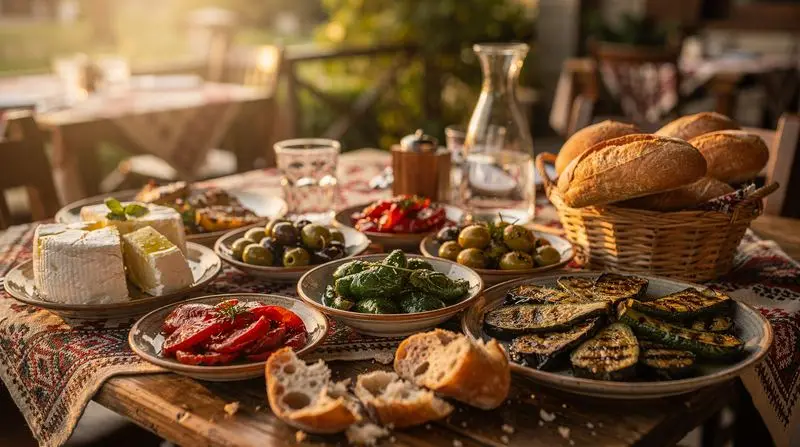
The most reliable way to eat vegetarian in a traditional Albanian restaurant is to order multiple starter dishes and skip the main course category entirely. Albanian starter culture is rich and abundant: a spread of fergese, white cheese, olives, stuffed peppers (these are typically vegetarian), ajvar (roasted pepper spread, available at some restaurants), and a large salad covers a satisfying and genuinely Albanian meal without involving any meat.
This mezze-style approach to ordering is actually how many Albanians eat — a sequence of shared small dishes rather than individual mains — and eating this way in an Albanian restaurant does not signal dietary restriction so much as a particularly Albanian approach to the meal.
Seasonal Vegetarian Eating
The vegetarian experience in Albania is most rewarding in the warmer months when seasonal produce is at its peak. May through October sees Albanian markets full of the vegetables and herbs that make Albanian plant-based cooking excellent: summer tomatoes, peppers of all varieties, eggplant, zucchini, fresh garlic, basil, and the wild herbs gathered from hillsides and mountain meadows.
In winter, the vegetarian options narrow somewhat to preserved and stored goods: pickled vegetables, dried beans, root vegetables, and the dairy products that are constant year-round. The winter byrek fillings shift toward cheese and stored spinach rather than the fresh summer vegetables. This seasonal variation is itself part of the interest of Albanian food — it reflects genuine agricultural rhythms rather than the artificial year-round availability of industrial food systems.
Vegetarian Tirana: The Best Options
In Tirana specifically, vegetarian eating has the most options of anywhere in Albania. The New Bazaar provides direct access to the best produce and to restaurants using it. The Blloku neighborhood has several newer restaurants with explicitly vegetarian sections on their menus. The traditional restaurants at Oda and in the New Bazaar area all have vegetarian dishes without requiring any menu negotiation.
For a guided exploration of Tirana’s food scene with vegetarian needs accommodated, the food tours described in our food tours guide can be customized in advance to focus on plant-based and dairy-based elements of Albanian food culture. The local guide’s knowledge of which vendors and restaurants best serve vegetarian travelers is genuinely useful in a food landscape that is still learning to communicate dietary specifics clearly.
Vegetarian Options at Hotels and Guesthouse Breakfasts
Breakfast at Albanian hotels and guesthouses is one of the easiest vegetarian meals of the day, typically built around bread, local cheese, olives, honey, jam, eggs, and seasonal fruit — a spread that requires no modification for vegetarians and often needs only minor adjustment for vegans (skipping eggs and honey). Larger hotels in Tirana and the Riviera resorts increasingly offer buffet breakfasts with clearly varied options, while smaller family guesthouses serve a fixed spread that is worth confirming in advance if you have specific restrictions. All-inclusive resorts along the coast, still a relatively new category in Albania compared to Greece or Turkey, vary considerably in how well they handle dietary requests — the all-inclusive Albania guide covers which properties are genuinely accommodating versus which require advance notice. For dinner at guesthouses that include meals in the room rate, messaging your host a day ahead about vegetarian needs consistently produces the best results, since it gives the kitchen time to plan around dishes beyond the default meat-based options.
Gluten-Free and Other Overlapping Dietary Needs
Vegetarian travelers with additional dietary restrictions face a slightly more complex picture in Albania. Byrek and most pastries are wheat-based, ruling out the single most reliable vegetarian staple for gluten-free visitors — in that case, grilled vegetables, salads, fasule (bean stew), and dairy-based dishes like fergese become the more dependable options. Dairy-free vegetarians (as opposed to full vegans) will find Albania noticeably harder than dairy-tolerant vegetarians, since cheese and yogurt sauces are woven into nearly every naturally vegetarian dish described above; leaning on grilled vegetables, roasted peppers, and bean-based dishes is the most reliable path. Nut allergies are generally easy to manage, since nuts are not a common hidden ingredient in Albanian savory cooking, though baklava and other sweets frequently contain walnuts or almonds. Communicating multiple restrictions at once works best with a written note in Albanian rather than a verbal list — ask your accommodation host to help translate specific combinations before eating out in smaller towns.